Seyfettin ÇABUK
Workers' Rights:
The Workers' Rights Analysis in Turkey within the Scope of the Subcontracting System
Joint Master’s Programme European Studies Master Thesis
Seyfettin ÇABUK
Workers' Rights:
The Workers' Rights Analysis in Turkey within the Scope of the Subcontracting System
Supervisors
Dr. Manfred WANNOFFEL, Hamburg University Assistant Prof. Beyhan AKSOY, Akdeniz University
Joint Master’s Programme European Studies Master Thesis
Sosyal Bilimler Enstitüsü Müdürlüğüne,
Seyfettin ÇABUK’un bu çalışması jürimiz tarafından Uluslararası İlişkiler Ana Bilim Dalı Avrupa Çalışmaları Ortak Yüksek Lisans Programı tezi olarak kabul edilmiştir.
Başkan : Prof. Dr. Harun GÜMRÜKÇÜ (İmza)
Üye (Danışmanı) : Dr. Manfred WANNÖFFEL (İmza)
Üye : Yrd. Doç. Dr. Beyhan AKSOY (İmza)
Tez Başlığı : Türkiye’de Alt-İşverenlik Sistemi Kapsamında İşçi Hakları Analizi
Workers’ Rights: The Workers’ Rights Analysis in Turkey within the Scope of the Subcontracting System
Onay : Yukarıdaki imzaların, adı geçen öğretim üyelerine ait olduğunu onaylarım.
Tez Savunma Tarihi : 28.02.2014 Mezuniyet Tarihi : 27.03.2014
Prof. Dr. Zekeriya KARADAVUT Müdür
TABLE OF CONTENTS
LIST OF TABLES ... iii
LIST OF FIGURES ... iv LIST OF ABBREVIATIONS ... v ÖZET ... vi SUMMARY ... vii INTRODUCTION ... 1 CHAPTER 1 THE SUBCONTRACTING CONCEPTS 1.1 The Historical Background of Subcontracting ... 5
1.2 The Theoretical Framework of Subcontracting ... 7
1.3 The Subcontracting, Subcontractor and Principal Employer ... 10
1.4 The Elements of the Subcontracting ... 13
1.5 The Historical Development of the Subcontracting in Turkey ... 14
1.6 The Reasons Bringing Out the Subcontracting ... 19
1.7 The Collusion in the Subcontractor-Principal Employer Relationship ... 21
1.8 The Liability in the Subcontracting ... 22
CHAPTER 2 THE SUBCONTRACTING AND WORKER RIGHTS 2.1 The Rights of the Subcontractor Workers in the Regulations and Laws ... 26
2.2 Misuses of the Subcontractor Workers’ Rights ... 28
2.3 Misuses of the Subcontractor Workers’ Rights in the Public Sector ... 34
2.4 Association and Organization Experiences of the Subcontractor Workers ... 39
CHAPTER 3 THE SUBCONTRACTING FROM THE EU PERSPECTIVE 3.1 The Subcontracting and EU ... 42
3.2 The EU Progress Reports in terms of the Worker Rights ... 48
CONCLUSION ... 51
BIBLIOGRAPHY... 55
CURRICULUM VITAE ... 61
LIST OF TABLES
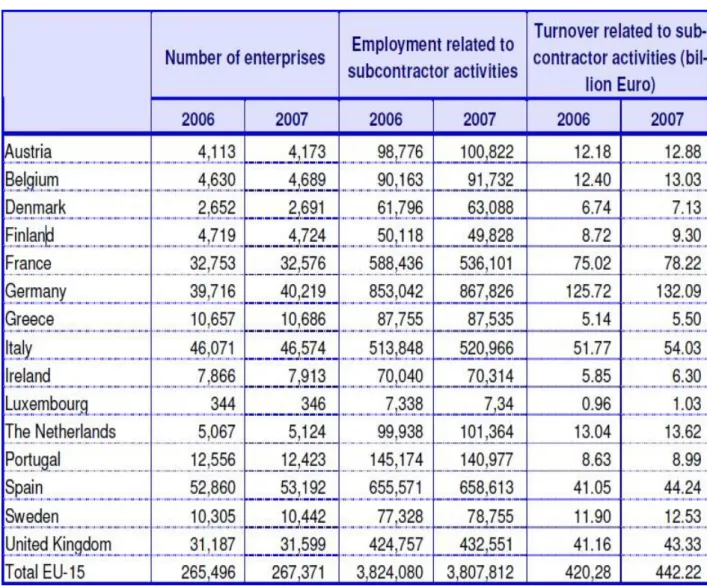
Table 1.1 Turkey 2002-2012 Informal Employment Rate (%) ... 19 Table 3.1 Importance of Subcontractor Activities in the Manufacturing Sector in the EU-15, 2006 and 2007 ... 43
LIST OF FIGURES
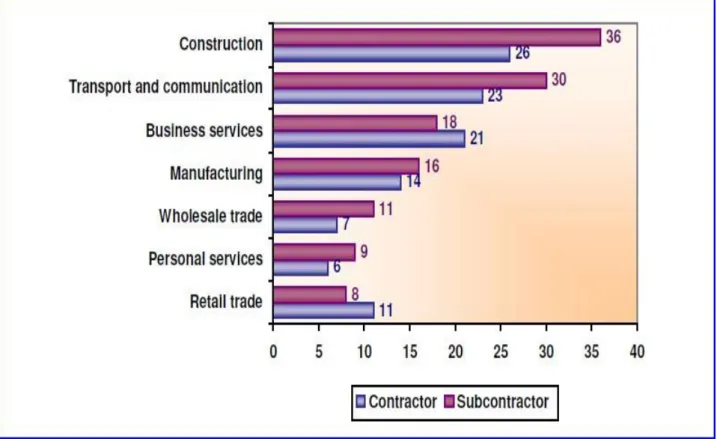
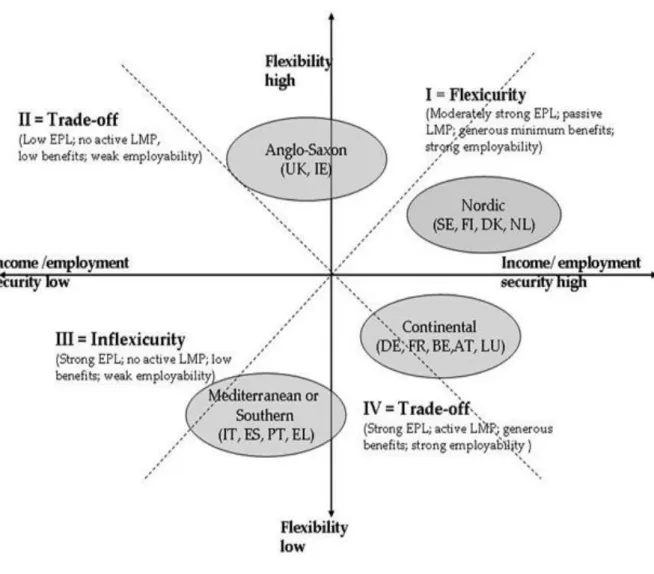
Figure 1.1 The Subcontractor Worker Rates in the Public Sector... 17 Figure 1.2 The Subcontractor Worker Rates in the Private Sector ... 18 Figure 3.1 Presence of SME Subcontractors and Contractors by Sector (%), EU-27, 2009 .... 44 Figure 3.2 Matrix of Security and Flexibility ... 46
LIST OF ABBREVIATIONS
BİS: Birleşik İşçi Sendikası CLS: Core labor standards
ETUC: European Trade Union Confederation EU: European Union
Eurofound: The European Foundation for the Improvement of Living and Working Conditions
ILO: International Labour Organization LSSM: Labour and Social Security Minister
OSCE: Organization for Security and Co-operation
SGK: Sosyal Güvenlik Kurumu (Social Security Institution-SSI) SOEs: The state-owned enterprises
TKİ: Türkiye Kömür İşletmeleri
UNCTAD: United Nations Conference on Trade and Development UNIDO: United Nations Industrial Development Organization
ÖZET
Türkiye’de Alt-İşverenlik Sistemi Kapsamında İşçi Hakları Analizi
Alt işverenlik uygulamaları Türkiye’de esnek bir istihdam modelinin ihtiyaç olarak görülmesi ve hissedilmesi neticesinde cumhuriyetin ilk yıllarından itibaren ve artarak piyasada kendine yer edinme imkanı bulmuştur. Alt işverenlik esnek yapısından dolayı özellikle kriz dönemlerinde daha sık tercih edilmektedir. Onun bu yapısı kriz dönemlerinde piyasaları istihdam açısından rahatlatmaktadır. Ancak bu dönemlerde karşılaşılan kanunsuz uygulamaların kriz sonrası dönemlerde de hem asıl işverenler hem de taşeronlar tarafından sıklıkla tekrar ettiği mahkemelere intikal eden davalardan, yazılı ve görsel basına yansıyan haberlerden, sendikaların bildirilerinden ve bazı akademik çalışmalardan anlaşılmaktadır. Yine aynı kaynaklardan yola çıkarak, kanuna aykırı uygulamaların dışında yasal boşlukların da hem aracı firmalar hem de asıl firmalar tarafından tespit edilip işçi hakları gözetilmeksizin kendi lehlerine kullanmakta oldukları anlaşılmaktadır.
Bu tezde özellikle Türkiye’de alt işveren işçilerinin bu usulsüz uygulamalar neticesinde mağdur olup olmadıklarını, yalnız bırakılıp bırakılmadıklarını ve haklarını savunurken bazı zorluklarla karşılaşıp karşılaşmadıklarını araştırmak amaçlanmıştır.
Anahtar Kelimeler: Türkiye’de Alt İşverenlik, Alt İşverenlikte İşçi Hakları, İşçi Mağduriyetleri, Yasalarda Alt İşverenlik, Uygulamada Alt İşverenlik.
SUMMARY
The Workers' Rights Analysis in Turkey within the Scope of the Subcontracting System
The subcontracting has got an opportunity to be implemented increasingly since the first years of the declaration of the republic after the flexible employment models had been seen and felt as a necessity. Although the subcontracting applications being preferred and used as a tool especially during the crisis ease the markets in terms of employment due to its flexible structure, it has been understood from the cases, written and visual media news stories, trade union declarations and some academic studies that the illegal implications encountered in times of the crisis have been continued by the principal employers and subcontractors after these periods. It is also understood from the same sources that, in addition to the unlawful practices, the legal gaps discovered by the principal employers and subcontractors have been used in their favour by not considering the rights of the workers.
It is aimed to investigate in this thesis whether the workers have become a victim and they have been left alone or not and whether they are faced with challenges while defending their rights after these unpleasant practices in Turkey.
Keywords: Subcontracting in Turkey, The Worker Rights in Subcontracting, Victimization of Workers, Subcontracting in Law, Subcontracting in Practice.
INTRODUCTION
Today, the rapid development and the changes coming with this development in business life, requires the assistance and specialization in works. As a result of these changes, new institutions and concepts have entered into the Labour Act and the subcontracting has become from one of them.
Regulations relating to the subcontracting are located in Labour Act. However, these regulations cannot define the subcontracting properly. Therefore, many problems have been encountered in practice. Moreover, even a concept unity has not been achieved in doctrine until today. The developments in the industry have left in a difficult position to the companies by increasing the variety of production of existing firms in working life. These developments also forced the companies to produce various products which generally require special expertises.1As a result, the traditional companies producing products and services with the workers who work with uncertain and full time work contracts have assigned some works which require expertise such as cleaning, maintenance and repair, service, office (data preparation) services and security or other auxiliary tasks. 2
At first, the subcontracting was applied in transport, construction and textile industry but recently it has been started to be used almost in all goods and services industry. For example, at first times in the construction industry, the building contractors undertaking to build whole construction were giving the plaster work to other employer, the paint works to another employer, the electrical and plumbing work to another employer and woodwork works to another employer. Then, the subcontracting was applied in road and dam construction, textile and auto factories and finally it has been applied in auxiliary tasks such as maintenance, catering, cleaning, staff transporting, security and office services today. The subcontracting was required to be regulated in legislation therefore it found a wide range application area in a short period although the Labour Act supported that the employers need to complete the works by using its own workers and facilities and the subcontracting
1 Mehmet Anıl Arslanoğlu, İş Kanununda Esneklik Temelli Üçlü Sözleşmesel İlişkiler, Legal Publishing,
İstanbul, 2005, p. 93.
2 Ercüment Özkaraca, İşyeri Devrinin İş Sözleşmelerine Etkisi ve İşverenlerin Hukuki Sorumluluğu, Beta
applications were just exceptional applications. The exceptions should not exceed primaries before making necessary regulations.3
Besides, the most important reason of necessity of regulations on subcontracting is that to protect to the subcontractor’s workers because the subcontractors are economically weaker than the principal employers.4 For this purpose, the subcontracting institution entered into the legislation as a concept with the Labour Act No. 3008 was enacted in 1936. Initially, the subcontracting institution had been used with good intents but later it has been started to be used to reduce the number of the permanent workers, avoid the obligations of Labour and Social Security Law, stay away from the syndication and collective bargaining rights of workers, reduce the workers’ wages, prevent the increase of the wages and other similar purposes.5 The subcontracting institution has not been regulated enough and detailed in legislation and because of this it has been misused many times. As a result of these misuses, the regulations related to the subcontracting institutions have been changed several times in the past6 and a new one is on the agenda of AKP government.7 The Labour Act No. 5518, 950 and 1475 and other regulations in force were enacted to prevent the misuses of the subcontracting applications during the years of 1950s and 1980s. However, all these laws and regulations were not enough to fill the legal gaps related to the subcontracting institution. The legal gaps were tried to be filled with Supreme Court (Yargıtay) jurisprudences during the Labour Act No. 1475.8
The Labour Act No. 4857 is the latest Labour Act and it has been in force since 2003. The regulations related to the subcontracting in the last Labour Act is made by taking into account the Supreme Court jurisprudences related to subcontracting and the collusive practices have been tried to be prevented by trying to fill legal gaps. With the enactment of Labour Act No. 4857, the concept unity has been provided. However, the sector and workers still continue to be encountered with many problems related to the subcontracting. The other
3 Aslıhan Özcan Kılıç, Alt İşveren İlişkisinden Doğan Asıl İşverenin Sorumluluğu, Unpublished Master
Thesis, Gazi University, Ankara, 2007, p. 27.
4 Oya Necla Kurtaran, Türk İş Hukukunda Alt İşveren Uygulamasında Muvazaa, Unpublished Master Thesis,
Ankara, 2006, p. 26.
5
M.Polat Soyer, 4857 Sayılı İş Kanunu Açısından Asıl İşveren – Alt İşveren İlişkisinin Kurulması ve
Sonuçları, MESS Sicil Dergisi, No.1(March), 2006, p. 16.
6 Engin Ünsal, 4857 Sayılı Yasa’ya Göre Asıl İşveren – Alt İşveren İlişkisinin Kurulması, Legal İş Hukuku ve
Sosyal Güvenlik Hukuku Dergisi, Vol.2, No.6, 2005, p. 536.
7 http://www.akparti.org.tr/site/haberler/taseron-uygulamalariyla-ilgili-sorunlari-cozecegiz/36391, (last accessed:
02/01/2013).
8 Fevzi Demir, 4857 Sayılı İş Kanunu’nun Başlıca Yenilikleri ve Uygulamadaki Muhtemel Etkileri, MESS
main reason of these problems is that the legal regulations in collective and individual Labour Act are inadequate and insufficient. The Labour Act has clarified the relationship between subcontractor and principal employer by introducing this relationship with its components rather than changing the institution of subcontracting.9 On the other hand, the regulations about subcontracting are not ended the discussions in doctrine. The subcontracting institution is continuous to be discussed in doctrine with its elements and insufficiencies.10 The Labour Act No. 4857 includes regulations which are comprehensive to prevent the misuses of the subcontracting applications. But, the collective Labour Act does not even mention subcontracting institution11 and this situation causes great legal gaps.
This study aims to discuss if the subcontracting is misused or not and other problems faced during the subcontracting applications in Turkey. Accordance with this purpose, the thesis will be divided into three main parts.
In the first chapter, firstly the historical background and theoretical framework of subcontracting and subcontractor and principal employer concepts will be examined. After investigating these concepts, the elements of the subcontracting will be clarified. The historical development of the subcontracting in Turkey will be one of the other important titles of the thesis. Under this title, the legislative changes in subcontracting will be explained chronically. There are some reasons that bringing out the subcontracting. This matter will be discussed under the next title, as well. Last part of this chapter will be devoted to collusion and responsibility which are two different important subjects of subcontracting.
In the second chapter, the legal rights of the subcontractors’ workers and misuses of these rights will be discussed. The laws and regulations about subcontracting have become in years almost as how they have to be in Turkey. However, the subcontracting practices do not reflect the same positivity. So, how the workers of subcontractors have become a victim of the subcontracting practices and what kind of measures they have taken against these misuses will be analyzed in this chapter. The collective bargaining and trade union rights are very important rights for all workers because they guarantee and protect other rights of the worker. The subcontractors’ workers have problems especially while demanding these basic rights. Thus, the big part of this chapter will be about these rights and how the subcontractors’
9 Osman Güven Çankaya and Şahin Çil, 4857 Sayılı İş Kanunu’na Göre Asıl İşveren-Alt İşveren İlişkisi,Sicil
İş Hukuku Dergisi, Vol 3, 2006, p. 55.
10
Soyer, 4857 Sayılı İş Kanunu Açısından Asıl İşveren, p. 16.
11 6356 Sayılı Sendikalar Ve Toplu İş Sözleşmesi Kanunu, 2012,
workers cannot take the advantage of these rights while they have right to have them legally. In brief, how the workers of subcontractors have been exploited for years illegally or directly by using the legal ways and gaps despite all improvements in regulations and laws will be deeply discussed in this chapter.
Lastly, the third chapter will approach to the subcontracting from the European Union (EU) perspective. In the first part of this chapter, a general assessment from past to present about the subcontracting in EU will be made. In the second part of this chapter, the related topics of Turkey progress reports prepared and published annually by the Commission of The European Communities will be summarized and discussed shortly. Albeit these reports have annoyed Turkey, they are the documents telling us to us by not making compromises to announce realities and truths. However, although the reports include detailed explanations and criticisms about different issues, it is worrying that the misuses of the subcontractor workers have not been mentioned enough.
Generally, the problems on the rights of the workers have been uttered in these reports. Moreover, this situation indicates that the EU does not care or ignores that the misusing problem of the subcontractor workers rights needs to a different way of solution because of its different status in the laws, regulations and even perceptions. Eventually, the EU knows and analysis Turkey maybe better than Turkish people12 and because of this, it cannot be thought that the EU is not aware of this situation. However, although the expressing of the problems experienced in the trade union rights is a regrettable situation for Turkey, it is an important part of the reports that worth to be appreciated. The last part of this third and last chapter will clarify the notion of decent work and the situation in the EU will be examined in terms of decent work concept of International Labour Organization (ILO).
CHAPTER 1
1 THE SUBCONTRACTING CONCEPTS
1.1 The Historical Background of Subcontracting
The subcontracting is an organizational model of capitalist production and its history goes back to ancient times. The development of trade after 12th century necessitated an alternative model of production to handicrafts. Actually, it is useful to examine the European continent before the industrial revolution to understand the history of subcontracting. During this period, the subcontracting was used extensively in manufacturing of some of the goods such as house-drawn carriage, toys, items made of gold and silver, silk goods, shoes, furniture, watches and scientific purposes utensils instruments.13
However, the subcontracting here was not only a cost-cutting factor, but also an important element of organizational flexibility. Forasmuch, the increasing luxury goods demands of affluent people and the more goods demands of other classes in main metropolitan areas of Europe such as London, Paris and Amsterdam were met through the use of increasing number of subcontractors.14 But, it is possible to say that the subcontracting was used before the birth of the modern factories and the use of subcontractors increased rapidly in parallel with the increase in the number of persons belonging to the bourgeois class and their demands for goods. There are analyzes which show that the subcontracting was used since the end of the 17th century in the modern sense. After the emergence of the modern bourgeoisie, the mechanism of commodity production changed in a short period of time and a revolution was experienced in addition to these technological revolutions.15
Even if it cannot be showed by numbers, it is possible to say that the subcontracting applications could be seen on the streets of British metropolis in 18th century and even after the second half of the 16th century, it was possible to see a subcontracting working network which expanded to the provinces and hosting workers who worked for low wages in order to meet the growing consumer demands.16
13 Ahmet Miraç Sönmez, Türkiye’de Kamu Personel Rejiminde Yardımcı Hizmetler Sınıfında Alt İşverenlik:
Sağlık Bakanlığı Üzerine Bir Araştırma, , Unpublished Master Thesis, Ankara University, 2011, p. 13.
14 Giorgio Riello, Strategies and Boundaries: Subcontracting and the London Trades in the Long Eighteenth
Century, 2008, p. 2. http://es.oxfordjournals.org/content/9/2/243 (last accessed: 11/10/2013).
15 Sönmez, Türkiye’de Kamu Personel Rejiminde Yardımcı Hizmetler Sınıfında Alt İşverenlik: Sağlık
Bakanlığı Üzerine Bir Araştırma, p. 13.
The reasons for preferring the mechanism of subcontracting during the concerned period were the providing flexibility possibilities of subcontractors in accordance with the demand of market and its advantages for principal employers while adapting to new situations and accessing all of the different specialties information that they did not have.17 This indicates that the emergence of a different culture of production. This system was especially used extensively while the demand was increasing for luxury goods. Therefore, it can be said that the use of subcontracting became a rule with the industrial revolution while it was just an exception before this revolution.18 At that time, it was not only concerned to benefit from expertise, but also it was aimed to get rid of the expenses of employing workers constantly by giving some part of the main work. Moreover, the principle employers were not hesitating to show the bank loans needed to be paid back as an excuse to use this system with above mentioned reasons.19
The author Charles Kingsley reflected the conditions of 1940s in textile sector in his book named as “Cheap Clothes and Nasty” by using the workers own words. According to this, if the workers were working in good companies, it means they were working for principle employer but if they were working in bad companies, it means they were working for subcontractors. Moreover, according to author, the number of the subcontractors was sometimes three or four and they were exploiting the workers utterly.20
The cruising followed by United States about subcontracting is positioned in a close date as 19th century as it was in United Kingdom. The subcontracting found a fairly common usage area in the large cities of United States such as New York, Chicago, Boston and Philadelphia. Especially in the textile sector, a lot of labourers employed in this way and low wages, long working hours, wages per piece, dangerous and difficult working conditions and other adverse situations like exploitation of child labor were seen so often in this country, just as in the UK.21
17 Maxine Berg, Luxury and Pleasure in Eighteenth Century Britain, Oxford Univ. Press, New York, 2005, p.
169.
18
Ibid., p. 261.
19 Ibid., p. 169.
20 Sönmez, Türkiye’de Kamu Personel Rejiminde Yardımcı Hizmetler Sınıfında Alt İşverenlik: Sağlık
Bakanlığı Üzerine Bir Araştırma, p. 15.
21
Bruce Goldstein, Catherine K. Ruckelshaus, Lessons For Reforming 21st Century Labor Subcontracting:
How 19th Century Reformers Attacked “The Sweating System”, pp. 1-2,
In those years, this system was servicing to the advantage of principal employers and the high labor costs of companies were drawn down thanks to the cheap labor force organised by subcontractors. The principal employers were not concerned that where, by whom and under which conditions the work had been done and the subcontractors were continuously decreasing the price to get more job. Consequently, the workers were forced to work for a lower wages. If we look at the present days, it is possible to say there is a return to the past in terms of working conditions especially in developing countries. In those countries, the working models have been adopted which are similar to employment models seen during the industrial revolution.22
1.2 The Theoretical Framework of Subcontracting
Opening up the whole world to industrial capitalism after the Industrial Revolution has led to the fierce competition between countries in the process of industrialization and long term crisis at the beginning of twentieth century. While the world was encountering this kind of problems, the Keynesian Theory argued that the market mechanism could not solve the crisis and saw necessary the height of effective demand in order to achieve full employment and this theory revealed the need of institutional capacity building in order to add new functions to the state and solve the crisis faced by capitalism after World War II. The Keynesian theory has also created the theoretical infrastructure of transition of welfare state concept. This theory has created a solution to the continuous recession and unemployment and made possible the creation of market conditions required by Fordist production system thanks to the production function of demand enhancer policies given to the state.23
The globalization became the main discussion area of all societies during the transition process from 20th century to 21th century and its effects were seen in both social and economic life. The process of globalization has deeply affected the labor markets as well as in all areas. This change was not bearing a partial attribute. The developed and developing countries faced with new problems in parallel with the conjuncture they had and entered into the solution search processes. The capital in the labor market shifted its production to the low-cost regions and it caused an increase the demand for information and knowledge workers in developed countries and a contraction of employment in manufacturing industry and it has transformed the unemployment in structural character. The rapid increase in the use of production, communications and information technology, flexible production structuring and
22 Ibid., p. 7.
implementation of subcontracting caused the division of production processes and the labor share in this divided productions started to decline continuously. The attractive opportunities in underdeveloped or developing countries for foreign investment have led to the creation of negative pressure on the current employment conditions and wages in countries.24
As it is mentioned above, the globalization emerged after the structural crisis of capitalism. In this process, neoliberal economic policies contributed to the underdeveloped countries to have them open free-market economy with the contribution of IMF and the World Bank by giving priority to some goals such as the removal of price interventions in goods and factor markets, liberalization of foreign trade and financial markets, flexibilization of labor markets, dissemination of privatization of state-owned economic enterprises and the privatization of some public services like education and health.25
As can be understood from the above descriptions, the subcontracting is one of the consequences of rapid globalization and neoliberal policies and there are three different economic theories which can be used to explain the basics and logics of subcontracting; Transaction Cost Theory, Agency Theory and Theory of Comparative Advantage.26
Ronald Coase who propounded Transaction Cost Theory pointed out while explaining the concept of transaction costs that the cost of obtaining some goods and services through the market rather than providing these services by its own facilities in his ‘Nature of the Firm’ book published in 1937.27 According to this theory, everything about providing the production of goods and services within the company or outside brings a transaction costs. According to this, while the supply of goods or services outside increase the coordination costs, providing them from the company increases the production costs because of the causes such as increasing number of workers, the development of physical facilities and so on.
According to Williams who has made the most important contribution to the theory, if the transaction costs of using market tools are lower than producing with company’s facilities, these services should be provided from outside. This argument has become a fundamental
24 Yücel Uyanık, Neoliberal Küreselleşme Sürecinde İşgücü Piyasaları, Gazi Üniversitesi İktisadi ve İdari
Bilimler Fakültesi Dergisi 10 / 2, 2008, p. 1.
25
Robert.Went, Neo – Liberal İddialar, Radikal Cevaplar, Yazın Yayıncılık, İstanbul. 2001, p. 7.
26 Riello, Strategies and Boundaries: Subcontracting and the London Trades in the Long Eighteenth Century,
pp. 3-6.
27
Ronald Coase, Nature of the Firm, Economica, New Series, Vol. 4, No. 16. 1937. http://www.colorado.edu/ibs/eb/alston/econ4504/readings/The%20Nature%20of%20the%20Firm%20by%20Coa se.pdf , (last accessed: 13/11/2013).
teaching explaining why the companies should provide some services and goods from outside.28
As we see from the arguments of the theory, it only has focused on the advantages that would be provided to the companies. No one can claim that this theory is not right, but I think it should have been made by considering the situation of the workers who are likely deeply and adversely affected from the consequences of this theory’s assumptions.
As to Agency Theory, it has been developed to describe the differentiation between objectives of managers (proxy) in private sector and shareholders (principal) of the companies. According to this theory, while the managers concentrate on long-term growth and higher wages for themselves, the shareholders are focused on higher profits. At this point, the mandatory contractual relationship becomes the proposal of the theory in order to keep proxies at the same line with pleasure of the principals.29 This theory is an approach that examines the issues emerging in the event of two different parties’ solidarity process whose objectives and interests are different.
Essentially, this theory has begun to develop after the economists started to examine the cooperating parties’ motivations, their control mechanisms and the flow of information between the parties. According to the economists’ point of view, proxies are motivated by their personal interests, behave rational and avoid risks. The principal party can motivate their proxies with various incentives. If it does not work to direct the proxy, the conflicts start between them. According to the theory, generally while the scale of the companies grows, supply chain and employee interactions increase. The principal parties need to more workers who will work as a proxy in order to overcome the complexity of the organization.30
This theory contains a contractual relationship and it can be mentioned its positive results for companies because its’ outsourcing inciting structure and cost cutting effects. However, this theory is criticized because of its complex assumptions and because it sees so simple the human behaviors. But, as the theory, these critics overlook how will be affected the workers after this theory is realized. Even today, it is still forgotten the working conditions of
28 Riello, Strategies and Boundaries: Subcontracting and the London Trades in the Long Eighteenth Century,
p. 4
29 Hilal Karabıyık, Türkiye’de Firma Büyüklüğü Ve Sahiplik Yapısını Etkileyen Sektöre Özgü Firma
Belirleyicilerinin Analizi: İmkb’de Sektörel Karşılaştırma, Unpublished Master Thesis, Atılım University,
2011, pp. 18-19.
the subcontractors’ workers although they are human beings and they are the most important part of the producing of goods and services.
The other theory about subcontracting is Theory of Comparative Advantage. The notion of comparative advantage has been formulated and popularised by David Ricardo. At the international perspective, this theory focuses on the advantages of the countries against each other in the production of some goods and services. The theory can be assessed in the context of international outsourcing in accordance with international subcontracting practices described below. Accordingly, if a company (supplier) providing external outsourcing performs business activities more efficiently and cheaper than the main company (client), the main company had better to give these activities to the providing external outsourcing company. According to this theory, this may increase the motivation of the supplier to focus on the activity that he is responsible, and so this supplier will be more professional on this specific activity than the main company and its’ competitors. Furthermore, the market will get a new service supplier who is more professional and can produce services and goods for a lower cost.31
This theory does not mention workers, their working conditions and what they will get by joining this system, as well. And it does not seem more merciful than other two theories. Because this theory focuses on who is better in producing services and goods and also who do it cheaper, the workers are seen as they have to consent to low wages and bad working conditions.
1.3 The Subcontracting, Subcontractor and Principal Employer
The subcontracting and subcontractor are defined in different ways. But, the most relevant ones will be explained in this study. Before explaining the subcontractor, the relationship between the subcontractor and principal employer will be explained to establish a link between concepts. Indeed, Article 2/6 of the Labour Act No. 4857 explains what the subcontractor and principal employer is while making the definition of the ‘principal employer-subcontractor relationship’, as well. In this article, the relationship is defined as;
‘The connection between the subcontractor who undertakes to carry out work in auxiliary tasks related to the production of goods and services or in a certain section of the main activity due to operational requirements or for reasons of technological
31 Steven Suranovic, International Trade Theory and Policy Analysis, 2007, chapter: 40-2-3,
expertise in the establishment of the main employer (the principal employer) and who engages employees recruited for this purpose exclusively in the establishment of the main employer is called “the principal employer-subcontractor relationship”.’32
Article 3/a of the Regulation of Subcontracting defines the subcontractor as; the subcontractor refers to a real or corporate person or a non-corporate institution or organisation taking the auxiliary tasks related to the production of goods and services carried out in the enterprise or the works that requires expertise for technological reasons in a certain section of the main activity and employing the designated workers only in this establishment.33
In terms of the Social Security Act No. 5510, the definition of the subcontractor is as follows; a subcontractor is the third party taking a section or adds-on of a work related to the production of goods and services carried out in the establishment by other employer and employing designated assureds for this job.34
The Subcontractor according to the ILO:
International Labour Organization (ILO) usually evaluates the subcontractor in two different ways according to the purpose of its usage. ILO sees the subcontracting as a complementary form of commercial relationship between formal large enterprises and informal small enterprises in order to make formal to the informal sector.35 The ILO Convention No. 94 approved and came into force by ILO in 1949. It has been arranged in this convention that how the wages and working conditions putting in the tender contracts about manufacturing, assembling or transporting of supplies and equipment at the works having done by the public authorities are determined. The convention has brought some provisions to be applied in the works taken by the contractors and subcontractors from public authorities. The countries accepting this convention shall regulate their internal legislations and regulations in accordance with this convention.36 Turkey has been criticized many times by ILO because of violating this convention. Because of these criticisms, some decrees issued
32 Article 2/6 of 4857 Sayılı İş Kanunu ,2003,
http://www.ilo.org/public/english/region/eurpro/ankara/download/labouracturkey.pdf , (last accessed: 04/01/2013).
33
Article 3/a of Alt İşverenlik Yönetmeliği, 2008, http://www.mevzuat.adalet.gov.tr/html/27996.html , (last accessed: 04/01/2013).
34 Article 12 of 5510 Sayılı Sosyal Sigortalar Ve Genel Sağlık Sigortası Kanunu, 2006,
http://www.mevzuat.adalet.gov.tr/html/27054.html, (last accessed 05/01/2013).
35
Nusret Ekin, Ekonomik ve Hukuksal Boyutlarıyla Alt İşveren, İstanbul Ticaret Odası Publishing, No: 2002-34, İstanbul, 2002, p. 91.
and implemented. The provisions relating to the ILO Convention were not included in the Labour Act No. 3008 but it entered into law with arrangements made in Labour Acts No. 931 and 1475.37
The Subcontractor according to the UNIDO:
United Nations Industrial Development Organization (UNIDO) has been closely interested in the subject of subcontracting as a strategic factor in industrial development in recent years and has made many researches and publications on the issue. As a result of these researches, UNIDO has made this definition of the subcontracting;
‘An economic relationship where one entity, the main contractor, requests another independent entity, the subcontractor or supplier, to undertake the production or carry out the processing of a material, component, part, subassembly or the provision of an industrial service in accordance with the main contractor’s specifications.’38
Of course, there are many different types of principal employer-subcontractor relationships in different EU countries. UNIDO emphasizes the manufacturing subcontracting or in other words the industry subcontracting with this definition. Thus, it can be said that the UNIDO made a limited definition of subcontracting.
The Subcontractor according to the UNCTAD:
United Nations Conference on Trade and Development (UNCTAD) makes the following definition of subcontracting;
‘The international subcontracting implies that an agreement is reached between two production units, whereby one of the two units (the sub-contractor) supplies the other (the principal), on terms agreed between the two parties, with parts or components (or assemblies) which the principal uses to produce goods bearing its trade-mark or for which it assumes exclusive responsibility.’39
As it is seen from all these definitions, although the different institutions and organizations describe the subcontracting from their point of view, there is a common point
37 Ayfer Sönmez, Asıl İşveren – Alt İşveren İlişkisinde Muvazaa, Unpublished Master Thesis, Dokuz Eylül
University, 2009, p. 13.
38 Jean-Louis Morcos, Industrial Subcontracting and Supply Chain Management, Vienna, 2003, p.2.,
http://www.unido.org/fileadmin/import/18187_SPXversusDELOCinonedoc.pdf , (last accessed: 04/01/2013).
39 Dimitri Germidis, International Subcontracting: A New Form Of Investment, OECD Publishing, Paris,
about subcontracting as they have all emphasized: a contract, a principal employer and subcontractor. However, the difference and problems appear when it comes to the application.
As to the employer, it is defined in the Article 2/1 of the Labour Act No. 4857. This article has defined the employer as;
‘the employer is a real or corporate person or a non-corporate institution or organisation employing employees.’40
Principal employer is defined in the Article 3/ç of Regulation of Subcontracting as; the principal employer is a real or corporate person or a non-corporate institution or organisation giving the auxiliary tasks related to the production of goods and services or the works that requires expertise for technological reasons in a certain section of the main activity and employing its workers in main activity, as well.41
1.4 The Elements of the Subcontracting
According to the definition in law, the first condition to be able to mention subcontractor-principal employer relationship, the job shall be undertaken from an employer. So, the subcontractor must undertake a job from principal employer. Moreover, to establish the subcontracting relationship, the principal employer must employ its workers in the other part of the work and the job assigned to the subcontractor must be an activity that is;42
related to the production of goods and services ,
carried out in the establishment ,
dependent on the actual work and,
continued as long as the actual work is in progress.
The elements required to establish the relationship of subcontracting can be listed briefly by benefiting from the definition that has been made in Article 2 of the Labour Act No. 4857;
the presence of a establishment and workers of principal employer,
40
Article 2/1 of 4857 Sayılı İş Kanunu ,2003,
http://www.ilo.org/public/english/region/eurpro/ankara/download/labouracturkey.pdf , (last accessed: 03/01/2013).
41 Article 3 of Alt İşverenlik Yönetmeliği, 2008, http://www.mevzuat.adalet.gov.tr/html/27996.html, (last
accessed: 03/01/2013).
42 Tuğsan Yılmaz, İşveren ve Alt İşveren İlişkisinin İşçi Üzerindeki Etkisi,
working in employer’s establishment and employing the subcontractor’s workers only in employer’s establishment,
technological requirement of the work done by subcontractor ,
employing the workers by subcontractor in producing production or service in a part of the actual work or auxiliary tasks.
The contract between principal employer and subcontractor must be made in writing.
1.5 The Historical Development of the Subcontracting in Turkey
The various forms of employment have begun to be seen in Turkish working life in particular with the development of industry. Besides, the form of production is diversified in parallel with economical and technological developments and as a result of this, the expertise required in some areas. In accordance with these changes and developments, the employers tend to assign certain works, which require expertise that they do not have, to other employers.43 One of these kinds of working types is subcontracting as it was mentioned above.
The concept of subcontracting has entered to Turkish Labour Act in 1936 with the Labour Act No. 3008.44 According to Article 1 of this act, even if the workers get a job through the third party rather than directly through the employer and make a contract with third party, the principal employer is liable for the contract. As it is seen, this article mentioned only the liability of principal employer and the condition of being at the establishment was not considered in this article. The liability of the principal employer is limited by the terms of the contract.45 This situation caused some problems and the relevant provision of the law changed with the law no. 5518 in 1950.46 According to the new form of the provision, if the workers hired through the third party (subcontractor) who undertakes to carry out a part of the same job was liable jointly with principal employer. The liability of the third parts and the same job condition were the most outstanding changes of this provision.47
On the other hand, The ILO Convention No. 94 adopted in 1949 has been approved by Turkey in 1960. It is regulated in this convention that the conditions putting into the contracts
43
Nahit Gürhan Aydın, Türk İş Hukukunda Asıl İşveren-Alt İşveren İlişkisi, Unpublished Master Thesis, Selçuk University, 2006, p. 5.
44 Ekin, Ekonomik ve Hukuksal Boyutlarıyla Alt İşveren, pp. 55-56.
45 Ünal Narmanlıoğlu, Türk İs Hukukunda Üçlü ilişkiler, Asıl İşveren - Alt İşveren İlişkisinden Doğan
Sorumluluklar, Legal Publishing, Vefa Toplantıları III, İstanbul, 2008, p. 54.
46 Çankaya and Çil, 4857 Sayılı İş Kanunu’na Göre, p. 16. 47 Narmanlıoğlu, Türk İs Hukukunda, p. 54.
for protecting the rights of the subcontractors’ workers in case the public institutions or organisations assign a work to other employers in their establishment. On the basis of this convention, the Ministers of Council’s decision published which called as the general principles about the working conditions of the workers working in the public institutions in 1988. However, the scope of the liability was narrowed in 1967 with the Labour Act No. 967. But, the Constitutional Court cancelled this act and the same regulation replaced with Labour Act No. 1475 again in 1971.48
The subcontracting had been widely started to be used for other reasons which were not proper for its own purposes especially from the mid-1980s and throughout the 1990s. So indeed, the employers used the subcontracting as a tool for some illegal purposes such as getting rid of some liabilities arising from the individual and collective law, preventing the trade union and collective bargaining rights of the workers through simulated transactions. The usage of subcontracting for illegal purposes resulted with not being able to use some basic rights of workers on paper. The issue frequently moved to the courts and it was tried be solved with a large number of cases and jurisprudence of the Supreme Court. The Supreme Court tried to cease these abuses and misuses with its decisions which were seen as successful and stable in general.49 However, it was claimed that the jurisprudences were not sufficient to stop these misuses and a new legislation had become necessary.50
In this context, the provisions related to the subcontracting had been revised firstly by the commission prepared the Law Act No. 4857 and thereafter by government and as a result the provision has taken current form with amendments. However, these new arrangements caused so many debates and interpretation differences. Moreover, two new controversial paragraphs added to the Article 2 of the Labour Act with the Law No. 5538.51 It is argued that these new provisions have brought privilege to the public institutions about the restrictions on subcontracting.52
48 Soru, Cevap ve Sorunlarıyla İş Hukukunda Alt İşveren, Türkiye İşveren Sendikaları Konfederasyonu, Matsa
Publishing, No.318, Ankara, 2012, p. 7.
http://tisk.org.tr/tr/e-yayinlar/soru_cevap_ve_sorunlariyla_is_hukukunda_alt_isveren/pdf_soru_cevap_ve_sorunlariyla_is_hukukunda _alt_isveren.pdf , (last accessed: 05/11/2013).
49 Ercan Akyiğit, Alt İşverenlik ve Benzer İlişkilerden Farkı, TÜHİS İş Hukuku, ve İktisat Dergisi, Vol. 22,
No. 5(February), 2010, p. 3.
50 Narmanlıoğlu, Türk İs Hukukunda, p. 55.
51 Article 2 of 4857 Sayılı İş Kanunu , 2003, Additional paragraphs,
http://www.turkishlaborlaw.com/content/view/27/77/, (last accessed: 07/01/2013).
Lastly, the law that ‘the Amendments on Labour Act and Other Laws No. 5763’called as employment package among the public includes some changes on subcontracting, as well. In accordance with this law, the obligation to notify the establishment is also regulated with two new paragraphs added to the Article 3.53 This law known as the law aiming the increase of the employment has been criticized because of its strict rules which may cause an opposite effect against its aim.54
Finally, the Regulation of Subcontracting bringing very important arrangements about subcontracting is promulgated in 2008. Since coming into force it has been the target of the intense criticism.55 It cannot be said that the purposes of this law to solve the problems occurred during the previous laws were enough to end them.
In a meeting, in 2012, of which the topic is “subcontracting, temporary employment relationship and remote working”,56
the Labour and Social Security Minister (LSSM) Faruk Çelik has already made a statement which confirms the continuing problems in subcontracting. In this meeting, the minister Çelik drew intention that they came together to analyse the subcontracting that causes problems for employers and workers in working life. The minister said that the subcontracting causes some important problems for subcontractor workers such as severance pay and working times. In this meeting, a report called as “subcontracting, temporary employment relationship and remote working” has been presented. This report was including actual numbers about subcontracting. According to this report, there are 585,788 workers in public sector and 419,466 workers in private sector. In total, there are 1,500,254 people working as a subcontractor worker.
53 Article 3 of 4857 Sayılı İş Kanunu , 2003, Additional paragraphs,
http://www.mevzuat.gov.tr/MevzuatMetin/1.5.4857.pdf , (last accessed: 08/01/2013).
54 Aykaç, İş Hukuku’nda Alt İşveren, p. 29. 55
Tankut Centel, Alt İşverene İlişkin İş Kanunu’ndaki Son Değişiklik, Sicil İş Hukuku Dergisi, No 10, 2008, pp. 6-7.
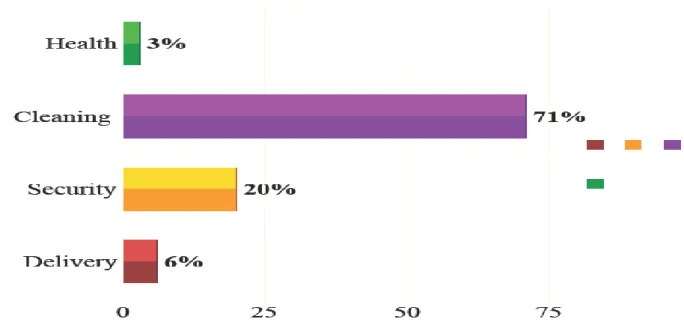
Figure 1.1 The Subcontractor Worker Rates in the Public Sector
Source: Datas retrieved from the internet site of the Ministry of Labour and Social Security (Çalışma ve Sosyal Güvenlik Bakanlığı) 57
In the public sector, the most of the subcontractor workers work in the cleaning sector and there are 417,442 workers in this sector. The security sector follows cleaning sector with 117,541 workers. 34,621 workers work in delivery sector and 16184 workers have employed in health sector.
The most common sectors that benefit from the subcontracting services are the municipalities with 36 percent and the state-owned enterprises (SOEs) with 14 percent.
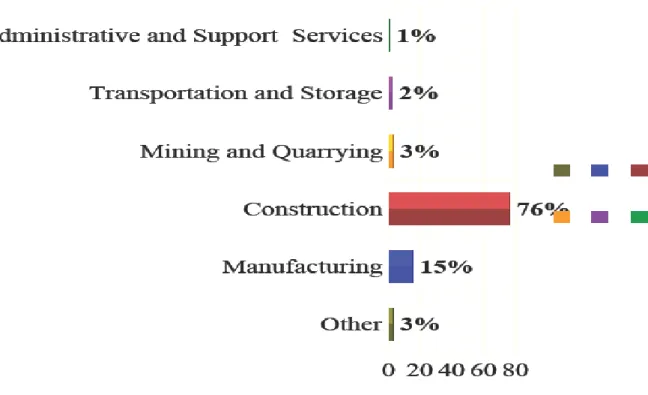
Figure 1.2 The Subcontractor Worker Rates in the Private Sector
Source: Datas retrieved from the internet site of the Ministry of Labour and Social Security 58 As to private sector, the construction sector is the densest sector having subcontractor workers with 318,087 workers. The second densest sector is manufacturing sector with 63,849 subcontractor workers.
As it is mentioned before, the increasing competition in business has led to the development of working systems on the basis of the efficiency especially since 1970s. The enterprises has began to downsize their businesses to reduce costs and to avoid assignments arising from the social security and tax legislation. The subcontracting has become very popular between this kind of enterprises.59
This new model of production has led to curtail the economic and social rights of the workers while downsizing the workplace. This new model also has caused the increase of the numbers of the workers in informal sector. As we see from the figure 2, the subcontracting is very common in construction sector and the workers are not generally hired continuously in this sector. Thus, the number of unregistered workers are comparatively higher in this sector.60 The informal employment occurs if the workers are never registered to the relevant
58
Ibid.
59
Oğuz Karadeniz, Kayıtdışı İstihdam, 2002, p.109.
60 Sema Betul Azaklı, Turkiye’de Kayıtdısı İstihdam ve Ekonomik Boyutu , Unpublished Master Thesis 2009,
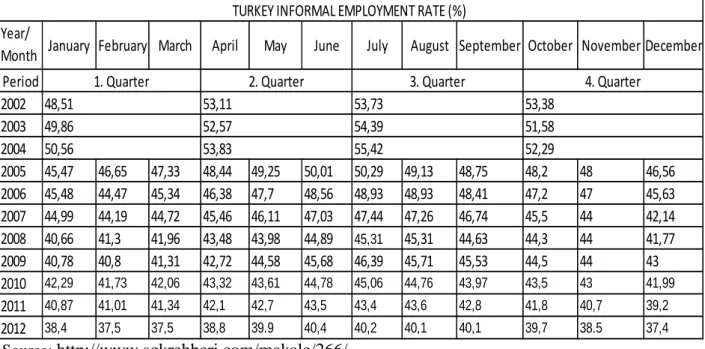
public institutions such as Social Security and tax authorities, etc. or, if their wages and workday information are given these institutions less than in reality.61 This definition shows us the problems of workers in subcontracting as it is endless. The informal employment rates has showed important developments in last decade. However, informal sector is still in frightening sizes. The table 1 proves and summarizes us the seriousness of the situation. Table 1.1 Turkey 2002-2012 Informal Employment Rate (%)
Year/
Month January February March April May June July August September October November December Period 2002 2003 2004 2005 45,47 46,65 47,33 48,44 49,25 50,01 50,29 49,13 48,75 48,2 48 46,56 2006 45,48 44,47 45,34 46,38 47,7 48,56 48,93 48,93 48,41 47,2 47 45,63 2007 44,99 44,19 44,72 45,46 46,11 47,03 47,44 47,26 46,74 45,5 44 42,14 2008 40,66 41,3 41,96 43,48 43,98 44,89 45,31 45,31 44,63 44,3 44 41,77 2009 40,78 40,8 41,31 42,72 44,58 45,68 46,39 45,71 45,53 44,5 44 43 2010 42,29 41,73 42,06 43,32 43,61 44,78 45,06 44,76 43,97 43,5 43 41,99 2011 40,87 41,01 41,34 42,1 42,7 43,5 43,4 43,6 42,8 41,8 40,7 39,2 2012 38,4 37,5 37,5 38,8 39.9 40,4 40,2 40,1 40,1 39,7 38.5 37,4 53,38 53,73 53,11 48,51
TURKEY INFORMAL EMPLOYMENT RATE (%)
1. Quarter 2. Quarter 3. Quarter 4. Quarter
52,29 51,58 50,56 49,86 55,42 54,39 53,83 52,57 Source: http://www.sgkrehberi.com/makale/266/
According to Turkstat(TUİK) figures, the numbers of the workers has been decreasing since 2002. According to datas of Turkstat, formal employment in 2012 came to 15 million 135 thousand and informal employment 9 million 686 thousand.62 It means, about 2 of every 5 workers are not registered. When the poor working conditions of the registered workers is considered, the situations of the workers in informal sector is quite alarming.
1.6 The Reasons Bringing Out the Subcontracting
The subcontracting entering into the production system with Industrial Revolution has developed rapidly in time. The rapid development of the subcontracting has played an influential role in the process of decreasing cost and increasing the quality and variety of the industrial production.63 So indeed, the developing economic and social conditions and technological changes have affected considerably the social life and working life. The
61Oğuz Karadeniz, T.C. Kalkınma Bakanlığı Onuncu Kalkınma Planı (2014-2018) Sosyal Güvenlik Sisteminin
Sürdürülebilirliği, Özel İhtisas Komisyonu 1. Taslak Rapor. ,2012, p.19.
62
Tepav, İstihdam İzleme Bülteni, No. 16, 2013, p. 14.
63 Nusret Ekin, Çağdaş Kobilere Dönüşen Alt İşverenlik, Tekstil İşveren Dergisi, No.278,(February), 2003,
increasing international competition, dizzying advances in communication and globalization processes have accelerated these changes.
The changes in new technologies have caused to the structural transformations in enterprises, reformed to the structures of the production and employment and speeded up to the subcontracting applications. The sector that the subcontracting is seen most commonly is construction industry. But, especially in these days, the subcontracting applications are seen so often in all sectors. The subcontracting applications function as a part of the flexible manufacturing models. Flexible manufacturing technologies which is one of the main features of the flexible manufacturing provides the possibility of externalization, in other words, to make the works to the subcontractors by separating the production process to small parts. It can be said that the subcontracting becomes widespread with the spread of the various flexible manufacturing approaches by making use of the opportunities of developing technologies.64
The employers who need technical expertise in production processes generally assign these tasks to the subcontractors. Through these kinds of working types, the principal employers get the opportunity to use technologies that they need without investing a new capital. In addition, the subcontracting provides the functional flexibility to the employers, which is very important for enterprises in this competitive environment. The flexible manufacturing technologies have provided a suitable environment to the spread of small and medium-sized enterprises (SMEs) and it has become another reason of the increase in the subcontracting relationships between the large enterprises and SMEs.65 In other words, the promoting of the SMEs with the purpose of accelerating the economic growth and reducing unemployment led to the proliferation of SMEs and the expansion of their subcontracting relationships with large enterprises.
In general, the enterprises compare the cost differences between when they complete the work themselves and when they assign a part of the work to a subcontractor. If the cost is lower than when they assign a part of the work to subcontractor, they prefer to leave this part of the work to a subcontractor.66 In short, it can be said that the subcontracting is one of the most important methods used by the employers to benefit from the cheap and non-union work force against the pressure coming from the international completion created by globalization in the world and Turkey.
64
Sönmez, Asıl İşveren – Alt İşveren İlişkisinde Muvazaa, pp. 23-24.
65 Ekin, Çağdaş Kobilere Dönüşen Alt İşverenlik, p. 72.
1.7 The Collusion in the Subcontractor-Principal Employer Relationship
The collusion can be defined as a contract which is regulated to deceive third parties. The real purpose of the contract is disguised from third parties.67 The subcontracting practices have begun to be seen so often especially after 1980s in Turkey and it has extended to all sectors in a short period. This increasing subcontracting relationship has caused some problems such as limiting the worker’s rights arising from the individual and collective Labour Act.68
The primary purpose in subcontracting practices is to provide more economical workforce in terms of the employers. The subcontractors have discovered the fraudulent aspects of the subcontracting practices while trying to achieve this aim. The practices which are against the workers are ignored by the workers who are in a vulnerable situation because of the limited employment opportunities and prevalence of the subcontracting practices in sector. These collusive practices have caused to the unfair competition and so the victimization of the employers who conform to the rules in the same sector.69 Therefore, the legislators need to make regulations on the issue and has tried to bring some measures to prevent the victimization of workers and conscientious employers. It is assumed that the collusion has four elements in doctrine and practice. These are the apparent transaction, collusion agreement, hidden transaction and purpose of deceiving third parties. The processes which are made by the parties to deceive third parties are called as apparent transaction. The parties make the legal process here just seemingly to be not effected from legal procedures.70
To mention the existence of the collusion, the parties need to make the apparent transaction in order to deceive third parties and they need to make an agreement to not be effected from this transaction. The collusion agreement is one of the founding contents of the collusion and it is a necessary condition for existing of collusion. The parties of the collusion are the parties of the apparent agreement, as well.71 The parties can make these processes themselves but they can do it also through their representatives. The hidden transaction is possible only in the relative collusion which will be explained later in the topic. The parties
67
Çankaya and Çil, 4857 Sayılı İş Kanunu’na Göre, p.60.
68 Sarper, İş Hukuku, p.139.
69 Sebahat Gençtarih, Asıl işveren - alt işveren ilişkisi ve alt işverenlik yönetmeliği ışığında uygulamadaki
sorunlar, Unpublished Master Thesis, 2010, p. 64.
70
Fikret Eren, “Borçlar Hukuku / Genel Hükümler“, Beta Publishing, İstanbul,2002, p. 325.
71 Turgut Uygur, Açıklamalı ve İçtihatlı Borçlar Kanunu / Sorumluluk ve Tazminat Hukuku, Vol.1, Seçkin
sometimes may do a transaction in accordance with their will and they truly desire under the apparent collusive transaction. This transaction is called as hidden transaction.72
The purpose of the deception is another integral part of the collusion. The aim of the willful discrepancy between the will and declaration is to deceive third parties by creating a different appearance. There cannot be collusion without this purpose.73
There are two types of the collusion. One of them is absolute collusion and the other one is relative collusion. If the parties, which make an apparent legal transaction to deceive third parties, do not arrange a hidden transaction that fitting their actual will, the ‘absolute collusion’ is in question here. But, if the parties, which make an apparent collusive transaction to deceive third parties, want to hide a transaction behind this collusive transaction fitting their actual will, the ‘relative collusion’ is in question here. In other words, there is a distinct legal action matching to the actual wills of the parties in relative collusion. The provision in Article 18 of the Turkish Code of Obligations has regulated to the relative collusion. According to this provision, the actual and joint purposes of the parties must be examined instead of considering the transactions made by the parties mistakenly or to hide their actual purposes.74
The collusion is seen especially when the subcontractor workers are chosen and dismissed by the decisions of the principal employer and when the workers completely work under the orders and instructions of the principal workers. Besides, if the workers work at the tasks which are not stated in the contracts, the collusion is in question here, as well.75
1.8 The Liability in the Subcontracting
The liability of the principal workers in subcontracting relationships was enacted with Turkish Labour Act No. 3008 in 1936.76 According to the Article 1 of the Labour Act No. 3008, even if the workers are employed directly by the third parties (subcontractor) and make a contract with third parties instead of the employers or its representatives, the principal employers are liable for the conditions of the contracts.77
72
Eraslan Özkaya, İnançlı İşlem ve Muvazaa Davalar, Seçkin Publishing, Ankara, 2004, p.172.
73 Ibid., p.103.
74 Safa Reisoğlu, Borçlar Hukuku – Genel Hükümler, Beta Publishing, İstanbul, 2000, pp.78-79. 75 http://www.csgb.gov.tr/csgbPortal/csgb.portal?page=haber&id=basin491 , (last accessed: 14/01/2013). 76
Sönmez, Asıl İşveren – Alt İşveren İlişkisinde Muvazaa, p. 21.
77 Article 1 of 3008 Sayılı İş Kanunu (15.06.1936), http://www.resmigazete.gov.tr/default.aspx, (last accessed:
The liability of the principal employer was emphasized here but the legal qualification of this liability was discussed for many years because the relationship between the principal employer and subcontractor was not mentioned in this law.78 But, the same article was changed in 1950. According to this renewed article, even if the workers are employed directly by the third parties (subcontractor) and make a contract with third parties instead of the employers or its representatives, these third parties are jointly and severally liable with the principal employers from the contracts.79 The Labour Act No. 931 which was enacted in 1967 was including some provisions on subcontracting and ‘several liability’ but the act was not long-lived and cancelled by the decision of the Constitutional Court in 1970 and the Labour Act No. 1475 was enacted.80
However, the Labour Act No. 1475 did not have very different provisions from the former Labour Act.81 This new law’s provisions on the subcontracting were more limited and unsubtle than the provisions of the current Labour Act. For example, taking a part of a certain work or its add-ons was sufficient to establish a subcontracting relationship according to Article 1 of the Labour Act No. 1475. This provision of the Labour Act caused many abuses in 1980s. Therefore, the subcontracting practices increased so fast in the period of this law in both the private and public sector and the subcontractor workers were more than principal employer workers in some companies and organizations. It can be said that the Labour Act No. 1475 tried to solve the problems by activating the several liability concept as it was at the last two Labour Acts instead of regulating the subcontracting and its elements.82
After this Labour Act, the Labour Act No. 4857 has been enacted on 10.06.2003 and it is still in force. This current Labour Act has been prepared by considering the problems experienced in the past and Supreme Court decisions and this law has made important changes on subcontracting.83
The subcontractors have had generally small capital and most of them have been generally weak in terms of their financial situation. Thus, the legislations have wanted to
78 Ayhan Keloğlu, TÜHİS İş Hukuku ve İktisat Dergisi, Vol. 23, No. 5-6, “Elektrik Dağıtım Sektöründe Alt
İşveren (Taşeron) Sorunu“, 2011, p. 23.
79
Article 1 of 3008 Sayılı İş Kanunu (31.01.1950) , http://www.resmigazete.gov.tr/default.aspx, (last accessed: 17/01/2013).
80 Tozlu and Eraslan, “Türkiye’de Alt İşverenlik Uygulaması“, p. 51.
81 Berna Gökçen Ayan, “Dış Kaynaklardan Yararlanma Yaklaşımı Olarak Türkiye’deki Kamu Kurumlarında
Alt İşverenlik Uygulamaları“, Unpublished Master Thesis, Adnan Menderes University, 2010, p. 38.
82
Güven Çankaya and Şahin Çil, “4857 Sayılı İş Kanunu’na Göre Asıl İşveren-Alt İşveren İlişkisi”,Sicil İş Hukuku Dergisi, Vol 3, 2006, p. 54.