FACTORS AFFECTING UNDERSTANDING AND APPLICATIONS
OF BRANDED HOUSING PROJECT MARKETING AROUND THE
ISTANBUL METROPOLITAN AREA
SELÇUK POLAT
IŞIK UNIVERSITY 2015
FACTORS AFFECTING UNDERSTANDING AND APPLICATIONS
OF BRANDED HOUSING PROJECT MARKETING AROUND THE
ISTANBUL METROPOLITAN AREA
SELÇUK POLAT
B.E., in Mining Faculty Istanbul Technical University,1994.
M.A., Master of Business Administration , New York Institute of Technology, 1998.
Submitted to the Graduate School of Social Sciences in partial fulfillment of the requirements for the degree of
Doctor of Philosophy
in Contemporary Business Management
IŞIK UNIVERSITY 2015
IŞIK ÜNİVERSİTESİ SOSYAL BİLİMLER ENSTİTÜSÜ
F ACTORS AFECTING UNDERSTANDING AND APPLICATIONS OF BRANDED HOUSING PROJECT MARKETING AROUND THE ISTANBUL
METROPOLITAN AREA
Ph.Dh. Thesis by SELÇUK POLAT
ONAYLAYANLAR:
Prof. Murat FERMAN (Thesis Supervisor)
Prof. Toker DERELİ
Prof. S. Saygın EYÜPGİLLER Prof. Esra Nemli ÇALıŞKAN Asst. Prof. Mısra Çağla GÜL
Onay Tarihi: 28/01/2015 Işık University Işık University Işık University İstanbul University Işık University
i
FACTORS AFFECTING UNDERSTANDING AND APPLICATIONS OF BRANDED HOUSING PROJECT MARKETING AROUND THE ISTANBUL
METROPOLITAN AREA
Abstract
Marketing is a very important issue to corporate success in today’s competitive business environment. Company’s growth and success can be strongly influenced by marketing practices. Developing marketing strategies can provide significant advantages for companies over their competitors. The aim of this study is to investigate the critical factors affecting understanding and applications of ‘branded housing project marketing’ around the Istanbul metropolitan area.
Branding and market positioning depend on fulfillment of certain conditions and key criterion.It is known that the following criterion- structure of companies, quality of the product, professional services, marketing and communications perspectives- both constitute important process and leverage to increase the perceived value of a product or a company in the market. It is crucial for companies to build a solid brand in today's highly-competitive markets to benefit from the brand-related advantages such as, creating overall differentiation providing costumer encouragement and maintaining overall image of high quality.
Nowadays, construction companies which build branded housing projects have already established themselves as prime actors of one of the leading and most dynamic sectors of the Turkish economy.It is an observed fact that the brand- related activities are becoming of a more strategic parameter in construction industry. In relation to this fact, each and every housing project aim to be related with a unique identity and brand image. Especially in residential real estate sector, due to the high economic values involved, marketing and sales activities are classified as crucial elements of corporate conduct.
ii
İSTANBUL VE ÇEVRESİNDE MARKALI KONUT PROJESİ ÜRETEN İNŞAAT FİRMALARININ PAZARLAMA ANLAYIŞ VE UYGULAMALARINI
ETKİLEYEN FAKTÖRLER
Özet
Pazarlama günümüzün rekabetçi ortamında başarı için çok önemli bir konudur. Güçlü bir pazarlama uygulamasının şirketin büyümesinde ve başarısında etkisi oldukça büyüktür. Pazarlama stratejileri geliştirilmesi rakipler karşısında şirketler için önemli avantajlar sağlıyabilir.Bu çalışmanın amacı İstanbul ve çevresinde faaliyet gösteren markalı konut projesi yapan inşaat firmaların pazarlama anlayış ve uygulamalarını etkileyen faktörleri araştırmaktır.
Markalaşma ve pazar konumlandırma belirli koşul ve kriterlerin yerine getirilmesine bağlıdır.Şirketlerin yapısı, ürün kalitesi, profesyonel hizmetler, pazarlama ve iletişim perspektifleri pazarda bir ürün veya şirketin algılanan değerini arttırmak için önemli bir süreç teşkil etmektedirler. Farkındalık yaratmak , pozitif kaliteli görüntü, müşteri sadakati ve cesareti yaratmak gibi marka ile ilgili avantajlardan yararlanmak için bugünün ekonomisinde bir marka oluşturmak çok önemlidir.
Günümüzde markalı konut proje yapan inşaat firmaları büyük bir sektör oluşturmaktadır. Marka ile ilgili faaliyetler inşaat sektöründe yoğun bir biçimde gözlenmektedir. Buna bağlı olarak, her konut projesinin kendi kimliği ve marka imajı olmalıdır.Özellikle konut sektörü gibi yüksek ekonomik değere sahip iş alanlarında, pazarlama ve satış faaliyetleri kendine has özellikler göstermektedir.
iii
Acknowledgements
There are many people who helped to make my years at the graduate school most valuable. First, I thank Prof. Murat Ferman, my major professor and dissertation supervisor. Having the opportunity to work with him over the years was intellectually rewarding and fulfilling. He has provided me with many helpful suggestions, important advice and constant encouragement. I also thank Prof. Saygın Eyüpgiller, Prof. Toker Dereli and Yrd.Doç.Dr. Mısra Çağla Gül who have contributed much to the development of this research starting from the early stages of my dissertation work. The last words of thanks go to my family. I thank my parents and thank my wife, for her endless support, patience, and encouragement through this long journey.
iv
v
Table of Contents
Abstract ………..…...i Özet………....ii Acknowledgements……….….iii Table of Contents………..…vList of Tables ………...………....ix
List of Figures ………...……...…xii
1.Introduction ……….….1
1.1 Review of Literature……….3
2.Branding……….7
2.1 Strategic Brand Management……….………..…9
2.2 Corporate Brand Management………...………12
2.3 Branding in Housing Sector ………..15
2.4 Dynamics of Corporate Branding in Housing Sector …..……...……...…...……….16
3. Housing Sector in Istanbul and Turkey………..…….18
3.1 Historical Development of the Turkish Housing Market………..….……...…...19
3.2 Importance of Housing………...……….……….….22
3.3 Housing Sales&Marketing ………...…………...……….23
vi
3.5 Residential Market in Istanbul……….……...………....…..36
4. Marketing in the Construction Industry………....…..40
4.1Factors Affecting Marketing Success for Construction Companies in the Housing Sector……….……….46
4.2 Critical Factors to Company Success for Construction Companies in the Housing Sector………...…….….50
4.3 Factors Having Impact on Marketing and Improvement Measures in the Real Estate Sector of Turkey ...……….………...……….53
5. Research Design and Methodology………..….56
5.1 Research Model………...…57
5.2 Research Method………...….59
5.3 Headlines of Survey Questions………...………...…59
5.4 Research Questions and Hypotheses………..…60
5.5 Research Population……….…..…71
5.6 Sampling Concept and Types……… …..…………..…..….71
5.7 Data Collection Methods………...……….…..…..71
5.8 Data Analysis Methods………...72
6. Analysis and Discussion of Emprical Results………….………...…..75
6.1 Findings on the Number of Employees and Quality Certificate…….……….75
6.2 Findings Regarding Use of the Advertising Tools ………77
6.3 Findings Regarding the Project Elements Emphasize on Customer Satisfaction ….79 6.4 Finding Regarding the Major Reasons of Customer Choice………...……...…..….81
6.5 Findings Regarding the Factors Affecting Marketing Concept&Implementation….83 6.5.1.Factors of Marketing, Sales and Promotion Activities...…..……….83
vii
6.5.2 Factors of Competitive Structure and Market Conditions...98
6.5.3 Factors of Corporate Structure...100
6.5.4 Factors of Advertising Activities...103
6.5.5 Factors of Corporate Brand Value...105
6.5.6 Factors of Customer Satisfaction...108
6.6 Factors Affecting Understanding and Applications of Branded Housing Project Marketing………..…………..111
6.7 Factors Affecting Marketing Concept and Application of Technical and Administrative Staff Averages by Number of Employees in the Company……....112
6.8 Branded Residential Project Marketing Concept and Applications Factors Affecting the Quality Certificate of the Company by Average………...…..………….114
6.9 Correlation Analysis of Marketing Concept and Application………….…………116
6.10 Statistical Relationship between Marketing Concept & Applications and Marketing, Sales &Promotion Activities in "Branded Residential Project" Applications and Marketing, Sales & Promotion Activities………..……119
6.11 Stepwise Regression Analysis of the "Branded Residential Project" Marketing Concept & Applications Factors Affecting the Marketing,Sales & Promotions Activities………...120
7. Conclusion and Implications for Further Research………..122
References……….125
Internet References………..137
Appendix A Questionnaires Used in Data Collection Process……….140
viii
Appendix C Istanbul Housing Project Map………...…....152
Appendix D Istanbul Housing Project Index………...154
Appendix E İNDER Members ………...….160
ix
List of Tables
Table 2.1 The Functions of the Brand for the Consumer
Table 2.2 Summary of Brand Definitions and Descriptions
Table 3.1 House Owning Ratio
Table 3.2 Urban Population and Occupation Expectancies (000)
Table 3.3 Residency Requirement Expectation in Turkey 2015 (000)
Table 3.4 Construction Permits for Buildings in the total of January-March 2014
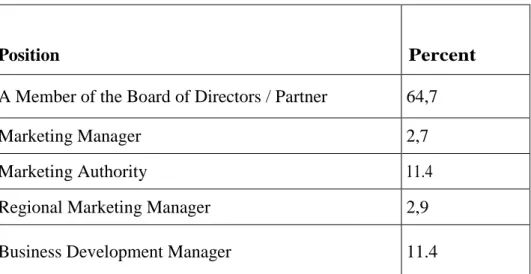
Table 4.1 People Who are Responsible for Marketing Planning in the Construction Industry
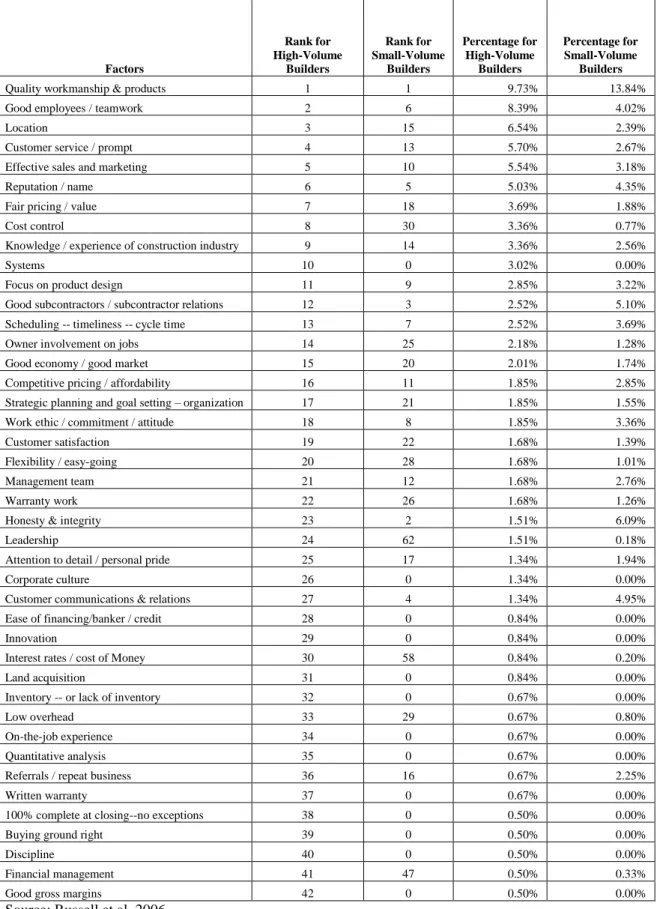
Table 4.2 Factors Leading to Construction Company Success: Comparisons of the
Perceptions of High-Volume and Small-Volume Home Builders
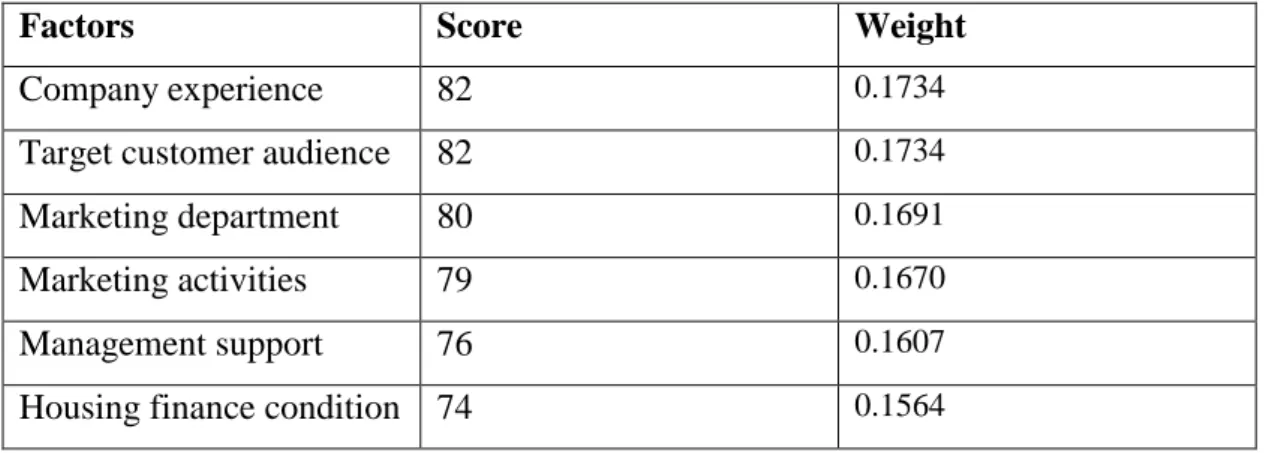
Table 4.3 Main Factors Affecting Marketing Success for Construction Companies
in the Housing Sector
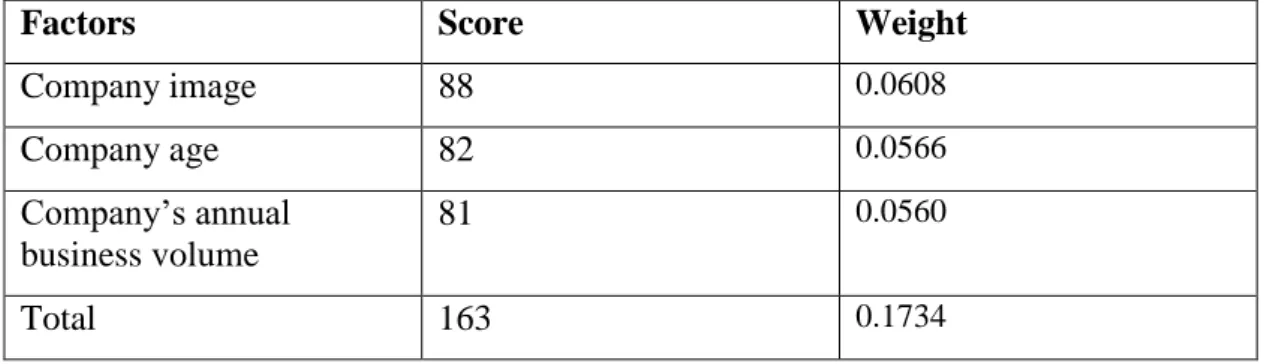
Table 4.4 Factors of Company Experience for Construction Companies in the Housing Sector
Table 4.5 Factors of Management Support for Construction Companies in the Housing Sector
Table 4.6 Factors of Housing Finance Condition for Construction Companies in the
Housing Sector
Table 4.7 Analysis of Main Factors for Construction Companies Success in the
Housing Sector
Table 4.8 Analysis of Sub Factors of Business Management for Construction Companies Success in the Housing Sector
x
Table 4.9 The Most Significant Sub-Factors Having Impact On Real Estate Marketing
Table 4.10 Ranking Constraints Under Marketing for Construction Companies in the
Housing Sector
Table 5.1 Main Factors of Market Selection in the Construction Industry
Table 5.2 Factors of Housing Finance Condition for Construction Companies in the
Housing Sector
Table 5.3 Factors of Sales and Marketing
Table 5.4 Organization and Management Style of Marketing Function
Table 5.5 Factors of Marketing Department for Construction Companies in the
Housing Sector
Table 5.6 Factors of Marketing Activities
Table 5.7 Advertising Channels Used by the Respondent Companies Advertising Channels
Table 5.8 Methodology Overview
Table 6.1 Findings Regarding the Various Number of Technical and Administrative
Employees and Whether There is a Quality Certificate or Not
Table 6.2 Utilization of Advertising Tools
Table 6.3 Project Elements with an Emphasize on Customer Satisfaction
Table 6.4 Reasons for Customer Choice Branded Residential Projects
Table 6.5 Distribution the Factors of “Marketing, Sales and Promotion Activities” Table 6.6 Distribution the Factors of Competitive Structure and Market Conditions
Table 6.7 Distributions the Factors of Corporate Structure
Table 6.8 Distributions the Factors of Advertising Activities
Table 6.9 Distribution the Factors of ‘Corporate Brand Value’distribution
xi
Table 6.11 ‘Branded Residential Project’ Marketing Factors Affecting the Average Table 6.12 Factors Affecting Marketing Concept and Application of Technical
and Administrative Staff Averages by Number of Employees in the Company
Table 6.13 Branded Residential Project" Marketing Concept and Applications Factors
Affecting the Quality Certificate of the Company by Average
Table 6.14 Correlation Analysis of Marketing Concept and Application
Table 6.15 Statistical Relationship between "Branded Residential Project" Marketing
Concept & Applications and Marketing, Sales & Promotion Activities
Table 6.16 Stepwise Regression Analysis of the "Branded Residential Project"
Marketing Concept & Applications Factors Affecting the Marketing, Sales & Promotion Activities
xii
List of Figures
Figure 2.1 The Cycle of Brand Management
Figure 2.2 Hatch and Schultz Corporate Brand Management Model
Figure 3.1 Cities in Turkey With More Than one Million of Population
Figure 3.2 Maslow Hierarchy of Needs Model
Figure 3.3 Digital Instruments to Reach Consumers
Figure 3.4 Model of Marketing Communication Management System for Real Estate Enterprises
Figure 3.5 Housing Price Increases in Turkey
Figure 3.6 Number of House Sales 2013-2014 in Turkey
Figure 3.7 New Investment Regions in Istanbul
Figure 3.8 Istanbul Residential Projects Zones
Figure 5. 1 Research Model; Factors Affect the Understanding and Applications of " Branded Residential Project "Marketing
Figure 5.2 Research Steps
Figure 5.3 Sub-factors of Competitive structure&Market Condition
Figure 5.4 Sub-factors of Corporate Structure
Figure 5.5 Sub-factors of Advertising Activities
Figure 5.6 Sub-factors of Corporate Brand Value
Figure 5.7 Sub-factors of Customer Satisfaction
Figure 6.1 Number of Technical and Administrative Person Working in Firm
Figure 6.2 Percentage of Quality Certificate
xiii
Figure 6.4 Factors Affecting the" Branded Residential Project" Marketing Concept and Application Average
Figure 6.5 Factors Affecting Marketing Concept and Application of Correlation Analysis
Figure 6.6 Results Model of "Branded Residential Project" Marketing Concept and
Applications Factors Affect on Marketing, Sales& Promotion Activities
Figure 6.7 Stepwise Regression Analysis of the " Branded Residential Project " Marketing Concept & Applications Factors Affecting the Marketing, Sales & Promotions Activities
xiv
List of Abbreviations and Terms
GYODER-Association of Real Estate Investment Trusts TOKİ-Mass Housing Administration
TUIK-Turkish Statistical Institute
KONUTDER-Residential Developers and Investors Association İNDER- İstanbul Residential Construction Companies Association
CRM-Customer Relationship Management CPI-Consumer Price Index
ITO-Istanbul Chamber of Commerce
TurkStat-Turkish Statistical Institute
TCMB-Türkiye Cumhuriyeti Merkez Bankası CBD-Central Business District
FDI-Foreign Direct Investment GDP-Gross Domestic Product
1
Chapter 1
Introduction
This study presents a survey over the construction companies operating in the housing sector which have branded residential housing projects in Istanbul metropolitan area. The critical factors leading to marketing success for construction companies are investigated through interviews with the owners and/or top-level managers.
The technological advances in recent years have led to the changes, not only in customer demand, but also for the consequent costs of market leadership, differentiation and focus. This trend emphasizes importance of the institutionalization of branding and marketing. (Kotler, 2003)
Rapid increase in population, relatively better economic conditions and availability of employment and resources have caused migration from rural areas to the biggest and the most industrialized cities of Turkey, such as Istanbul, Ankara and Izmir, since 1950’s. Particularly in Istanbul, the volume of construction and housing prices have been significantly higher than other cities in Turkey. Population increase, continued migration from rural to urban areas, renewal of existing housing are the main factors that affect increasing housing demand in Turkey. (Tuncel, 2011)
On the other hand, income level has been a significant factor affecting the demand, in recent years. Investing in real estate is considered as a highly-popular investment instrument by Turkish people, since Turkey has a rather shallow stock exchange market and there seems to be a limited number of lucrative investment instruments as a whole. Consequently, return on investment on real estate has been relatively higher and satisfactory particularly in periods of rapid economic development. (www.tuik.com.tr)
There is a significant number of real estate consultancy and investment companies in Turkey, providing the sector their world-class expertise. Real estate consultants provide property-related services in residential, retail, office, logistics, as well as,
2
hospitality industries. Their services include, but are not limited to, investment advice, asset resolutions, land advice, valuation and feasibility studies, project management and concept development, strategic advice and market assessment/ forecasts. (www.invest.gov.tr)
According to regulations in Turkey, construction permit is the license allowing and authorizing a new construction work-project as a legal status. However, the significant amount of “illegal” construction lacking legal permission should be taken as a signal for urgent need of a possible revision and/or policy changes in the area. Unfortunately, nearly all of those illegal houses are of low- quality and their future presence is highly questionable and even subject to termination due to their illegal status.
Clearly, these houses are vulnerable to many different legal, economic and social risks and threats. It has been observed that the Governments did not hesitate to demolish these slum houses in recent years, under the context of re-structuring the metropolitan area programmes. As a result of these policies, an on-going growth can be expected in the construction of higher quality, mostly branded residential structures which may as well contribute to an overall increase in housing prices. (www.toki.gov.tr)
By planning and crafting the branding processes in a systematic fashion, construction companies can distinguish themselves in industry, gain confidence, as well as, preference of consumers by creating a high brand value image and perception. (Yüksel, 2003)
Considering the fact that the constant activities in the re-structuring of construction sector and innovations will continue in such an accelerated fashion, the overall importance of branding in construction sector will also increase.(Kotler&Armstrong, 2005)
Since the construction sector occupies an important place in the economy of the country, it assumes a significant role in development of both employment and production dynamics. Major elements of civilized life such as houses, roads, dams, airports, factories and hospitals are all built as a result of construction activities. Considering contribution of other sectors by providing inputs and continuing their
3
operations in connection with developments in this sector, it is seen that the share of construction sector in the Gross National Product is no less than thirty percent. (Makinde, 2006)
In Turkey, competitive environment in the construction industry is getting tense, due to increasing complexity of projects in direct proportion to technological advancements. This phenomenon introduces new challenges in solving problems during the stages of preliminary design, tendering and construction and after- construction services and support. When those challenges are handled in an efficient way, it is possible to contribute to stable and sustainable growth, decreasing of regional developmental differences, improvement of physical structure, and development of human resources, strengthening social networks, in a direct and indirect fashion. (Göncü, 2004)
As it is for all other countries of world, construction industry is considered as the locomotive sector and the major engine for providing efficiency and stability of country-wide development and strategicaly positioning in Turkey.
1.1 Review of Literature
It has been argued that some of the most influential factors contributing to the on-going success of a construction firm are present management systems, procedures and practices.(Adrian, 1976; Lussier, 1995; Strischek, 1998) In fact, business failures, including those of home building companies, typically seem to be characterized by a lack of management skill and experience. (Flahvin, 1985; Gaskill & Van Auken, et al, 1993)
A thorough review of the literature has revealed only one significant study addressing management’s perception of factors leading to the success of construction companies. In that research, the authors selected a random sample of more than 1,100 small-volume home builders and asked each one to list, in priority order, the top five things that contributed most to the success of their companies. (Hutchings&Christofferson, 2000)
4
In other studies, using non-financial predictors for success, the analysis of the data indicated that careful planning and the use of professional advisors were two factors directly linked to successful businesses. (Gaskill & Van Auken, et al, 1993; Lussier, 1995)
In some other studies, marketing is found to be a critical issue to success in today’s increasingly competitive business environment. (Arslan, Kıvrak, et.al., 2009)
A company’s growth and success can be strongly influenced by marketing practices. The aim of this study is to investigate the critical factors affecting marketing success of construction companies in the housing sector of Turkey. Within this context, a survey is carried out among forty Turkish local construction companies that are active in the housing sector. During this survey, top-level managers and/or owners of the companies are interviewed. The majority of the interviewees are happening to be the owners of these companies. In the data collection phase, a questionnaire was administered during face-to-face interviews. (Arslan, Kıvrak, et.al., 2009)
Six possible factors that stand to have an effect on successful marketing for construction companies in Turkey have emerged. Finally, the ranking of the critical factors have been determined by using the Simple Multi Attribute Rating Technique (SMART). Based on the results, company image and customer satisfaction are determined as the most highly vital factors for successful marketing in construction business.
Other factors perceived to be important in construction companies include implementation of accounting systems and regular review of financial statements (Adrian, 1976; Gerstel, 1991; Schleifer, 1990), change order procedures (Adrian, 1976; Gerstel, 1991; Strischek, 1998), the creation of quality performance standards for subcontractors (Gill, 1968; Shinn, 1995), estimating and scheduling procedures (Shinn, 1995; Strischek, 1998), implementation of strict purchase order systems (Gill, 1968; Shinn, 1995), control of job-site safety (Gordon, 1997), ongoing training and education (Bednarz, 1997), and the use of checklists for quality control. (Gerstel, 1991)
5
There are many studies on the concept of marketing in the construction industry. Morgan (1990) investigated marketing of consulting engineering services and discovered that very few firms had their own marketing departments.
Yisa et al. (1996) proposed a framework for improving the effectiveness of the marketing function within the construction companies. They concluded that a practical approach for formulating, implementing and evaluating corporate marketing programs can be represented by that framework.
Dikmen et al. (2005) examined the perception of and attitude of Turkish contractors towards marketing. They found that marketing capability was not seen as a strategic success factor by the majority of the contractors.
Jaafar et al. (2008) also studied the marketing practices of engineering consulting firms in Malaysia. Their analysis showed that many civil and structural consultancy firms had neither marketing departments, nor employees specifically responsible for marketing.
Arslan et al. (2009) investigated the critical factors affecting marketing success of construction companies in the housing sector of Turkey. The authors identified company image and customer satisfaction as vital factors for successful marketing in construction business.
Polat and Dönmez (2010) examined the marketing management functions of Turkish construction companies and revealed that Turkish contractors made use of marketing management functions, only to some extent.
Çako and Çınar (2012) have established that corporate branding is as important for companies in the construction industry as with all other companies in different venues. Corporate culture of construction companies, characteristics of products or services, required quality standards, out-sourced professional services, keeping-up with technology and research are found to be important elements increasing an institution’s brand value.
Ene (1995) and Adegbile (2008) have both assessed marketing practices among Nigerian construction firms and concluded that there was little or no use of marketing in the Nigerian construction industry. They, therefore, suggested the need for increased awareness on the importance of marketing as a tool to withstand the
6
stiff competition in the Nigerian construction business environment. Although considerable research exists, few have dealt with strategies utilized by Nigerian construction professionals in marketing their services.
Strategic management practices in the construction industry have been investigated by a number of researchers to this date, among those; Chinowsky and Byrd (2001); Price and Newson (2003); Naaranoja et al. (2007) are to be mentioned. The need for presence of strategic perspective has also been stressed by some country-specific studies, such as that for the U.K. construction industry - Lansley (1987); Yisa and Edwards (2002); Price et al. (2003) - and that for the Turkish construction industry- Oz (2001); Dikmen and Birgönül (2003)-to name a few.
Among U.K.-based studies, Lansley (1987) specifically referred to significance of corporate-level strategies while, Yisa and Edwards (2002) pointed to critical role of business consultancy domain. On the other hand, Price et al. (2003) examined how strategic management practices have changed within the construction industry however, shying away from revealing the state-of-the-art in a detailed manner. Regarding above-mentioned Turkey-specific studies; Oz (2001) investigated the international competitiveness of Turkish construction companies using Porter’s diamond framework, but did not include any strategic evaluation for the domestic market.
7
Chapter 2
Branding
Today, every organization wants to create, develop and maintain a strong brand portfolio. Beyond the producers and distributors of fast-moving consumer goods, whose brands are competing head- to -head, branding has become a strategic issue in all sectors: high tech, low tech, commodities, utilities, components, services, business-to-business, pharmaceutical laboratories, non-governmental organizations and non-profit organizations all see a use for branding. (Kapferer, 2008)
The American Marketing Association (1960) proposed the following company-oriented definition of brand as: A name, term, sign, symbol, or design, or a combination of them, intended to identify the goods or services of one seller or group of sellers and to differentiate them from those of competitors. This definition has been criticized for being too product-oriented, with emphasis on visual features as differentiating mechanisms. (Arnold, 1992; Crainer, 1995) Despite these criticisms, the definition has endured to contemporary literature, albeit in modified form.
Many other brand definitions and descriptions focus on the methods used to achieve differentiation and/or emphasize the benefits the consumer derives from purchasing brands. These include definitions and descriptions that emphasize brands as an image in the consumers’ minds (Boulding, 1956; Martineau, 1959, Keller, 1993), brand personality (Alt and Griggs, 1988; Goodyear, 1993; Aaker, 1996), brands as value systems (Sheth et al., 1991), and brands as added value. (Levitt, 1962, de Chernatony and McDonald, 1992; Murphy, 1992; Wolfe, 1993; Doyle, 1994) Brown (1992) takes a broad approach to these concepts in defining a brand as nothing more or less than the sum of all the mental connections people have around it. (Wood, 2010)
The eight functions of a brand are presented in Table 2.1. The first two are mechanical and concern the essence of the brand; that is, to function as a recognized symbol in order to facilitate choice and to gain time. The following three functions
8
reduce the perceived risk. The last three have a more pleasurable side to them. Ethics show that buyers are expecting, more and more, responsible behavior from their brands. (Kapferer, 2008)
Table 2.1The Functions of the Brand for the Consumer
Function Customer Benefit
Identification Practicality Guarantee Optimization Badge Continuity Hedonistic Ethical
To be clearly seen, to quickly identify the sought-after products, to structure the shelf perception.
To allow savings of time and energy through identical repurchasing and loyalty.
To be sure of finding the same quality no matter where or when you buy the product or service.
To be sure of buying the best product in its category, the best performer for a particular purpose.
To have confirmation of your self-image or the image that you present to others. Satisfaction created by a relationship of familiarity and intimacy with the brand that you have been consuming for years. Enchantment linked to the attractiveness of the brand, to its logo, to its communication and its experiential rewards.
Satisfaction linked to the responsible behavior of the brand in its relationship with society (ecology, employment, citizenship, advertising which doesn’t shock).
Source: Kapferer, J. N. (2008)
Branding means much more than just giving a brand name and signaling to the outside world that such a product or service has been stamped with the mark and imprint of an organization. It requires a corporate long-term involvement, a high level of resources and skills to become the referent. ( Kapferer, 2012)
9
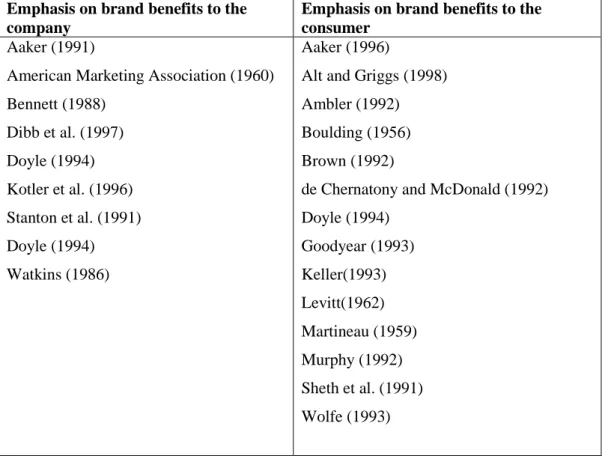
A common feature of the definitions summarized in Table 2.2 is that they either address the role of brands for the seller, or they focus on the role of brands for the consumer. (Wood, 2000)
Table 2.2 Summary of Brand Definitions and Descriptions
Emphasis on brand benefits to the company
Emphasis on brand benefits to the consumer
Aaker (1991) American Marketing Association (1960) Bennett (1988) Dibb et al. (1997) Doyle (1994) Kotler et al. (1996) Stanton et al. (1991) Doyle (1994) Watkins (1986) Aaker (1996)
Alt and Griggs (1998) Ambler (1992) Boulding (1956) Brown (1992)
de Chernatony and McDonald (1992) Doyle (1994) Goodyear (1993) Keller(1993) Levitt(1962) Martineau (1959) Murphy (1992) Sheth et al. (1991) Wolfe (1993)
Source: Wood, L. (2000) Brands and brand equity: Definition and Management
None of the authors in Table 2.2 explicitly addresses in their definitions how brands benefit both the buyer and seller, though some (e.g. Doyle, 1994) discuss or describe both buyer and seller benefits. (Wood, 2000)
2.1 Strategic Brand Management
The Turkish real estate sector is going through major changes that affect the demand and supply structure of the sector. Thus, in such periods of change, be it a ‘property boom’ or, on the other extreme, an economic crisis, project development and management process becomes an even more important topic of interest (Wernecke, Rottke, and Holzmann 2004), as the real estate market becomes more competitive, with the customers becoming more selective, and the firms striving to create better solutions and strategies. (Çobanoğlu, Erdoğmuş, 2008)
10
In consumer marketing, brands often provide the primary points of differentiation between competitive offerings, and as such, they can be critical to the success of companies. Hence, it is important that the management of brands is handled within a strategically framework. However, a lack of effective dialogue between corporate functions that are disparate in philosophy and lack of a common and compatible terminology may create barriers in adopting and maintaining a strategic management perspective within organizations. (Wood, 2000)
The “brand community” approach to managing brands fits well with the new logic of marketing proposed by Vargo and Lusch (2004). In order to manage brands effectively, managers have to monitor the response of consumers to their branding activities (McEnally and de Chernatony, 1999), and respect them as co-creators or co-producers of the brand. Every brand exists by virtue of a continuous process, whereby managers keep specifying core values, and these values are interpreted and re defined by customers. Within this perspective, managers need to take a different view of their promotional activities and their efforts to promote the brand in an efficient way. Managers may need to maintain a consistency regarding all of the business decisions that could potentially affect consumer-initiated brand meaning, at the end of the day. Brands gain value by connecting to meanings important to consumers. Strong brands have considerably more “power” to consumers than their ability to distinguish an offer from those of competitors – they show additional effects as well. (Mark& Kay, 2006)
Managers of brands are essentially involved in the creation of brand description and therefore, the degree of brand strength or brand loyalty to be achieved. It is assumed that the higher the degree of brand strength achieved, the greater the competitive advantage. (Wood, 2000)
Products come to life, live and disappear, but brands endure. The permanent factors of this creative process are what gives a brand its meaning and purpose, its content and attributes. A brand requires time in order for this accumulation of innovations to yield a meaning and a purpose. (Kapferer, 2008)
As shown in Figure 2.1, brand management basically, alternates between phases of product differentiation and brand image differentiation.
11 Brand Weak Strong Different Product Banal Source: Kapferer, J. N. (2008)
Figure 2.1The Cycle of Brand Management
The performance measures adopted in brand management are crucially important, as they can influence the objectives and strategies chosen by managers. Quantification itself is considered to be important as it provides hard data that can be compared year- on- year, as well as providing marketers with well-defined targets. Performance measures that encourage decisions that promote the long-term health of the brand are considered to be better than measures that do not encourage strategic decision making. A key benefit of adopting brand value as a performance measure is that it creates a long-term focus for management. If, brand strength is the degree of attachment to a brand, and brand value is based on the future earnings of a brand then the higher the brand strength the higher the brand value. Managers of brands (not necessarily marketers alone) should therefore manage, and seek to maximize, both brand strength and brand value. The natural long-term outcome of this should be increased profitability. (Wood, 2000)
Brand management is thus a balance between preservation, renewal, extension and growth of the prototype on the one hand, and on the other the creation of new products and services to capture new circumstances of use and new customers, and to open new segments. The first part maintains feeds and consolidates the brand base, while the second opens bridgeheads into the future, carrying what will tomorrow become the brand’s new prototype. (Kapferer, 2008)
Competition and me-toos, changes in customers’ expectations
12 2.2 Corporate Brand Management
Corporate brand management is a topic of growing significance in today’s business world as well as for academia. A significant amount of research has been dedicated to product branding in marketing and management over the years, but corporate branding subject has been more serious research.According to Morsing (2002), corporate branding means turning the company into a brand and not just branding the products the company sells. (Balmer, J.M.T. &Mukherje, A. 2007-2008)
Achieving this goal is a challenging managerial process that requires that the company considers what it stands for and how to communicate it. Corporate branding goes deeper than marketing, because it is about communicating the values and identity of the company in a strategic and coherent way. It involves the whole of the organization, and in modern multiproduct companies, corporate brand development is a distinct managerial commitment. (Balmer, J.M.T. &Mukherje, A. 2007-2008)
Corporate brands can help companies reduce costs, give customers a sense of community, provide a seal of approval, and create common ground among stakeholders. (Hatch and Schultz 2001)
Successful corporate brands can also be invested with a financial value as stand-alone resources: the brand equity dimension. Importantly, this financial asset can be turned into a liquid asset when the brand is acquired, and leveraged, by another firm. Moreover, company brands can be a valuable income stream for institutions when the inherent brand values and reassurances are borrowed by other firms. (Balmer, J.M.T. 2012)
Corporate brands frequently have little impact on consumers and may not affect demand for product or service offerings. Corporate branding communications can be directed at shareholders, employees, and other stakeholders, but these brand associations are directed at different logical domains. Corporate communications alone are not likely to create a strong brand in which brand meaning and brand community are cultivated. Although brands have logic and a history that are rooted in their management, brands are not logically perceived to be the same as the companies that created them. (Mark, Kay J.2006)
13
Strategic corporate brand management, maintenance, and development should be recognized as being critical, challenging, and ceaseless boardroom concerns. Senior managers also need to comprehend the challenges and responsibilities that come with corporate brand management. Responsibilities include the upkeep of a meaningful corporate brand covenant. Failure to effectively nurture a corporate brand may cause the brand to lose its luster with customers and other stakeholders and may result in the brand emerging as an institutional liability. By focusing on the three corporate brand management imperatives of custodianship, credibility, and calibration, senior managers are better placed to meet the tasks and challenges of strategic corporate brand management. (Balmer, J.M.T. 2012)
Corporate brands need not be solely targeted at stakeholders, while the product brand focuses on consumers (see Balmer, 2001; de Chernatony, 2002). Corporate brand values should be directed with a management focus related to a common corporate identity. Stakeholders may have different points of contact with the employees of an organization and this can raise branding problems. As van Rekom (1997) notes, employees may dissociate themselves from corporate advertising campaigns, and even oppose them.
Corporate brands are not the same as corporate identities. The latter are shaped from a mix of professional sub-cultures, and are conceived to be multidisciplinary in scope (Balmer, 2001). Developing an identity, like branding, involves similar issues of communicating a message, differentiating a product or service, and enhancing the image of the target, yet the target of identity building focuses inward, rather than outward on the customer focus of branding. In the quest to develop consistent corporate identities, managers face similar problems and challenges as brand managers, namely the problem of managing multiple meanings. Gioia et al. (2000) argue that identities should be conceived as changing and relatively fluid, much as brands are conceived here by the new marketing model of Vargo and Lusch (2004).
The mix of brands and corporate identities may be in flux, but an organization’s multiple identities nevertheless can be managed (Pratt and Foreman, 2000). Corporate branding has been identified as the way in which an organization communicates its identity. The issues can get confusing, “corporate image” and “corporate reputation” while being distinct concepts, are easy to confound with branding issues. (Mark, Kay J.2006)
14
Corporate brands can have a small set of fundamental core values that define the brand (Balmer, 1998). These values are intrinsic to the firm and part of its core ideology (Balmer, 1998; Collins and Porras, 1996). If a corporation has a lot of core values, it can create confusion between values and norms (de Chernatony, 2001). Extended values can create depth and texture for the corporate brand across markets and countries, and these values might change (Aaker, 1996). Corporate brands might also possess peripheral values that should be minimized in the marketing process, and absentee values, desirable values that should be developed or internalized. (Interbrand, 2000) For many companies, the appeal of using a corporate brand is simple economic viability. Managing and developing a single corporate brand is a more cost-effective task than managing a portfolio of country or region specific brands, each with their particular nuances. (Aaker, 2004, Melewar and Walker, 2003)
As product markets continue to change, marketing and brand managers must search for opportunities to optimize resource allocation in their brand portfolios, and sometimes reduce the number of brands. (Aaker and Joachimstahler, 2000) In this situation, the corporate brand tends to be more visible and work as balancing factor and a super-ego, reflecting the core brand values, ideology and norm system of the corporation. (Van Riel, 1995; Balmer, 2001a; Kapferer, 2002, 2004) Managers in mature markets must also find new and more cost-effective ways of differentiating and energizing their corporate brands. (Aaker, 1996)
According to Hatch and Schultz (2003) corporate branding is dependent on the successful interaction between three components called “strategic stars” which are strategic vision, organizational culture and corporate image in figure 2.2.
15
Source: Khan, B.M. (2009)
Figure 2.2 Hatch and Schultz Corporate Brand Management Model
Hatch and Schultz (2003) propose a cross-functional approach that integrates the whole corporation. They argue that the involvement of multiple stakeholders and the different interfaces of corporate brands highlight the relational nature of corporate branding. The framework they propose links strategic vision, organizational culture, and corporate image. Strategic vision is the central idea behind the company; it should clearly express the company’s future goals. The vision must also connect to the heritage of the company. (Khan, B.M. 2009)
Organizational culture is explained as; the internal values, beliefs and basic assumptions that embody the heritage of the company and communicate its meanings to its members; culture manifests itself in the way employees all through the ranks feel about the company they are working for. (Khan, B.M. 2009)
2.3 Branding in Housing Sector
The real estate sector, in recent years, has entered into an era of serious change and transformation. The industry is under the spotlights and has been subject to many critical evaluations by different parties.
The tougher regulations introduced after the latest earthquake, in addition to technological advancements on better quality construction materials and efficient
(Vision-Culture Gap) (Vision-Image Gap)
(Image Culture Gap) VISION(managers)
CULTURE(employees) IMAGE(stakeholders)
CORPORATE BRANDING
16
project systems are gaining ground. These developments in the construction sector, has changed consumers' expectations. Consumers nowadays are not only seeking for high- quality housing built by trusted companies for aesthetic value that enhance the quality of life. This increase in competition between companies, places the branding as an important element of corporate strategies. (Polat, et.al., 2010)
2.4 Dynamics of Corporate Branding in Housing Sector
The Marmara earthquake in Turkey, in terms of public awareness, has been a turning point for construction industry. Building inspection, building quality, security and lands capping quests have both gained importance. From the middle of 2000s, the improvement and increase of competition in the sector shifted concentration towards corporate branding and establishing brand relationship with consumers.
Turkish construction sector after a certain period managed to compensate for the adverse effects of this economic crisis, and mainly large-scale companies have concentrated their projects abroad, as well as some medium-sized companies .Thus,
when the growth of the construction industry and the revival of the competitive environment became evident, companies have, by then, realized the need to be associating themselves with corporate brand. (Polat& Dönmez, 2010)
Long process of corporate branding requires progress in the frame work of a specific plan. As the construction industry is experiencing intense competition creating a difference in services and products become a necessity for companies. Management continuity in policies and services targeting community ensures to build trust with the corporate brand name. Understanding of quality in the manufacturing process as well as post-production quality of the service provided to the customer benefits the company. (Polat, et.al., 2010)
Improvement of business processes, increasing efficiency through the development of process management systems, such as monitoring employee-supplier-customer satisfaction both provides benefits to the company. In addition, giving importance to quality factor and positioning the company as a leader of the industry with new projects should provide great advantage to become a respected and highly competitive brand. Finally; the effective use of resources, adopting environmental-sensitive approaches, designing and providing reliable services that meet customer expectations are remaining key factors that help along the way. (Polat,et.al., 2010)
17
The construction industry is a very competitive marketplace and the main method companies can use in standing out from the crowd is by building, and maintaining a strong brand. Branding builds a unique personality for a business that cannot be copied or imitated, thereby, attracting a well defined type of customer. Brands are more than just logos and positioning statements but, instead, they symbolize what people think and feel about a business. (Friedman, 1984)
Corporate branding requires planning and carrying out a lengthy progress in the framework of a specific strategically initiative. Under intense competition, construction companies are somehow forced to create a meaningful set of differences which are meaningful to wide audiences. (Polat, et.al., 2010)
Improvement of business processes, increasing efficiency through the development of process management systems, employee-supplier-customer satisfaction in line with targets such as improving the execution of studies provide benefits to the company. Giving importance to the quality of the company leads the industry with new projects is a great advantage to become a brand. In addition to this, the effective use of resources, technology close monitoring, environmental approaches, understanding and reliable services that meet customer expectations and labor use are factors that help along the way. (Kotler, 2003)
18
Chapter 3
Housing Sector in Istanbul and Turkey
Real estate market in Turkey attracts attention of many domestic and foreign investors at an increasing rate in recent years. The future projections of growth in the real estate market of Istanbul/Turkey demonstrate the need for careful planning and marketing strategy building to get a larger share of the pie on the supply side. Just as for every type of business in today’s marketplace, profits will flow from finding of the right customers, designing the right projects for satisfaction of customer needs and wants in the real estate market. Therefore, the most important aspects are to become marketing-oriented, customer focused; generating intelligence on the needs, wants, preferences and behavior of different target customer groups. (Çobanoğlu, Erdoğmuş, 2008)
Since the beginning of 2000s, there is a significant increase in the Gross Domestic Product and the purchasing power of households in Turkey. This consistent growth in the economy has been acting as a major agent in increasing the housing demand of the consumers. For many, “buying a house” is still considered the most reliable investment in Turkey. In Istanbul, with 14- million of population, house ownership-rate is 55% and this ratio is gradually rising year- by- year. (Tuncel, 2011)
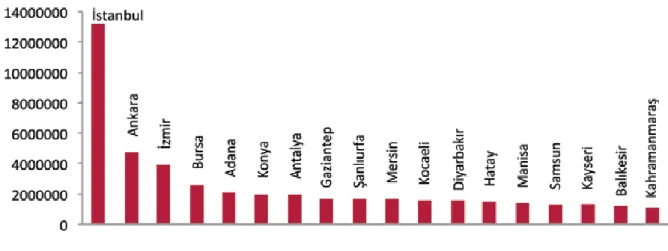
Today, other than the big cities like Istanbul, Ankara, Izmir, Bursa and Adana, the population of fourteen more cities has already surpassed one- million. (Figure 3.1)
19
Source: Turk Stat, 2010
Figure 3.1 Cities in Turkey with More Than One- Million of Population
Aside from the population growth, these cities attract a great deal of immigrant and there seems to be a constant gap in supplying the lower and middle segment housing offers. (www.gyoder.org.tr)
3.1 Historical Development of the Turkish Housing Market
Periodical evolution of real estate industry in Turkey up-to 1980s is evaluated less than five distinct periods:
-Period between 1923 and 1945:
Turkish real estate industry has its roots back to the World War I which is a milestone in the world history. Political and economic structure caused the restructuring of the industry. Following Turkish war of independence there has been major restructuring in many residential areas. The ‘Ministry of Housing and Reconstruction’ had been established, although later on it duties were transferred to the Ministry of Internal Affairs. After Ankara was chosen as the capital city, it was perceived as a suitable place to live for government employees and bureaucrats and this did increase the need for the real estate properties across Ankara. Those dynamics also affected the legislation for the real estate industry. In 1925, a new law introduced which made payment advances to government employees for housing possible, as well as easing the regulations of new residential construction. (Savran, 1992)
20
-Period between 1946 and 1952;
Country becomes a member of World Bank and IMF which has introduced prospects of economic development in connection to the world. The foreign-aid within the Marshall Plan has been activated. A wave of immigration from country to the cities had begun. New legal properties are introduced to encourage the construction works and local municipalities have been granted authority of control over land creation for construction purposes. (Şengül, 2001)
-Period between 1953 and 1960;
Along with industrial development gaining momentum by 1950’s, coupled with the problems and decline in agricultural industry, a rapid increase in immigration to the cities evolved which eventually sped up the urbanization rate. As a result of this, need for residential real estate in big cities have increased significantly. Between 1950 and 1960 twenty private, as well as, three government-owned banks have become operative in industry. Turkish Industrial Development Bank was also founded in 1954, and a new law for the ‘encouragement of foreign investments’ have been activated which immediately shown positive effects on the various sectors in Turkey. In 1958, the Ministry of Housing and Reconstruction was established. (Yavuz, 1969)
-Period between 1961 and 1980;
With a new legislation following the coup-de-etatsof 1960, state adopted “declaration of assets” a mandatory principle. This, no doubt, played as an inhibitive factor over construction and real estate demand. Meanwhile, Emlak Banks, a government-owned bank started to become a major player in industry. In order to prevent speculation and put a curb on the high price levels on the estate Land Office Directorate was established in 1969. Economic and political fluctuations between 1973 and 1977 have caused a steep decrease in purchasing power and eventually led the urban sprawl slow down. (Çapa, 1990)
-Period between 1979 and 1980;
While Turkey has been trying to overcome its economic and political problems, a raise in oil prices made by the OPEC effective for the member countries, dragged
21
Turkey into an economic crisis. And this situation resulted with a re-settlement needs to be done with IMF and the World Bank. (Çapa, 1990)
The Fourth 5-Year Economic Recovery Plan launched for the period between 1979 and 1983. Negative growth figures in 1979 and 1980, observed a high inflation rate- with the figure of 107, 2% in 1980- made headlines. A fast increase in oil prices caused disruption both in investments and production in real estate industry. (Arıbaş, et.al., 1985)
Following the 1980’s, there was a so-called transitory period with the civilian government taking charge an immediately, introducing new economic policies. As of 1987, Turkish real estate industry has started to experience a recession period which has lasted for nearly five years. Disruption of crediting resources for congregate housing projects, as well as raises in the stock exchange values, were to be named as the major reasons for this recession.(Arıbaş, et.al., 1985)
The economics strategies followed between 1990 and 1994 have aimed to improve the distribution of income and overall elimination of differences across the regions in terms of employment, and developmental level. (Yavuz, 1969)
Between 1996 and 2000, Turkey was under the negative effects created by the Asian and Russian economic depressions.
The massive earthquake that took place in 1999 set a milestone for real estate industry in Turkey. After the hit, some constructional improvements were started to apply to the residential estates. The term,” urban regeneration” was introduced and it created a new job opportunities with a good earning potential for everyone in the real estate industry. (Çapa, 1990)
By 2005, an increase in overall industrial demand was observed. Production in the construction sector has increased, not only for residential estates, but, also for bigger scale investments like shopping malls. These positive developments attracted foreign investments to Turkey, and thus created a healthy competition as well as revealing the importance of branding. (Keleş, 2010)
Regarding the period after 2010, following can be said;
Commercial real estate industry was observed to have a limited recession level compared to residential estate industry. Although there was a recession in the retail market and economical activities, investments continued for shopping mall and
22
office markets projects. Hotel type of estates have been coming up as another favorite item in commodity real estate industry which are mainly supported by increasing demand from tourism industry.(Keleş, 2010)
Through the end of year 2012, rapidly increasing exchange rates along with the hiking interest rates have both contributed to a slow-down, followed by a major decline in demand for residential estates. Bymid-2013, signs of partial recovery became apparent.
It is always easier for the branded projects to survive during a period of economic slowdown, and even, recession. Market is almost saturated in the west coast of Turkey and Istanbul, in terms of projects targeting the upper class. On the other hand, there is lack of production for the parties of middle and bottom classes in the cities that has increasing population rate. (Arıbaş, et.al., 1985)
3. 2 Importance of Housing
In ancient ages, people were known to use caves and hollows for sheltering. With the beginning of settled life, the need of houses for sheltering emerged. Started with caves, cabins and booths houses evolved to condos, villas, skyscrapers and intelligent buildings. Houses are a social assurance for the mankind; it is the right of property and modern man not only seeks for sheltering but also, seeks comfort, rests and live hood in house the construction industry, both in terms of the value added and creating employment, is an important sector of our economy. Actually, it is the third largest industry after food and textiles. (Şenyurt, 2001)
The structural need of housing properties in relation to real estate products can be examined by referring to Maslow’s Hierarchy of Needs Model (Figure 3.2). According to Maslow’s Hierarchy of Needs, shelter is one of the requirements for addressing our physiological needs (along with the need food, water, air, sleep, sex). Their physiological needs and not feel motivated to move towards self-actualization. Maslow represented the human’s physiological needs as the base of a triangle to show that meeting these needs are the most important in our lives. If these needs are not met, the individual may only be able to focus on meeting the essential needs (McLeod, 2007)
23
Source: McLeod, (2007).
Figure 3.2 Maslow Hierarchy of Needs Model
Shelter is one of our basic needs: it is a place that can protect us from the elements, keep us warm and safe, and give us the encouragement to satisfy our other needs.
Houses are physical places, providing one of the basic requirements of people to survive; namely, sheltering. Houses also provide economical, change, aesthetical and usage value sets. (Göncü, 2004)
3.3 Housing Sales & Marketing
Real estate sector in global market is developing day by day and correspondingly the profitability of the sector is raising, therefore it is critical to improve real estate marketing strategies. The way of marketing of real estate is an important issue for the seller, as it may affect marketing costs, the selling price and the marketing time of the property. (Ihtiyar,et.al., 2011)
Real estate marketing concludes all activities to meet housing requirements of the consumers via planning, application, control and evaluation. Today, a strategic approach built on customer satisfaction and marketing perspectives should be adopted for establishing and maintaining a competitive environment in the industry. Real estate marketing is performed by individuals of agencies with multiple departments and employees. In multi-people agencies, there are sales representatives
24
beyond office workers and houses are promoted by those staff. Alternatively, there are also individual sales agencies, as well as professional and franchise entities such as Turyap, Remax, Eskidji, Century 21, Realty World providing services to construction companies. Some housing companies also have their own marketing departments and when it comes to marketing their projects they may establish partnership with banks. (Tuncel, 2011)
Regulating individual agencies, a standard was published- entitled “Real Estate Commission Services General Rules” in Official Gazette on 8 July, 2003.In addition to first set of standards defined there was a revision of those, adopted on 29 April, 2004.
According to these standards, it is mandatory for agencies to become a good-standing member of Chamber of Commerce or professional chambers formed by Chamber of Commerce and Trades.No other activities are permitted other than real estate commissioning under these regulations. The working individuals must attend qualification courses provided by Chambers of Commerce and Trade or professional business organizations formed by Chambers of Commerce and Trade. Earning an overall qualification, represented by a certification document is the mandatory first step in working for a so-called real estate agency. Another regulation of a high-school diploma for agents and a four-year-degree for counselors as required educational qualification is in works. (Tuncel, 2012)
In this age and time of digitalization, real estate agents cannot remain strangers to the digital capabilities to be utilized in their marketing efforts. Figure 3.3, below presents the digital practices of real estate agents.
25
Figure 3.3 Digital Instruments to Reach Consumers
Real estate marketing is defined as the sum of activities provided by an agent in order to meet customers’ needs and demands, for buying, selling or renting. Therefore, a real estate agent or commissioner is a person working and consulting on buying, selling and renting of a real estate. Any real estate agent authorized to work in the field as well as receiving commission and fees is called a licensed-counselor and must have certified- knowledge on topics of law, deed, map, accounting, taxation, fees, credit management, and specialty marketing.
There are positive and negative issues related to real estate agency work; high- income opportunities, working together with others, networking are on the positive side, whereas, unstable income, high rate of rejection and limited control over industry represent major negative aspects. (Tuncel, 2011)
Real estate marketing is getting more and more complicated every day. Industry is continuously changing according to economic conditions, customer awareness is increasing and expectations are changing. The real estate agencies and corporations must provide extraordinary, high-value services in order to be successful. Besides, there are key factors noted to be affecting success of these companies. (Benjamin, et.al., 2000):
26
Number of sales representatives, Being a franchise,
Number of advertisements,
Being close to the estates marketed, Previous sales in the area,
Low price are the mostly mentioned factors in this regard.
Quality of services provided by individuals are related to their professional qualities, such as, being trustworthy, presenting high capabilities in problem-solving, being kind, and having good time-management skills. Therefore, professionals of real estate industry must be highly qualified, responsible individuals and they have to be equipped with extensive knowledge. (Kotler, 2009)
There are basically three parties taking parts in nearly all real estate marketing activities. First is the owner; second is the customer and third is the creditor. The customer generally does not see the owner. An agency or the marketing department acts as the intermediary. While the owner has the tendency to sell the real estate for the market value (or even higher), the customer seeks for best payment terms and best price. The sales representatives must carefully research the market and have the right attitude taking both sides’ demands into consideration. (Kotler&Armstrong, 1994)
Real estate marketing is getting more and more complicated every day. Industry is continuously changing according to economic conditions, customer awareness in increasing and expectations are changing. The real estate agencies and corporations in real estate industry must provide extraordinary, high-value services in order to be successful. Besides, these factors are noted to be affecting success of these companies. (Benjamin, Jud and Sirmans, 2000)
In real estate industry, the basic need for agencies knows them and earns trust of the customers. Trust is related to the respect shown to the customers. Most of the individuals buy one or two real estates during their whole lives. They can be very much concerned and find it a high-risk decision procedure all the way around. It is expected that the representatives to advise and provide reliable consultation to those individuals. Leading topics of those interactions are price, delivery date and terms of payment. As a matter of fact this is a negotiation process and both sides might need