GRADUATE SCHOOL OF NATURAL AND APPLIED SCIENCES
CUSTOMER SATISFACTION MEASUREMENT IN
FOOD INDUSTRY
Elvin EKER
Thesis Advisor: Asst. Prof. Dr. Önder Bulut
Department of Industrial Management and Information Systems
Bornova – İZMİR
ACKNOWLEDGEMENTS
I would like to thank to my supervisor Asst. Prof. Dr. Önder Bulut for taking me on board this interesting project. It has truly been a pleasure to work with him.
I would like to thank to my family for supporting me during my whole life and my years of studies. Finally, I owe a special thanks to my Grandmother for being with me whole my life …
TEXT OF OATH
I declare and honestly confirm that my study titled ―CUSTOMER SATISFACTION MEASUREMENT IN FOOD INDUSTRY‖, and presented as Master’s Thesis has been written without applying to any assistance inconsistent with scientific ethics and traditions and all sources I have benefit from are listed in bibliography and I have benefited from these sources by means of making references.
Contents
ACKNOWLEDGEMENTS ... i
TEXT OF OATH ... ii
List of Figures ... v
List of Tables ... vii
ABSTRACT ... viii
1. INTRODUCTION ... 10
1.1 Customer Satisfaction ... 10
1.2 Measuring Customer Satisfaction ...2
1.2.1 The Research Objectives and Scope of Study ...2
1.2.2 Customer Satisfaction for EFQM ...3
1.2.3 Structure of Thesis ...5
1.3 A Customer Satisfaction Study in Food Industry ...5
2. MAIN CONSEPTS TECHNIQUES AND RELEATED LITERATURE ...6
2.1 The Process of Customer Satisfaction Managment ...6
2.1.1 Techniques of Measuring Customer Satisfaction in Literature ... 10
2.1.2 Segmenting the Market ... 12
2.1.3 CSM Models ... 12
2.1.4 Expectations and Experiences ... 14
2.2 Customer Satisfaction Measurement Program ... 17
2.2.1 Required Decisions ... 17
2.2.2 Choosing the Best Research Method ... 18
2.2.3 Identification of Survey objectives ... 21
2.2.4 Focusing and determining list of attributes ... 21
2.2.5 Sampling Methods ... 23
2.2.6 Reliability and Validity of a Survey... 27
2.2.7 Response Formats and Scale Types ... 28
3. A CUSTOMER SATISFACTION MANAGEMENT STUDY FOR THE LOGISTICS AND SALES ACTIVITIES OF A FOOD COMPANY ... 31
3.1 CRM and CSM in the Company ... 31
3.2 Design of the Survey ... 33
3.3.1 Chi-Square Goodness-of-Fit Test ... 37
3.4 Validity and Reliability ... 38
3.4.1 Validity ... 38
3.4.2 Reliability ... 38
4. RESULTS ... 40
4.1 Participant’s Characteristics ... 40
4.1.1 Traditional Customer’s Survey Analyses ... 41
4.1.2 Key Account Customer’s Survey Analyses ... 53
4.1.3 Out of Home Consumption Customer’s Survey Analyses ... 63
4.1.4 Dealer Customer’s Survey Analyses ... 74
List of Figures
Figure 1 The process of CSM (modified from Naumann . 1995) ...8
Figure 2 A satisfaction rating question followed by a question defining importance...9
Figure 3 The customer satisfaction equation (redrawn from Craig 1993.) ... 14
Figure 4 The Kano model (Sandholm 2000.) ... 15
Figure 5 The relation between sample size and standard error (Fink 1995.) ... 25
Figure 6 Level of measurement and response formats (modified from Burns . 2008.) ... 29
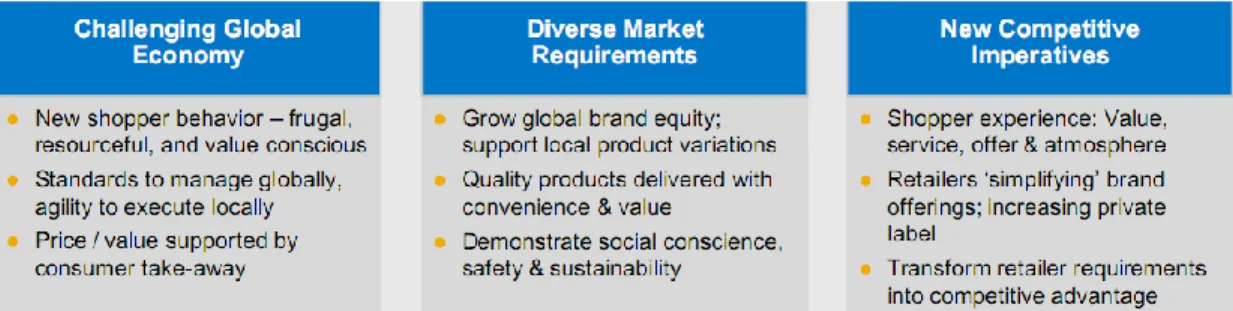
Figure 7 General Market Requirements - Industry trends are driving changes in sales ... 32
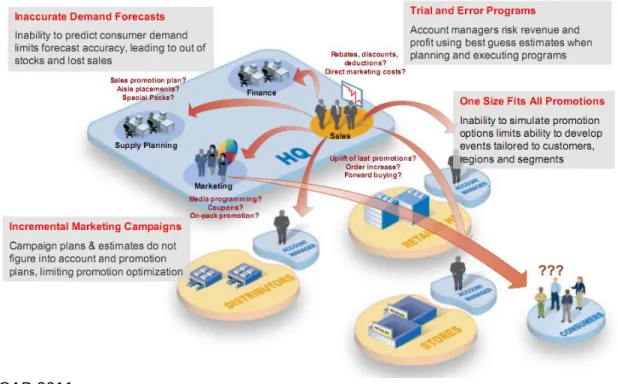
Figure 8 Relevant Business Processes – Without CSM, promotion optimization potential is limited ... 33
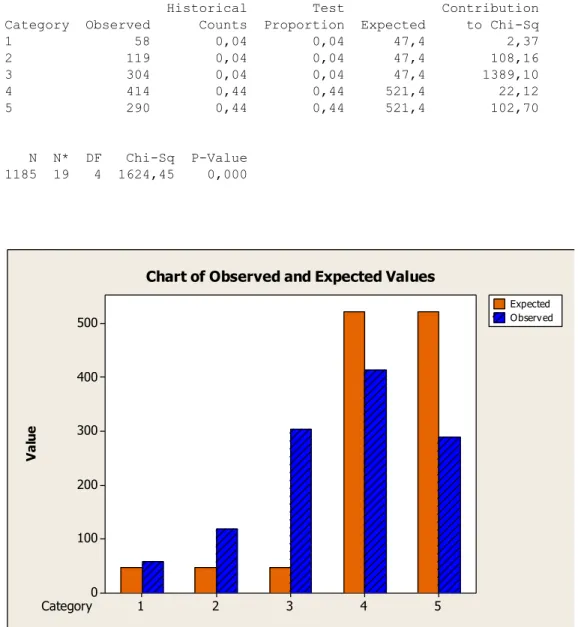
Figure 9 Chart of Observed and Expected Values ... 47
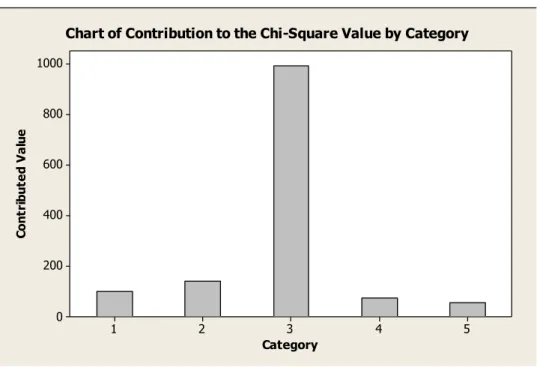
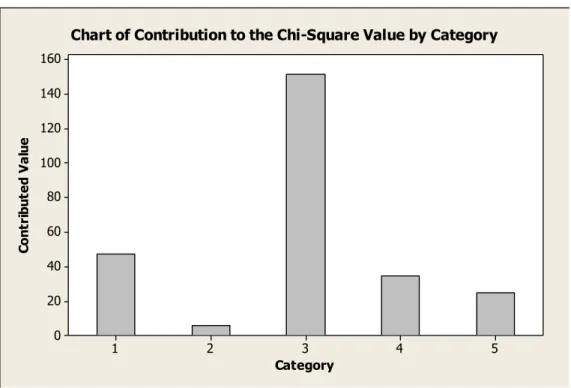
Figure 10 Chart of Contribution to the Chi Square Value by Category ... 48
Figure 11 Chart of Observed and Expected Values ... 49
Figure 12 Chart of Contribution to the Chi Square Value by Category ... 49
Figure 13 Chart of Observed and Expected Values ... 50
Figure 14 Chart of Contribution to the Chi Square Value by Category ... 51
Figure 15 Chart of Observed and Expected Values ... 52
Figure 16 Chart of Contribution to the Chi Square Value by Category ... 52
Figure 17 Chart of Observed and Expected Values ... 58
Figure 18 Chart of Contribution to the Chi Square Value by Category ... 59
Figure 19 Chi-Square Goodness-of-Fit Test for Categorical Variable: 18 ... 59
Figure 20 Chart of Observed and Expected Values ... 60
Figure 21 Chart of Contribution to the Chi Square Value by Category ... 60
Figure 22 Chart of Observed and Expected Values ... 61
Figure 23 Chart of Contribution to the Chi Square Value by Category ... 62
Figure 24 Chart of Observed and Expected Values ... 63
Figure 25 Chart of Contribution to the Chi Square Value by Category ... 63
Figure 26 Chart of Observed and Expected Values ... 69
Figure 27 Chart of Contribution to the Chi Square Value by Category ... 70
Figure 28 Chart of Observed and Expected Values ... 71
Figure 29 Chart of Contribution to the Chi Square Value by Category ... 71
Figure 30 Chi-Square Goodness-of-Fit Test for Categorical Variable: 37 ... 72
Figure 31 Chart of Observed and Expected Values ... 72
Figure 33 Chart of Observed and Expected Values ... 74
Figure 34 Chart of Contribution to the Chi Square Value by Category ... 74
Figure 35 Chart of Observed and Expected Values ... 80
Figure 36 Chart of Contribution to the Chi Square Value by Category ... 81
Figure 37 Chart of Observed and Expected Values ... 82
Figure 38 Chart of Contribution to the Chi Square Value by Category ... 82
Figure 39 Chart of Observed and Expected Values ... 83
Figure 40 Chart of Contribution to the Chi Square Value by Category ... 84
Figure 41 Chi-Square Goodness-of-Fit Test for Categorical Variable: 36 ... 84
Figure 42 Chart of Observed and Expected Values ... 85
Figure 43 Chart of Contribution to the Chi Square Value by Category ... 85
Figure 44 Chi-Square Goodness-of-Fit Test for Categorical Variable: 35 ... 86
Figure 45 Chart of Observed and Expected Values ... 86
Figure 46 Chart of Contribution to the Chi Square Value by Category ... 87
Figure 47 SAP and CRM helps optimize promotions, improving both revenue and profitability ... 89
List of Tables
Tablo 1 Advantages and disadvantages of qualitative and quantitative research methods . 20
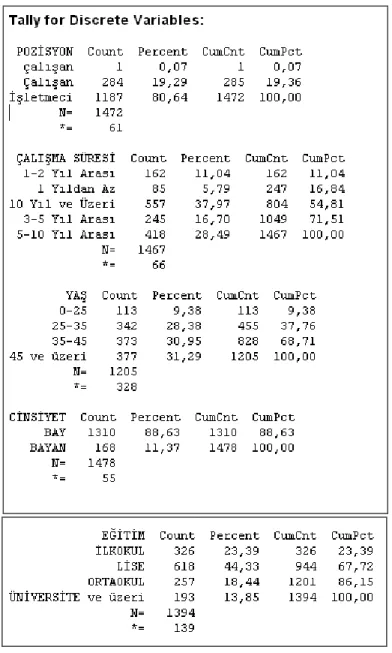
Table 2 Tally Variables for Traditional Customers ... 42
Table 3 Omitted Item Statistics for Traditional Customers ... 43
Table 4 Corelation Matrix for Traditional Customers ... 45
Table 5 Total Statistics for Traditional Customers ... 46
Table 6 Chi-Square Goodness-of-Fit Test for Categorical Variable: 16 ... 47
Table 7 Chi-Square Goodness-of-Fit Test for Categorical Variable: 18 ... 48
Table 8 Chi-Square Goodness-of-Fit Test for Categorical Variable: 36 ... 50
Table 9 Chi-Square Goodness-of-Fit Test for Categorical Variable: 39 ... 51
Table 10 Tally Variables for Key Account Customers ... 53
Table 11 Tally Variables for Key Account Customers ... 54
Table 12 Corelation Matrix for Key Account Customers ... 56
Table 13 Total Statistics for Key Account Customers ... 57
Table 14 Chi-Square Goodness-of-Fit Test for Categorical Variable: 16 ... 58
Table 15 Chi-Square Goodness-of-Fit Test for Categorical Variable: 35 ... 61
Table 16 Chi-Square Goodness-of-Fit Test for Categorical Variable: 38 ... 62
Table 17 Tally Variables for Out of Home Consumption Customers ... 64
Table 18 Omitted Item Statistics for Out of Traditional Customers ... 65
Table 19 Corelation Matrix for Out of Home Consumption Customers ... 67
Table 20 Total Statistics for Out of Home Consumption Customers ... 68
Table 21 Chi-Square Goodness-of-Fit Test for Categorical Variable: 16 ... 69
Table 22 Chi-Square Goodness-of-Fit Test for Categorical Variable: 18 ... 70
Table 23 Chi-Square Goodness-of-Fit Test for Categorical Variable: 39 ... 73
Table 24 Tally Variables for Dealer Customers ... 75
Table 25 Omitted Item Statistics for Dealer Customers ... 76
Table 26 Corelation Matrix for Dealer Customers ... 78
Table 27 Total Statistics for Dealer Customers ... 79
Table 28 Chi-Square Goodness-of-Fit Test for Categorical Variable: 16 ... 80
Table 29 Chi-Square Goodness-of-Fit Test for Categorical Variable: 17 ... 81
ABSTRACT
Customer Satisfaction is one of the key concepts in food industry since the industry is mainly driven by wide range of customer preferences and expectations. A customer-focused management culture and a customer relations management system should be established as to obtain immediate feedback and to provide quick response. Periodic measurement of customer satisfaction is a must for such a system. In this study, we propose a survey-based customer satisfaction measurement method and its statistical analysis for the sales and logistics activities of a food firm. We first group the customers in different classes and then develop specific measures based on customer needs and expectations. We finally provide managerial recommendations based on our analysis.
We aim to design a customer feedback channel via the customer satisfaction measurement for both the quality of the firm`s service and products. The food firm that involved in this study plans to take corrective and preventive actions as to improve its customer relations management system.
Keywords: Customer Satisfaction Measurement, Customer Relations Management, Food Industry
ÖZET
Gıda sanayinde müşteri tercih ve beklentilerinin geniş çaplı değişimiyle birlikte müşteri memnuniyeti en önemli kriterlerden biri haline geldi. Müşteri odaklı yönetim mantığı ve müşteri memnuniyeti yönetim sistemi hızlı geri dönüşler sağlamaktadır. Müşteri memnuniyetinin düzenli olarak belli dönemlerde ölçülmesi ilgili sistemin gereğidir. Bu çalışmayla birlikte, gıda firmasına ilişkin satış ve lojistik aktivitelerin anket uygulamalı bir müşteri memnuniyeti ölçümleme metodu ile istatistiksel analizi hazırlanmıştır. Öncelikle farklı sınıflardaki müşteriler gruplandırmıştır ve müşteri beklentilerine ve ihtiyaçlarına göre özel ölçümler yapılmıştır. Çalışma sonunda analizlerimize bağlı olarak yönetsel öneriler sunulmuştur.
Firmanın ürün ve hizmet servisleriyle ilgili geri bildirimlerinin müşteri memnuniyeti ölçümlenmesiyle sağlanabileceği bir müşteri geribildirim kanalı düzenlenmeye çalışılmıştır. Çalışmada yer alan firma müşteri ilişkileri yönetimine ilişkin düzenleyici önleyici faaliyetler almayı planlamaktadır.
Anahtar sözcükler: Müşteri Memnuniyeti Ölçümü, Müşteri İlişkileri Yönetimi, Gıda Sanayi
1. INTRODUCTION
In this chapter we introduce the basics of customer satisfaction and its measurement techniques. We also introduce the food firm where the proposed measurement method is applied. This chapter also highlights the importance of service quality and its relationship with customer satisfaction.
1.1 Customer Satisfaction
The concept of customer satisfaction is new to many companies. It is important to make it clear and explain what's meant by the term.
Customer satisfaction is the state of mind that customers have about a company when their expectations have been met or exceeded over the lifetime of the product or service. The achievement of customer satisfaction leads to company loyalty and product repurchase. There are some important implications of this definition:
i) Because customer satisfaction is a subjective, no quantitative state, measurement won't be exact and will require sampling and statistical analysis.
ii) Customer satisfaction measurement must be undertaken with an understanding of the gap between customer expectations and attribute performance perceptions. iii) There should be some connection between customer satisfaction measurement and
bottom-line results.
In "Satisfaction" can refer to a number of different facts of the relationship with a customer. For example, it can refer to any or all of the following:
i) Satisfaction with the quality of a particular product or service ii) Satisfaction with an ongoing business relationship
iii) Satisfaction with the price-performance ratio of a product or service
iv) Satisfaction because a product/service met or exceeded the customer's expectations.
Each industry could add to this list according to the nature of the business and the specific relationship with the customer.
1.2 Measuring Customer Satisfaction
Measuring customer satisfaction is a relatively a new concept to many companies that have been focused exclusively on income statements and balance sheets.
The problem companies face, however, is exactly how to do all of this and do it well. They need to understand how to quantify measure and track customer satisfaction. Without a clear and accurate sense of what needs to be measured and how to collect, analyze and use the data as a strategic weapon to drive the business
Plans constructed using customer satisfaction research results can be designed to target customers and processes that are most able to extend profits.
It's no surprise to find that market leaders differ from the rest of the industry in that they're designed to hear the voice of the customer and achieve customer satisfaction. In these companies:
i) Marketing and sales employees are primarily responsible for designing (with customer input) customer satisfaction surveying programs, questionnaires and focus groups.
ii) Customers are informed about changes brought about as the direct result of listening to their needs.
iii) Customer satisfaction is incorporated into the strategic focus of the company via the mission statement.
iv) A concentrated effort is made to relate the customer satisfaction measurement results to internal process metrics.
To be successful, companies need a customer satisfaction surveying system that meets the following criteria:
i) The system must be relatively easy to design and understand.
ii) It must be credible enough that employee performance and compensation can be attached to the final results.
iii) It must generate actionable reports for management.
1.2.1 The Research Objectives and Scope of Study
framework which describes the relationship between fundamental variables of customer satisfaction.
Service quality, customer expectations, overall satisfaction, customer segmentation, customer demographic characteristics and relationships between all concepts and variables are developed after the detailed analysis of existing literature.
Customer perception is a growing and key issue for continuous improvement and different organizations are becoming more customer-focused. More and more companies and organizations are using customer satisfaction as an indicator on their performance of delivered products and services. The thesis focuses on the customers of the food authorities, and on the importance of understanding and receiving feedback from the customers. The intent of the thesis is to establish a conceptual framework for customer satisfaction measurement within the food sector and to determine how consistent and applicable food sector user data from customer feedback and surveys is gathered internationally. In addition, the goal is to identify what type of customer satisfaction surveys are more effective and represents the true customer perception. If we can truly understand the customer needs, then it is possible to provide quality services to the customers. Moreover, the aim is to determine how to utilize results from customer satisfaction measurements, future prospects and how to link customer input into the decision-making process.
1.2.2 Customer Satisfaction for EFQM
The European Foundation for Quality Management (EFQM) is a framework, which can be used by organizations to assess the quality of their processes, in a number of areas.
The framework is a self-assessment tool which explores what an organization can do to change service or adapt its products in order to improve for customers, based on 'The Excellence Model Framework'.
EFQM uses the 'RADAR' methodology:
Results (Aimed/required result as part of strategy)
Approaches (Methods of how the results are achieved planned and developed)
Deploy (Carry out approaches systematically)
Assess & Refine (Monitor results achieve to adapt approaches if necessary)
http://www.efqm.org/en/tabid/171/default.aspx
Customer satisfaction is the key factor determining how successful the organization will be in customer relationship (Reichheld, 1996); therefore it is very important to measure it. EFQM is based on idea of customer satisfaction, a management approach of an organization centered on quality, based on the participation of all its members and aiming at long-term success through customer satisfaction and benefits to all members of society (ISO 8402). The achievement of true customer satisfaction involves: customer oriented culture; an organization that centers on the customer, employee empowerment, process ownership, team building and partnering with customers and suppliers.
In the other words:
Improvement of the firm’s reputation and image
Reduction of customer turnover, increased attention to customer needs in EFQM planning,
Reduction of marketing costs and lower transaction costs,
Reduction of costs related to product /service failures,
And lastly increased satisfaction among personal and greater stability of the workforce. (David M. Szymansk, 2000)
1.2.3 Structure of Thesis
This thesis consists of five parts. The first part gives an introduction to the study and describes the outlines of the scope. The second part presents the idea behind and concepts of customer satisfaction and the methods used to measure the degree of satisfaction. Furthermore, the differences in the customer focused management style between the public and private sectors are discussed. The third part of the thesis focuses on the international benchmarking that was undertaken in order to map current practices in use by food sector administrations in different countries. The fourth part discusses the results of the analysis as well as presents conclusions of this thesis. And the last part is about the conclusion.
1.3 A Customer Satisfaction Study in Food Industry
The Food Firm established since 1973 with high-quality choice for consumers and the company continues its leadership in the food industry, dairy, meat, aquatic product range meets the needs of different consumer products brand with a very wide range of products. Closely follow the global trends, the company maintains its leadership role in many product line. The company operates with a workforce of more than four thousand.
The company's products, not just at home and also a product group of the worlds’ major exporting countries and becoming recognized as "World’s Brand". The company has not only within the borders of Turkey Middle East countries and also has the services to Turkic Republics, Germany, Romania and so on. Countries such as which are continue.
Turkey Customer Satisfaction Index (TMME) study, which is being done by Kalder, conducted in 2009 and according to the research the food firm was became the first in the category of dairy and meat sector.
The company follow up the customers in different categories to take advantage and to provide the right control in the best way .
2. MAIN CONSEPTS TECHNIQUES AND RELEATED LITERATURE
This chapter introduces the concept and process of customer satisfaction measurement, its background, how customer satisfaction is formed and discusses who the actual customers of the road authorities are. In addition, the different methods and models related to satisfaction measurement and service quality are covered. Many public organizations have adopted the customer focused management style from the private sector and the challenges regarding the differences between the natures of public and private sectors are presented. Finally, the establishment of a system in gathering customer data is discussed.
Today, customer focus and satisfaction is a driving force for many companies and organizations. Measuring customer satisfaction provides an indication on how an organization is performing or providing products or services. Customer satisfaction has traditionally been studied within market research and the term customer satisfaction measurement is widely used in particularly business terminology. There are various definitions of customer satisfaction and according to Rope (1994), to actually define satisfaction has proven to be hard and contradictory because of its multiple dimensions.
Customer satisfaction is generally understood as the satisfaction that a customer feels when comparing his preliminary expectations with the actual quality of the service or product acquired. In other words, customers are typically concerned with the value and quality of the product or service they receive. In addition, customers generally want the best possible product or service for a low cost. The perception of the best product or service and lowest price can, however, vary significantly by customer segment or industry. In order to obtain an overall picture of customer perception, a company or organization needs to measure the customer. (Czarnecki, 1998.)
2.1 The Process of Customer Satisfaction Managment
In order to be successful in providing quality of one’s services or products, it is important to obtain feedback from customers. According to Fink (1995), a survey is a
system for collecting information, to describe and compare knowledge, behavior and attitudes. Surveys generally involve determination of objectives for the data collection, choosing a reliable data collection method, analyzing gathered data, reporting and presenting the results. The objectives of a survey are usually identified though detected needs, but might also be defined through other surveys, reports, experts or focus groups and panels. (Fink, 1995.)
Measuring customer satisfaction is now an important area of research for most organizations. The first step of customer satisfaction measurement is to link the measurement to organizational strategy. If the measurements don’t reflect the aspirations and goals of the organization, they are of little value and do not support improvements work. Hence, the organization needs to define long-term goals and develop these goals and objectives that should be measured and followed in terms of the various stakeholders. (Czarnecki, 1998.)
The process of measurements includes several steps. First, the objectives of the research have to be identified and defined. Next steps include the development of a research plan, the definition of attributes that are to be measured and which research method to use, the gathering of data and the processing and analyzing of data. Finally the data should be utilized, results reported and presented. Furthermore, the results from the CSM and findings from all the various steps should be used to improve the current CSM program and practices. (Naumannn, 1995.) Figure 4 presents the different steps and the general process of customer satisfaction measurement.
Figure 1 The process of CSM (modified from Naumann . 1995)
CSM is often a popular program to outsource because it may take extensive labor to undertake a survey. Moreover, the work does not occur consistently, only one or a few times per year. However, when developing and defining the factors to measure in the surveys, specialists and employees from within the organization are best suited. This because the internal specialists are most familiar with the goals and day-to-day activities of the organization. (Czarneck, 1998.)
In the form of comments or numbers the comments are based on feedback and responses in the respondents, i.e. the persons who have agreed to participate in the research, own words. Numeric data is obtained when respondents are asked to rate or rank items and it is often analyzed by statistical methods (Fink 1995). Customer satisfaction is typically formed by two components: the satisfaction rating in itself and the importance rating by the costumer. The satisfaction rating is generally
described with different scales, e.g. excellent, good, fair and poor. According to Czarnecki (1998), the importance can be discovered in several ways:
priority ranking (asking the customer different questions designed to determine the importance)
attribute ranking (forcing the customer to make trade-off decisions)
statistical analysis (testing the relative impact of changes to your products or services over time)
By having the customers to rank and determine the relative importance of products or services, you can establish your priorities for service and product development and find out where improvements are needed (Matzler, 1998). Companies and organizations typically don’t have enough resources to make all the improvements simultaneously and thus prioritization can help the organization to focus on the issues that are valued most by its customers. An example of a satisfaction rating question followed with a priority ranking question is presented in Figure 2.
Figure 2 A satisfaction rating question followed by a question defining importance
Market research is usually used either for constant tracking of activities or for determination of specific problem areas. Constant tracking research is for example customer satisfaction measurements conducted on a regular basis or typical omnibus surveys. Research undertaken in order to determine specific problem areas are separate or so called ad hoc surveys that generally are one-time studies and carried out occasionally. The sample in ad hoc surveys can be specified by regions or certain
customer groups such as for example professional or private drivers. Usually these separate surveys may be more costly and time-consuming. (Lotti, 1994.)
Conducted CSM can often be seen only as a single ―snapshot‖ in time, but by undertaking surveys regularly trend information over time can be obtained. Trend data can help the company or organization to identify issues that need to be addressed or improved. Open-ended questions can also provide valuable information on specific issues. In order to get real benefits from customer feedback, customer satisfaction measurements cannot only be a one-time activity. It is necessary for the company or organization to form an ongoing and constantly reviewed quality management system and customer feedback framework. (Czarnecki 1998, Krivobokova 2009.)
2.1.1 Techniques of Measuring Customer Satisfaction in
Literature
Today, CSM is usually a central part of quality management. As Kessler (1996) has stated: ―If you are not measuring it, you are not managing it‖. Measurements support companies or organizations to create an understanding for the demands and needs. Furthermore, CSM discovers the issues that need to be improved and reveals the factors that affect and create a successful relation between the company or organization and its customers. A good customer relation requires extensive quality image, which is formed by the organization’s ability to handle the processes that are prioritized by customers. Lotti (1994) sums it up and states that customer satisfaction measurement is pointless if it does not result in such produced quality that satisfies the customers. (Lotti 1994.)
Customer satisfaction measurements are often complex to perform. There is always a risk that the results obtained from the measurements diverge from the reality. Measurements can be carried out with a focus on the attitudes of the customer, the behavior of the customer or the effects that the customer has on the company or organization in question. Companies and organizations that regularly measure customer satisfaction show that they care about their customers and that they want to improve their products or services. The CSM process is continuous and the measured and received feedback forms a base for ongoing work. Based on the results
from CSM, new goals are set and these are then measured and monitored. (Lotti 1994, Sörqvist 2000.)
In the evaluation of the level of customer satisfaction, the following factors are generally measured:
overall satisfaction with products or services
satisfaction with specific parameters of a product or service
These specific attributes measured in the surveys should be based either on results from earlier undertaken studies or established by an expert in the field. This evaluation of level of satisfaction can also be expanded by an analysis of the importance or priority of each of the parameters to the costumers. Typical issues to focus on when measuring customers’s needs and views are which current services of the organization are seen as most important, what deficiencies the services have and what kind of services are still missing. (Krivobokova 2009, Sandholm 2000.)
Listening to customers and the awareness of customer’s needs and wishes form the basis for customer service. The most commonly used tools for gathering public input and the main approaches to understanding the customers’ needs and views are polls or surveys, focus groups and interviews. Surveys are useful especially in measuring the level of satisfaction and in gauging the issues that are important to the customers. Focus groups are gatherings of small groups of different stakeholders recruited to discuss certain topics and issues. In-depth interviews are typically used to interview key individual stakeholders where the aim is for example to collect individual case stories. (Stricker. 2003.)
Another source of customer feedback is complaints. Customer complaints can often be used as a basis for improving quality of existing services. Thus, it is important to ensure that it is easy for the customers to express their views, for example by having a telephone number known by the customers. However, it is not certain that all customers complain when they are dissatisfied. Nevertheless, the type and occurrence of the complaints can provide an overview and give some idea of where problems regarding the quality of the organization’s products or services might be occurring. Hence, Sandholm (2000) suggests, that it could be a good idea to
actually compile, study and process the complaints. The absence of complaints regarding specific issues does not mean that the quality of the service or product would be satisfactory. (Sandholm, 2000).
Each of the survey approaches has their different strengths and the method to use depends on the circumstances of the research. When choosing the survey method to use, one also needs to consider how the method affects the customer. Some methods are more challenging and time consuming than others, what might result in lower response rates. Response rates also depend on the level of interest the respondent has in the topic or for example on the layout of the questionnaire. (Adams. 2006, McGivern 2009.)
2.1.2 Segmenting the Market
Organizations from all different sectors, whether they are commercial companies or government agencies, deal with a wide range of people. This means that the organizations have a customer base with diverse needs. By segmenting and identifying different groups within their customers, organizations can adjust their services to meet the different needs. According to Garnham (1999), different customers and stakeholder groups have different expectations and needs on the road network. Hence, segmenting the customers allows the road administration to determine the specific needs for the different groups of customers. When conducting market research, it can be useful to compare different customer groups and to explore if the organization is achieving higher levels of customer satisfaction with one customer segment compared to the other segments etc. (Adams . 2006, Garnham . 1999.)
2.1.3 CSM Models
Customer satisfaction measurements have had a central position especially in the United States. The focus on service quality as a concept has increasingly grown mostly because of its relation to costs, profitability, customer satisfaction, customer retention and positive word of mouth (Buttle, 1996). The original idea of CSM has its roots in the concept Total Quality Management (TQM). According to Vavra (1997), the TQM approach was introduced in the late 1970s and the basis of the concept is to
improve quality and performance and to increase customer satisfaction. Key principles of the concept are customer focus, continuous improvement and decision making. According to the method, improvements in quality of products or services will lead to higher levels of customer satisfaction. Decision-making processes and quality decisions in a company or organization should thus be based on measurements and market research. (Vavra, 1997.)
Another well-known and extensively applied model in customer satisfaction and service quality measurement is the SERVQUAL model. SERVQUAL is a service quality framework developed by Parasuranam. in the 1980s. The main idea of the model is to identify service quality gaps by measuring both perceptions and expectations of customers (Lotti, 1994). The model comprises 22 attributes and the service quality is measured by using five dimensions: Tangibles, Reliability, Responsiveness, Assurance and Empathy (Wisniewski, 2001).
By using the model SERVQUAL, managers can define which areas need to be targeted for performance improvement. Wisniewski (2001) argues that performance improvements can be prioritized by combining the largest negative gaps with an assessment of where expectations are highest. Wisniewski (2001) further argues that positive gaps indicate that the expectations are not just being met but also exceeded, which provides managers with a tool to review whether they might be ―over-supplying‖ a specific feature or ―over-performing‖ in a specific area of service. This aspect of the model is particularly relevant for the public sector as they are dealing with increasing budget cuts.
Furthermore, Wisniewski (2001) suggests that the gap analysis approach can be useful at comparing the needs of different customer segments or of customers in different regions. For example if a regional office consistently has smaller gaps than the rest of the regional offices, it is more likely to meet the customers’ expectations than the other offices. The functionality of SERVQUAL has, however, also been criticized both on theoretical and operational grounds by a number of researches (e.g. Buttle, 1996). For example according to Buttle (1996), SERVQUAL’s five dimensions are not universals. Moreover, he argues that there is a high degree of intercorrelation between the different dimensions.
2.1.4 Expectations and Experiences
Service quality or customer satisfaction is formed by the difference between the customers’ expectations of a service and the actual perceived service. In other words, customer dissatisfaction occurs if the expectations are greater than the performance (Wisniewski 2001). An analysis of gaps between customer expectations and the performance of a company or organization is a cornerstone to monitor the overall corporate performance (Czarnecki, 1998). Customer satisfaction always requires an experience of the operations of a company or an organization. The level of customer satisfaction is formed by the correlation between a customer’s expectations and his experiences. In other words, the customer always compares the experiences with the expectations he has of the company or organization. Customer satisfaction occurs when a customer’s experiences of a service match the expectations and customers are impressed when they get more than they anticipated. In addition, the level of customer satisfaction is formed by the image of the company or organization. Many companies and organizations have made customer satisfaction their top priority by developing a carefully designed customer satisfaction framework. (Bergman. 1994.) Figure 3 provides a summarized overview of which key factors result in satisfied customers.
Figure 3 The customer satisfaction equation (redrawn from Craig 1993.)
In the 1980’s, Professor Noriaki Kano developed the Kano model, which is visualized in Figure 4. The model describes how customer satisfaction is created and it separates quality dimensions into three different types of needs which together determine the customers’ perception of quality. These needs are divided as followed:
stated needs
implied needs
According to the model in the Figure 4, the stated needs are expected by the customer to be satisfied and these needs are regarded as important. Hence, customers are satisfied when the stated needs are satisfied. The implied needs are so obvious to the customer that the customer does not even mention these when asked for example in a survey. The implied needs do not create greater customer satisfaction as these needs are considered as obligatory to fulfill. But on the other hand, if these needs are not fulfilled, the level of customer satisfaction will decrease dramatically. The unconscious needs are needs that are unexpected by the customer but what may result in high levels of customer satisfaction. The absence of these needs will, however, not lead to dissatisfaction. (Bergman . 1994, Sandholm 2000.)
Figure 4 The Kano model (Sandholm 2000.)
The level of satisfaction is determined by comparing the expectations of the customer with the experience generated from the contact or encounter between the customer and the company or organization. If a customer’s expectations were higher than the actual experience, the level of satisfaction is negative, i.e. the customer is not satisfied with the company. If the level of satisfaction is very negative, the company or organization often gets negative feedback and complaints. When a customer’s expectations meet the experiences, the level of satisfaction is neutral. If the customer had high expectations, the customer relation with the company will strengthen. A customer with low expectation from before will not be fully satisfied, even if he is not disappointed with the company or organization. If a customer’s experiences exceed
the expectations, the level of satisfaction is positive and the customer is satisfied. The essential thing is to influence the customers’s expectations in order to have an effect on the level of satisfaction. This because the same level of action and operation with different levels of expectations will result in different degrees of satisfaction. (Rope . 1994)
Because the level of satisfaction is highly affected by customers’ expectations, it is essential to understand how the expectations are formed. A company or organization is in many cases able to influence these expectations so that a higher or maximum level of satisfaction can be achieved. According to Sörenqvist (2000), the following factors have shown to have a great impact on the customers’ expectations:
previous experiences
marketing and publicity
image and reputation
significance and interest
information from others
the price of the product or service
Other factors that affect the customer’s expectations are for example the characteristics of the customer, such as socio-demographic characteristic like age, residence, gender, marital status, education or income level (Lotti, 1998). Some researchers have, however, criticized the great emphasis and focus on customer’s expectations (e.g. Vuorela 1988). The customer’s expectations might be unclear, vague, unrealistic or inappropriate. Some customers might not even have specific expectations of certain products or services. The customers’ expectations are only the tip of the iceberg. Thus, it is also necessary to ascertain the needs and problems experienced by the customers. (Öster 2008, Matzler. 1998.)
Customer satisfaction is defined as a customer’s overall evaluation of the performance of an offering to date. This overall satisfaction has a strong positive effect on customer loyalty intentions across a wide range of product and service categories. (Gustaffson, 2005)
The satisfaction judgment is related to all experiences made with certain business concerning its given product, the sales process and the after-sale service. Whether the customer is satisfied after purchase also depends on the offer’s performance in relation to the customer’s expectation. (Kotler, 2000)
Factors which determine the extent of expectations are: customer needs, total customer value and total customer cost. It is mentioned by researchers who study customer choice that choosing a product or service is only one of the stages customers go through. A purchase decisions is influenced by the buyer’s characteristics. These include cultural, social, personal and psychological factors. (Chaston, 2001)
2.2 Customer Satisfaction Measurement Program
Customer satisfaction is formed by the customers’ subjective experiences of the organizations’ products or services. Moreover, customer satisfaction is strongly connected with the present and that is why customer satisfaction has to be claimed again and again in daily contacts with the customers. Customer perception should thus be measured on a systematic and continuous basis. If the gathering and obtaining of customer feedback and information are not ongoing, a management system reacting on customer input cannot be established. According to Sandholm (2000), customer perceptions and customer feedback regarding their needs and expectations must be fed back to the organization and used as a basis for improvement work in order for a company or organization to be successful in quality management. (Rope . 1994.)
2.2.1 Required Decisions
An important step in the CSM process is to identify customers’ requirements or quality dimensions and the appreciated characteristics of a product or service. In other words, the customer requirements will define the quality and level of standard of our services. According to Hayes (1998), knowledge of customer requirements and expectations is essential to provide a better understanding of how customers define
the quality of your services. If you understand these requirements, you are in a better position to develop measures to achieve satisfied customers. (Hayes 1998.)
In order to determine the level of customer satisfaction, continuous and systematic measurement is required. If customer feedback is not measured continuously and only gathered one time with the intention to identify possible problem areas, an organizational strategy based on and reacting to customer input cannot be formed. Systematic and continuous measurement activity is also required if the aim is to maintain the standard of an organization’s operations by using information concerning customer satisfaction. (Rope . 1994.)
According to Rope . (1994), certain decisions are required in order to design and construct a system for gathering customer data. Decisions are needed in the following areas:
how often to measure: constantly or in certain time intervals
which customers to include in the sample : everyone or special segments/customer groups
what issues or attributes to measure (satisfaction levels concerning issues defined and decided beforehand or overall level of satisfaction)
which measurement method to use
All of these issues affect what type of data that will be gathered and with which level of precision. The data gathering system will always be a compromise that is designed depending on and taking into consideration the possibilities to utilize the data, the economical aspect and functionality of the system. If the customer satisfaction measurement system is designed to be too complicated, it will be hard to execute and the data will be difficult to handle and analyze and the system will not be cost-effective. (Rope . 1994.)
2.2.2 Choosing the Best Research Method
The goal of most CSM programs is good-quality-data. The quality of data gathered in customer satisfaction measurements is influenced by a number of different factors. One factor is the data-gathering technique, i.e. are the measurements
undertaken by mail, telephone or personal surveys. But how do you decide which is the best survey method for a particular research project? The data-gathering technique also relates to issues like sample selection and identification of respondents, Naumann . (1995) states.
When you are planning to undertake some form of market research or measurement, there are multiple factors that need to be taken into consideration when choosing the best, most appropriate and optimal survey mode or research method for your project. Each data gathering method has unique advantages, disadvantages and special features (Burns . 2008). According to Adams . (2006), the following factors affect what type of research method is the best research method for you:
the type of information that you need – qualitative, quantitative or both
the resources you have access to – both technology and human resources
the type or groups of people you need to interview
the methods and resources that can be used for the data handling and analyzing
Furthermore, Adams . (2006) states that your choice of method to use is also constrained by the time and money you have available for the project.
There are many options to consider when choosing the best and most appropriate research method. Before you make your decision regarding what research method to use to collect information, you ought to compare the strengths and limitations of each method. An advantage of a written survey is the relatively low cost of administration and data analysis. For telephone surveys the key advantage is good quality control and reasonable cost. The advantages and disadvantages related to different qualitative and quantitative research methods are summarized in Table 3. The use of especially qualitative research methods has grown in popularity. According to Elmore-Yalch (1998), this is mostly due to the lower costs, the excellent means to understand the in-depth motivation and feelings of customers and the benefit of improving the efficiency of quantitative research. (Czarnecki 1998.)
Advantages Disadvantages
Observational Research
useful tool for discovering exactly how people
use services or goods
costly; time consuming; observations can be interpreted differently
Interviews and focus groups
costly; in-depth interviews useful if the respondents are geographically
scattered
cannot be assumed to statistically represent the whole
population
Panels and workshops
panels can be less expensive as respondents don’t have to be recruited every time; encourage creativity
require a greater time commitment from the participants; the group setting
may intimidate some participants
Online qualitative research
cost effective; data is directly fed into the researcher’s computer
program
not all potential respondents have computer skills or access to the Internet
Mail surveys
cost effective; extra material (e.g. maps) can be
included;
respondents usually perceive this method as less
intrusive;
possible to conduct longer surveys; efficient to reach a large audience
time-consuming; affects the collection of initial thoughts;
lower response rates; no control over who is actually responding
Face-to-face interviews
a more personal approach;
higher response rates; extra material can be used;
flexibility possible in the interviewing process
time-consuming; costly; hard to get a wide enough geographic coverage;
hard to conduct with large sample sizes
Telephone interviews
higher response rates; reasonable cost; easy to include
respondents from wide or different geographical regions;
good quality control
more households are becoming cell-only; difficult to
include stimulus or extra material
Internet / e-mail surveys
data is directly fed into the researcher’s computer program; effective method to
reach a wider audience
uncertainty of who actually responded to the survey
in Internet research; harder for respondents to stay anonymous when using e-mail surveys Tablo 1 Advantages and disadvantages of qualitative and quantitative research methods
2.2.3 Identification of Survey objectives
The first and most important step in a CSM program is to clarify and define the objectives. Only by clarifying the objectives, you will be able to select and design a good and functioning CSM program (Naumann . 1995). Otherwise, there is a risk that you are collecting too much low-impact data. Moreover, clarifying objectives allows a company or organization to adopt a clear direction for the CSM program and efforts. According to the views of Naumann . (1995), the following three questions must be answered in order to develop good and concise objectives:
why are we doing this (i.e. why are we undertaking CSM)
who will use the data
in what form should the data be in order to be valuable
The most common answer to the question ―why are we doing this?‖ is that a company or organization is trying to better understand the customers’ needs and preferences or to determine whether there have occurred any problems related to the provided products or services. Some organizations might want to measure the customers’ perception of delivered quality to learn whether improvement works have been noticed by the customers and resulted in higher levels of satisfaction. Naumann . (1995) summed the most common CSM objectives up and state that these are:
to get closer to the customer
to measure continuous improvement from the customer’s perspective
to use customer input as the driver for process improvement
to link CSM data to internal performance measures
2.2.4 Focusing and determining list of attributes
As a basis for improvement work, both data and analysis of these data are required. In order to have a substantial basis for decision-making, sufficient collection of data is needed. It is essential, that the data collected apply to the topic in question. In can be tempting to try to gather information concerning a variety of issues when undertaking market research and customer satisfaction measurement. All of these
studied issues might not even be relevant to the research problem and if one tries to concentrate on too many issues it will most likely result in increased costs and longer deadline for the delivery of research findings (Adams . 2006, Bergman . 1994.)
A critical component of customer satisfaction research is to determine the extent of which existing services and products meet the needs and expectations of the customer. These expectations can be formalized as a set of attributes that capture and represent issues that are seen as important by the customers. When determining the attributes that should be included in the CSM, it is important to look at the issue both from the internal or organizational perspective and the external or customer perspective. According to Elmore-Yalch (1998), a combination of qualitative and quantitative research methods and techniques can be used to identify the critical performance attributes.
The organizational knowledge should, however, be the first source of information in the process, as the internal employees know their work and their customers. Moreover, the employees are often also customers, Elmore-Yalch (1998) points out. An internal exploratory research will help the organization to finalize the study objectives and survey questionnaire, make meaningful recommendations for quality improvement and recommendations that are consistent with the organization’s strategy. By undertaking research concerning the customers’ views, the organization can form an understanding of the perceptions and organizational performance from the customers’ perspective. (Elmore-Yalch 1998.)
Focusing and determining the list of performance attributes is potentially the most important step the whole CSM process (Elmore-Yalch 1998). In other words, the essential thing is to ask the right questions so that the improvement focus within a company or an organization relates to what is important to the customers (Kessler 1996). Focusing on a handful of measures is much more important than too many detailed questions. The customer management plan should be reviewed on a regular basis to ensure that it still is relevant and valid (Stickler . 2003).
Ultimately, usefulness of CSM survey and research methods comes from improved decisions and customer/stakeholder satisfaction, including their use to determine contractor performance and possible bonuses. It is important that survey
and research methods are related to outcomes. Experimentation is desirable because even if the methods have shortcomings, as all of them do, some may be more effective than others for effective decision-making or good outcomes.
2.2.5 Sampling Methods
An important step in a research project is to define who to include in the research, i.e. whom to collect data from. Due to financial constraints, it is not possible to administer a survey to all customers. Samples are created because it is generally impossible to interview everyone who are interested in or affected by the subject of the research project. A sample is a selection or a portion of a larger group or in other words the population. However, the sample needs to be representative of all of these different groups of people. These groups of people form a so called population of interest and the sample should represent the whole population of interest for the survey to be accurate. The process of sampling ensures that the results of a survey based on a sample of customers are generalizable to all customers. This aspect is particularly important when undertaking quantitative research, as the data produced from such research need to be reliable and valid. However, no sample is completely accurate as it usually includes some degree of error or bias. (Adams. 2006, Hayes, 1998.)
Sampling plans are usually developed because of the difficulties related to identifying the sample to be surveyed. In other words, a sampling plan is usually established in order to know how many respondents are required to participate in the study, whom to include in the survey and how to contact these respondents. According to Adams . (2006), another benefit with a sampling plan is that it can help identify any potential problems early on in the research process. Further on, Adams . (2006) list the following steps that should be included in an effective sampling plan:
to identify precisely the population of interest
to choose the sampling method or methods to use
to decide how many respondents that need to be surveyed from each group
Another essential step is to calculate how much it will cost to gather all the data from the sample as this generally is one of the largest costs in a research project (Adams, 2006).
Sampling methods are usually divided into two types: probability sampling and non-probability sampling. The most common types of probability sampling are simple and stratified random sampling. In simple random sampling, everyone of the population has an equal chance of being selected for the survey. Hence, probability sampling provides a statistical basis for the sample to be representative of the whole target population. The advantage of simple random sampling is that you are able to get an unbiased sample without too much difficulty. The disadvantage is that a simple random sample may not include all of the attributes of a population that are of interest. If you for example have results from previous studies showing that younger and older drivers differ in their customer satisfaction, the risk in simple random sampling is that you might not get a large enough proportion of e.g. older drivers in your sample. (Fink, 1995.)
Stratified random sampling can be used when you need to be sure that you select and get the right proportions of people with certain characteristics such as age, gender, residential area, level of education, health status, etc. In stratified random sampling the population is divided into subgroups and a random sample is then selected from each of these subgroups. The disadvantage with this type of sampling is that it is more complicated than simple random sampling. Furthermore, the subgroups must be selected correctly as too many subgroups may lead to a large and expensive survey. Another type of probability sampling is cluster sampling. In cluster sampling, clusters are randomly selected and all members of the selected cluster or clusters are included in the sample. You can decide either to survey all the members or to select randomly among the members. Cluster sampling is generally used in large surveys and can for example be used to focus on and survey randomly selected regions or counties. The difference between stratified sampling and cluster sampling is that you in stratified sampling have to create the groups. (Fink, 1995)
Non-probability sampling is the second type of sampling. In non-probability sampling, samples are chosen based on the aims of the survey and on the different
characteristics of the target population. In other words, some members of the population have a chance of being chosen to participate in the survey whereas some do not. A typical example of non-probability sampling is the use of focus groups. Focus groups are often used especially in market research to examine the customers’ views and needs. (Fink, 1995)
The size of a sample reflects the amount of people or places (e.g. regions, departments, schools etc) that need to be surveyed to get accurate and reliable results. Factors that affect the sample size are time, costs and how exact the information needs to be. For example if you increase the size of the sample, you will also increase the costs of the data collection and analysis. There are different formulas and statistical calculations to use to estimate the needed sample size for a survey, but often it is based on experience. In smaller surveys, a sample size of 500 already provides a good picture of the overall results. If the goal is to analyze a sample according to different customer or population groups, the sample size needs to be bigger. An increase in the sample size also has a positive effect on the standard error, i.e. the standard error or sampling variation decreases. The relation between these two variables is presented in Figure 7. (Fink 1995, Lotti 1994.)
Figure 5 The relation between sample size and standard error (Fink 1995.)
Whichever sampling method that is chosen to be used for the survey, there is generally a loss of information because of non-response. In other words, all of the selected members of the target population will most likely not respond to the survey. The ideal would be a response rate of 100%, but this is usually impossible and would require increased costs and 41 times. The proportion of the non-responses should
always be reported by the determination of how substantial it is and to which customer groups it is focused. (Lotti, 1994)
According to Naumann (1995), determining of the appropriate sample size is a complex decision involving many tradeoffs. An important aspect is the amount of time available for the survey. The larger the sample, the more time it takes to gather and analyze the data. Other factors that influence the choice of sample size are money, type of questionnaire and staffing (if research not outsourced). (Naumann, 1995)
When conducting customer satisfaction measurements or surveys, it is unlikely that all customers will return a completed survey. According to Hayes (1998), response rate can be defined as the percent of returned and completed surveys of all the surveys that were administered or distributed. Especially for mail surveys, response rates tend to be low. When planning the survey and sampling process, you must take into account the response rate. Hayes (1998) suggests that to obtain and achieve a certain sample size, you need to distribute more surveys than otherwise would be needed for the analysis. Furthermore, Hayes states that the following formula can be used to calculate the distribution sample size:
Distribution size = Needed Sample Size / Response Rate
The formula does acquire us to estimate the expected response rate beforehand and to conclude the needed sample size for a given level of confidence. The estimated response rate can for example be based on similar surveys conducted in the past. (Hayes, 1998)
In order to encourage people to participate in a survey and to increase the response rate, companies or organizations can try to offer and use incentives such as a chance to enter a prize draw. Other techniques used to increase response rates are for example to include a personalized cover letter, pre-notification of the survey and reminders. Especially in mail and online surveys at least one reminder is often sent usually to those who have not returned the questionnaire before a certain date. (Adams . 2006, McGivern 2009)
2.2.6 Reliability and Validity of a Survey
Measurement instruments can help -us better understand and measure the level of satisfaction of our customers to uncover any perceived problems with our services or products. In order to obtain our customers’ opinions and current level of satisfaction, we need to accurately measure these attitudes. The goal of every CSM program is good-quality data. In other words, when developing the measures to be used for CSM, it is important to ensure that the data and results obtained from measurements provide reliable and valid information. There are a number of factors that influence the quality of various type of data for example the chosen measurement method as data gathering techniques and these again relate to sample selection, question complexity and identification of correct respondents. (Hayes 1998, Naumann, 1995.)
According to Hayes (1998), the term reliability is used to describe the degree of error associated with a measure. There are various factors affecting the level of reliability, for example sample size, sample of people and numbers of items in the scale. A decreased sampling error can be achieved with an increased sample size. Similarly, an increased number of items in the questionnaire will lead to a higher reliability. Furthermore, Hayes (1998) states that reliability of scales is especially important when exploring the relationship between different variables. Low reliability leads to lower observed correlation between two variables. In other words, if the reliability for one or both of the variables is low, incorrect conclusions concerning relationships between different variables can be made. (Hayes, 1998)
A good and accurate sample represents the whole population, i.e. if important characteristics of the population are distributed evenly by all groups. This is an important aspect particularly in quantitative research. No matter how exact the sample is chosen, the sample will most likely include errors or biases. Typically these errors are non-sampling errors. Usually they occur due to imprecision in the definition of survey objectives or to errors in measurement methods and in design of survey. Another source of non-sampling errors or biases is non-response. Everyone selected to the sample will not participate in the survey and not all of the respondents
will answer all questions, which is called item non-response. Other factors that may result in biases are poorly worded questions and untrained interviewers. (Fink, 1995)
No results based on surveys are absolute and factors such as sample size may influence the research’s reliability. By increasing the sample you can increase the reliability, but on the other hand this will also lead to increased costs. There are statistical methods that can be used to ―correct‖ or compensate non-responses either to entire surveys or just some questions. A common method is ―weighting‖ where the aim is to weight the data to correctly represent the population. (Fink 1995, Lotti 1994)
2.2.7 Response Formats and Scale Types
An important step in a survey’s development process is to select a response format, i.e. how customers can respond to the items or questions in the survey. This because the response format determines how the data gathered from the survey can be used (Hayes,1998). According to Burns (2008), there are three basic question-response formats and each one of these has two variations. These different question-response formats and their variations are presented in Figure 9.
When using open-ended response format questions, respondents are instructed to respond in his or her own words. This kind of response format is suitable for and used especially in exploratory research. Open-ended questions can be divided into unaided and aided response formats. Categorical response format questions provides specific response options and this kind of format is used when the researcher already knows the possible response to a question. Response options ensure that respondents can answer questions quickly and effortlessly. Metric response questions usually provide the respondents to choose from a scale developed by the researcher. Respondents can for example be asked to rate their level of satisfaction in a scale from 1-10 or in scale descriptors such as ―poor‖, ―fair‖, ―good‖, ―very good‖ and ―excellent‖. Alternatively, metric response format questions can be of a natural type where respondents may be asked to provide numbers in their answer. (Burns. 2008.)
Figure 6 Level of measurement and response formats (modified from Burns . 2008.)
Probably the most widely used scale in survey research is the Likert Scale. When using the Likert Scale, respondents are asked to specify their level of agreement to a statement. In other words, the Likert Scale is designed to allow customers to respond in varying degrees. According to McGivern (2009), the response format of a typical Likert Scale consists of five points which can be listed as followed:
5 Agree strongly 4 Agree
3 Neither agree nor disagree 2 Disagree
1 Disagree strongly
According to Hayes (1998), the advantage of using a Likert-type format or scale rather than for example a ―yes-no‖-scale is the possibility to more variability of the scores. Moreover, scales with only two response options have, from a statistical perspective, less reliability than scales with five response options. Hayes (1998) also points out, that reliability seems to level off after five scale points, which suggests that there is not too much need to use more than five scale points. Another advantage
is that the Likert-type format allows you to determine the percentage of positive or negative responses for a certain attribute or issue. This can be done for example by combining the responses on the ends of the scale (e.g. combining strongly agree and agree to positive responses). (Hayes 1998.)
Another example of a response format or scale is ranking. In order to measure opinions or attitudes, respondents can be asked to rank a set of attitudes relevant to the issue. Ranking can thus provide an idea of how a person evaluates an object or a set of criteria. The main difference with regard to a Likert-type format is that with ranking we cannot establish the distance or intervals between the rankings. Problems with scales are also possible. Respondents might for example have the tendency to avoid using the extreme values of the scales. (McGivern 2009.)