ISTANBUL BILGI UNIVERSITY
INSTITUTE OF SOCIAL SCIENCES
ORGANIZATIONAL PSYCHOLOGY MASTER’S DEGREE PROGRAM
EXPLORING EFFECTIVENESS OF 8 WEEKS MODIFIED MINDFULNESS BASED STRESS REDUCTION (MBSR) PROGRAM ON MINDFULNESS, PERCEIVED STRESS, PSYCHOLOGICAL CAPITAL, RUMINATION AND PSYCHOLOGICAL FLEXIBILITY,
MODERATED BY PERSONALITY TRAITS
KIVILCIM KIRAN GEN
116632002
Dr. Öğr. Üyesi Gergely Czukor
ISTANBUL 2020
ACKNOWLEDGEMENTS
I would like to express my gratitude to all my professors and instructors at the Istanbul Bilgi University, but also a special thanks to my thesis advisor Dr. Gergely Czukor, for his support and humble leadership that he provided. I also would like to express my gratitude to the program director Doç Dr. İdil Işık. Back in 2016 as she was interviewing me for the program, she asked if I was trained in research methods and in response, I anxiously said “No, but I am very eager to learn”. She smiled and said, “That is a good answer.”. This encouragement gave me great hope at the beginning of my academic endeavor of going back to school and conducting an academic research, after so many years working in corporate life. This program was a great opportunity for me, not only to learn academically, but also to start a new path. Finally, I am thankful to Doç. Dr. Bilge Uzun for her suggestions in the making of this thesis which contributed significantly, but mainly for her positive regard and support.
I also would like to thank to my spouse, Özgür Gen, for his unconditional support. Without him, none of this would happen. But above all, I am deeply thankful to my son, Deniz, for bringing a depth to my life beyond my deepest meditation experience or academic endeavor.
FOREWORD
I had my first mindfulness meditation experience in February 2015 which was refreshingly extraordinary, an eureka moment in my personal history. For all my life, I had been prone to mental restlessness. I did a twenty minutes body scan mediation practice in a winter afternoon, and in that moment, I felt a deep connection to my body and senses that I have never felt before, In those 20 minutes my mind was clear, I felt peaceful. The constant chatter in my head was silenced for a while and I truly experienced what is said to be here and now, a concept I used to think was a romanticized and overrated phenomenon. Yet, listening to an easy to follow set of instructions and just paying intentional attention to my immediate experience, the restless noise in my mind was diminished and I experienced a new level of calmness, composure, and tranquility. How could this happen? Would it be possible to have more of it? Is it possible for me to ease my 35 years long self-inflicted suffering due to constant thoughts in my mind? I had questions.
After that afternoon, I followed my curiosity. For the past five years, I have been practicing, studying, and teaching mindfulness. It is my personal belief and hope that in a near future, mindfulness will not only become a mainstream tool for therapeutic treatment of mental disorders, but also an important approach in preventive psychological health care for a more compassionate society. With this regard, I wanted to do my master’s research in this field, and I am happy to be able to make a modest contribution to the scientific study of mindfulness.
ENOUGH
Enough.
These few words are enough. If not these words, this breath. If not this breath, this sitting here. This opening to the life
we have refused again and again until now. Until now.
David Whyte (1990)
vi TABLE OF CONTENTS ACKNOWLEDGEMENTS ... iii FOREWORD... iv TABLE OF CONTENTS ... vi LIST OF FIGURES ... x LIST OF TABLES ... xi
LIST OF ABBREVIATIONS ... xiii
ABSTRACT ... xv
ÖZET ... xvi
CHAPTER I – INTRODUCTION ... 1
1.1 Overview ... 1
1.2 Purpose of This Study ... 3
CHAPTER II – LITERATURE REVIEW ... 5
2.1 Mindfulness ... 5
2.1.1 Operational Definition of Mindfulness ... 5
2.1.1.1 Self-Regulated Attention ... 7
2.1.1.2 Orientation to Experience ... 8
2.1.2 Origins of Mindfulness Based Psychology ... 11
2.1.3 Mechanisms and Evidence for Mindfulness Based Interventions ... 16
2.1.4 Characteristics of Mindfulness Based Interventions ... 20
2.2 Mindfulness Based Interventions... 23
2.2.1 Mindfulness Based Stress Reduction (MBSR) ... 23
vii
2.2.3 Mindfulness Based Compassion Programs ... 28
2.2.4 Mindfulness Based Approaches in Psychotherapy ... 32
2.3 Wellbeing at Work ... 35
2.3.1 Stress ... 36
2.3.2 Rumination ... 38
2.3.3 Psychological Capital (PsyCap) ... 40
2.3.4 Psychological Flexibility ... 41
2.3.5 Mindfulness for Employee Wellbeing ... 43
2.4 Research Question and the Hypothesis of the Study: Effectiveness of Mindfulness Training and Moderation Role of Personality Traits ... 46
CHAPTER III – METHOD ... 49
3.1 Design of the Study ... 49
3.2 Human Participant Research Ethic Committee Approval ... 50
3.3 Participants and Formation of Intervention Groups... 50
3.4 Procedure ... 54
3.4.1 Designing of the Modified Mindfulness Based Stress Reduction Program (m-MBSR) ... 54
3.4.2 Learning Mode of the Program ... 56
3.4.3 8 Weeks Modified Mindfulness Based Stress Reduction Program (m-MBSR) ... 59
3.4.3.1 Week 1 – Introduction to Mindfulness, Mind on Autopilot ... 59
3.4.3.2 Week 2 – Living in Our Heads, Perception and Awareness ... 60
3.4.3.3 Week 3 – Mind and Body Connectedness ... 61
3.4.3.4 Week 4 – Understanding Stress and Negative Thought Patterns .. 62
3.4.3.5 Week 5 – Responding to Stress and Negative Thought Patterns .. 63
3.4.3.6 Week 6 – Interpersonal Mindfulness and Compassion ... 64
viii
3.4.3.8 Week 7 – Self Compassion and Taking Care of Self ... 66
3.4.3.9 Week 8 – Taking Mindfulness into Life ... 67
3.4.4 Summary of the Intervention Program ... 68
3.5 Data Collection ... 68
3.6 Instruments ... 69
3.6.1 Demographics Form ... 70
3.6.2 Work and Life Habits and Experiences Form ... 70
3.6.3 Personality Traits: Big Five Personality Questionnaire (B5KT-50-Tr) .. 70
3.6.4 Mindfulness: Five Facet Mindfulness Questionnaire (FFMQ) ... 71
3.6.5 Stress: Perceived Stress Scale (PSS) ... 72
3.6.6 Psychological Capital: Psychological Capital Questionnaire (PCQ) ... 73
3.6.7 Rumination: Ruminative Thought Style Questionnaire Short Form (RTSQ-SF) ... 73
3.6.8 Psychological Flexibility: Acceptance and Action Questionnaire (AAQ-II) ... 74
3.7 Data Analysis ... 75
CHAPTER IV – RESULTS ... 75
4.1 Confirmatory Factor Analysis of the Scales ... 75
4.1.1 Factor Analysis of B5KT-50-Tr ... 76
4.1.2 Factor Analysis of FFMQ ... 77
4.1.3 Factor Analysis of PSS ... 81
4.1.4 Factor Analysis of PCQ ... 82
4.1.5 Factor Analysis of RTSQ-SF ... 85
4.1.6 Factor Analysis of AAQ-II ... 87
4.2 Descriptive Statistics ... 88
4.3 Correlational Analysis of the Variables ... 90
ix
4.5 Results of Hypothesis Testing ... 93
4.5.1 Results of Paired Sample T-Test Analysis ... 93
4.5.2 Results of Non-Parametric Wilcoxon Signed Rank Analysis ... 95
4.5.3 Summary of Pretest Posttest Comparisons ... 97
4.6 Results of Moderation Analysis... 98
4.6.1 Moderation Effect of Personality Traits on Mindfulness... 99
4.6.2 Moderation Effect of Personality Traits on Psychological Capital ... 100
4.6.3 Moderation Effect of Personality Traits on Rumination... 102
4.6.4 Moderation Effect of Personality Traits on Psychological Flexibility and Stress ... 104
CHAPTER V – DISCUSSION ... 106
5.1 Summary of the Findings ... 106
5.2 Limitations of this Research and Further Studies ... 108
5.3 Conclusion ... 113
REFERENCES ... 114
APPENDICES ... 143
APPENDIX A: Ethics Approval ... 142
APPENDIX B: Voluntary Application Form (Turkish) ... 143
APPENDIX C: Informed Consent Form (Turkish & English) ... 144
APPENDIX D: Fee Waiver (Turkish & English) ... 146
APPENDIX E: Forms & Scales (Turkish & English) ... 147
APPENDIX F: Kıvılcım Kıran Gen Biography & Credentials to Teach Mindfulness ... 167
APPENDIX G: The 8 Weeks Modified Mindfulness Based Stress Reduction (m-MBSR) Program Lesson Plans ... 173
x
LIST OF FIGURES
Figure 1.1 Mindfulness Journal Articles Published by Year... 2
Figure 2.1 Attitudes in a Mindfulness Class ... 9
Figure 2.2 Operational Definition of Mindfulness ... 10
Figure 2.3 Proposed Hypothesis Model ... 48
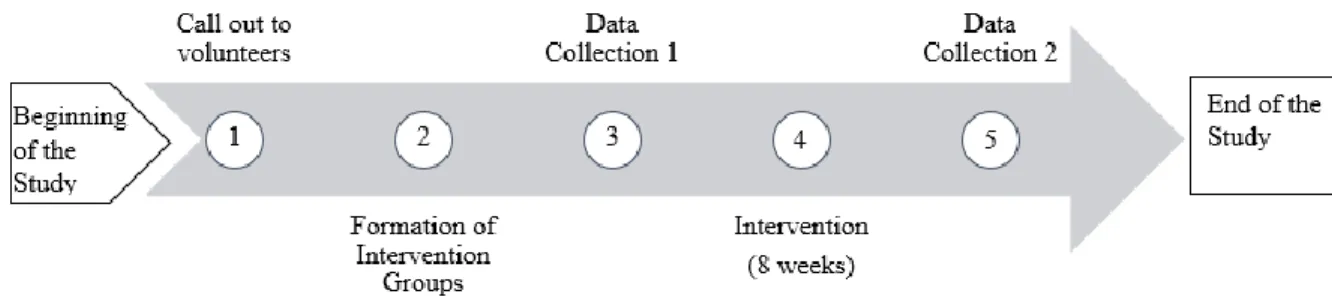
Figure 3.1 Timeline of the Study ... 49
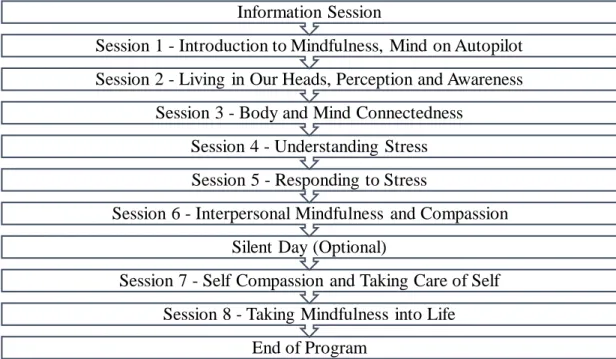
Figure 3.2 8 Weeks Modified Mindfulness Based Stress Reduction Program Curriculum ... 55
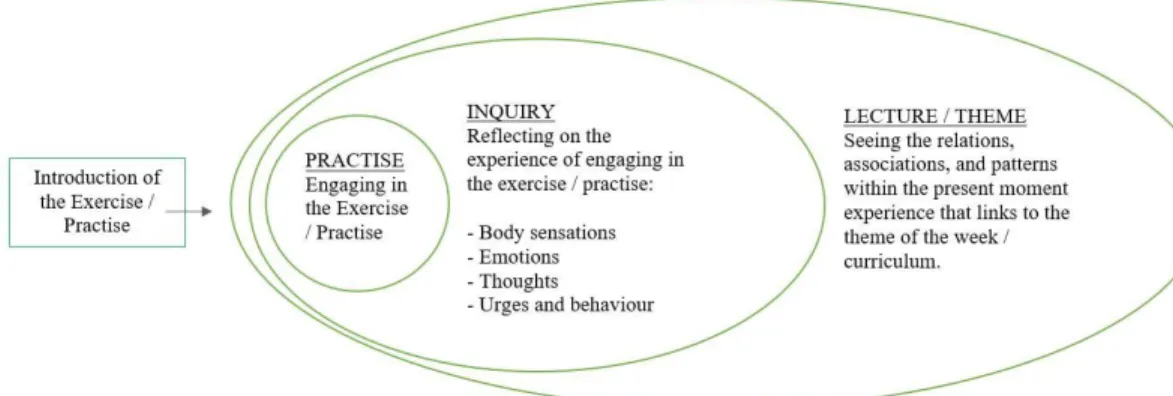
Figure 3.3 Learning Mode of the Program ... 56
Figure 4.1 Moderation Role of Extraversion on the Relationship Between Mindfulness Intervention and Psychological Capital ... 101
Figure 4.2 Moderation Role of Openness on the Relationship Between Mindfulness Intervention and Rumination ... 103
xi
LIST OF TABLES
Table 3.1 Intervention Groups ... 51
Table 3.2 List of Exercises and Practices Utilized in the Curriculum ... 58
Table 4.1 Factor Analysis of Big 5 – 50 Personality Inventory ... 75
Table 4.2 Factor Analysis of FFMQ (Pre-Test) ... 78
Table 4.3 Factor Analysis of FFMQ (Post-Test) ... 79
Table 4.4 Factor Analysis of PSS (Pre-Test) ... 81
Table 4.5 Factor Analysis of PSS (Post-Test) ... 82
Table 4.6 Factor Analysis of PCQ (Pre-Test) ... 83
Table 4.7 Factor Analysis of PCQ (Post-Test) ... 84
Table 4.8 Factor Analysis of RTSQ-SF (Pre-Test) ... 85
Table 4.9 Factor Analysis of RTSQ-SF (Post-Test) ... 86
Table 4.10 Factor Analysis of AAQ-II (Pre-Test) ... 87
Table 4.11 Factor Analysis of AAQ-II (Post-Test) ... 87
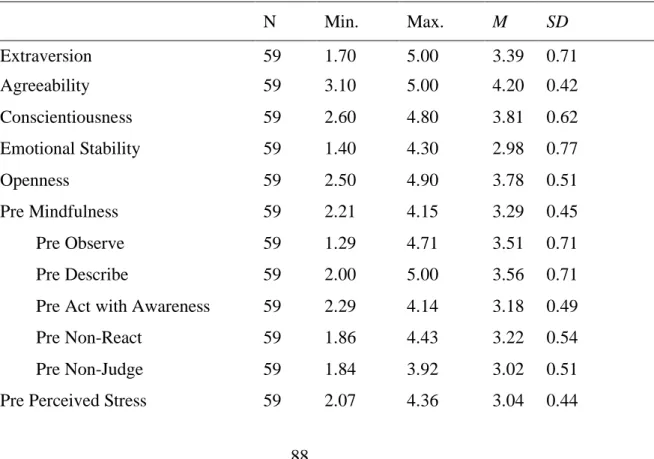
Table 4.12 Descriptive Statistics ... 88
Table 4.13 Correlational Analysis of the Variables ... 90
Table 4.14 Data Normality Analysis ... 92
Table 4.15 Paired Sample T-Test Analysis ... 94
Table 4.16 Wilcoxon Signed Rank Analysis ... 96
Table 4.17 Summary of Pretest Posttest Comparisons ... 97
Table 4.18 Moderation Effect of Personality Traits on Mindfulness ... 99
Table 4.19 Regression Analysis for Psychological Capita ... l00 Table 4.20 Effects of Mindfulness Intervention on Psychological Capital at Values of Extraversion ... 101
Table 4.21 Pretest-posttest Rumination Difference Scores as Predicted by Big Five Traits... 103
xii
Table 4.22 Moderation Effect of Mindfulness Intervention on Rumination at Values of Openness ... 104 Table 4.23 Moderation Effect of Personality Traits on Psychological
Flexibility... 104 Table 4.24 Moderation Effect of Personality Traits on Stress ... 105
xiii
LIST OF ABBREVIATIONS
AAQ Acceptance and Action Questionnaire
AAQ-II Acceptance and Action Questionnaire Version II ACT Acceptance and Commitment Therapy
B5KT-50-Tr Big 5 Personality Traits Big Five Personality Questionnaire CAS Cognitive Attentional Syndrome
CFT Compassion Focused Therapy CMT Compassionate Mind Training DBT Dialectical Behavior Therapy
FFMQ Five Facet Mindfulness Questionnaire MBA Mindfulness Based Approach
MBCL Mindfulness Based Compassionate Living MBCP Mindfulness-Based Childbirth and Parenting MBCT - C Mindfulness Based Cognitive Therapy for Cancer MBCT - L Mindfulness Based Cognitive Therapy for Life MBCT Mindfulness Based Cognitive Therapy
MBI Mindfulness Based Intervention
MBIP Mindfulness Based Intervention Program MBP Mindfulness Based Program
MBSR Mindfulness Based Stress Reduction MCT Metacognitive Therapy
MiSP Mindfulness in Schools Project
m-MBSR Modified Mindfulness Based Stress Reduction MSC Mindful Self Compassion
PCQ Psychological Capital Questionnaire PSS Perceived Stress Scale
xiv RFT Relational Frame Theory
RTSQ-SF Ruminative Thought Style Questionnaire Short Form SIYLI Search Inside Yourself Leadership Institute
xv ABSTRACT
The aim of this study was to investigate the effectiveness of an 8-week modified Mindfulness Based Stress Reduction (MBSR) program and empirically demonstrate how mindfulness training would increase mindfulness, alleviate psychological distress and promote positive psychological affect, whilst exploring moderation role of personality traits. A modified version of the MBSR program was designed for a non-clinical population and delivered to participants (N=59) who are working adults. The result of the pretest – posttest analysis indicated that following the intervention, mindfulness, psychological capital, and psychological flexibility significantly increased, while perceived stress and rumination significantly decreased. Effect sizes included large, medium and small effects, mindfulness being the most strongly affected (d=.86), followed by rumination (d=.56), perceived stress (d=.55), psychological flexibility (d=.41) and psychological capital (d=.21). A positive correlation between mindfulness and openness trait, and a negative one between mindfulness and neuroticism trait was observed in line with the previous literature. Moderation analysis revealed that introverts as compared extroverts, and highly open participants as compared those who are less open, benefited from the training the most in terms of an increase in psychological capital and decrease in ruminative thinking, respectively. Overall, this study is in line with similar studies on the empirical results of the mindfulness training programs in the international literature. Additionally, by providing a moderation analysis using specific personality traits, this study extends the literature on factors of individual differences that influence the success of mindfulness trainings.
xvi ÖZET
Bu araştırma 8 haftalık modifiye edilmiş Mindfulness (Bilinçli Farkındalık) Temelli Stres Azaltma (MBSR) programının bilinçli farkındalığı arttırma, psikolojik sıkıntıyı hafifletme ve olumlu psikolojik etkiyi desteklemedeki etkililiğini ampirik olarak göstermek ve kişilik özelliklerinin bu program üzerindeki düzenleyici rolünü incelemek amacıyla hazırlanmıştır. Araştırmanın örneklemini yapılan duyuruya olumlu cevap vermiş ve çalışma hayatı olan genel popülasyondan katılımcılar oluşturmaktadır (N = 59). Ön test – son test analiz sonuçlarına göre müdahale programı sonrası bilinçli farkındalık, psikolojik sermaye ve psikolojik esnekliğin anlamlı düzeyde yükseldiği, algılanan stres ve ruminasyonun anlamlı düzeyde azaldığı gözlemlendi. Etki büyüklükleri arasında büyük, orta ve küçük etkiler yer alırken, en çok etkilenen bilinçli farkındalık (d=.86), ardından ruminasyon (d=.56), algılanan stres (d=.55), psikolojik esneklik (d=.41) ve psikolojik sermaye (d=.21) olarak belirlendi. Ayrıca literatüre uyumlu olarak bilinçli farkındalık ve deneyime açıklık kişilik özelliği arasında pozitif, bilinçli farkındalık ve nevrotiklik kişilik özelliği arasında negatif yönde korelasyon bulundu. Moderasyon analizi, dışadönüklerle karşılaştırıldığında içe dönüklerin ve deneyime daha az açık olanlara kıyasla deneyime daha açık olan katılımcıların psikolojik sermayede artış ve ruminatif düşüncede azalma bakımından müdahale programından daha çok yaranlandığını ortaya koydu. Çalışmanın sonuçları uluslararası literatürdeki bilinçli farkındalık eğitim programlarının ampirik sonuçları üzerine olan benzer çalışmalar ile paraleldir. Ayrıca, bu çalışma kişilik özellikleri moderasyon analizi sunarak bilinçli farkındalık eğitimlerinin başarısını etkileyen bireysel farklılıklara dair literatürü genişletmektedir.
1 CHAPTER I
INTRODUCTION
1.1 Overview
Mindfulness has been a popular concept in the recent years. Originally a 2,600 years old Buddhist notion (Brown & Ryan, 2003; Dunne, 2011), today, modernized applications of mindfulness practice find place in almost all areas of life; in the fields of psychotherapy, chronic pain management, cancer care, grief intervention, stress management, wellbeing, personal effectiveness, leadership training, education, interpersonal relations, child birth and parenting, justice system, politics, community care and sports performance. There is an extensive selection of mindfulness-based programs that are offered, ranging from 8 weeks in-class group intervention programs to couple of hours long seminars, mobile applications that offer bite-size teachings as short as 10 minutes, guided recordings of many kinds, video in demand programs, distance learning or seclusive retreats, presented by a trained therapists or a teachers, or as a self-help programs, to suit any type of demand. Publication on mindfulness is extensive, there are more than 30,000 search results on Amazon about mindfulness that range from academic text books to self hep books, magazines dedicated to mindfulness and meditation can be found even in supermarket aisles, news, articles, white papers appear in the press every day. According to the National Health Statistic Report, 18 million people in United States meditate, (Clarke, Black et al. 2015), and in the UK, 26% of British adults reported that they practice meditation, and 14% does it regularly (Halliwell, Mental Health Foundation Report, 2010). Mindfulness is presented as a panacea for a wide range of problems by eager marketeers, and it is estimated to be over a one-billion-dollar industry in the United States alone.
2
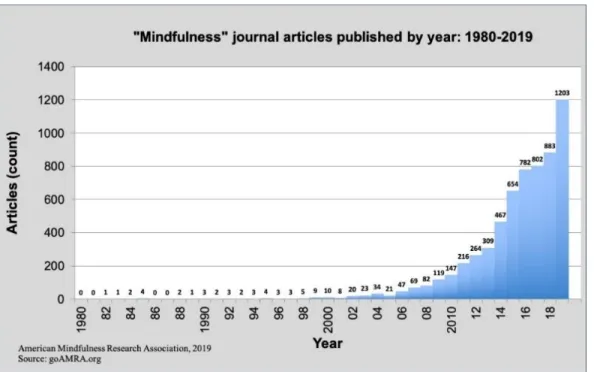
Along with the extensive application in the field, the scientific research on mindfulness has also been growing. As depicted in the figure down below, which is taken from the website of American Mindfulness Research Association, there is a substantial growth in the scientific research on mindfulness.
Figure 1.1. Mindfulness Journal Articles Published by Year
A quick survey of the literature shows that mindfulness meditation is found to be strongly correlated with psychological wellbeing (coping with depression, anxiety, stress), empathy and resiliency, as well as increased task performance, attention span and memory improvement (Hyland et al., 2015; Brown & Ryan, 2003). Among other benefits of mindfulness, the most common are; self-regulation (Glomb et al., 2012), emotional regulation (Chambers, Gullone, & Allen, 2009), getting out of mindless autopilot mood and disengaging from cognitive schemas (Shapiro, Astin, & Freedman, 2006), enhanced cognitive capacities (Jha et al., 2010), decreased anxiety (Shapiro, Brown, & Biegel, 2007), decreased psychological distress (Shonin et al., 2013) and
3
increased psychological flexibility (Hayes & Strosahl, et al., 2004). Although there are concerns regarding possible harm that meditation may cause, these concerns are relevant for any potent instrument, and when empirically supported programs are delivered by competent teachers to the carefully assessed participants, benefits of mindfulness-based programs are salient (Baer et al., 2019).
Most of the research in the area is in the field of clinical psychology, and research on mindfulness for general health and specifically for employee wellbeing is emerging. A meta-analysis that looked over 20 intervention trials, 10 controlled, 7 uncontrolled and 3 quasi studies, total sample size of 1,542 people, concluded that mindfulness-based intervention has medium size statistically significant effect on physical and mental health. Conclusion also stated that mindfulness may help with problems of both clinical and non-clinical nature (Grossman et al., 2004).
There are currently many training offerings in Turkey, both for individuals and also for work place, to boost physical and psychological wellbeing and also as a preventive measure to avoid psychological distress, increase attention, enhance performance, regulate emotions, promote creativity and cultivate a positive organizational climate. In line with the previous research and current popularity of the subject, a research on the effectiveness of mindfulness training in Turkish context is missing in the literature. A study on mindfulness intervention would present empirical evidence on effectiveness of this approach for alleviating psychological distress and promoting general wellbeing for non-clinical populations in Turkish context too.
1.2 Purpose of this study
Purpose of this study is to look at effectiveness of an 8-week Mindfulness Based Intervention (MBI) among Turkish urban workforce population. Using a quantitative
4
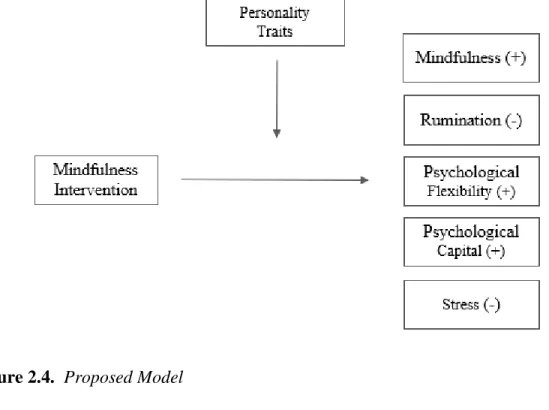
method, the researcher aims to explore whether mindfulness training would increase mindfulness levels of the participants whilst decreasing psychological distress and elevating positive affect. The study focuses on the most common psychological distress factors such as stress and rumination, and positive affect, namely psychological capital, and psychological flexibility.
The study will also look at the role of personality traits as moderators of the relationship between mindfulness training and the outcomes. Research in the field of individual differences suggests that some people may be more dispositional to benefit from mindfulness intervention. A meta-analysis from 32 samples in 29 studies showed that neuroticism and conscientiousness are both negatively correlated with mindfulness, whereas openness is positively correlated with mindfulness (Giluk, 2009). Baer et al. (2006) also “predicted and observed a positive correlation between mindfulness and openness, and an inverse relationship with neuroticism”. The current study aims to explore and demonstrate empirical evidence on the relationship of mindfulness and personality traits in line with the previous research.
Since there are various programs on mindfulness that are available to general population, the program that will be offered for the scope of this study will be based on the MBSR program, developed by Jon Kabat-Zinn in 1979 (Kabat-Zinn, 1990), which sets the golden standard in the field and it has been studied extensively in the literature. The program will also carry elements from Mindfulness Based Cognitive Therapy (MBCT), Mindful Self Compassion (MSC) and Compassionate Mind Training (CMT) programs, to serve the specific needs of the population at hand, whilst it aims to demonstrate that a modified MBSR program (m-MBSR) is still effective as long as it carries the necessary characteristics of a mindfulness-based program.
5 CHAPTER II
LITERATURE REVIEW
2.1 Mindfulness
2.1.1 Operational Definition for Mindfulness
Defining mindfulness is not a straightforward task. First, the word mindfulness may be used to describe more than one thing; “a psychological trait, the practice of cultivating mindfulness (e.g., mindfulness meditation), a mode or state of awareness, or a psychological process” (Germer, Siegel, & Fulton, 2005). As a psychological concept it has both trait and state like qualities (Hülsheger et al., 2013). Since the word is used interchangeably to describe more than one construct, it is important to define mindfulness through a concrete specific operational definition before any attempt on empirical evidence.
According to its Buddhist roots, mindfulness is “being conscious of what one is doing, having a clear sense of one’s mental state and bodily feelings, which is about acknowledging impermanence of body, feeling and mind” ” (Shonin, Van Gordon & Singh, 2015). Zen master Thich Nhat Hahn says mindfulness is “keeping one’s consciousness alive to the present reality” (Hahn, 1976). Founder of the MBSR program, Jon Kabat-Zinn defines mindfulness as “process of bringing a certain quality of attention to moment-by-moment experience” (1990). A similar description is made by Williams, Teasdale and Segal, stating that “mindfulness is the awareness that emerges through paying attention on purpose, in the present moment, and nonjudgmentally to things as they are” (2002). An alternative definition is
6
“mindfulness is a kind of nonelaborative, nonjudgmental, present-centered awareness in which each thought, feeling, or sensation that arises in the attentional field is acknowledged and accepted as it is” (Shapiro & Schwartz, 1998). Another alternative can also be “a state of psychological freedom that occurs when attention remains quiet and limber, without attachment to any particular point of view” (Martin, 1997).
Based on these descriptions it can be concluded that mindfulness offers a nonbiased, perspective-less state of mind, overriding the schemas and constructs of the mind and therefore ‘mindful people’ have a heightened awareness of their body and mind, clarity of thoughts, sensations, and emotions, and a certain unreactive pattern of behavior to things that happen to them and around them (Keng et al., 2011; Brown et al., 2007). Research also suggests supports this explanation. It is suggested that prolonged mindfulness practice enhances working memory capacity (Roeser et al., 2013), increases cognitive flexibility, the ability to perceive multiple perspectives or thoughts (Bishop et al., 2004), provides an improved mental and emotional flexibility when dealing with problems (Good & Lyddy, 2015), increases self-regulation (Glomb et al., 2011; Hülsheger & Schewe, 2011), and provides a sense of mastery on urges and behaviors (Glomb et al., 2011).
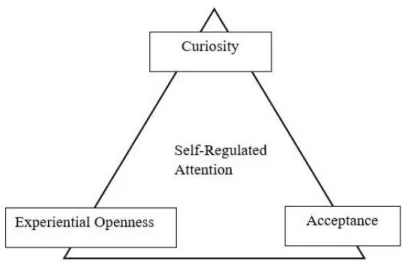
In the article “Mindfulness: A Proposed Operational Definition” Bishop et al. suggests a conclusive operational definition for mindfulness (2004). After studying the previous literature and works of other scholars in the field, Bishop and friends suggest a two-component model for mindfulness, which can be summarized as “self-regulated attention along with, an open, curious, and accepting orientation towards experience.”
7 2.1.1.1 Self-Regulated Attention:
Attention is the cognitive behavioral process of noticing the environmental information. It can be voluntary, like paying attention to learn a task, or involuntary, like noticing the fire alarm. According to Bishop and colleagues, mindfulness begins with using the process of attention to “observe and attend to the changing field of thoughts, feelings, and sensations from moment to moment, by regulating the focus of attention.” (2004) In mindfulness context, this would be what is said to be here and
now, being fully present with all that is happening around us, as well as inside of us.
Self-regulated attention requires the ability to switch between various events, all happening at the same time, for example noticing the sensation of breathing, a thought, or a feeling that arises in the moment, and therefore would involve training the switching ability of attention.
Another aspect of attention self-regulation is the “nonelaborative awareness of thoughts, feelings, and sensations as they arise.” (Bishop, 2004). Normally, people have a tendency to acknowledge the stimuli, and the innate experiences that accompany the stimuli as positive or negative (Frijda, 1988). However, in a mindfulness practice people would be invited to notice the tendency to categorize these experiences as positive or negative, or sometimes as wanted or not wanted, as it is referred in a mindfulness class. This would often be described as “being an impartial observant of your own experience”, meaning “not getting tangled up in our own experience by elaborating on its origins, implications, and associations, but being able to observe and notice all mind and body events as they are, with a direct experience” (Teasdale, Segal, Williams, 1995).
As the descriptions above suggest, mindfulness is about being aware of whatever is present. A common misunderstanding about mindfulness is that it means
8
getting rid of thoughts, emptying the mind, suppressing the emotions, or ignoring body sensations. On the contrary, mindfulness would not try to get rid of any mind or body happening but would consider all of it as object of observation. Once noticed and acknowledged, attention would be deliberately directed back to breath or any other choice of anchor point, preventing further elaboration. Since attention has limited capacity (Schneider & Shiffrin, 1977), stopping secondary elaboration of cognitive processes opens up more space for information related to current experience, creating a wider perspective without the filter of our beliefs, assumptions, expectations, and desires (Bishop, 2004). In this two component model of mindfulness, mindfulness is considered to be a metacognitive skill, “cognition about one’s cognition” (Flavell, 1979), involving “self-regulation of attention, attention switching, and the inhibition of elaborative processing” (2004).
2.1.1.2 Orientation to Experience
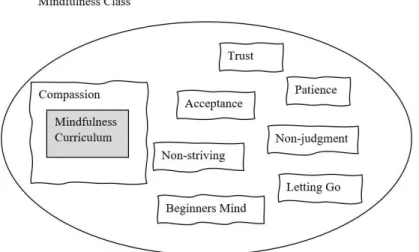
Orientation to experience is an important component of mindfulness and without this specific orientation, mindfulness training would merely be an attention training. The orientation to experience is commonly known as the mindful attitudes which define the specific quality of the behavior towards what is noticed through attention. This quality of behavior is key to ‘being mindful’ (Kabat-Zinn, 2013). According to Kabat-Zinn there are seven mindful attitudes, which serve as the pillars of mindful presence, which are judgment, patience, beginner’s mind, trust,
non-striving, acceptance, and letting go which can be cultivated through mindfulness
training. He also names compassion, generosity, gratitude, forgiveness, kindness,
empathic joy and equanimity as the other qualities which arise from deepening the
practice of mindfulness (Kabat-Zinn, 2013). Compassion has a special place in the mindfulness curriculum and is defined by Kabat-Zinn; “mindfulness eventually is a
9
radical act of self-compassion”. Kabat-Zinn explains this, by saying that compassion is the fabric in which the curriculum is conveyed through, and that there is an implicit teaching of compassion within the curriculum. Compassion will be described in more detail in the following chapters. Figure 2.2 describes the teaching of attitudes in relation to the mindfulness curriculum as described by Kabat-Zinn (2013).
Figure 2.1. Attitudes in a Mindfulness Class
In line with Kabat-Zinn’s attitudes, in the two-component model, Bishop and colleagues state that the orientation to present moment experience that is adopted and cultivated in a mindfulness practise can be defined as curiosity, acceptance, and
experiential openness (2004).
Orientation begins with curiosity, which is twofold:
(1) when the mind wanders off, which it typically does, carrying the commitment of curiosity and coming back to the direct experience instead of being drifted,
10
(2) being curious about whatever arises in the moment, thoughts, feelings, sensations, and urges, and observing what is here.
The person who is engaged in the mindfulness meditation is not trying to create a specific type of experience, like relaxation, instead, is just curiously observing what is here now. By this way, the person engages in acceptance, which is defined as “being experientially open to the reality of the present moment” (Roemer & Orsillo, 2002). Acceptance also means realizing to have an expectance for things to be in a certain way, and letting go of this expectance by allowing current thoughts, feelings, and sensations to be as they are (Hayes, Strosahl, & Wilson, 1999), which is an active process of facing whatever is there with an openness, which leads to the third component, experiential openness (Bishop et al., 2004). Figure 2.3 below elaborates and recaps the model of .
11
2.1.2 Origins of Mindfulness Based Psychology
The concepts and practices described in the field of mindfulness has been part of many schools of thought, such as and not limited to Stoicism in the ancient Greece and Sufism in Islam (Murgula & Diaz, 2015; Mirdal, 2010), however, it is Buddhism that have studied the concept and the practices of mindfulness extensively. Therefore, before looking into the mechanisms of mindfulness interventions, we should look at the historical Buddhist roots of the concept to understand present-day mindfulness-based psychology.
Western travelers and scholars who have travelled to the east and learned about mindfulness have introduced this concept to the western world. The original Buddhist text of Satipaṭṭhāna Sutta is one of the historically oldest documents that describes the concept of mindfulness, and it serves as the foundational text in the field. Sati in Pali language, one of the two languages that most Buddhist texts are written in, the other being Sanskrit, means ‘mindfulness’ and paṭṭhāna may mean ‘foundation’, ‘presence’ or ‘establishment’, and finally the word sutta means ‘discourse’, consolidating one possible meaning of Satipaṭṭhāna Sutta as “Discourse on the Foundation (Establishment) of Mindfulness” (Thera, 2005).
According to Satipaṭṭhāna Sutta, the goal of practicing mindfulness is to attain
nibbana in Pali, more widely known as nirvāṇa as in Sanskrit. Nirvāṇa means
liberation from the repeated rebirth in saṃsāra, literal translation being the world or
wandering, or in more metaphysical context, repeated cycle of birth and death that is
considered to cause suffering by its very nature, because suffering is an inevitable part of human condition since humans age, get sick, have ill will and die, which cause suffering. The term nirvāṇa is often translated as enlightenment in to English, and popularly considered as a spiritual state, however, the literal translation of the word
12
nirvāṇa is awakening, and in a more naturalistic context, it may mean to be informed
about the nature of the mind, thus ending the cycle of saṃsāra. In this context,
‘attaining nirvāṇa’ may not mean attaining a supernatural, spiritual or a metaphysical state, but simply a calm presence, free from the inner conflict that causes psychological suffering that arises from the nature of our minds, which is an inevitable result of being human and being alive, often referred as the human condition (Collins 1998; Wright, 2017).
Siddhārtha Gautama, who was a historical figure born in present-day Nepal, and was commonly known as the Buddha after supposedly attaining nirvāṇa himself, explains this concept of inevitable psychological suffering that arises from being human, in the foundational doctrine of Buddhism, “The Four Noble Truths” as;
(1) in life there is suffering (dukkha in Sanksrit) and it is inevitable, (2) the origin of suffering is “craving” which is wanting things to be in a
certain way,
(3) there is a way to end suffering while living,
(4) and following the Eightfold Path (a set of practices that Buddha recommends, mindfulness meditation being one) serves as a formula to end the suffering (Teasdale & Chaskalson, 2011)
The Sanskrit word dukkha is commonly translated as suffering, but other translations include pain, unsatisfactoriness, grief, misery, distress, worry, sorrow,
unhappiness, and stress (Tyson & Pongruengphant, 2007). It is important to
understand Jon Kabat-Zinn’s, the innovator of the modern-day mindfulness, understanding of dukkha to understand how he introduced mindfulness into the mainstream psychology through the Mindfulness Based Stress Reduction (MBSR) program since formation of the MBSR was pivotal in shaping the general
13
understanding of mindfulness and its applications today because Kabat-Zinn’s 8 weeks course, MBSR was designed as a remedy for dukkha (Wilson, 2014). Kabat-Zinn says in his own words:
Mindfulness was introduced to western world in the 19th century and by the time
Kabat-Zinn developed the MBSR program there were already many teachers who have been teaching mindfulness (Rapaport et al., 1998). There were also books such as Zen
Buddhism and Psychoanalysis by Erich Fromm (1960), and Psychotherapy East and West by Alan Watts (1961) that introduced eastern philosophy and mindfulness to
mainstream psychology. However, it was Kabat-Zinn’s ‘secularization’ of the concept by cutting the obvious ties with Buddhism, which made mindfulness more palatable to wider circles, and attractive to academicians and scientists to consider mindfulness as a possible form of treating psychological distress. Kabat-Zinn explains the link between Buddhism and mindfulness as such:
“I want to make a connection between the words stress in English and our general concept of it in this society, and the Buddhist concept of dukkha”. (Rapaport et al., 1998).
“I did not shy away from explicitly stating its Buddhist origins, however, from the beginning of MBSR, I bent over backward to structure it and find ways to speak about it that avoided as much as possible the risk of it being seen as Buddhist, ‘New Age’, Eastern Mysticism, or just plain ‘flakey.’ To my mind this was a constant and serious risk that would have undermined our attempts to present it as commonsensical, evidence-based, and ordinary, and ultimately a legitimate element of mainstream medical care.” (Kabat-Zinn, 2011).
14
The main technique of treatment in mindfulness practice is meditation. Meditation is a broad term, and it refers to a “family of self-regulation practices that focus on training attention and awareness in order to bring mental processes under greater voluntary control and thereby foster general mental wellbeing and development and/or specific capacities such as calm, clarity, and concentration" (Walsh & Shapiro, 2006). There are various kinds of meditation (Ospina, Bond et al., 2008), mindfulness meditation being one. In Satipaṭṭhāna Sutta, it is described that in order to ease suffering, one must be aware of, train and calm the feelings, sensations and thoughts and the reactions of the mind in response to these, and that the method of training is meditation. There are two types of meditation; concentration meditation (samatha) which is for calming the mind, and the other technique is insight mediation (vipassana) for understanding and gaining insight into the mind. These two types of mediation form the basis of present-day mindfulness applications.
Buddha discloses the following practices in The Eightfold Path which are total of 8 recommendations that are categorized in three parts, wisdom (paññā), mind training (samadhi), and ethics (sila) to end earthly suffering, in other words psychological distress:
Wisdom; achieved by Insight (vipassana) meditation
(1) right view (2) right intention
Mind training; achieved by Concentration (samatha) meditation
(3) right effort (4) right mindfulness (5) right meditation
15
Ethics; achieve by moral behavior in everyday actions
(6) right speech (7) right action
(8) right means of livelihood (Huxter, 2015)
The MBSR program also emphasizes the practices of insight and concentration meditations, without the ethical context (sila) attached to it, which is something Kabat-Zinn is criticized for. While some thinks that explicit ethics training is needed for effective delivery of any type of mindfulness training, some argues that ethics is already implicit in even secular MBIs. Nevertheless, Kabat-Zinn takes a stance against the critiques, saying that to place the program on a scientific basis there had to be changes to be made. In his own words he had written:
In conclusion, Kabat-Zinn with no formal training in psychology, but being a Doctor of Medicine, a scientist and an academic, he applied scientific method to mindfulness and has formed the basis of evidence-based mindfulness psychology as we know today. His vision and efforts in recontextualizing mindfulness meditation have started a whole new wave in the mind-body holistic approach to human psyche. Today mindfulness-based practices can be learned by individuals from all kinds of
“The intention and approach behind MBSR were never meant to exploit, fragment, or decontextualize the dharma, but rather to recontextualize it within the frameworks of science, medicine (including psychiatry and psychology), and healthcare so that it would be maximally useful to people who could not hear it or enter into it through the more traditional dharma gates, whether they were doctors or medical patients, hospital administrators, or insurance companies.”(Kabat-Zinn, 2011).
16
backgrounds, and anybody can benefit from the approach without any attachments to any religious or philosophical teaching (Wright, Day & Howells, 2009). Present day mindfulness researchers are studying and linking the wisdom of this ancient human practice with significant clinical findings in psychology, medicine, and neuroscience.
2.1.3 Mechanisms and Evidence for Mindfulness Based Interventions
By practicing mindfulness and honing attention in a certain way as described in insight and concentration meditation techniques, feelings, senses, emotions, and thoughts are brought into awareness in a certain unbiased and unreactive pattern, which is assumed to alleviate distress and promoting positive affect.
The skills that are learned in a mindfulness class begin with “approaching one’s experience with an orientation of curiosity and acceptance, which sets the stage for intensive self-observation” (Bishop et al., 2004). Since mindfulness is as a process of “exploratory awareness that involves observing the ever-changing nature of the personal experience”, the participant makes an intentional effort to observe and gain a greater understanding of the nature of his or her own thoughts and feelings, whatever arises in the stream of consciousness in the present moment. As sensations, feelings and thoughts arise, discriminating between different elements of experience, such as realizing that a sensation is different than a feeling, or a thought is different than a sensation is one of the objects of the practice. In a way, the body and the mind are a laboratory for self-observation, and the practitioners are invited to be curious about their experience rather than being rigid and dutiful in order to practice ‘right’. Therefor an important part of mindfulness training involves experiential psychoeducation on the mechanism of cognitive processes.
17
Once learned, practicing mindfulness is easy and convenient. Despite the popular images such as fancy meditation accessories, postures and settings, one does not need any of these to practice mindfulness. Mindfulness meditations and practices can be practiced anywhere, for any duration of time, with no special gear needed, making it easily accessible to practice at work, during commute, and in break times.
Development of mindfulness over a prolonged practice would result in greater capacity to recognize the complex nature of emotional states that are linked to body sensations and thoughts, increasing emotional awareness. Similarly, with prolonged exercise of curiosity and acceptance through mindfulness, it is expected that the cognitive and behavioral schemas decrease, and “dispositional openness increase, a trait that is characterized by curiosity and receptivity to new experiences” (Costa & McCrae, 1987). When perception about self and the world are assessed through a non-judgmental and observative state of mind, a state of meta-cognition is thought to be achieved (Jankowski & Holas, 2014), and when meta cognitive insight is available, there is a greater capacity to see relationships between thoughts, feelings and actions and realize the patterns of behavior, developing insight to a person’s psyche, to the unique construct of it causes, meanings, and motives (Segal, Williams, & Teasdale, 2002). Finally, another result of metacognitive insight may also be a change in perspective on the self (Lazar, Hölzel et al. 2011; Grecucci, Pappaianni et al. 2015).
Further benefit of prolonged practice, and perhaps one of the most beneficial ones, is acquiring an attitude of acceptance towards painful or unpleasant thoughts and feelings (Hayes et al., 1999). Through awareness, “emotional distress would be experienced as less unpleasant and threatening, since the context of acceptance changes their subjective meaning” (Bishop et al., 2004). Additionally, since negative and positive emotion regulation predicts negative and positive emotional reactions, respectively, this plays an important role in resilience and subjective wellbeing (Ng &
18
Diener, 2009). Assessing and responding to emotions with awareness, enabling the person to regulate emotions without pushing them away or getting tangled up in them, is one of the skills learned through practice of mindfulness. Taking a more mindful stance towards one’s experiences and emotions may be helpful in enhancing emotion regulation and limiting reactivity (Linehan, Bohus, & Lynch, 2007). A meta-analysis on literature in this field also suggests that mindfulness is correlated with more positive emotional tone (Eberth & Sedlemeier, 2012).
In line with the theoretical underpinnings described above, research suggests that mindfulness decreases emotional reactivity (Arch & Craske, 2006), stabilizes attention and decreases negative mind wandering (Mrazek, Smallwood & Schooler, 2012), decreases the emotions of fear, anger and worry (Robins et al., 2012), reduces stress (Ciesa & Serretti, 2009) and provides better recovery from work related strain (Hülsheger et al., 2015). Additionally, mindfulness is not only associated with alleviation of psychological distress, but also elevation of positive affect. Research suggests that mindfulness is correlated with higher levels of positive affect (Keng et al., 2011), daily experiences of positive emotions (Fredrickson et al., 2008), more hopeful attitudes (Malinowski and Lim, 2015), lower cynicism (Taylor & Millear, 2016), and overall happiness (Killingsworth, 2010).
Research tools in this area does not only involve self-report scales or observation, but also using technology such as functional magnetic resonance imaging and electroencephalography. Findings with these methods suggest that “meditation appears to reflect changes in anterior cingulate cortex and dorsolateral prefrontal areas,”, “shrinking of the amygdala”, and “increase in hippocampus”. These suggest that people who engage in meditation may have better attention and emotional regulation, and that meditation may protect preservation of white and grey matter” (Cahn & Polich, 2006; Chiesa, Brambilla, Serretti, 2011; Lazar, Hölzel, et al., 2011).
19
As a final note, mindfulness training has also a direct effect on the body through the peripheral nervous system. “The purpose of mindfulness meditation is not relaxation” is a statement often repeated by mindfulness teachers to the disappointment of mindfulness students. However, whilst meditating majority of the people slow their breathing down even if there is no explicit direction to do so. In one study, both the experienced and novice meditators reported to have slower respiration rates compared to controls at rest and during the meditation (Ahani et al., 2014). When breathing slowly, ‘rest-digest-relax’ part of our nervous system, namely the parasympathetic nervous system is engaged, as opposed to sympathetic nervous system (Jerath et al., 2006). Engaging in parasympathetic nervous system slows the heart rate, regulates the blood pressure, improves sleep and digestion, and normalizes the stress hormones (Benson, Beary & Carol, 1974). In conclusion, mindfulness is thought to have direct effects on the physical body, and it is thought to reduce stress reactions of a person through various neurobiological mechanisms. (Creswell & Lindsay, 2014).
In summary, mindfulness research indicates that the mechanism of mindfulness meditation works through the following elements;
(1) attention regulation,
(2) body and mind awareness, ability to realize and differentiate sensations, thoughts, feelings, moods
(3) distancing from thoughts a process known as ‘cognitive defusion’ (4) a gained insight into one’s psyche
(5) emotion regulation
(6) change in perspective on the self (7) soothing of the nervous system
20
2.1.4 Characteristics of Mindfulness Interventions
Interest in mindfulness resulted in a rapid increase in types of programs that are offered in the field. However, to be effective, the programs should pass the integrity check and comply with the evidence-based mindfulness protocols. To define the qualities of mindfulness programs and mindfulness teaching, Crane et al. (2017) suggest that the warp and the weft metaphor is an appropriate one to understand what makes a mindfulness program effective. “In weaving, the term warp defines the fixed thread, and the term weft defines the transverse thread that makes each tapestry unique, giving it’s texture and color” (Crane et al., 2017). Just like with the warp and weft analogy, a mindfulness-based program should have certain fixed qualities that are unique to the essence of mindfulness, and specific customization and variations that are unique to the context and the population. Therefore, in order to successfully adapt a mindfulness-based program to a unique population, the program creator should keep in mind the specific characteristics of the participants, and also the context in which the program material will be taught, whilst “being loyal to the essential, constant, and integral parts of a mindfulness-based program” (Crane et al., 2017).
The essential and integral parts of an MBP is described as;
(1) being based on contemplative traditions, science, and the major disciplines of medicine, psychology, and education,
(2) follows a model of human experience which is designed to target the causes of human distress,
(3) has a present moment focus,
(4) supports the development of greater attentional, emotional and behavioral self-regulation, as well as positive qualities such as compassion and wisdom,
21
(5) engages the participant in a sustained intensive training in mindfulness meditation practice and provides an experiential inquiry-based learning process, (Crane et al., 2017).
It should be noted that evidence based positive research results that reflect the effectiveness of mindfulness programs originate from first or second-generation teachers. These teachers were either contemporaries of Kabat-Zinn or other teachers that come from Buddhist tradition, or people who have learned directly from them. Since we are now moving into a new phase in mindfulness teaching, it is crucial that the program curriculums are well designed, adhering to the principles of mindfulness protocol, in order to successfully deliver evidence-based effective mindfulness programs (Crane, Kuyken, Williams, 2012).
Apart from the program qualities, another important aspect of the effective mindfulness-based intervention is teacher competence. In order to deliver an beneficial program, the teacher is expected to;
(1) have competencies for effective delivery of the MBP,
(2) have capacity to embody the qualities and attitudes of mindfulness within the teaching,
(3) has undertaken appropriate training and commits to ongoing good practice,
(4) is part of participatory learning process with the participants, patients, and clients (Crane et al., 2017).
Jon Kabat-Zinn states that “the quality of MBSR as an intervention is only as good as the MBSR instructor and his or her understanding of what is required to deliver a truly mindfulness-based program.” (Kabat-Zinn, 2011), a point that is important to
22
reflect on. Mindfulness interventions are not considered therapy on their own, but may be used as part of therapy, and technically mindfulness interventions may be classified as experiential interventions integrated into psychoeducation. Although it is not
therapy but often it is said to have therapeutic effects, which creates an important
emphasis on teaching integrity. Just like the psychotherapist plays the utmost important role in the effectiveness of a treatment psychotherapeutically, the personal competence and teaching integrity plays the most important role in deliverance of the mindfulness curriculum.
Therefor well-rounded mindfulness teachers are assessed in 6 domains and are expected to;
(1) have mastery in the coverage, pacing, and organization of each session, adherence to the curriculum but also appropriate level of flexibility in adherence,
(2) have relational skills which is described as having compassion, warmth, curiosity and respect for the participants, authenticity in forming connections,
(3) embody mindfulness, with a present moment focus and responsiveness, calm and alert with the attitudinal foundations of mindfulness,
(4) have competency in guiding the mindfulness practices, using spacious and invitational language,
(5) convey the course themes through interactive inquiry-based dialogue, and,
(6) create a learning container for the whole group meeting in common humanity (Crane, Kuyken, Rothwell, Williams, 2010)
23
In conclusion, mindfulness is a new area of development and adherence to the standards in the field is important to maintain the reliability of the programs and the effectiveness of the treatment.
2.2 Mindfulness Based Interventions
Currently there are many mindfulness-based programs that are offered for a diverse variety of conditions to various audiences, both clinical and non-clinical in nature. Almost all mindfulness-based group programs are a derivative of the original Mindfulness Based Stress Reduction (MBSR), first designed and delivered in 1979-80. Programs that are utilized in the scope of this study, MBSR, Mindfulness Based Cognitive Therapy (MBCT), and mindfulness-based compassion programs and their derivatives are discussed in detail in the next sections.
2.2.1 Mindfulness Based Stress Reduction (MBSR)
As discussed in the previous sections, Jon Kabat-Zinn’s personal history with Buddhism plays an important role in the development of the MBSR program. Although Kabat-Zinn no longer identifies himself as a Buddhist (Kabat-Zinn, 2010, Interview with Danny Fisher), it was due to his encounters with the Buddhist teachings that inspired him to develop the MBSR program. Today, the MBSR program is offered by many universities, medical centers, hospitals, and health maintenance organizations for coping with stress, pain, and anxiety, and is estimated to have reached over 25,000 people.
24
When Kabat-Zinn was a PhD student at the Massachusetts Institute of Technology (MIT) between the years of 1964 – 1971, he was also a Zen Buddhism student attending the teachings of Philipp Kapleau, Thich Nhat Hanh and other Buddhist teachers. In 1976, when he started working for University of Massachusetts he was also maintaining his private Buddhist practices, and also taking on new roles such as being the founding member of the Cambridge Zen Center and teaching at the Insight Meditation Society. His idea of taking this ancient Buddhist practice out of religious and philosophical context and applying it to distresses of the mundane life was shaped after a vision he had during a silent retreat. Shortly after, in 1979, he started the Stress Reduction Clinic and the Center for Mindfulness in Medicine, Health Care, and Society at the University of Massachusetts Medical School (UMass CFM),where he was still working as a professor, and delivered the MBSR program first for chronic pain management, and later for stress management (Kabat-Zinn, 1990; Kabat-Zinn, 2003). The core aim of the MBSR program is to reduce stress reactivity to one’s experiences, focusing on the habituated reactions to stressors and realizing
skillful and unskillful ways of responding to difficulties. Skillful ways are described as
adaptive behaviors towards alleviating immediate and future distress, whereas unskillful ways are described as dysfunctional behaviors that create more distress (Kabat-Zinn, 2013).
MBSR program is an eclectic program delivered in a group setting, typically 6 – 20 people, although groups as big as 40 people are not unusual, depending on the teacher’s experience. Both educational and therapeutic in nature, it offers meditation skills training, contemplative practices, physical movement in yoga poses, psychoeducation on the nature of the human mind and distress, inquiry based Socratic dialogue, poem and story reading for reflection, and group support all tailored into 2.5 – 3 hours long sessions that are offered once a week for 8 weeks. An additional 6 -7 hours long Silent Practice Day typically takes place in the 6th week. In addition to the
25
in-class training, participants undertake daily at home meditation and other daily life practices, such as journaling and some other informal meditative exercises that require them to invest around 50 – 90 minutes daily. Jon Kabat-Zinn gives a detailed curriculum of the program in his book Full Catastrophe Living, published first in 1990, and revised later in 2013. The curriculum has been updated couple of times, published and circulated by UMass CFM. Currently the most up to date curriculum version is the Mindfulness-Based Stress Reduction (MBSR) Authorized Curriculum Guide 2017, revised and edited by Saki Santorelli, Florence Meleo-Meyer, and Lynn Koerbel, under the supervision of Jon Kabat-Zinn.
Another important features of the MBSR program is the experiential learning environment, in which the group leader would create a non-didactic atmosphere where the key elements of mindfulness are ‘conveyed rather than taught’ (Crane & Kuyken, 2012). This puts a great emphasis on the competence and quality of the teaching, and requires an in dept training, typically over a 1 – 3 years for a person to become an MBSR teacher. Although there is not an official guideline on the qualifications for being an MBSR teacher, typically the bare minimum requirement is that an MBSR teacher should receive 150 – 250 hours of training and additional supervision. Additionally, teachers should have at least 5 – 10 days silent retreat experience before teaching a mindfulness group and are expected to practice mindfulness personally for at least 6 months to 1 year prior to starting mindfulness teacher training. The most important qualification of an MBSR teacher is that she or he would be expected to
embody the concept of mindfulness personally within the class, expressing attention
and gentle orientation towards the present moment experience in all engagements with the group (Crane & Kuyken, 2010).
MBSR is used as a ‘template’ for designing other mindfulness-based interventions and there are many other programs, designed for a variety of clinical and
26
non-clinical settings based on the MBSR. Some noteworthy mentions are Mindfulness-Based Eating Awareness Training (Kristeller & Wolever, 2010), Mindfulness-Based Relapse Prevention (Bowen et al., 2009), BREATHE in Reconciliation, a trauma sensitive MBSR for communities affected by violence, Mindfulness-Based Trauma Recovery for Refugees in Israel (University of Haifa), Mindfulness-Based Childbirth and Parenting (Hughes, Williams, Bardacke et al., 2009), Mindfulness-Based Mind Fitness Training for military personnel and civilians that serve in high stress environments (Stanley et al., 2011), Eline Snel Method for Children (2013), Mindfulness in Schools (MiSP) Project with a specific curriculum designed for children aged 7 to 11 (Paws .b curriculum), and for children aged 11 to 18 (.be curriculum), and Koru Program designed for university students.
2.2.2 Mindfulness Based Cognitive Therapy (MBCT)
Mindfulness Based Cognitive Therapy (MBCT), originally designed for treatment of relapsing depression, is an 8-week mindfulness-based group intervention that combines the MBSR program with an underpinning of psychological framework from cognitive behavioral therapy (CBT), as conceptualized and applied by Beck, (Segal, Williams & Teasdale, 2002). Compared to MBSR, MBCT classes are shorter, approximately 2 hours, instead of yoga, mindful movement is introduced, and there are additional curriculum elements of CBT exercises. Also, MBCT classes are typically smaller groups, 6 to 15 people.
The core aim of the MBCT program is to increase psychological resilience by being aware of and changing one’s relationship with the ‘cognitive reactivity’, which is defined as “the tendency to reach to small changes in mood with large changes in negative thinking”, therefore there is an explicit focus on the role of cognitive patterns
27
in creating and maintaining distress within the curriculum (Segal, Williams, and Teasdale, 2002). MBCT is a unique intervention, a cross between psychoeducation and therapy, and may ultimately be categorized as a therapy, however unlike traditional therapies instead of trying to “fix problems” the emphasis is on letting things to be as they are. This notion of ‘letting things to be instead of fixing them’, often referred as being mode versus doing mode in a MBCT class, allows MBCT to have a softer stance, with more self-compassion and flexibility as opposed to traditional CBT (Crane, 2017).
As scientist and clinicians working in the field of psychology, Mark Williams, John Teasdale and Zindel Segal were not particularly interested in mindfulness to begin with. They were working on possible theoretical frameworks for a maintenance therapy for depression relapse. They started to share ideas with each other as early as 1989, and after investigating various theories, models and applications including MBSR, they have decided to add an attention training component to the standard CBT. Eventually, they “discarded the ‘therapy’ framework all together and adopted a more mindfulness-based approach. Later, they decided to “integrate core cognitive therapy principles with sustained mindfulness practice” finalizing the MBCT protocol as we know today (Segal, Williams & Teasdale, 2002).
MBCT was specifically designed for depression relapse and the research suggest that MBCT is an effective way to prevent relapse of depression with patients with 3 or more previous episodes (Ma & Teasdale, 2004). A meta-analysis that included six randomized controlled trials with a total of 593 participants also confirmed this finding, additionally, it was concluded that MBCT was at least as effective as maintenance antidepressant medication for people who had 3 or more episodes (Piet, 2011). However current research shows that MBCT may be an
28
effective treatment not for depression only, but for other anxiety as well (Hofmann et al. 2010; Evans, 2016).
MBCT is a versatile program and its applications broadened since its introduction. Currently MBCT is adapted for a wide range of clinical and non-clinical contexts, since MBCT is considered not only clinically effective, but also cost-effective, for both treatment and prevention of psychological distress. Adaptations of MBCT include medically unexplained symptoms, social anxiety, bipolar disorder, combat related post-traumatic stress disorder, epilepsy, insomnia, couple therapy and such (Eisendrath, 2016). Some specific program adaptions of MBCT are, MBCT – L (Life), designed for non-clinical settings with a more focus on resilience and positive psychology, MBCT – C, Cancer for Care of Cancer patients, survivors and care givers, (Bartley, 2011), Finding Peace in Frantic World program (Williams & Penman, 2011) a self-help program which is sometimes referred as ‘MBCT light’.
There is an extensive research on applications of MBCT in the field and it is sometimes considered as an updated version of MBSR by practicing teachers in the field, a curriculum that is firmly rooted in evidence-based science.
2.2.3 Mindfulness-Based Compassion Programs
Compassion focused mindfulness interventions are a derivative of the MBSR program with an explicit teaching emphasis on self-compassion. Programs in this category are Compassionate Mind Training (CMT) by Paul Gilbert (2006), Mindful Self Compassion (MSC) by Chris Germer and Kristen Neff (2013), and Mindfulness Based Compassionate Living (MBCL) by Erik van den Brink and Frits Koster (2015).
29
The core aim of these programs is to cultivate compassion as a method of alleviating psychological distress.
To understand programs in this category, we would need to look into the Buddhist origins of the notion of compassion and its relation to mindfulness. In Buddhist psychology, karuṇā (compassion) together with mindfulness are referred as
two wings of a bird, stating that these two concepts are inseparable, and are to be
practiced together. Kabat-Zinn says: “Mindfulness without heartfulness is not mindfulness.”, and to be practicing mindfulness, it must be done with kindness and compassion (Kabat-Zinn, 2013). This is also important for understanding criticisms towards practicing mindfulness alone, without the ethical principles, as discussed in the earlier chapters. Practicing mindfulness with an intention of kindness and compassion may make up for the missing component of ethics that some people think secular mindfulness trainings lack, which would help to cultivate right type of mindfulness.
In Buddhist teachings, compassion is one of the four noble virtues (the others are mettā; loving kindness, active good will towards others, mudita; is sympathetic joy, and upekkha; is the non-reactive, non-partial balanced state towards all beings). Compassion is considered an immeasurably valuable quality because it is believed that since the ultimate purpose of life is annihilation of self through reaching nirvana, which ends the repeated cycle of suffering, not causing more suffering, is not only an important ethical consideration, but also necessary to break free from the repeated cycle of suffering. Compassion is thought to be antidote for suffering and Buddhists engage in various practices such as veganism, or ahimsa, nonviolence, because they see these practices as direct ways to cultivate compassion in everyday life. Practices like Mettā, which is a special form of concentration meditation, in which phrases of good will and kindness such as “May you be well, may you be happy, may your