AN OVERVIEW OF COMPACTION EQUATIONS
BASILABİLİRLİK EŞİTLİKLERİNE GENEL BAKIŞ
Tansel ÇOMOĞLU
Ankara University, Faculty of Pharmacy, Department of Pharmaceutical Technology, 06100 Tandoğan-Ankara,TURKEY
ABSTRACT
The background, theoretical and experimental requirements of powder compaction equations have been briefly reviewed in this paper. There have been many equations proposed but none has proven to reflect both powder properties and to be successfully applied in research and development and production environments. However, the equations most commonly used are Heckel and Kawakita ones, because they alone have claimed to be able to relate to the physical properties of the materials being compacted. In this article, advantages, limitations and modifications of some of these compaction equations have been discussed.
Key words: compaction, compaction equations, Walker-Bal’shin equation, Heckel equation, Kawakita and Ludde equation, The Cooper-Eaton model, Leunberger equation, Shapiro equation, Sonnergaard equation
ÖZET
Bu yazida tozların basımında ve sıkışabilirliğinde yararlanılan eşitliklerin altyapıları, teorik ve deneysel gereklilikleri özetlenmiştir. Önerilen pek çok eşitlikten hiçbiri tozların özelliklerini tam olarak yansıtmamakta ve hem araştırma, geliştirme hem de üretime uygulanamamaktadır. Ancak, bunlardan Heckel ve Kawakita eşitlikleri basılan materyalin fiziksel özellikleri ile ilişkili olduğundan en çok kullanılanlarıdır. Bu makalede, bazı sıkışabilirlik eşitliklerinin avantajları, limitleri ve modifikasyonlarından söz edilmiştir.
Anahtar kelimeler: basılabilirlik, basılabilirlik eşitlikleri, Walker-Bal’shin eşitliği, Heckel eşitliği, Kawakita ve Ludde eşitliği, The Cooper-Eaton modeli, Leunberger eşitliği, Shapiro eşitliği, Sonnergaard eşitliği.
INTRODUCTION
The powder compaction plays an important role in the manufacture of a variety of products that include ceramics, metallic parts, fertilizers and especially pharmaceuticals (1).
The compaction of a powder is defined as its propensity, when held within a confined space, to reduce in volume under an applied pressure (2). It is generally accepted that the compaction process is partitioned in several distinct stages. Consequently, it is difficult or impossible to let one simple monovariate equation to cover the entire densification region (3). Holman (4), solved this problem by dividing the compression profile in three or four distinct parts and assigned separate equations to each region.
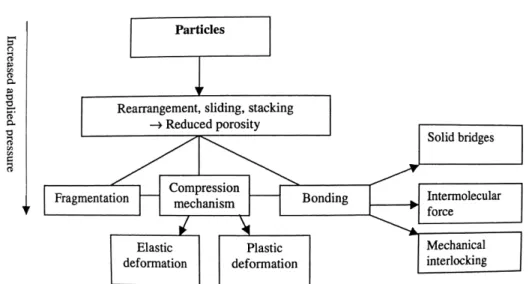
During the initial stage of compaction, i.e. at low pressures, it is commonly considered that some sliding, rearrangement or fragmentation of the particles may occur, resulting in a closer packing structure and reduced powder bed porosity. At a certain load, the reduced space and the increased interparticular friction will prevent any further interparticular movement. The reduction of the tablet volume is therefore associated with changes in the dimensions of the particles, i.e. fragmentation and deformation. Particles can change their shape temporarily by elastic deformation and permanently by plastic deformation. Particles can also fracture into of smaller particles, i.e. particle fragmentation. The particle fragments can then fall into smaller spaces, which will further decrease the volume of the powder bed. These small particles can then, when pressure is further increased, undergo deformation. One single particle may undergo these cycle of events several times during one compression cycle.
More outlined the mechanics of compaction process can be outlined as a three-phased process (5-7);
• Packing and fragmentation,
• Deformation (and/or fragmentation), • Elastic compression.
Figure 1. The deformation mechanisms of powder particles under compression (2,8).
The tensile strength of a pharmaceutical compact is determined by interparticular bonds and may be described simply in terms of number of bonds and respective bonding forces. As seen in Figure 1, bonds may be solid bridges, intermolecular forces and/or mechanical interlocking. Particle fragmentation and particle deformation are both bond forming compression mechanisms that affect the number and the force of the interparticulate bonds, respectively. Since deformation is the most common mechanism, most of the modeling has been focused on this particular property.
The ideal requirements for a compression equation could be itemized as follows (3): • The model should cover the whole range of densification with sufficient accuracy. • The parameters should be related to physical relevent properties of the powder.
• The parameters should be sensitive to changes in formulation and experimental variables and insensitive or at least proportional to minor changes in normalisation factors like density or initial volume.
• The model and its parameters should be easily estimated by general available computer programs.
• The model should significantly differentiate between powders and dissimilar compression characteristics.
• The quality of the model should be evaluated by a combination of the range of densification covered and the goodness-of-fit to the observed data.
• The goodness-of-fit should be evaluated on the original untransformed data by analysis of the residuals and the residual standard deviation (S.D.).
• Normalisation factors such as the density or the volume at zero pressure should be reported. The initial purpose of fitting experimental data to an equation is usually to linearize the plots so as to make comparisons easier between different sets of data. The parameters of the fitting equation can also be used for comparison purposes. A second reason is a practical one of predicting the pressure to obtain a required density.
1. Walker and Bal’shin Equations
Most of the earliest attemps to study the degree of consolidation of the powders were made in the field of powder metallurgy (7,8).
Walker proposed the first known equation in 1923 (2,8,9):
V= a-K.ln P (1)
where V is the volume of the powder, P is the applied pressure and K and a are constants. In this work, K values were found to be greater for plastically deforming materials when compared to those for brittle fractured ones.
Later, Bal’shin, in 1938, published the same equation and attempted to give it some theoretical justification by applying “the concept of fluid mechanics”. However, since then, the use of this equation has no enlightment on the subject and it is little used at the present time (2,8,9):
Log P= -K.Vapp. + C (2)
where K and C are the constants, Vapp. is the apparent specific volume (=V/Vs = ρs /ρ). 2. Heckel Equation
Heckel equation is one of the most frequently used equations in the pharmaceutical research area. The equation was proposed by Heckel in 1961 and was originally developed and applied on ceramic and metal materials. Heckel considered the compaction of powders to be analogous to a first-order chemical reaction. The pores are the reactant and the densification of the bulk product. The “kinetics” of the process may be described as a proportionality between the change in the density with pressure and the pore fraction. Final form of Heckel equation can be given as (1):
ln (1/1-D)= A.P + B (3)
where (1-D) is the pore fraction, P is the applied pressure, A and B are constants.
The parameter B is said to relate to low pressure densification by interparticle motion, while the parameter A indicates the ability of the compact to densify by plastic deformation after interparticle bonding (2).
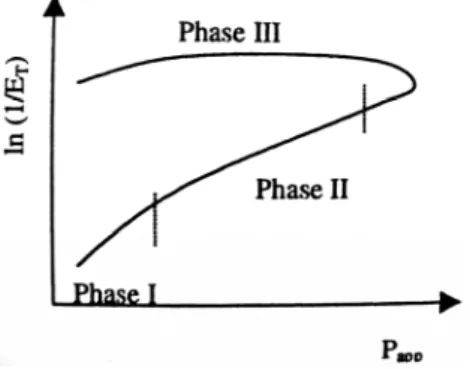
Figure 2. A typical example of a Heckel profile during compression and decompression of a powder (11).
Figure 2 illustrates a typical Heckel profile. The profile has an initial curvature (phase I), thereafter the relationship is often linear (phase II) and finally during decompression an expansion in tablet height is represented by increased tablet porosity (phase III).
In phase II, the profile follows a linearity. The nonlinearity in the early stage of compression is explained in different ways in the literature. According to Heckel himself it is probably due to the effect of rearrangement processes in the powder. Others support this theory, although it is difficult to quantify. Denny (8), contributes with additional explanations, claiming that the non-linearity is due to densification by brittle fracture or to the presence of agglomerates of primary particles, which is very common for fine powders. As agglomerates are always much weaker than the primary particles themselves, they break down at low pressures, therefore an initial curvature will be seen in the Heckel plot. Denny also suggests the possibility that the Heckel equation is incorrect and needs some degree of modification. When deriving the Heckel equation several assumptions are made, such as that the yield stres, σ0, is constant. It is more likely that the yield stress is pressure dependent. This might be expected to be the case, due to the constraining presence of neighboring particles. Further assumptions include that the compact in die is isotropic.
3. Kawakita Equation
Another equation which has received considerable attention in the field of powder compaction was developed by Kawakita and Ludde (12) and is expressed as:
Pa /C = 1/ab + Pa / a (4)
where C is the relative volume decrease , i.e,
C = (V0 –V) / V0
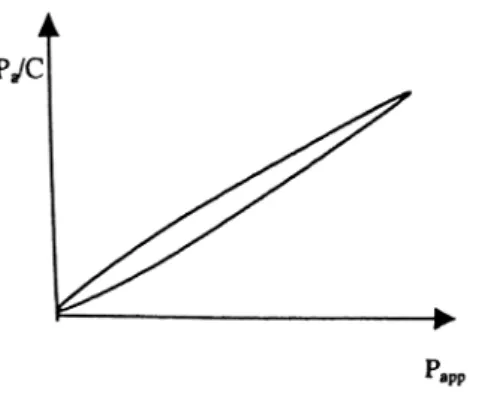
and a and b are constants. It can be seen in Figure 3 that a plot of Pa /C aganist P should give a straight line from which the constants, a and b, can be derived. It is shown that the constant, a, is equal to the value of the initial porosity, e0. In practice, it has been found that its derived value does not correspond with the measured value due often to the nonlinearity of the plots. The constant, b, has the dimension of the reciprocal of stress, but, in general, there has not been a good correlation found between its value and any mechanical property of the particles used (13). Although some Kawakita plots give good straight lines throughout the whole range of pressures over which they are plotted, many show curvature especially at the low pressure end (2) .
Figure 3. A typical example of a Kawakita profile during compression of powder (12).
The two most commonly used compaction equations; Heckel and Kawakita, have not proven to be successful in relating the densification behavior with the physical and mechanical properties of the materials. The Kawakita equation works best for only a limited range of materials, where the Heckel equation produces curved plots. Even though these two equations appear very different, it has been shown mathematically that for pressures that are relatively low compared to the yield strength, the Kawakita and Heckel equations are identical in form. It can be said that the Kawakita equation is a special case of the more general, modified Heckel equation (11,12).
4. The Cooper-Eaton Model
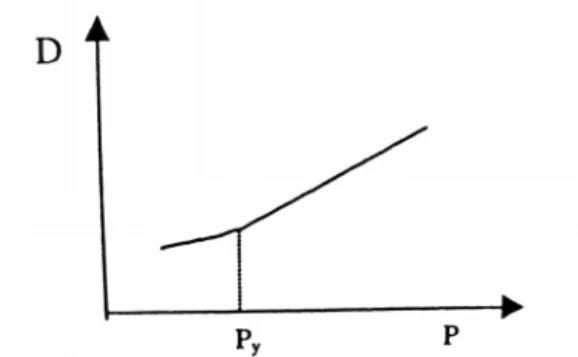
The Cooper-Eaton equation is one of the equations which is based on the assumption that compression of powder is a process that takes place in two stages, where stage 1 is filling voids, and stage 2 is fragmentation and deformation of the particles (2,9,14) (Figure 4).
(Vi – Vp) / (Vi – Vt) = C3 exp (-K3 / Pa ) + C4 exp (-K4 / Pa ) (5)
where C3 , C4 , K3 and K4 are constants.
The two terms on the right hand side of the equation are related to the slippage of particles at early stages of the compaction and to the subsequent elastic deformation, respectively. Their findings supported the opinion that the yield strength of metal powder compacts are related to the linear portion of the Heckel plots. However, the difficulty, in practical use of the equation above, is the assignment of some physical significance to the constant parameters of this equation. Another drawback of this model is the applicability only to a single-component system (9).
Van Der Zwan and Siskens (15), using the experimental points of the high pressure range only, proposed the simplification of the Cooper-Eaton equation to a single term relation as:
(Vi – Vp) / (Vi – Vt )= C5 exp (-K5 / Pa ) (6)
where C5 is equal to the sum of the constants C3 andC4 and K5 is a new constant. It was, then,
reported by these workers that Kawakita’s constant b equals approximately to the reciprocal of the constant K5 of the simplified Cooper-Eaton model, although the mathematical expressions of the
two methods are very different.
Figure 4. A typical example of Cooper-Eaton profile during compression of powder (14). Leiser and Whittemore (16), used this equation to study the effects of variables on the compaction process. They reported that the values of the constants were dependent on the lower pressures chosen to determine the constant a. The value of the constant a was also dependent on the maximum pressure tested.
5. Leunberger Equation
Another method in the field of powder compaction was proposed by Leunberger (17) who related the two important indices of powder compression; compactability (the ability of the material to yield a compact with adequate strength) and compressibility ( ability of the material to undergo volume reduction under pressure). This relationship can be expressed as:
Pdh = Pmax [ 1 – exp ( -γPa ρr) ] (7)
where Pdh is the deformation hardness, Pmax denotes the theoretical maximum deformation hardness that would be attained as Pa approaches infinity and relative density approaches 1, and γ is the compression susceptibility.
Leunberger and some other workers (17) observed a good correlation when they applied the equation above and its modified versions to the single component powders and their binary mixtures. It was noted by these workers that a low Pmax value shows a relatively poor compactability and this limiting value can not be exceeded even at very high compaction pressures. A high value of γ indicates that the theoretical limit of hardness and a sharp decrease in compact porosity may be attained with relatively low compaction pressures.
6. Shapiro Equation
Shapiro’s model is one of the models that covers the first two stages of the consolidation process (packing/fragmentation and deformation and fragmentation) (17-22).
ln E = ln E0 – kP – bP0.5 (8)
where P is applied pressure, E0 is the initial porosity, and k and b are constants.
This equation is found useful in describing the compression behavior of metal and ceramic powders with phase 1 and 2 characteristics. For metals the value of b was relatively small compared to the value of k, for ceramics it was the opposite, thus correlation with the material properties. It may be necessary to add another term to this equation in order to cover materials with phase 3 (elastic compression) characteristics, such as pharmaceuticals.
7. Sonnergaard Equation (The log-exp-equation)
A relatively new method in compaction was proposed by Sonnergaard (2,3). Two simultaneous processes were described; a logarithmic decrease that by inductive considerations was chosen to describe a reduction in volume by fragmentation and an exponential decay representing apparent plastic deformation. This log-exp-equation is based on the Walker approach.
V = V1 – w log (P) + Ve exp (-P/Pm ) (9)
where V is the volume, V1 denotes volume at pressure 1 MPa, Ve is the volume at zero pressure, P is pressure, Pm is the mean pressure and w is a parameter.
Sonnergaard claims that this equation does not only give a better regression compared to the Cooper-Eaton model and the Kawakita model, but also more information about the materials. The model has potential as a tool when investigating the strength or deformation characteristics of the granules. The model is suitable to describe compaction of materials that consolidate by fragmentation, when the investigation is done in the medium pressure range only, which is a limitation.
CONCLUSION
A number of compaction data evaluation techniques that are used to assess the deformation characteristics of pharmaceutical powders have been reviewed. None of them was found to be fully satisfactory for the comprehensive analysis of the compaction mechanisms.
It was observed that the most commonly used compaction equations were based on the relationship between the applied pressure and the volume reduction of a material being compacted. These equations were found to yield useful information on determining the stages of compaction and predominant mechanisms taking place.
In conclusion, more than one data evaluation technique may have to be applied in order to increase the validity of the results drawn from the results of a compaction study.
REFERENCES
1. Panelli R., Filho A.F. “A study of a new phenomenological compacting equation”, Powder Technology, 114, 255-261 (2001).
2. Klevan I. “Evaluation of compression parameters in the Shapiro equation”, Master Thesis, (2005).
3. Sonnergaard, J.M. “Investigation of a new mathematical model for compression of pharmaceutical powders”. Eur. J.Pharm. Sci., 14, 149-157 (2001).
4. Holman, L.E. “The compaction behavior of particulate materials. An elucidation based on percolation theory”. Powd.Tech., 66, 265 (1991).
5. Shapiro, I. “Compaction of powders XII. Evaluation of published compaction equations for modeling purposes”, Adv. Powder Metal. Part. Mat., 1, 22, (1997).
6. Seelig, R.P., Wulff, J. “The pressing operation in the fabrication of articles by powder metallurgy”. Trans AIME, 166, 492 (1946).
7. Kakar, A.K., Chaklader, A.C.D. “Deformation theory of hot pressing”. Journal of Applied Physics, 39, 2486-2488 (1968).
8. Denny, P.J. “Compaction equations: a comparison of the Heckel and Kawakita equations”. Powder Technology, 127 162-172, (2002).
9. Çelik, M. “Overview of compaction data analysis techniques”, Drug Dev. Ind.Pharm., 18(6&7), 767-810 (1992).
10. Shapiro, I. “Compaction of powders X. Development of a general compaction equation”.
Advances in Powder Metallurgy & Particulate Materials, 3, 229-243, (1993).
11. Heckel, R.W. “Density-pressure relationship in powder compaction”. Trans. Metal. Soc.
AIME, 221, 671-675 (1961).
12. Kawakita, K., Lüdde, K.H. Some considerations on powder compression equations,
Powder Technol., 4, 61 (1970/1971).
13. Ge, R. “Some considerations on the compaction equation of Kawakita”. Powder
Technology, 4, 15-23 (1993).
14. Cooper, A.R., Eaton, L.R. Compaction behavior of some ceramic powders. J. Am. Ceram.
Soc., 45, 97 (1962).
15. Zwan, Van Der J., Siskens, C. “The compaction and mechanical properties of agglomerated material”. Powder Technol., 33, 43 (1982).
16. Leiser, D.B., Whittemore, O.J. “Compaction behavior of ceramic particles”. Ceramic
Bulletin, 49, 714-717 (1970).
17. Leunberger, H. Int. J. Pharm., 12, 41 (1982).
18. Hewitt, R.L., Wallace, W., Malherbe, M.C. “The effects of strain hardening in powder compaction” . Powder Metallurgy, 17, 1-12 (1974).
19. Arzt, E., Fischmeister, H. “Fundamental aspects of compaction of metal powders”.
20. Arzt, E., Fischmeister, H. “Fundamental aspects of compaction of metal powders”. Fifth
Polish Conf.on Powder Metallurgy, Ponzan, Poland, 19-32, (1979).
21. James, P.J. “Particle deformation during cold isostatic pressing of metal powders”. Powder
Metallurgy, 20, 199-204 (1977).
22. Comoglu T. “Fundamental aspects of compression”. I.International Mediteranean
Pharmacy Congress, 28-31 October, Mersin-Turkey, 79-83, (2005).
Received: 29.06.2007 Accepted: 17.08.2007