THE EFFECT OF STUDENT AWARENESS OF GOALS ON SUCCESS IN AND ATTITUDES TOWARDS A READING COURSE AT
GAZIOSMANPAŞA UNIVERSITY
A THESIS PRESENTED BY DURSUN DEMİR
TO THE INSTITUTE OF ECONOMICS AND SOCIAL SCIENCES IN PARTIAL FULLFILMENT OF THE REQUIREMENTS
FOR THE DEGREE OF MASTER OF ARTS
IN TEACHING ENGLISH AS A FOREIGN LANGUAGE
BILKENT UNIVERSITY JULY, 2002
Title: The effect of student awareness of goals on their success in and attitudes towards a reading course in Gaziosmanpaşa University.
Author : Dursun Demir
Thesis Chairperson: Dr. Sarah Klinghammer, Bilkent University, MA TEFL Program
Thesis Members: Dr. William Snyder, Bilkent University, MA TEFL Program; Dr. Alev Yemenici, Middle East Technical University, Foreign Languages Department.
The present study investigated the effects of goal setting on students' success in and attitudes towards a reading course. Moreover, the study also revealed the
relationship between attitudes towards reading in general and attitudes towards a reading course, attitudes and gender, and attitudes and proficiency level.
The study was conducted in the preparatory classes at Gaziosmanpaşa
University, Tokat, Turkey. Fifty-two (twenty female, thirty-two male) pre-intermediate level preparatory students participated in this study.
The study sought to investigate three research questions. The first research question compared the relationship between the subjects' attitudes towards reading in general and toward their reading course, further differentiated according to gender and proficiency level. The second research question concerned the effect of goal setting on attitudes towards a reading course. The third research question concerned the effect of goal setting on success. Concerning the second and third research questions, two
hypotheses were made: 1) Students who set their personal goals will show more positive attitudes than students in the control group. 2) Students who set their personal goals will
other as the control group, were selected. Prior to the treatment both groups took an attitude survey and an achievement test.
The survey consisted of forty items. Subjects were asked to indicate their
responses to each statement on a 5-point Likert-scale, from "strongly agree" to "strongly disagree". The test consisted of fifty questions.
The experimental group was provided with the goal list of the reading course every week and required to write down some of the goals to be practiced in the subsequent week, whereas the control group just followed their regular syllabus. The treatment lasted for eight weeks.
After the treatment, both groups took the same survey and the same test they took prior to the treatment. The data were analyzed by running t-tests. The results of the pre-survey revealed that (a) Subjects had significantly more positive attitudes towards reading in general than they had towards the reading course (p<. 01). (b) Female students had slightly more positive attitudes than male students but the difference was not significant. (c) High proficient students had more positive attitudes than low proficient students and the difference was significant (p<. 05).
Post-survey results indicated that setting goals does not foster more positive students attitudes thus, the first hypothesis was rejected. Posttest results indicated that setting goals does not increase students success thus, the second hypothesis was rejected, also.
success in the same course, the changes were not statistically significant. However, it is difficult to make generalizations about the findings of the current study because of limitations of time and treatment.
BILKENT UNIVERSITY
INSTITUTE OF ECONOMICS AND SOCIAL SCIENCES MA THESIS EXAMINATION RESULT FORM
July 31, 2002
The examination committee appointed by the for the Institute of Economics and Social Sciences for the thesis examination of the MA TEFL student
Dursun Demir
has read the thesis of the student.
The committee has decided that the thesis of the student is satisfactory.
Thesis Title : The effect of student awareness of goals on their success in and attitudes towards a reading course at Gaziosmanpaşa University
Thesis Advisor : Dr. Sarah Klinghamer
Bilkent University, MA TEFL Program Committee Members : Dr. William Snyder
Bilkent University, MA TEFL Program Dr. Alev Yemenici
We certify that we have read this thesis and that in our combined opinion it is fully adequate, in scope and quality, as a thesis for the degree of Master of Arts.
____________________ Dr. William Snyder (Chair) ____________________ Dr. Sarah Klinghammer (Committee member) ____________________ Dr. Alev Yemenici (Committee member)
Approved for the
Institute of Economics and Social Sciences
___________________________________ Kürşat Aydoğan
Director
ACKNOWLEDGEMENTS
I would like to express my gratitude to my advisor Dr. Sarah Klinghammer who provided encouragement and expert advice throughout the scope of the study.
I am also grateful to Dr. William Snyder and Ms. Julie M. Aydınlı for their valuable ideas and assistance.
I would like to express my sincere thanks to my friend H. Tüzün Pacçı who has helped me to carry out this study. My thanks also go to Mustafa Çiğdem for giving me permission and making the experiment at Gaziosmanpaşa University possible.
I owe special thanks to my lovely sisters Şafak Demir, Naile Gül Acerbaş, my dear friend Nurullah Yazar, and my cousin Süleyman Demir who have always been with me and supported me throughout the study.
Finally, I would like to express my biggest thanks to my beloved mother for always being there for me and giving me moral support and her love.
Dedicated to the memory of my father Hüseyin Demir
TABLE OF CONTENTS
LIST OF TABLES ... xi
LIST OF FIGURES ... xii
CHAPTER 1 INTRODUCTION ... 1
Background of the Study ... 1
Statement of the Problem ... 4
Significance of the Problem ... 4
Research Questions ... 5
Hypotheses ... 6
CHAPTER 2 LITERATURE REVIEW ... 7
Introduction ... 7
Attitudes ... 7
Definition ...…… 7
Factors Affecting Attitudes ...……. 9
Promoting Positive Attitudes ... 11
Attitude and Achievement ... 15
Goals ... 19
Definition ... 19
Goal Setting Theory ... 23
Effects of Goal Setting on Achievement ... 25
Effects of Goals on Attitudes ... 28
CHAPTER 3 METHODOLOGY ... 31
Introduction ... 31
Subjects ... 32
Materials ... 33
Goal List ... 34
Goal Check-list and Cards ... 34
Attitude Survey ... 35
Pretest and Posttest ... 36
Data Collection Procedures ... 37
Variables ... 39
Hypotheses ... 40
Analytical Procedures ... 40
CHAPTER 4 DATA ANALYSIS ... 42
Summary of the Study ... 42
Data Analysis Procedures ... 43
Results of the Study ... 44
Findings on the First Research Question ... 45
Findings on the Third Research Question ...…... 52
Results of the Pretest ... 52
Results of the Posttest ... 53
Conclusions ... 54
CHAPTER 5 CONCLUSIONS ... 56
Summary of the Study ... 56
Discussion of Findings ... 57
The First Research Question ... 57
The Second Research Question ... 57
The Third Research Question ... 58
Limitations of the Study ... 58
Subjects ... 59
Length of Treatment ... 59
Unexpected Problems in Procedure ... 60
The Teacher's Behavior ... 60
Pre and Posttest ……….. 60
Pedagogical Implications ... 61
Implications for Further Research ... 62
REFERENCES ... 64 APPENDICES ... 71 Appendix A: Reading Goals ... 71 Appendix B: Goal Check-list ... 72 Appendix C: Goal Cards ... 73 Appendix D: Attitude Survey ... 74 Appendix E: Pretest / Posttest ... 77 Appendix F: Questionnaire to Determine Goal Awareness ... 86
Appendix G: Informed Consent Form ……….. 87
Appendix H: Reading Passages Used in Orientation ... 88
Appendix I: The Results of the Questionnaire to Determine Goal Awareness ...……….. 89
LIST OF TABLES
TABLES PAGES
1 Achievement goal analysis of classroom climate... 20 2 Characteristics of Subjects by Group... 34 3 Mean Values of Attitudes Towards Reading and Attitudes Towards the Reading Course... 46 4 Mean Values of Responses Given by Male and Female Subjects on the
Pre Survey... 46 5 Mean Values of Responses Given by the High Proficient and Low
Proficient Subjects on the Pre Survey... 48 6 Mean Values and Gain Scores of Responses Given by the Subjects
in the Experimental Class on the Surveys Given at the Beginning
(Pre Survey) and End (Post Survey) of Treatment... 49 7 Mean Values and Gain Scores of Responses Given by the Subjects
in the Control Group on the Survey Given at the Beginning
(Pre Survey) and End (Post Survey) of Treatment... 50 8 Comparison of Scores of Subjects in Experimental and Control Groups
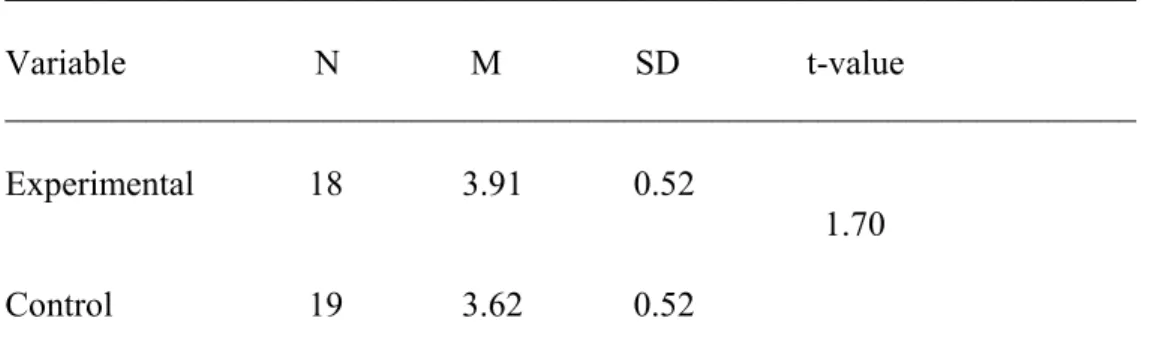
on Post Survey... 51 9 T-test for Independent Samples (Pretest)... 52 10 T-test for Independent Samples (Posttest Results)... 53
LIST OF FIGURES
FIGURE PAGE
1 Model of the acquisition and development of second language
CHAPTER 1: INTRODUCTION
The purpose of this study is to determine whether student awareness of personal goals increases academic success and improves attitudes towards a reading course. Moreover, the study investigates whether there is a relationship, between attitudes towards reading in general and attitudes towards a reading course, attitudes of male and female students, and those of high proficient and low proficient students.
The study was conducted in the preparatory classes at Gaziosmanpaşa
University, Tokat, Turkey, in the spring of 2002. Two classes, one experimental group and the one control group, were selected for the study. Fifty-two (twenty female, thirty-two male) pre-intermediate level Turkish preparatory students aged from 17 to 26 participated in this study.
Background of the Study
Although goals of a course are written in the curriculum, students are generally believed to be unaware of these goals because goals are mostly set by teachers,
supervisors, or administrators in Turkey. Students are rarely included in the goal setting process of the curriculum. However, if students are given a chance to set their own goals, this may increase their goal awareness. The researcher’s hypothesis is that setting and being aware of their own goals may influence students' academic success and attitudes. Determining the effect of goal awareness for each student would be a time consuming task. Therefore, this study focused on one group of students and the effect of goal awareness on their success in and attitudes towards a reading course.
Reading, which is defined by Urquhart and Weir (1998) as “dealing with the message in written or printed form” (p. 14), is one of the four skills that is often taught
to language learners. Whether as preparatory classes or freshmen classes, most universities in Turkey have reading courses. Gaziosmanpaşa University is a Turkish-medium university where there are three English preparatory classes. Students from seven departments have the option of going to preparation classes. Among the preparation classes, there is a separate reading course to prepare the students to read academic texts related to their subjects in their subsequent years at the university. One of the factors that might affect the success of this course is the students’ attitudes towards it.
Success is generally defined as the achievement of what somebody is trying to do. In terms of education, “success” refers to student achievement of the goals written in the curriculum. So, every school tries to establish an education program best able to help students achieve these goals. The aim of designing curriculums, choosing better
materials, training teachers in teacher training courses, trying to use the latest technological devices in education, and spending money on education is to increase student success. Yet, these are not enough for successful education. As Brown (1994) suggests, there are some other factors, such as age, sex, personality, learning styles and strategies, acculturation, motivation, and attitudes that affect the success of any course. Attitudes are referred to as a person’s positive or negative feelings towards an object, person, or situation (Beck, 2000). According to Savignon (1983), learners’ attitudes are the most widespread and important variables in language acquisition. Savignon says that “... ultimate success in learning to use a second language would most likely to be seen to depend on the attitude of the learner” (p. 110). Cheng (1995) agrees that attitudes of learners may affect their success. Attitudes affect success via motivation. Day and
Bamford (1998) state that students with positive attitudes are more motivated to learn and those with poor attitudes are demotivated, and so they have difficulties in
understanding the subject matter.
Attitudes are not permanent; they can be changed. So, it is important for teachers to know the sources of attitudes as, with such knowledge, they can help students change negative attitudes to positive ones. Day and Bamford (1998) state that there are four sources of attitudes toward second language reading which are “first language reading attitudes, previous experiences with learning to read second languages, attitudes toward the second language, culture, and people, and the second language classroom
environment” (p. 23).
According to research carried out by Brooks (1996), there is a positive
relationship between learning outcomes and attitudes toward the target language. While positive attitudes have been found to increase students’ proficiency, negative attitudes decrease it (Brown, 1994), so, it is important for teachers to try to foster positive student attitudes. In order to nurture positive attitudes towards reading, teachers can implement strategies such as avoiding repetition of unsuccessful teaching activities, using relevant, interesting, and enjoyable materials, and encouraging extensive reading (Brooks, 1996). There is also a relationship between students’ positive attitudes and their setting personal goals. Whether students’ attitudes are influenced by goal setting was
investigated by Wicker, Brown, Hagen, Boring, and Wiehe, (1991). They found that students have positive attitudes when they are aware of the goal they are trying to accomplish. The study also showed that setting difficult goals increased the study time and the importance students gave to the subject matter.
The term “awareness” has also been discussed and used in the field of language learning since the early 1980s (Fairclough, 1992). Awareness can be said to be learner consciousness about what they are doing and why they are doing it (Van Lier, 1996). Generally, some students are believed to be unaware of what they are learning and why they are learning it. Being given a chance to set their own goals for learning may make them aware of their goals, which, as a result, may lead to greater success and more positive attitudes towards a course.
Statement of the Problem
As stated earlier, in Turkey almost every university has reading courses. There are many factors that affect the success of these courses, one of which is believed to be the attitudes of the students toward the courses. The goals of the students may play an important role in influencing their attitudes, provided that students are aware of their goals. Since goals in a curriculum are mostly determined by instructors, administrators, or institutions in Turkey, students may be unaware of what the goals of a course are. One of the best ways to make students aware of goals is to help them set personal goals. This study aims to investigate whether student awareness of goals affects their success in and attitudes towards a reading course.
Significance of the Problem
While there have been a number of important studies about attitudes towards reading (Brooks, 1996; Frank, 2001; Gettys & Fowler, 1996; McKenna, 1997; Mosher, 1999;), the relationship between attitudes and success (Hogsten & Peregoy, 1999; Wagner, 1994) and the effect of goal setting on performance (Bennett, 2000; Page-Voth & Graham, 1999), there seems to be a gap in the literature about the attitudes of students
towards a reading course and the effects of goal setting on the attitudes of students towards a reading course, which are the topics of this study. Moreover, research on this topic seems to examine the attitudes of students towards reading in their mother tongue. However, this study investigates the attitudes of students towards a reading course in a second language, in this case English.
Revealing the attitudes of the students towards a reading course is important because, as Brooks (1996) and Waters, Martelli, Zakrajsek, and Popovich (1988) suggest, it is necessary for teachers to be aware of student beliefs and attitudes in order to be able to deal with them appropriately.
Also, although the study was carried out at Gaziosmanpaşa University, it may provide useful information to other universities with English courses.
Research Questions
This study addresses the following research questions:
1) What are the attitudes of the students towards their reading course at Gaziosmanpaşa University, in Tokat?
2) Does the setting and awareness of personal goals affect students’ attitudes towards the reading course?
3) Does the students’ awareness of their goals affect their success in the reading course?
Hypotheses
The null hypothesis: The setting of personal goals and checking them every week doesn’t affect students' success in and attitudes towards a reading course.
Experimental hypothesis 1: Students who set their personal goals each week will develop positive attitudes towards a reading course demonstrating more positive
attitudes towards the reading course than the students in the control group, who do not set personal goals.
Experimental hypothesis 2: Students who set their personal goals each week demonstrate a higher level of performance than students in the control group.
CHAPTER 2: LITERATURE REVIEW Introduction
The purpose of this study was to investigate the effects of a goal setting process on students’ reading achievement and attitudes toward their reading course. This study also seeks to investigate the relationships between attitudes towards reading and
attitudes towards the reading course, attitudes and gender, and attitudes and proficiency level.
In this chapter, previous research in areas related to this study will be reviewed. The first section of this chapter deals with attitudes. Several factors which affect attitudes, promoting positive attitudes, and the attitude-achievement relationship are discussed. The second section focuses on goals. Here, literature on achievement goals, goal setting theory, the goal-achievement, and the goal-attitude relationship are
reviewed.
Attitudes Definition
The concept of attitude, which was researched and developed by social
psychologists (Olson, & Zanna, 1993; Reutzel & Hollingsworth, 1991), has been the subject of many articles and studies over the past four decades. Although it is a complex concept (Day & Bamford, 1998), many definitions have been attempted to describe it. Beck (2000) defines attitude as a person’s negative or positive feelings about a specific person, object, or situation. While Gardner (1985) uses the term to refer to an
individual’s beliefs and opinions about an object, Olson and Zanna (1993) use it to refer to a person’s negative or positive evaluations of something. Therefore, attitudes can be
regarded as both relatively weak and strong emotional and affective responses toward an object (Beck, 2000).
Henerson, Morris, and Fitz-Gibbon, (1987) state that “esteem,
self-perception, self-concept, self-confidence, and locus of control” are different aspects of attitudes and, thus, instruments devised to measure these properties indirectly measure attitudes, as well (p. 40).
In terms of reading, attitude is “ a state of mind, accompanied by feelings and emotions, that makes reading more or less probable” (Smith, 1991, p.1).
Attitudes are said to have three components: cognitive, affective, and conative. The cognitive components are the beliefs, opinions, information, and perceptions about the object; the affective components are one’s evaluations or feelings about it; and the conative components are concerned with one’s behavioral actions (Beck, 2000;
McKenna, Kear, & Ellsworth, 1995; Olson & Zanna, 1993). There is some disagreement about this categorization, for example, Alexander (1988) uses the term “behavior” instead of conation to refer to the individuals’ actions related to their feelings.
Apart from these three components of attitudes in general, Lewis and Teale (1980) developed a multi-dimensional conceptualization of reading attitudes. According to this conceptualization, a representation of reading attitudes consists of three
components: the individual development factor (the value placed on reading as means of personal development); the utilitarian factor (the value placed on the role of reading as a means of educational or vocational achievement); and the enjoyment factor (the pleasure brought by reading). This conceptualization attempts to show that reading attitudes can affect individual and professional development as well as shape the use of spare time.
Factors Affecting Attitudes
In order to understand the influence of attitudes in academic settings, an in-depth look at the nature and factors that influence attitude development is necessary. By nature, attitudes are related to one’s feelings, and therefore can easily be shaped by certain external factors. In the academic setting, these factors can be classified into five major groups: (a) demographic differences (b) home environment, (c) classroom environment, (d) teacher influence and (e) achievement.
Demographic factors include gender (Baker & Wigfield, 1999; Friend, 1995; Hogsten & Peregoy, 1999; Shepston & Jensen, 1996;), chronological age (McKenna, 1994; Shepston & Jensen, 1996), intelligence (Day & Bamford, 1998; Mathewson, 1994), and ethnicity (Baker & Wigfield, 1999; Walberg & Tsai, 1985). Studies focusing on gender differences concluded that girls had consistently more favorable attitudes towards reading than did boys (Hogsten & Peregoy, 1999; McKenna, 1997; Shepston & Jensen, 1996). A reason why girls had more positive attitudes than boys may be due to the fact that girls are better readers, and they engage in it for pleasure more than boys do (Hogsten & Peregoy, 1999), or may be due to societal values leading girls to develop reading abilities earlier than boys (McKenna, 1994). In the same regard, another study by Kelly (1986) indicated that a majority of the students in kindergarten to high school classes perceived reading as a girl's activity. Anderson, Tollefson and Gilbert (1985) found that students’ attitudes become less favorable as they continue their education, so primary school students were found to have more positive attitudes towards reading than high school students. Further, the researchers stated that the change in students’ attitudes may be due to the fact that as children grow older, more and more leisure activities
become available for them, which reading must compete with, so even the attitudes of successful readers may become less positive as they get older. However, there are some other studies like, Brooks (1996) and Smith (1990), which showed no change in the attitudes of students over time.
As to the factors affecting student attitudes caused by the classroom
environment, curriculum (whether it meets students’ needs or not), the organization of classroom, the type of instructional program and content, class size, the task, the
material’s difficulty, and teaching techniques are the most prominent (Fredericks, 1982; Rye, 1983). Baker (2000) argues that if students cannot develop the necessary abilities to cope with the tasks they have to do in the early school years, this may lead them to have negative attitudes towards those school subjects. In this regard, grouping students according to their abilities in secondary classrooms produced negative attitudes among poor readers (Shannon, 1980). Shannon also suggests that informing students about the nature and purpose of the tests they are going to take could help to reduce negative attitudes.
After agreeing with some of the factors mentioned above regarding the factors related to the teacher, Hogsten and Peregoy (1999) emphasize the importance of early intervention of teachers into the problems students have about reading to improve their attitudes. One of the other factors that affects reading attitudes is extensive reading. Since students can choose their materials according to their interests and stop reading whenever they wish, Day and Bamford (1998) suggest that extensive reading programs may foster positive attitudes.
Promoting Positive Attitudes
Affective concerns, such as attitudes, interests, motivation, locus of control, self-concept, feelings, and emotions, are important to reading and can affect a desire to read (Baker & Wigfield, 1999; Gettys & Fowler, 1996; Mathewson, 1994; McKenna, Kear & Ellsworth, 1995). Moreover, the feelings of learners about the information they are trying to acquire affects their learning and usage of learned information afterwards (Cooter & Alexander, 1984). Therefore, trying to foster positive attitudes has been one of the major concerns for some researchers and one of the instructional goals of affective reading programs and curriculums (Day & Bamford, 1998; Lewis & Teale, 1980).
Day and Bamford (1998) state that knowing the sources of student attitudes toward second language reading may help teachers to foster positive attitudes in their students.
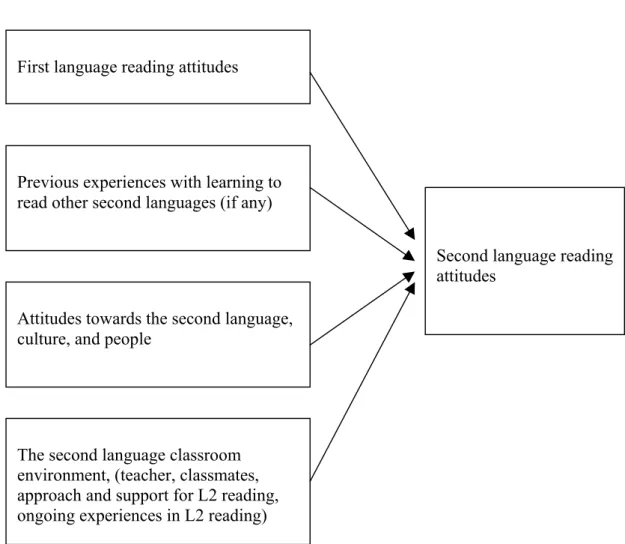
Figure 1 shows the sources of second language reading attitudes. As can be seen in Figure 1, the first source that may affect students’ second language reading attitudes is first language reading attitudes. When learning a second language, students bring their first language reading attitudes into the learning environment. So, if their attitude concerning first language reading is positive, they are likely to begin second language reading with either a positive or negative attitude. Early experiences with reading affect the formation of reading attitudes. The factors that shape the first language reading attitudes are early experiences with reading, classroom environment, and the importance of reading in the first language culture. Likewise,
previous experiences with learning to read other foreign languages, attitudes of students towards the second language, second language culture and people, and the second
Figure 1- Model of the acquisition and development of second language reading attitudes. (taken from Day & Bamford, 1998, p. 23)
language classroom environment may positively or negatively affect the shape of second language reading attitudes.
Mathewson (1994) and McKenna (1994) make several suggestions about pedagogy that may help foster positive student attitudes towards reading. Some of them are:
• Helping students set personal goals leading to positive attitudes towards reading.
First language reading attitudes
Previous experiences with learning to read other second languages (if any)
Attitudes towards the second language, culture, and people
The second language classroom environment, (teacher, classmates, approach and support for L2 reading, ongoing experiences in L2 reading)
Second language reading attitudes
• Making students believe that various genres, content, and authors are worth reading
• Setting the classroom environment in such a way to support positive reading intentions
• Encouraging students to read materials that will bring them satisfaction • Helping students read texts of suitable difficulty
• Teaching students reading strategies that will help them understand the text better and more easily
• Giving some external incentives
• Assessing students’ beliefs about reading • Instilling positive beliefs about reading
• Exposing students to a variety of genres and topics • Providing early success
• Relating readings to students’ own lives
• Exposing students to adults who show that reading is useful, relaxing, and fun.
• Providing positive student models • Seeking parent involvement • Reading aloud to students
Mathewson and McKenna's suggestions are particularly important to this study, because one of the hypotheses of this study is that students’ setting personal reading goals may foster positive attitudes.
In a study designed to improve both students’ vocabulary knowledge and attitudes towards reading, Mosher (1999) created weekly vocabulary lessons and increased silent and oral reading times. Participating in this study were twenty-three fourth grade students, some of whom were not native speakers of English. They responded to a Gates-MacGinite Vocabulary test and Elementary Reading Attitude Survey at the beginning of intervention. Throughout the study, students prepared weekly vocabulary lists consisting of ten words, took an extra twenty minutes of silent reading time, and two or three hour periods of weekly read-aloud sessions. Six months later, students took the same attitude survey and the vocabulary test which they took at the beginning of the study. A review of the results showed that students’ attitudes related to both reading at home and reading in school improved substantially. The researcher also made note that when students’ vocabulary knowledge increased, their own perceptions of their abilities increased as well.
In a similar study, Hudley (1992) examined the effects of using role models to improve high school girls' attitudes towards reading, school, and literacy in general. Once a week, students were exposed to presentations by different role models. Speakers shared with the students their experiences, successes, and collected wisdom. The
treatment lasted for fifteen weeks and the results of the post survey indicated that students attitudes improved significantly.
Another study by Ivey and Broaddus (2001) showed that free reading time and teacher reading out loud activities are the two reading activities enjoyed most by students. So, focusing on these activities may foster positive attitudes. The students in
the study stated that the factor that motivated them the most was having a say in reading materials selection.
Research related to attitude change has produced some negative results as well. For example, Frank (2001) investigated the influence of a strategy-based reading workshop on parents’ and children’s attitudes. The subjects for this study ranged from below average to above average in terms of their reading abilities. The results did not indicate a significant difference in the attitudes of either parents or children.
It is obvious from the literature review that to promote positive attitudes it is important to learn the current attitudes of the students. This can be done by conducting an attitude survey, but research reveals that although teachers are aware of the
importance of attitudes (McKenna, 1994), many of them are unaware of instruments which can be used to assess attitudes toward reading (Heathington & Alexander, 1983) and, therefore, they try to assess them informally, and sometimes even unconsciously (Alexander, 1988). However, conducting a formal survey will provide teachers and curriculum specialists with information which can be used in the selection and design of instructional materials that may foster positive attitudes in students (Swanson, 1982; Waters, Martelli, Zakrajsek, & Popovich, 1988). This is important because research shows that material which stimulates positive attitudes is comprehended more easily than material which stimulates negative attitudes (Rye, 1983).
Attitude and Achievement
To make students lifelong and successful readers, teachers and parents should consider attitude as the most important affective component for learning. It is assumed that students have certain attitudes toward each subject they study in school. These
attitudes influence the studying behavior and achievement of the students. For example, students with favorable attitudes towards a given subject are expected to learn more about that subject because they like it and enjoy learning about it. Day and Bamford (1998) argue that although teachers are aware of the importance of affective variables such as attitudes, they seldom include them into their reading pedagogy.
Students` attitudes have often been positively correlated with motivation and achievement (Baker & Wigfield, 1999; Brooks, 1996; Day & Bamford, 1998; Hogsten & Peregoy, 1999; McKenna, Kear, & Ellsworth, 1995; Wigfield & Guthrie, 1997). Baker and Wigfield note that motivation is a result of positive attitudes and so, children harboring more positive attitudes are more motivated to read. Similarly, McKenna, Kear and Ellsworth (1995) and Mathewson (1994) suggest that motivated readers will have positive attitudes towards reading and thus will engage more in reading. Since attitude, interest, and motivation seem to have such an effect on students' abilities, high degrees of student ability and efforts to increase the quality of instruction may not be enough for achievement if students have negative attitudes (Walberg & Tsai, 1985).
The first studies carried out to discover attitude-achievement correlation date back to the 1950s. Although it attracted researchers’ attention most in the 1970s, it was still the subject of some studies in the 1990s. In one of these studies, Hogsten and Peregoy (1999) tried to investigate the relationship between reading attitudes, self-perceptions, and reading achievement. One hundred fifty-five students in grades two and six completed the Estes Reading Attitude Scale to measure their attitudes toward three content areas, reading, math and science, and the About Myself Scale to measure their self-perceptions. Eighty-three of these students were above grade level and seventy-two
of them were below grade level. Scores were analyzed on the basis of grade level, reading level, and gender. Results indicated that (1) reading attitudes and
self-perceptions of second grade students were more positive than sixth grade students, (2) girls had more positive attitudes than boys, (3) below grade level readers in both the second and sixth grades had less positive attitudes towards reading, science, and math. In terms of why below grade level students scored less positive attitudes, the researchers suggest that this may be due to their early poor proficiencies in these content areas. It is also possible however, that attitude was related to the early poor proficiency.
Brooks (1996) and Smith (1990) state that relatively few studies have been carried out about the attitudes of adults towards reading probably due to a lack of adequate attitude measures. In one of these, Brooks investigated the relationship between reading attitudes of adults and their reading performance. Participants of the study were 129 adult learners from both high school and college populations. Based on the scores obtained from proficiency tests, subjects were identified as remedial or proficient readers. Subjects completed a Short Form Reading Attitude Survey which included eighteen statements regarding reading. The results of the study indicated that (1) proficient high school students had positive attitudes towards reading while remedial high school students had negative attitudes and the difference was statistically
significant. (2) college students, whether remedial or proficient, had generally positive attitudes towards reading and there was no statistically significant difference between their attitude scores. Based on this results the researcher stated that as students mature, their attitudes mature as well and when they reach college level, they regard reading with greater importance.
The results of the studies on the relationship between positive attitudes and achievement are not always consistent. Often a positive relationship is seen between favorable attitudes and higher achievement; but opposite cases are also reported (Alexander, 1988). According to Lewis and Teale (1980) the reason for conflicting results may be due to an inadequate definition of attitudes toward reading which affects the content and shape of attitude scales.
In another study about adult attitudes, Smith (1990) examined the stability of reading attitudes from early childhood to the middle-adult years. Eighty-four adults, many of whom were over forty, participated in this study. Their attitudes were assessed in (a) 1st, 6th, 9th, and 12th grades, (b) five years after high school graduation, and (c) 21 or 26 years following high school graduation. The results revealed that: (a) the college graduate group had significantly higher attitude scores than did the high school group, (b) there was a significant difference between the attitude scores of occupational groups in that the professional group (teacher, banker, engineer, etc.) had more positive
attitudes than the labor group, (c) females had significantly higher attitude scores than males, (d) attitudes showed some degree of stability over time with no significant differences among children and adults. Based on these findings, the researcher stated that positive attitudes that are fostered, especially during the later school years, will remain positive in adulthood and since attitudes of individuals do not change over time, development of positive attitudes in children should be emphasized. These results also suggest that studies carried out to reveal the attitudes of children can be used to refer to the attitudes of adult students.
Goals Definition
The term “goal” has been mostly used in psychology and education. In psychology, “goal” is defined as the thing an individual is trying to attain. “It is the object or aim of an action” (Latham, 2000, p. 115). In education, the term is mostly used in curriculum development studies to refer to general statements of a program. Goals are important components of a curriculum, because as Brown (1995) suggests “a curriculum will often be organized around the goals of the program” (p.72). Moreover, having goals means that you can decide at the end of the process whether you achieved what you have wanted to achieve (Day & Bamford, 1998).
Another term that is used throughout the goal setting process is “task”. It refers to a piece of work to be done. A difficult task is one that is hard to do. Writing a book is, for example, a harder task than writing a thank you note (Locke & Latham, 1990). The difficulty of tasks is related to goal achievement, as discussed below.
Literature on achievement goals classifies the goals that individuals try to attain into two different groups. The groups have been labelled differently by different
theorists: mastery versus performance (Ames, 1992), learning versus performance (Elliot & Dweck, 1988), and task versus ego (Nicholls, 1984). According to Somuncuoglu and Yıldırım (1999) the common criteria in classifying achievement goal orientations is related to whether the orientation perceives learning as a tool or an end in itself. In this study, the terms mastery and performance will be used to differentiate the two groups.
Students who have mastery goals try to develop new skills, understand their work, and promote their competence, whereas students with performance goals try to do
better than others, attain success with little effort, and be above standards. So, students with performance goals perceive learning as a way to attain a desired goal and focus their attention on attaining success (Ames, 1992). Table 1 illustrates the detailed characteristics of mastery and performance goals.
______________________________________________________________________
Climate dimensions Mastery goal Performance goal
Success defined as... Improvement, progress High grades, high normative performance
Value placed on... Effort/learning Normatively high ability Reasons for satisfaction... Working hard, challenge Doing better that others
Teacher oriented toward... How students are learning How students are performing View of errors/mistakes... Part of learning Anxiety eliciting
Focus of attention... Process of learning Own performance relative to others
Reasons for effort... Learning something new High grades, performing
better than others
Evaluation criteria... Absolute, progress Normative
Table 1. Achievement goal analysis of classroom climate (taken from Ames & Archer 1988, p. 261).
As can be seen in the table, there are differences between mastery and
performance goals in terms of the definition of success, view of errors, reasons for study, and evaluation criteria. While mastery goals seem to perceive learning as an end in itself, performance goals seem to perceive learning as a tool to use to outperform others.
Mastery goals (e.g. “I want to learn as much as possible”) have been linked to a belief that effort leads to success (Ames, 1992), a preference for difficult work, risk taking (Ames & Archer, 1988; Elliott & Dweck, 1988), and positive attitudes towards learning (Ames & Archer, 1988). Students with mastery goals have also been found to spend more time on learning tasks, persist more against difficulties (Elliott & Dweck,
1988), and engage more in effective learning and problem solving strategies (Ames, 1992).
However, performance goals (e.g. “It is important for me to do better than other students”) have been linked to avoidance of difficult tasks (Elliott & Dweck, 1988), negative affect after failure, positive affect after success with little effort, and use of short term learning strategies such as memorizing (Ames, 1992). Since the focus of students with performance goals is on their ability and “normative performance”, students who think that they don’t have the necessary abilities to attain a goal avoid challenging tasks (Ames, 1992). Therefore, Ames suggests that since mastery goals lead to long term and high quality learning, they should be emphasized in classroom settings.
In terms of achievement goals-motivation relationships, Elliot and Harackiewicz (1994) and Harackiewicz and Elliot (1993) state that both goal types are associated with intrinsic motivation and they found as a result of their studies that mastery goals had a more positive effect on intrinsic motivation than do performance goals.
In addition to the two goal types mentioned above, Meece, Blumenfeld, and Hoyle (1988) and Meece and Holt (1993) talk about a third goal type, work-avoidance goals, in which students try to get the work done with minimum effort. Students adopt this goal to avoid failure or to show their negative attitudes towards schoolwork (Meece, Blumenfield & Hoyle, 1988). For the purposes of this study, work avoidance goals will not be emphasized.
Different researchers have different opinions on how students choose what kind of achievement goals to attain. Ames (1992) and Meece, Blumenfield and Hoyle (1988), for example, suggest that students’ prior experiences, achievements, failures, parents’
goals and beliefs, characteristics of the learning situation, tasks and activities done in the classroom, and student needs and competencies all affect whether learners choose mastery or performance goals. On the other hand, Newman (1988) claims that students may try to attain both goal types together at any given time without having to make a choice between them. Meece, Blumenfield and Hoyle (1988) also believe that students’ choosing and trying to attain these goals influences their cognitive, affective, and behavioral patterns. As stated earlier in this literature review, the same terms, cognitive, affective, and behavioral, are used to define attitudes. This similarity suggests that attitudes and goals may be interrelated and thus they may influence each other, as is hypothesized in this study.
A study by Harackiewicz, Barron, Tauer, Carter and Elliott (2000) investigated the effects of achievement goals on six hundred forty-eight students in an introductory psychology course. The study continued for one semester. Students’ achievement goals were measured at the beginning, study strategies in the middle, and interests at the end of the semester. Their final grades were obtained from the departments as well.
The results of the study showed that students who adopted mastery goals
reported higher levels of interest in psychology than students who adopted performance and work avoidance goals. On the other hand, students with performance goals achieved higher grades than students who did not endorse performance goals and students with work avoidance goals were those who were less interested in the course and received lower grades. Based on these findings, the researchers stated that achievement goals of the students are related to their interest in psychology, enjoyment of lectures, and final grades in the course.
In addition to some of the benefits mentioned above, goals, whether mastery or performance, provide a standard by which students can see their progress (Guthrie, Cox, Knowles, Buehl, Mazzoni & Fasulo, 2000), lead students to discover the pleasurable aspects of a given academic activity (Locke & Latham, 1990), and inform students of what they are expected to acquire (Print, 1980).
In a similar sense, Alegre and Moss (1999) argue that if students have goals in their minds, they study more. They also suggest that students’ setting their own goals gives them a voice in their instruction, increases their motivation and confidence, and leads them to spend more time on their studies outside of class. Therefore, they suggest teachers draw a framework in which students write their personal goals and the steps through which they can attain these goals, and at the end, assess whether they have achieved their goals or not.
Goal Setting Theory
Research on motivation reveals that most researchers used goal setting as a way of motivating employees in industrial settings and students in academic settings. Madden (1997), for example, investigated how teachers motivate their students and found that goal setting was the most frequently employed method used.
One of the important researchers to focus on goal setting is Locke (1968). He developed a theory of goal setting and claimed that goals affect performance in general and sometimes affect behavior. According to this theory, there are three ways by which goals can be set. They can be set participatively, they can be assigned by supervisors or administrators, or individuals can choose their own goals.
Latham (2000) points out that goal-setting theory has been accepted by so many researchers that it has been tested with over 40,000 people in various countries both in laboratory and field settings, the research including about eighty-eight different tasks. Basically the theory has four claims:
1. Specific hard goals, whether they are self-set, set participatively, or assigned, produce higher performance than easy goals, no goals, or a goal of “do your best”.
2. “The higher the goal the higher the performance” provided that individuals’ ability is constant and they accept the goals.
3. Variables such as feedback, praise, or the involvement of supervisors’ or administrators’ affect goal commitment and its results, provided that they lead to the setting of and commitment of specific hard goals.
4. Goal setting influences motivational variables such as choice, effort, and persistence to achieve the goal.
In order to derive the motivational benefits of goal setting, the theory requires four sub-principles which are:
a) The goal must be both specific and hard. This is necessary because people generally adjust their level of effort according to the difficulty of the goal. People with low goals will be satisfied with a little success, and will rarely have a chance to develop their abilities. Goal specificity, however, will lead individuals to give more of their attention to the goal. Moreover, goals give individuals a chance to judge their adequacy and success, and specific hard goals lead people to work faster and harder in a given unit of time. As a result, individual satisfaction increases as well.
b) Feedback must be provided during the process. A study by Schunk and Swartz (1993) revealed that students in the goal condition who received feedback demonstrated higher performance than students who did not receive feedback.
c) Goal commitment must be maintained. Although setting a goal leads
individuals to find ways to attain the goal, it may not always work. People in some cases may reject the goals. In such cases, encouraging individuals to focus on the outcomes and increasing their self-efficacy may lead to goal commitment. In terms of goal commitment, there is no difference between assigned and chosen goals. Both of them may lead to goal commitment. In choosing a goal, individuals have a say in the process, while assigning the goal implies that the individual is capable of attaining it.
d) Resources must be provided to attain the goal. These resources include time, money, people, and equipment. It may not be possible to attain goals if some or all of these resources are lacking.
After explaining all these steps, Latham (2000) claims that “No other theory of motivation has been found to be as consistently effective in the workplace as goal setting” (p. 117).
In addition to the properties mentioned above, writing down the goals, stating them positively, setting properties, and being precise help individuals attain goals more easily (Setting Goals Effectively, n.d.).
Effects of Goal Setting on Achievement
Studies focusing on the effects of goals on performance date back to the 1960s. There seem to be two particular fields in which experiments took place, education and industry. In one of these studies, Page-Voth and Graham (1999) investigated the effects
of goal setting and strategy use on the writing performance and self-efficacy of students with writing and learning disabilities. Participants in the study were thirty seventh and eighth graders who were randomly assigned to one of the three groups: goal setting, goal setting plus strategy, and control. Students in the two experimental groups composed three essays, trying to attain different goals when writing each paper, while students in the control group were given no goal but only required to write three essays. Results showed that although there were no significant differences between the two
experimental groups, papers written by these two groups were longer, included more supporting details, and were qualitatively better than essays written by students in the control group. These results suggest that students with assigned goals outperform others whether they are provided with the necessary strategies to achieve the goals or not.
Schunk and Rice (1991) state that if students are provided with goals and they try to attain them, they are more likely to attend the class and they pay more attention to the activities done in the classroom, which, as a result, increases their achievement. On the other hand, in the absence of a learning goal, students may be less motivated to work, and they may not be very sure of their capabilities because they lack standards against which they can compare their abilities. In their study, Schunk and Rice provided
students in the experimental groups with one goal, finding the main idea, and found that students increased their achievement in the reading course.
In a different study, Rothkopf and Billington, (1975) investigated the effects of specific descriptions of learning goals on learning from the text. Subjects read a 600-word text. One hundred thirty-eight volunteer college students were divided into three groups. Students in the first treatment group were provided with a list of twelve learning
goals. Students in the second treatment group were provided with a longer list of goals (twenty four goals), and students in the control group were provided with no learning goals but told to learn as much as possible.
Following the study, a test was carried out which consisted of: (a) items relevant to goals, (b) items not directly relevant to goals, but topically related to goals which came from the same immediate neighborhood of the goal relevant material, (c) incidental items that were not related to goals.
The results were consistent with the hypothesis of the researchers;
1. Specific descriptions of learning goals produced higher performance on goal relevant items than the general directions given to the control group.
2. Subjects who received the longer list of goals (second treatment group) produced lower performance than the subjects who received shorter list of goals (first experimental group)
3. Subjects in both treatment groups produced lower performance on incidental items than the control condition.
4. The test items from the same topical neighborhood as the goal relevant materials produced somewhat mixed results.
According to the results of this study, it can be said that describing learning goals to the students has a positive effect on students` achievement if the list of goals is not very long. Moreover, description of goals not only affects the learning of goal relevant items but also has a substantial effect on the learning of items from the same topical neighborhood. However, the description of goals doesn’t have any positive effect on incidental items.
Effects of Goals on Attitudes
Although many researchers point out that goals and goal commitment affect attitudes (Busch, 1998; Day & Bamford, 1998; Mathewson, 1994; Sideridis &
Kaissidis, 2001), it seems that the goal setting-attitude relationship has not attracted as much attention as the goal setting-achievement relationship in the literature. Sideridis and Kaissidis-Rodafinos (1998) focus on the self-importance and attitude relationship and state that "attitudes, self-esteem, actual ability, or other background variables are altered as a function of the self-importance one places on achieving a certain goal or performing a behavior" (p. 94). This statement suggests that goal setting should be followed by goal commitment (self-importance) in order to see any change in attitudes.
Bennett (2000) investigated the effects of goal setting and motivational tools on sixth grade students’ writing achievement and attitudes. To increase their motivation, participants were given a choice as to which academic subject to set goals for. In the survey, students were asked about their feelings and attitudes towards school,
themselves, and the goal setting process. An interview was used along with the survey. Thus, quantitative and qualitative data were gathered together.
The results revealed that students who participated in creating their academic goals to improve their writing developed positive attitudes towards both the subject and themselves, and got higher scores in the writing course. The researcher further stated that goal setting and motivational tools are highly effective procedures to use in classroom settings in that when students are allowed to set their own goals for their learning, they take responsibility, develop an intrinsic desire to attain the goal, and develop their own learning styles.
Similar results were reported by Busch (1998) and Deloris (1992). In his study, Busch investigated the relationship between attitudes towards a managerial program, self-efficacy, and goal commitment. The participants for the study were one hundred and nineteen employees whose education levels ranged from high school to university degrees. Participants were given three questionnaires (one for self-efficacy, one for goal commitment, and one for attitudes towards the program). Regression analysis indicated that individuals who had a high commitment to goals and individuals who had high efficacy had more positive attitudes towards the managerial program.
In another study, Deloris (1992) investigated whether some different strategies, like setting reading goals, keeping a daily log, read-aloud sessions, daily sustained silent reading periods, and providing interesting reading materials changed the attitudes of seventeen fifth graders who were unmotivated and uninterested in reading. The results revealed that students’ attitudes toward reading improved, and they read more.
A study with different results was done by Gaa (1973), who investigated whether individual goal setting conferences affected achievement, attitudes, and goal setting behavior of fifty-four elementary students. He divided these students into three groups: goal setting, conference, and control. Students in the goal setting group participated in weekly individual conferences with an experimenter. In these conferences, the goal setting procedure was explained and the importance of goals was emphasized. The students were asked to write down the goals they wanted to accomplish during the subsequent week.
Students in the conference group received individual conferences on goal setting procedure, but they didn’t set specific goals. The control group didn’t receive any
conferences, but received the same classroom instruction as the goal setting and conference groups and were administered the same achievement test and attitude measurement.
As a result of this study, the achievement scores of the students in the goal setting group were significantly higher than those of students in the conference and control groups. But there was no significant difference between the attitudes of these three groups. The researcher further pointed out, however, that since attitudes towards reading tend to be deep rooted, a four week treatment period may not have been long enough to affect a change (Gaa, 1973).
This chapter reviewed the literature on attitudes and achievement goals as they relate to this study and the next chapter will give information on the participants, materials, procedures, and the data analysis.
CHAPTER 3: METHODOLOGY Introduction
The purpose of the present study was to investigate the effects of students’ setting their personal goals on their success in and attitudes towards a reading course. In addition, this study investigated whether there was any relationship between attitudes towards reading and attitudes towards the reading course, differentiating further between the male and female students, and high proficient and low proficient students. The study, then, focused on the following questions:
1) What are the attitudes of the students towards their reading course at Gaziosmanpaşa University, in Tokat?
2) Does the setting and awareness of personal goals affect students’ attitudes towards the reading course?
3) Does the students’ awareness of their goals affect their success in the reading course?
The study employed an attitude survey to assess the effects of goal awareness on students’ attitudes and a test to assess the effects of goal awareness on students’ success.
This methodology chapter contains four sections. First, subjects and their
characteristics are described in detail. The second section provides information about the materials used in this study. Third, in the procedure section, an in-depth description is given about how the study was conducted. Finally, the data analysis section describes how the data were collected and analyzed in the study.
Subjects
The study was conducted in Gaziosmanpaşa University English preparatory classes, at the pre-intermediate level of instruction. The Department of Foreign Languages is a preparatory school which gives instruction in general English so as to enable students to be able to use English resources related to their fields in the various faculties at Gaziosmanpaşa University, where the medium of the instruction is Turkish. At the Department of Foreign Languages, students who want to learn English in
preparatory classes are given a placement test at the beginning of the academic year and then grouped according to the results of the test. Students are placed into
pre-intermediate or elementary groups according to the results of this test. Each class is composed of approximately thirty students.
For the purpose of the present study, two of these pre-intermediate classes were chosen, based primarily on the instructor’s willingness to participate. The second reason why these two classes were chosen was to eliminate the teacher variable, as these two classes were taught by the same instructor. The rationale behind choosing the pre-intermediate level was that all three prep classes were placed into the elementary level that year. Since the study was conducted in the second semester, the students in these classes were at the pre intermediate level when the study was conducted. One of these two classes was used as the experimental group and the other was used as the control group. There was a total of nine students in the two classes. However, only fifty-two of them participated in this study. The mean age of these subjects was 20.02 years ranging between 17 and 26. All of the subjects were Turkish and their native language was Turkish.
The class selected as the experimental group was composed of students whose first semester reading grade range was from 17 to 89; the same figure range was from 10 to 87 for the control group. These students represented various university departments, including the Faculty of Agricultural Engineering, Faculty of Economics and
Administrative Sciences, Faculty of Arts, Nursing, and the Vocational High School. After successfully completing their studies in the prep program, students were planning to take courses in their departments.
As mentioned above, not all the fifty-nine students in both classes participated in the study because three students in the experimental group and four students in the control group were not present on the day of the pretest and pre survey. Therefore a total of fifty-two students in both classes took the pretest and pre survey. These fifty-two students were used as a sample to answer the first research question. Three of the students who took the pretest and pre survey in the experimental group, and five of the students who took the pretest and pre survey in the control group did not take the posttest and post survey. Moreover, since seven students in the experimental group who took the test and the survey failed to carry out the requirements of the treatment, they had to be excluded from the study. So, a total of thirty-seven students (eighteen in the experimental, nineteen in the control group) were used as a sample to answer the second and third research questions. Detailed information about these subjects is given in Table 2.
Materials
Materials used in the present study included a goal list, a goal check-list, individual student goal cards, an attitude survey (devised by the researcher) and a
Table 2
Characteristics of Subjects by Group
_____________________________________________ Group Male Female Total _ Experimental 11 7 18 Control 9 10 19 _____________________________________________
reading comprehension test (devised by the researcher) used as pretest and posttest. Goal List
Using different examples of lists from the literature, the researcher designed a goal list for a reading course to be used throughout the study (see Appendix A). This goal list was negotiated with the teacher of the reading course who would be teaching in both control and experimental groups in order to omit the goals which would not be taught and practiced throughout the eight week period. The list the researcher first designed included twenty general goals for a reading course. After the negotiation, the list was reduced to nineteen goals.
Goal Check-list and Cards
In addition to the goal list, the researcher designed a goal checklist for the teacher on which she could tick the goal or goals that were taught and practiced each week throughout the intervention (see Appendix B).
The researcher also prepared small cards on which students were to write down their personal goals for the subsequent week (see Appendix C). Every student in the
experimental group was provided with eight cards, one for each week. Attitude Survey
Since all the surveys in the literature were designed to measure the attitudes of students towards reading in general, an attitude survey consisting of forty items was developed by the researcher to assess students’ attitudes towards a specific reading course (see Appendix D). The survey was designed to measure attitudes toward reading assignments, reading work load, success in the reading course, new vocabulary in the reading course, preferences of students in the reading course, tests in the course, difficulty of the course, and reading in English.
The survey, which was written in English first and then translated into Turkish to ensure students’ understanding, had two sections. The first section asked about students’ background (sex, age, department, first semester reading grade). The second section included forty statements to assess students’ attitudes towards the reading course. A five-point Likert scale, with “strongly agree”, “agree”, “undecided”, “disagree”, and “strongly disagree” options, was used as the respond format. Some of the items (3, 5, 8, 9, 11, 13, 14, 17, 19, 20, 23, 26, 28, 30, 34, 37, 39) on the survey were negative
statements and the rest positive, which had to be taken into consideration in the statistical data analysis.
The first draft of the survey (Turkish version) was piloted with a class similar to the sample to be used as subjects. The pilot study was carried out at Middle East
Technical University with seventeen pre intermediate level students. The pilot study showed that items were clear enough for students to understand, so no changes were
made in the survey. Then, the Turkish version of the survey was administered to the target population.
Pretest and Posttest
Since the students were at the pre intermediate level when the pretest and the attitude survey were administered, an achievement test for the pre-intermediate level was designed by the researcher (see Appendix E). In order to prepare this achievement test, four quizzes and two midterm tests that were administered in both experimental and control classes in the first term were examined and the same question types, which students were familiar with, were used in this achievement test. The same test, with some changes in the order of the options, was used both as the pretest and the posttest.
Three reading comprehension passages (the first two of them including approximately 300 words each and the third one 50 words) were selected from three different course books, Passages, Task Reading, and Face the Issues (see Appendix E for the passages). One of the passages was about the life of Elvis Presley, the second was a story in which a girl tried to get through some problems caused by her parents’ divorce, and the third one was about a bank robbery.
These passages were selected for two reasons. First, the topics, genre, style, and proficiency level of these passages were similar to those which students were reading in their regular reading classes. Second, the lexical items these three passages included were familiar to the students from their reading courses.
The test consisted of three sections. The first section included four skimming and scanning questions based on the first reading passage. The second section consisted of thirty-eight multiple-choice questions about each of the first and second reading
passages. Each multiple-choice question contained three choices: one correct answer and two distracters. The third section consisted of eight fill-in-the-blanks questions about the third passage. The subjects were given two minutes for skimming and scanning
questions and a total of sixty minutes for other questions and survey items.
The first draft of the test was piloted at Middle East Technical University with seventeen pre intermediate level students. After the pilot, some changes both on the wording and options of three questions were made since they caused misunderstandings for students.
Data Collection Procedures
On November 30, 2001, after receiving permission from the Gaziosmanpaşa University preparatory school administration to carry out the research, the researcher administered a questionnaire to see whether students in both classes were aware of their reading goals or not since such awareness would make this study unnecessary (see Appendix F for the questionnaire). For this questionnaire, four open-ended questions were prepared and then translated into the students’ native language for reliability reasons. Fifty-two students in two classes were asked these questions and their responses were analyzed in terms of reading goals.
On March 11, 2002 an attitude survey was given to the subjects in both experimental and control groups simultaneously. On the first page of the survey, the students read the explanation, which assured them that the right to participate was voluntary (see Appendix G for informed consent form). Then, subjects were requested to answer five background questions. On the second page, the students were asked to indicate the degree to which they agreed with each of forty statements.