The Relationship between Daily Life Activities and the Cognitive
Function Levels of the Elderly in a Nursing Home
Ayse Çevirme1, Nezihe Ugurlu2 and Nazife Misirli3
1Sakarya University, School of Health Sciences, Sakarya, Turkey
Telephone: 05363237836, E-mail: [email protected]
2Mugla University, School of Health Sciences, Mugla, Turkey
Fax: +90 252 2124755, Telephone: +90 252 2111795, E-mail: [email protected]
3Anadolu Private Hospital, Bursa, Turkey
Telephone: 905064476557, E-mail: [email protected]
KEYWORDS Daily Living Activities. Cognitive Abilities. Elderly.Faculty Nursing Home. Relationship ABSTRACT As the general population is getting older the need for the health care of this group also increases.
Elderly health care needs increase due to loss of physical and cognitive abilities which may limit or prevent their usual independent daily life activities. The research was done descriptively to determine the relation between the levels of the cognitive functions and the daily living activities for the aged in a nursing home. This study was conducted with 54 elderly residents of the Private Nursing Home in Mugla, Turkey. A questionnaire was formulated after examining the studies and literature about the elderly. It consisted of socio-demographic characteristics, a Standardized Mini Mental Test (SMMT) to determine the existence of cognitive disorders and also a short-term faculty-loss questionnaire. As a result of the study, the cognitive disorder and faculty loss were determined in 57.5 percent and 72.2 percent of the aged people respectively.
Address for correspondence:
Ayse Çevirme Sakarya University,
School of Health Sciences, Sakarya, Turkey
Telephone: 05363237836 E-mail: [email protected]
INTRODUCTION
The population of the elderly patients at the age of >65 years has been increasing through-out the world. Access to healthcare services by the elderly has been rising with increase in age of the population (Karabulut et al. 2015). Some of the physical and spiritual aspects of individ-uals with aging in function, reduction or loss of social relationships occur. (Diker 2001). This oc-curs because loss of abilities and functional ca-pacity can limit or prevent the usual daily life activities of the elderly and their independent functions become semi-dependent or complete-ly dependent (Inal et al. 2007; Akça et al. 2014). The association between cognitive decline and decline in activities of daily living functioning in older people is well-known from numerous of studies covering a wide range of countries (Hel-vik et al. 2015). When individuals maintain their life actively, they fell themselves better, they be-come healthier and they bebe-come self-sufficient (Mehtap et al. 2015). Efforts to improve the senso-ry capabilities, perceptions and well- being of
the elderly and increase their cognitive perfor-mance may also increase their overall function and positively affect their quality of life (Njegovan et al. 2001).
Aging is a universal and natural period oc-curring in all living creatures in which irrevers-ible structural and functional changes cause a decline in all bodily functions. These changes are divided into two groups, chronological and biological. Though the chronological age is the same for all humans, the biological age can dif-fer from one person to another. Biological aging occurs as a result of functional and structural changes in molecular cells, tissues and organs; hereditary factors also play a role (Yigitoglu 2008).
As the population of the elderly in society increases, more attention is being given to men-tal diseases. Dementia is the most important dis-ease of old age. It is well known that with in-creasing numbers of people living longer, the ratio of their chances for developing dementia also increases (Çuhadar 2006).
Dementia is a word originating from the Lat-in and is a usually progressive condition marked by deteriorating cognitive functioning often ac-companied a decline in social skills. The memo-ry is particularly affected and this then affects a person’s daily activities (Eker 2005).
Caretakers tending to the basic needs of their patients such as eating, cleaning, dressing and relieving themselves at the later stages of de-mentia, can find themselves directly affected on the mental health level by the many behavioural and psychiatric symptoms of their patients. In addition, the patients’ psychiatric symptoms can contribute to caretakers abusing the patients physically, neglecting the patients’ care and tak-ing to their beds (Bulut et al. 2002).
Dementia which develops in most people over 65, that this disease ,when it occurs, hap-pens mostly to people over the age of 65 is not only a private tragedy; it also seriously affects the family members of dementia patients and causes a serious social and economic burden (Clark and Cummings 2003).
If dementia is diagnosed early on, further declines in the cognitive functions, depressions, anxieties, delusions and behaviour disorders accompanying it can be cured as well. This re-search was carried out in order to determine the cognitive function and the daily living activity levels of the elderly residing in nursing homes.
MATERIAL AND METHODS
Research Type
The research was done descriptively to de-termine the relation between the levels of the cognitive functions and the daily living activi-ties for the aged in a nursing home.
Research Sampling
The sample group consisted of 54 elderly in the Private Nursing Home in Mugla ,Turkey in 4 January 2014 and 11 March 2015.Volunteer par-ticipants in the research, could communicate easily and who were not visually or hearing im-paired or mentally retarded.
Gathering the Findings
A questionnaire was formulated after ex-amining the studies and literature about the eld-erly. It consisted of socio-demographic char-acteristics, a Standardized Mini Mental Test (SMMT) to determine the existence of cogni-tive disorders and also a short-term faculty-loss questionnaire.
Standardized Mini Mental Test (SMMT)
The Standardized Mini Mental Test (SMMT) was developed by Folstein et al. in 1975. The validity and reliability of this scale for use in Turkey, which evaluates the degree of cognitive disorder, was performed by Güngen et al. in 1999. The test scores over 30 points; we used a cut-off score of 23/24.
Clock Drawing Test
This test evaluates a person’s visual motor skills. It is used particularly to evaluate the ne-glect phenomenon. A pencil and a form with an empty clock figure are given to the elderly per-son, and she or he is asked to draw the clock to show the time as “10:15.” If they cannot do this, the score is 1. If they draw the common scheme of the clock but cannot complete it, the score is 2. If the numbers are correctly placed but the marking is wrong, the score is 3 and 4 is given for a good performance. Evaluation is as follows: 1 point for “He couldn’t draw”; 2 or 3 points for “He drew incorrectly”; and 4 points for “He drew correctly.”
Short-Term Faculty Loss Questionnaire
The Short-Term Faculty Loss Questionnaire was developed by the World Health Organiza-tion (WHO) to evaluate physical and social fac-ulty losses. Its adapted form to Turkish was applied for this study. The questionnaire eval-uated the previous one-month period by World Health Organization (WHO) of those elderly being tested.
Modified Daily Living Activities (MDLA) and Instrumental Daily Living Activities (IDLA)
The MDLA scale was developed by Katz et al. The scale consists of eight questions. The questions concern the following activities: eat-ing and drinkeat-ing, dresseat-ing and undresseat-ing, comb-ing and shavcomb-ing, walkcomb-ing, gocomb-ing to bed and get-ting up, relieving oneself, bathing and inconti-nence. The IDLA scale was developed by Law-ton and Brody and consists of seven questions: using the telephone, travelling by car or taxi, food shopping, preparing meals, doing house-work, recognizing their drugs and taking them, and handling money affairs.
Application of the Data Gathering Tools
Before beginning the application, written permission was obtained from the Turkish So-cial Service and Child Protection Institution Di-rectorate. The questionnaires were given to mobile elderly people by inviting them to the library. Immobile individuals were seen in their own rooms between 8:30-12:00 and 13:00-16:00 using a one-to-one interviewing technique. Each interview lasted 15 minutes. Before the interview, the aims of the research and the fact that the information gathered would be kept confiden-tial were explained to those taking part in the research.
Data Evaluation
Data were evaluated by a SPSS 11.0 comput-er packet programme. Frequency and chi-square analyses were used for the statistical analyses.
RESULTS
A great majority of the elderly participants (70.4%) in the research were men; 40.7 percent of them were 80 years old or over, and 31.5 per-cent of them had completed a five–year basic education. A majority of the participants at the nursing home (63.0 %) were widowed; 51.9 per-cent of them had incomes from their retirement pensions, and 24.0 percent were receiving so-cial security income from the Turkish Soso-cial Se-curity Institution.
Table 1 indicates that 5.6 percent of the participants had high level cognitive disorders, 27.8 percent of them had medium level
cogni-tive disorders; 24.0 percent of them had low level cognitive disorders while 42.6 percent of them were found as normal. Of the participants in the study 20.4 percent had light faculty loss-es; 18.5 percent of them had medium faculty losses; 33.3 percent had severe faculty losses, but 27.8 percent of them had no faculty losses. Those who could not draw the clock comprised
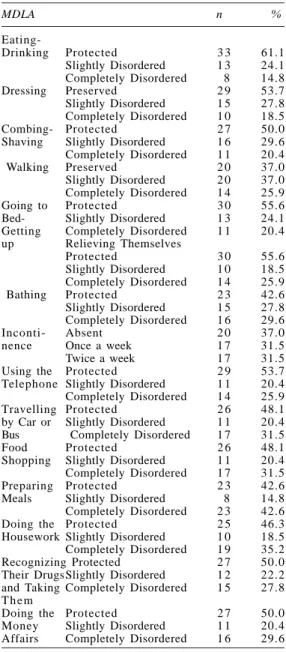
Table 2: Distribution of the old in the resting home according to the states of their abilities to do MDLA and DLA
MDLA n % Eating-Drinking Protected 3 3 61.1 Slightly Disordered 1 3 24.1 Completely Disordered 8 14.8 Dressing Preserved 2 9 53.7 Slightly Disordered 1 5 27.8 Completely Disordered 1 0 18.5 Combing- Protected 2 7 50.0
Shaving Slightly Disordered 1 6 29.6
Completely Disordered 1 1 20.4
Walking Preserved 2 0 37.0
Slightly Disordered 2 0 37.0
Completely Disordered 1 4 25.9
Going to Protected 3 0 55.6
Bed- Slightly Disordered 1 3 24.1
Getting Completely Disordered 1 1 20.4
up Relieving Themselves Protected 3 0 55.6 Slightly Disordered 1 0 18.5 Completely Disordered 1 4 25.9 Bathing Protected 2 3 42.6 Slightly Disordered 1 5 27.8 Completely Disordered 1 6 29.6 Inconti- Absent 2 0 37.0
nence Once a week 1 7 31.5
Twice a week 1 7 31.5
Using the Protected 2 9 53.7
Telephone Slightly Disordered 1 1 20.4
Completely Disordered 1 4 25.9
Travelling Protected 2 6 48.1
by Car or Slightly Disordered 1 1 20.4
Bus Completely Disordered 1 7 31.5
Food Protected 2 6 48.1
Shopping Slightly Disordered 1 1 20.4
Completely Disordered 1 7 31.5
Preparing Protected 2 3 42.6
Meals Slightly Disordered 8 14.8
Completely Disordered 2 3 42.6
Doing the Protected 2 5 46.3
Housework Slightly Disordered 1 0 18.5
Completely Disordered 1 9 35.2
Recognizing Protected 2 7 50.0
Their Drugs Slightly Disordered 1 2 22.2
and Taking Completely Disordered 1 5 27.8
T h e m
Doing the Protected 2 7 50.0
Money Slightly Disordered 1 1 20.4
Affairs Completely Disordered 1 6 29.6
Table 1: Distribution of the old in the resting home according to their scores from SMMT and SFL scales and their clock drawing states
Scales n % SMMT 0–9 ( Severe ) 3 5.6 10–19 ( Medium ) 1 5 27.8 20–23 (Light) 1 3 24.0 24–30 (Normal) 2 3 42.6 KYY 0–4 (Normal) 1 5 27.8 5–7 ( Slight ) 1 1 20.4 8–12 Medium ) 1 0 18.5 13 and‘! ( Severe ) 1 8 33.3 SÇT No Drawing 1 9 35.2 Wrong Drawing 2 3 42.6 Correct Drawing 1 2 22.2
35.2 percent; 45.0 percent of them drew it inrectly, and only 22.2 percent were able to cor-rectly draw the clock.
Table 2 shows that the activity of eating had completely deteriorated in 14.8 percent of the elderly participants of the research, and the ac-tivity of dressing had completely deteriorated in 18.5 percent of them. Combing and shaving, going to bed and getting up had also
complete-ly deteriorated in 20.4 percent of residents; walk-ing and relievwalk-ing oneself had completely deteri-orated in 25.9 percent of participants while for 29.6 percent of them the activity of bathing had completely deteriorated. Incontinence was seen in 31.5 percent of the elderly once a week and in 31.5 percent of them twice a week. Ability to use the telephone had completely deteriorated in 25.9 percent of them, and travelling by car or bus had
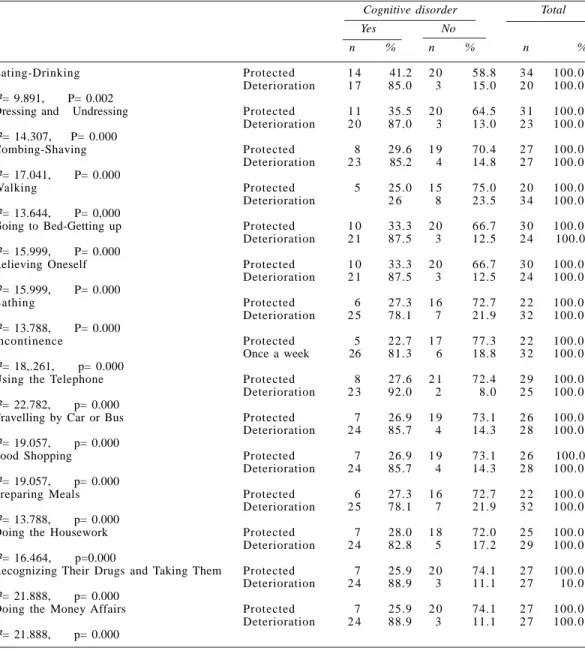
Table 3: The states of their abilities to do MDLA and DLA according to their cognitive disorder states Cognitive disorder Total Yes No
n % n % n %
Eating-Drinking Protected 1 4 41.2 2 0 58.8 3 4 100.0
Deterioration 1 7 85.0 3 15.0 2 0 100.0
÷²= 9.891, P= 0.002
Dressing and Undressing Protected 1 1 35.5 2 0 64.5 3 1 100.0
Deterioration 2 0 87.0 3 13.0 2 3 100.0 ÷²= 14.307, P= 0.000 Combing-Shaving Protected 8 29.6 1 9 70.4 2 7 100.0 Deterioration 2 3 85.2 4 14.8 2 7 100.0 ÷²= 17.041, P= 0.000 Walking Protected 5 25.0 1 5 75.0 2 0 100.0 Deterioration 2 6 8 23.5 3 4 100.0 ÷²= 13.644, P= 0,000
Going to Bed-Getting up Protected 1 0 33.3 2 0 66.7 3 0 100.0
Deterioration 2 1 87.5 3 12.5 2 4 100.0
÷²= 15.999, P= 0.000
Relieving Oneself Protected 1 0 33.3 2 0 66.7 3 0 100.0
Deterioration 2 1 87.5 3 12.5 2 4 100.0 ÷²= 15.999, P= 0.000 Bathing Protected 6 27.3 1 6 72.7 2 2 100.0 Deterioration 2 5 78.1 7 21.9 3 2 100.0 ÷²= 13.788, P= 0.000 Incontinence Protected 5 22.7 1 7 77.3 2 2 100.0 Once a week 26 81.3 6 18.8 3 2 100.0 ÷²= 18,.261, p= 0.000
Using the Telephone Protected 8 27.6 2 1 72.4 2 9 100.0
Deterioration 2 3 92.0 2 8.0 2 5 100.0
÷²= 22.782, p= 0.000
Travelling by Car or Bus Protected 7 26.9 1 9 73.1 2 6 100.0
Deterioration 2 4 85.7 4 14.3 2 8 100.0
÷²= 19.057, p= 0.000
Food Shopping Protected 7 26.9 1 9 73.1 2 6 100.0
Deterioration 2 4 85.7 4 14.3 2 8 100.0
÷²= 19.057, p= 0.000
Preparing Meals Protected 6 27.3 1 6 72.7 2 2 100.0
Deterioration 2 5 78.1 7 21.9 3 2 100.0
÷²= 13.788, p= 0.000
Doing the Housework Protected 7 28.0 1 8 72.0 2 5 100.0
Deterioration 2 4 82.8 5 17.2 2 9 100.0
÷²= 16.464, p=0.000
Recognizing Their Drugs and Taking Them Protected 7 25.9 2 0 74.1 2 7 100.0
Deterioration 2 4 88.9 3 11.1 2 7 10.0
÷²= 21.888, p= 0.000
Doing the Money Affairs Protected 7 25.9 2 0 74.1 2 7 100.0
Deterioration 2 4 88.9 3 11.1 2 7 100.0
also completely deteriorated in 31.5 percent of the participants. Preparing meals had complete-ly deteriorated in 42.6 percent of those in our study, and doing the housework had complete-ly deteriorated in 35.2 percent. Recognizing and taking their drugs had completely deteriorated in 27.8 percent of residents. Shopping for food and clothing had completely deteriorated in 17.0 percent and for 29.6 percent of them, correctly managing their money affairs had completely deteriorated.
In Table 3, the deterioration of eating and drinking capability was seen in 85.0 percent of the elderly with cognitive disorders and in 15.0 percent of those without cognitive disorders. This difference between the groups was found statistically meaningful (p <0.05). The activity of eating and drinking had deteriorated more in those who had cognitive disorders.
When we examined the activity of dressing and undressing, it had deteriorated in 87.0 per-cent of the elderly with cognitive disorders and in 13.0 percent of those without cognitive disor-ders. A very meaningful statistical difference between the groups was found (p <0.05). In our study, the activities of combing and shaving had deteriorated in 85.2 percent of participants with cognitive disorders and in 14.8 percent of those without cognitive disorders. The difference be-tween the groups was found to be statistically very meaningful (p <0.05). The ability to walk had deteriorated in 76.5 percent of the partici-pants with cognitive disorders and in 23.5 per-cent of those without cognitive disorders. The relation between the existence of cognitive dis-orders and the state of walking was found to be statistically very meaningful (p <0.05).
The activities of relieving oneself, going to bed and getting up had deteriorated in 87.5 per-cent of the elderly with cognitive disorders and in 12.5 percent without cognitive disorders. The differences between the groups were statistical-ly very meaningful (p <0.05). The ability to bathe oneself had deteriorated in 78.1 percent of the elderly with cognitive disorders and in 21.9 per-cent without cognitive disorders. The relation between the state of the cognitive disorders and the activity of bathing was also found to be sta-tistically very meaningful (p <0.05). Incontinence had become an issue for 18.8 percent of elderly residents of the rest home without cognitive dis-orders and for 81.3 percent of those with cogni-tive disorders. A statistically very meaningful
difference was found between incontinence and the level of cognitive disorders (p <0.05).
The ability to use the telephone had deterio-rated in 92.0 percent of the participants with cog-nitive disorders and in 8.0 percent for those with-out cognitive disorders. A statistically very mean-ingful relation was found between the states of the cognitive disorders and using the telephone (p <0.05). Activities such as travelling by car or bus and grocery shopping had deteriorated in 85.7 percent of the elderly with cognitive disor-ders and in 14.3 percent for those without cog-nitive disorders. Statistically very meaningful relations between the groups were found (p <0.05).
The ability to prepare meals had deteriorat-ed in 78.1 percent of individuals with cognitive disorders and in 21.9 percent of those without cognitive disorders, and the difference between the groups was found to be statistically very meaningful (p<0.05). The ability to do house-work had deteriorated in 82.8 percent of elderly with cognitive disorders and in 17.2 percent in those without cognitive disorders. A statistical-ly very meaningful correlation was determined between the ability to do housework and cogni-tive disorders (p <0.05).
Being able to recognize their drugs and take them, and handling their money affairs had de-teriorated in 88.9 percent of the elderly with cog-nitive disorders and in 11.1 percent of those with-out cognitive disorders. The differences be-tween the groups were found statistically very meaningful (p <0.05).
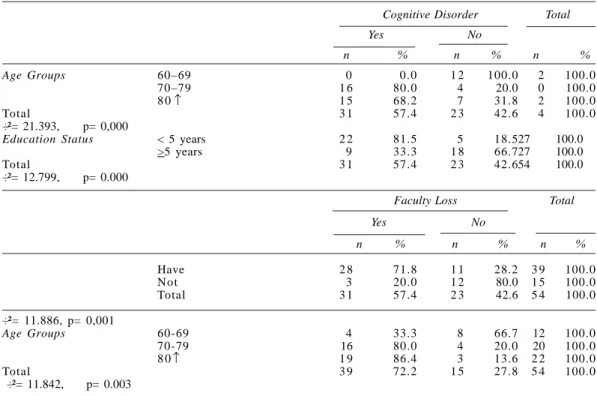
Table 4 shows that cognitive disorders among the elderly were seen in 80.0 percent of the 70-79 age group and in 68.2 percent of the 80 and over group. The difference between the groups was found statistically very meaningful (p <0.05). When we examine cognitive disorders according to education level, the frequency rate for cognitive disorders for elderly with less than five education years was determined as 81.5 per-cent; the rate for those who finished primary education was at least 33 percent. The correla-tion between the state of cognitive disorder de-terioration and the educational level was found to be statistically very meaningful (p <0.05).
When we examine cognitive disorders in re-lation to faculty loss, faculty loss was seen in 71.8 percent of older people with cognitive dis-orders and in 28.2 percent of those without cog-nitive disorders. A statistically very meaningful
difference was found between the existence of cognitive disorders and faculty loss (p <0.05). In Table 4, we can see that faculty loss has been determined in 33.3 percent of the 60-69 age group; in 80.0 percent of the 70-79 age group; and in 86.4 percent of the 80 and over 80 age group. The difference between the groups was statistically meaningful (p <0.05). As people age, their faculty loss increases.
DISCUSSION
Elderly men comprised the great majority (70%) of participants in the study. When other studies done at nursing homes are examined, men have generally constituted the majority oThe percentages and the SMMT scores of eld-erly participants in our study were as follows: 42.6 percent received 24-30 points, 27.8 percent got 10-19 points, 24.0 percent of them got 20-23 points and 5.6 percent received 0-9 points from the SMMT. In a similar study done earlier, while 38.3 percent of study participants got 24 or more
points; 33.3 percent got 10-19 points; 28.3 per-cent received 20-23 points, and none of them scored 0-9 points (Çuhadar et al. 2006). Another study; group average was found to be 21.4 ± 5.6 by Akça et al. (2014). In the study performed by Sahin et al. (2005), 41.5 percent of those studied got 23 (the threshold value) or less from the SMÇMT, and the test results decreased as the age increased. Results indicated that the ratio of cognitive disorder increased depending on the increase in age (Sahin et al. 2005).
When the state of faculty loss was exam-ined, it was determined that 33.3 percent of the elderly had severe faculty losses; 18.5 percent had medium faculty losses; 20.4 percent of them had light faculty losses, but 27.8 percent had no faculty losses. In a similar study, it was deter-mined that 40.0 percent of the older persons had medium faculty losses (Çuhadar 2006).
According to study results, while no cogni-tive disorder was found in participants in their sixties, indications of cognitive disorder were evident in 68.2 percent of persons at age 80 and over, and a very high level (80 %) of cognitive
Table 4: The states of cognitive disorder and faculty loss according to some socio- demographical f e a t u r e s
Cognitive Disorder Total Yes No n % n % n % Age Groups 60–69 0 0.0 1 2 100.0 2 100.0 70–79 1 6 80.0 4 20.0 0 100.0 8 0 1 5 68.2 7 31.8 2 100.0 Total 3 1 57.4 2 3 42.6 4 100.0 ÷²= 21.393, p= 0,000
Education Status < 5 years 2 2 81.5 5 18.527 100.0
>5 years 9 33.3 1 8 66.727 100.0
Total 3 1 57.4 2 3 42.654 100.0
÷²= 12.799, p= 0.000
Faculty Loss Total Yes No n % n % n % Have 2 8 71.8 1 1 28.2 3 9 100.0 N ot 3 20.0 1 2 80.0 1 5 100.0 Total 3 1 57.4 2 3 42.6 5 4 100.0 ÷²= 11.886, p= 0,001 Age Groups 60-69 4 33.3 8 66.7 12 100.0 70-79 16 80.0 4 20.0 20 100.0 8 0 1 9 86.4 3 13.6 2 2 100.0 Total 3 9 72.2 1 5 27.8 5 4 100.0 ÷²= 11.842, p= 0.003 ↑ ↑
disorder was found in the elderly in their seven-ties. This difference between the groups was found to be statistically meaningful (p <0.05). As people get older, the ratio of having cogni-tive disorder increases. Güngen et al. (1999), in their validity and reliability study, determined that the SMMT average points for people in the 80 or over 80 age group were lower (Güngen et al. 1999). In their study, Diker et al. (2001)
deter-mined that the ratio of light cognitive disorder was 25.7 percent and the ratio of severe cogni-tive disorder was 6.9 percent (Diker et al. 2001). Maral et al. (2001) determined that cognitive dis-order was found in 27.2 percent of older persons in the 60-74 age group and in 56.0 percent of those 75 or over (Maral et al. 2001). In another similar study done earlier, it was reported that while the dementia prevalence for the 65 and over 65 age group was 2.2 percent to 8.4 per-cent, it was between 10.5 percent and 16.0 percent for the 75 and over 75 age group and it was 15.2 percent - 38.9 percent for the 85 and over 85 age group.(Lobo et al. 2000; Rockwood and Standnyk 1994; Rockwood and Stadnyk 1994). When the education status of the elderly participants in the study and their states of cog-nitive disorder were evaluated, it was determined that the frequency rate of having cognitive dis-orders for those who had less than five years of education was 81.5 percent and it was a lot more. This difference between the groups was found statistically meaningful, too (p <0.05).
In their study, Gülseren et al. (2000) deter-mined that there was a positive correlation be-tween education level and several cognitive functions (Gülseren et al. 2000).In similar stud-ies done at rest homes, a statistically meaning-ful relation was also determined between the education status and cognitive disorders (Çu-hadar et al. 2006; Diker et al. 2001). It is known that a low education level in the elderly increas-es the dementia prevalence. This may be ex-plained by the fact that more education and learn-ing increases the neocortical synaptic density. It has been proposed that a higher level of edu-cation may possibly postpone the onset and age of dementia (Bulut et al. 2002).
The ratio of faculty loss is 71.8 percent and higher in the elderly with cognitive disorders. .The difference between the groups was also found statistically meaningful (p <0.05). In a sim-ilar study in which the faculty loss was evaluat-ed according to the existence of cognitive
disor-ders, a statistically meaningful relation was not found between faculty loss and cognitive disor-ders (Çuhadar et al. 2006).
When the state of faculty loss was evaluat-ed according to ages, faculty loss in the 80 and over 80 age group was much higher (86.4 %) than that of other age groups. In a similar study done earlier, a statistically meaningful relation was also found between the age groups and faculty loss (Çuhadar et al. 2006). Ergün et al. (2003) determined that cognitive functions af-fected the daily living activities. In that study, researchers found that the elderly residents of the rest home with low SMMT averages were more dependent in terms of shopping and dress-ing while those in the polyclinic group were more dependent regarding travelling and using the telephone (Ergün et al. 2003). Another study; when physical activity levels of elderly individ-uals were examined in the research, it was found that 28.8 percent of whom is very active, 53.6 percent of whom is minimal active and 17.6 per-cent of whom is inactive (Mehtap et al.2015).
As individuals get older, their ability to ac-complish daily living activities decreases and performing normally routine tasks becomes more difficult (Berberoglu et al. 2002). In our study, the incidence of incontinence and ability to walk were the most deteriorated areas for nursing home residents. Residents’ ability to perform other routine daily activities decreased in the following order: bathing, preparing meals, trav-elling by car or bus, food and clothes shopping, doing the housework, combing- shaving, rec-ognizing their drugs and taking them, handling money affairs, using the telephone, dressing and undressing and eating – drinking. In another study performed at the rest home, it was deter-mined that the residents were more dependent in terms of cleaning, shopping, travelling, pre-paring meals, a thing and transfer (Berberoglu et al. 2002). In another study, women were deter-mined as more dependent than men in terms of climbing up and going down the stairs, moving their plates away from the table, making their beds, sitting down and standing up, relieving themselves, eating, doing the housework and dressing (Yaris et al. 2001). In another study per-formed in the city centre of Malatya, women were determined as more dependent in shopping, climbing up the stairs and controlling their blad-der function (Günes et al. 2005).
CONCLUSION
High level cognitive disorder was found in 5.6 percent of older persons, a medium-level cog-nitive disorder was found in 27.8 percent of the elderly and low level cognitive disorder was found in 24.0 percent of them. Light faculty loss was found in 20.4 percent of the elderly, 18.5 percent had medium faculty loss and 33.3 per-cent of them suffered severe faculty loss.
RECOMMENDATIONS
Cognitive decline may cause deterioration in the daily living activities, nutrition and capac-ity for independent functioning.Risk factors are important for cognitive impairment. Early diag-nosis of dysfunction the effect on the function-ality of the person is important.
For this reason, nursing home residents as-sessing cognitive function in the elderly by health care personnel become a part of routine screening tests, such as SMMT, MDLA about that should be used.
ACKNOWLEDGEMENTS
The authors declare that they have no con-flict of interests.
REFERENCES
Altintas H, Attila S, Sevencan F et al. 2006. Ankara’da bir yasli bakimevinde yasayan yaslilarda depresyon belirtilerinin taranmasi. TAF Preventive Medicine
Bulletin, 5,5: 332-342.
Akça AS, Saracli Ö, Emre U, Atasoy N, Gudul S, Barut BÖ et al. 2014. Hastanede yatan yaslilarda bilissel islevlerin gunluk yasam aktiviteleri, depresyon, ank-siyete ve klinik degiskenlerle iliskisi. Archives of
Neuropsychiatry, 51: 267-274
Berberoglu U, Gül H, Eskiocak M et al. 2002. Edirne Huzurevi’nde kalan yaslilarin sosyo-demografik özellikleri ve KATZ indeksine göre günlük yasam etkinlikleri. Geriatri, 5(4): 144-149.
Bulut S, Ekici I, Polat A et al. 2002. Elâzig ili Abdullah Pasa Egitim ve Arastirma Saglik Ocagi Bölgesinde yasayan 65 yas ve üzeri nüfusta demans prevalansi ve demans alt gruplari. Demans Dergisi, 2: 105-110.
Cavlak U, Dirik A 2005. Evaluation of mobility activ-ities of daily living, depreession level and mental status in geriatrics. J Med Sci, 5(2): 106–112. Clark GD, Cummings LJ 2003. Damansin tanisi ve
te-davisi. Bir güncellestirme. Sevinçok, L.(Çev. Ed.).
Demans Dergisi. 1: 21-29.
Çalistir B, Dereli F, Ayan H et al. 2006. Mugla il merkez-inde yasayan yasli bireylerin yasam kalitelerinin incelenmesi. Geriatri, 9(1): 30-33.
Çuhadar D, Sertbas G, Tutkun H 2006. Huzurevinde yasayan yaslilarin bilissel islev ve günlük yasam etkinligi düzeyleri arasindaki iliski. Anatolian
Jour-nal of Psychiatry, 7: 232-239.
Demet MM, Taskin O, Deniz F et al. 2002. Manisa huzurevlerinde kalan yaslilarda depresyon belirtile-rinin yayginligi ve iliskili risk etkenleri. Türk
Psikiyatri Dergisi, 13(4): 290-299.
Diker, Etiler N, Yildiz M et al. 2001. Altmis bes yas üzerindeki kisilerde bilissel durumun günlük yasam aktiviteleri, yasam kalitesi ve demografik degisken-lerle iliskisi. Bir Alan Çalismasi. Anadolu Psikiyatri
Dergisi, 2(2): 79-86.
Eker E 2005. Alzheimer hastaligi ve diger demanslar.
Türkiye Klinikleri Dâhili Tip Bilimleri Dergisi. Psikiyatri, 1(29): 3–16
Ekici B, Özdemir S 2004. Yasli bireylerin saglik ve evde bakim durumlarinin degerlendirilmesi.
Hem-sirelik Forumu Dergisi, 6(4): 27–36.
Ergün GÖ, Bozdemir N, Oguz S et al. 2003. Adana Huzurevi’nde yasayan yaslilar ile aile hekimligi po-liklinigine basvuran yaslilarin mediko sosyal özel-liklerinin degerlendirilmesi. Geriatri, 6(3): 89-94. Gülseren s, Koçyigit H, Erol A et al. 2000. Huzurevinde yasamakta olan bir grup yaslida bilissel islevler, ru-hsal bozukluklar, depresif belirti düzeyi ve yasam kalitesi. Geriatri, 3(4): 133-140.
Günes G, Demircioglu N, Karaoglu L 2005. Malatya sehir merkezinde yasayan yasli kadinlarin günlük yasam aktiviteleri, sosyal ve psikolojik fonksiyon düzeyleri. Türk Geriatri Dergisi, 8(2): 78-83. Güngen C, Ertan T, Eker E 1999. The Standardized
Mini Mental State Examination in Turkish. 9th
Congress of the International Psychogeriatric As-sociation. August 15-20, , Vancouver, Canada.
Helvik AS, Hegseth LD, Bergh S, Jûratë Galtytë-Benth JS et al. 2015. A 36-month follow-up of decline in activities of daily living in individuals receiving domiciliary care. BMC Geriatrics, 15: 47. Inal S, Subas F I, Ay S M et al. 2007. The links between
health-related behaviors and life satisfaction in eld-erly individuals who prefer institutional living. BMC
Health Services Research, 7:30
doi:10.1186/1472-6963-7-30.
Karabulut U, Basat O, Basat U 2015. Evaluation of cognitive functions and daily living activities of elderly diabetics under intensive insulin therapy.
JAREM, 5: 47-51.
Kiliçoglu A, Yenilmez Ç 2002. Huzurevindeki yasli bi-reylerde yasam kalitesi ve bireye özgü etkenler ile iliskisi. Türk Psikiyatri Dergisi, 13: 273-281. Lobo A, Launer LJ, Fratiglioni L et al 2000.
Preva-lence of dementia and major subtypes in Europe: A collaborative study of population-based cohorts.
Neurology, 54 (Suppl 5): 4-9.
Maral I, Aslan S, Ilhan MN et al 2001. Depresyon yayginligi ve risk faktörleri: Huzurevinde ve evde yasayan yaslilarda karsilastirmali bir çalisma. Türk
Psikiyatri Dergisi,12(1): 251-259.
Mehtap B, Taskin E, Lok N, Lok S 2015. Review of physical activity levels of elderly people living in nursing home. Science, Movement and Health, Vol. XV, Issue 2; 15(2): 105-110.
Njegovan V, Hing MM, Mitchel SL et al. 2001. The hierarcy of functional loss associated with
cogni-tive decline in older persons. J.Gerontol. A.Bid. Sci
Med. Sci, 56: M 638–643.
Onur B 199. Gelisim Psikolojisi: Yetiskinlik Yaslilik ölüm. Imge kitapevi Yayincilik, Ankara.
Rockwood K, Stadnyk K 1994. The prevalence of de-mentia in the elderly: A review. Can J Psychiatry, 39: 253-257.
Sertbas G, Bahar A 2003. Huzurevinde yasayan yasli-larin yasliliga iliskin görüsleri ve sosyal uyumyasli-larinin degerlendirilmesi. Hemsirelik Forumu Dergisi, 6(5): 33-39.
Sahin EM, Özer C, Ölüç F et al 2005. Huzurevinde kalan yaslilarda demans ve depresyon. Geriatri, 8(1): 22-24.
Tel H, Tel H, Sabanciogullari S 2006. Evde ve kurumda yasayan 60 yas ve üzeri bireylerin günlük yasam aktivitelerini sürdürme ve yalnizlik yasama duru-mu. Geriatri, 9(1): 34-40.
Yaris F, Çan G, Topbas M et al 2001. Trabzon 2No’lu Merkez Saglik Ocagi bölgesinde yasayan yaslilarin medikososyal durumlarinin degerlendirilmesi.
Geri-atri, 4(4): 159-171.
Yigitoglu R 2008. Biyolojik yasin degerlendirilmesinde laboratuvar analizi. Türkiye Klinikleri J Med Sci, 28(Suppl): S252-S254.
Paper received for publication on June 2015 Paper accepted for publication on April 2016