THE REPUBLIC OF TURKEY
BAHÇEŞEHİR UNIVERSITY
EUROPOL: RELATIONSHIP WITH TURKISH
LAW ENFORCEMENT INSTITUTION AND
FUTURE OF EUROPOL
Master’s Thesis
THE REPUBLIC OF TURKEY
BAHÇEŞEHİR UNIVERSITY
INSTITUTE OF SOCIAL SCIENCESEUROPEAN UNION PUBLIC LAW AND INTEGRATION PROGRAMME
EUROPOL: RELATIONSHIP WITH TURKISH
LAW ENFORCEMENT INSTITUTION AND
FUTURE OF EUROPOL
Master’s ThesisAHMET DEMİRCİ
Thesis Advisor: YRD. DOÇ. DR. CENGİZ AKTAR
THE REPUBLIC OF TURKEY
BAHÇEŞEHİR UNIVERSITY
THE INSTITUTE OF SOCIAL SCIENCES EU PUBLIC LAW AND EU INTEGRATIONName of the Thesis: Europol: Relationship With Turkish Law Enforcement Institution And Future Of Europol
Name/Last Name of the Student: Ahmet DEMİRCİ Date of the Thesis Defense:
This thesis has been approved by the institute of social sciences.
Prof. Selime SEZGİN Director
I certify that this thesis meets all the requirements as a thesis for the degree of Master of Arts.
Prof. Ayşe NUHOĞLU
Program Coordinator
This is the certify that we have red this thesis and that we have found it fully adequate in scope, quality and content, as a thesis for the degree of Master of Arts.
Examination Committee Signature
ACKNOWLEDGEMENT
I would like to express my gratitude to all those who gave me the possibility to complete this thesis. In particular, I am deeply indebted to my supervisor, Assist. Yrd. Doç. Dr. Cengiz AKTAR, whose help, stimulating suggestions and encouragement helped me throughout research and writing of this thesis. The completion of this study would have been impossible without his help.
ABSTRACT
EUROPOL: RELATIONSHIP WITH TURKISH LAW ENFORCEMENT INSTITUTION AND FUTURE OF EUROPOL
Demirci, Ahmet
European Public Law and Integration Thesis Supervisor: Yrd. Doç.Dr. Cengiz Aktar
August 2010, pages
European Police Office (Europol), which is one of the European Union (EU) institutions at the area of intelligence supply directed towards serious international organized crimes was discussed and analyzed in this study. Within this scope, general information about Europol, its historical development and progress of the organs and functions of Europol were emphasized in the first chapter. Relations between Europol and Turkish Law Enforcement Institution and adaptation of Turkish Law Enforcement Institution during the integration process of Turkey with EU form the second chapter. The discussions related with the future of Europol take place in the third chapter.
Europol is the EU law enforcement organization that handles criminal intelligence. Its aim is to improve the effectiveness and co-operation between the competent authorities of the Member States in preventing and combating serious international organized crime and the mission of Europol is to make a significant contribution to the EU law enforcement action against organized crime, with an emphasis on targeting criminal organizations.
Europol became fully operational on 1 July 1999, after the finalization of a number of legal acts relating to the Convention. With an expanded mandate now including child abuse, terrorism and forgery of money, and the authority to enter into cooperation agreements with third states and international organizations, Europol was equipped to become a full-fledged partner in fighting crime within Europe’s borders and beyond. Europol becomes fully operational today following the ratification and adoption by all Member States of the legal acts provided for in Article 45, point 4, of the Europol Convention. This provides EU member states and their law enforcement agencies with a valuable additional weapon in their fight against organized crime in a Europe without frontiers.
Key Words: Europol, Turkish Law Enforcement Institution, Crime, Investigation, European Union.
ÖZET
EUROPOL: TÜRK EMNİYET TEŞKİLATI İLE BAĞLANTISI VE EUROPOL’UN GELECEĞİ
Demirci, Ahmet
Avrupa Kamu Hukuku ve Entegrasyon Tez Danışmanı: Yrd. Doç.Dr. Cengiz Aktar
Ağustos 2010, sayfa
Bu çalışmada uluslararası ciddi organize suçlara yönelik istihbarat temini alanında Avrupa Birliği (AB) kurumlarından birisi olan Avrupa Polis Bürosu (Europol) ele alınmıştır. Bu bağlamda çalışmanın birinci bölümünde Europol hakkında genel bilgiler, kurumun tarihsel gelişimi ve Europol’un organlarının ve fonksiyonlarının tanıtılması üzerinde durulmuştur. Europol ile Türk Emniyet Teşkilatı arasındaki ilişkiler ve Emniyet Teşkilatının AB sürecindeki durumu ikinci bölümü oluşturmaktadır. Europol’un geleceğine yönelik düşünce ve analizlere ise üçüncü bölümde yer verilmiştir.
Europol, AB’nin emniyet teşkilatı olup suçlarla ilgili istihbarat temini konusu ile ilgilenir. Amacı uluslararası ciddi organize suçları önleme ve mücadele konusunda üye ülkelerin konuyla ilgili yetkilileri arasında etkinlik ve işbirliğini geliştirmektir ve Europol’un misyonu da suç örgütlerinin üzerinde oluşturacağı baskı ile AB’nin organize suçlarla mücadele yasalarına önemli katkılarda bulunmaktır.
Europol tam anlamıyla faaliyete geçmesi 01 Temmuz 1999 tarihinde, Konvansiyon ile ilgili çok sayıdaki yasal düzenlemelerin kanunlaşmasıyla gerçekleşmiştir. Bugün çocuk suçları, terörizm ve para sahtekarlığı dahil olmak üzere genişletilmiş bir yetki ve yürürlüğe girecek üçüncü ülkeler ve uluslar arası organizasyonlar ile işbirliği yetkileri ile donanmasıyla birlikte, Europol Avrupa sınırlarının içerisinde ve ötesinde suçla mücadele konusunda gerçek, ehliyetli ve tam donanımlı bir partner haline gelmiştir. Özgürlük, güvenlik ve adaletin güvence altına alınması AB’nin temel değerleridir. Bununla birlikte Avrupa Vatandaşlığı kavramının oluşturulması, ekonomik ve sosyal gelişmenin desteklenmesi de AB’nin önceliklerini oluşturmaktadır. Türkiye’de AB’ne adaylık sürecinde Adalet ve İçişleri alanlarında kapsamlı çalışmalar yürütülmektedir. Başta anayasa, Türk Ceza Kanunu, Ceza Muhakemeleri Usulü Kanunu, Polis Vazife ve Salahiyetleri Kanunu ve bunlara bağlı çıkartılan yönetmeliklerde düzenlemeler yapılmıştır.
Anahtar Kelimeler: Europol, Türk Emniyet Teşkilatı, Suç, Soruşturma, Avrupa Birliği.
TABLE OF CONTENTS
LIST OF FIGURES ... ix
ABBREVIATIONS ... x
1. INTRODUCTION ... 1
2. HISTORICAL BACKGROUND OF EUROPOL ... 4
2.1 HISTORICAL OF EUROPOL ... 4
2.1.1 Europol Structure and Organization Chart ... 9
2.1.1.1 The Management Board ... 9
2.1.1.2 The Director ... 10
2.1.1.3 The Financial Controller and Financial Committee ... 11
2.1.2 Trevi, Europol and European States ... 11
2.1.3 Europol Agreement ... 13
2.1.4 European Police Ethics Agreement ... 14
2.2 FUNCTIONS OF EUROPOL ... 17
2.2.1 Europol and Liaison Offices ... 17
2.2.2 Cooperation of Europol with the European Institutions, International Institutions and Third Countries ... 19
2.2.2.1 Countries and International Institutions Which Signed Agreement With Europol ... 22
2.2.2.2 Cooperation Between the EU Member States and Law Enforcement Authorities ... 23
2.2.2.3 Collaboration With Non-Member States ... 25
2.2.3 Europol and Information Exchange (INFOEX) ... 25
2.2.3.1 Information System and Data Transmission of Europol .... 26
2.2.3.2 Data Collection From EU Member States by Europol ... 28
2.2.3.3 Transmission Line in Europol ... 28
2.2.4 Initiation of a Project and Collaboration for Analyzing Purposes in Europol ... 29
2.2.4.1 Internal Regulations of Europol on Collaboration for Analyzing Purposes ... 30
2.2.4.2 Strategic Analysis ... 31
2.2.4.3 Operational Analysis ... 31
2.2.4.4 Analysis Conclusions ... 32
2.2.4.5 In-House Evaluation Meetings (In House Meetings) ... 33
2.3 NATIONAL BODY OF EUROPOL (AWF) ... 34
2.3.1 Determining National and International Needs ... 35
2.3.2 AWF (Analysis Work File) Civil Servant Experts ... 36
2.3.3 Incorporation of National Bodies ... 36
2.3.4 Incorporation of Prosecution Office ... 36
2.3.5 Using of Analysis Data After AWF is Closed ... 37
2.3.6 Putting Analysis Conclusions Into Practice ... 37
3. THE RELATIONSHIP BETWEEN EUROPOL AND TURKISH LAW ENFORCEMENT INSTITUTION ... 38
3.1 TURKISH LAW ENFORCEMENT INSTITUTION DURING EU HARMONIZATION PROCESS ... 38
3.2 TURKISH NATIONAL PROGRAM ... 47
3.3 TRANSFORMATION IN THE TURKISH LAW ENFORCEMENT INSTITUTION DURING THE EU HARMONIZATION PROCESS ... 49
3.4 INSTITUTIONAL STRUCTURING AND TWINNING MECHANISM .. 52
3.5 TWINNING PROJECTS OF JUSTICE AND INTERNAL AFFAIRS OF THE GENERAL DIRECTORATE OF SECURITY AFFAIRS ... 53
3.6 THE AGREEMENT BETWEEN THE EUROPOL AND TURKISH SECURITY AGENCY ... 56
4. THE FUTURE OF THE EUROPOL ... 57
4.1 FOP (FRIENDS OF PRESIDENCY) WORK TEXT ... 58
4.2 AUTHORITY OF THE EUROPOL TOWERED FROM REACTIVE TO PROACTIVE AND TO INVESTIGATION ... 59
4.3 EUROPOL ACHIEVEMENTS FACTORS ON THE ANALYSIS COLLABORATION ... 64
4.4 MEASURES TO STIMULATE AWARENESS LEVEL OF THE EUROPOL ... 64
4.5 EUROPOL AND THE POLICING OF INTERNATIONAL TERRORISM ... 66
5. CONCLUSION ... 69
REFERENCES ... 77
APPENDIX ... 81
APPENDIX 1 AGREEMENT ON COOPERATION BETWEEN THE EUROPEAN POLICE OFFICE AND TURKEY ... 82
LIST OF FIGURES
Figure 1.1: Europol Organization Chart ... 10
Figure 1.2: Countries and International Institutions Signed Agreement with Europol .... 22
Figure 1.3: Information Exchange Between the Member States and Data Transmission to Europol ... 26
Figure 1.4: Quarterly progression of IS content, 0ctober 2005-April 2009 ... 28
Figure 2.1: The General Structure of Turkish Law Enforcement Institution ... 49
Figure 2.2: The General Structure of Turkish National Police Institution ... 50
Figure 2.3: 2003 TWINNING PROJECTS (Ministry of Interior) ... 54
Figure 2.4: 2004 TWINNING PROJECTS (Ministry of Interior) ... 54
Figure 2.5: 2005 TWINNING PROJECTS (Ministry of Interior) ... 55
Figure 2.6: 2006 TWINNING PROJECTS (Ministry of Interior) ... 55
Figure 2.7: 2007 TWINNING PROJECTS (Ministry of Interior) ... 56
ABBREVIATIONS
Association of European Police Colleges : AEPC Analysis, Work File : AWF Central Schengen Information System : C.SIS European Committee on Crime Problems : CDPC
European Community : EC
European Council of Police Trade Unions : CESP
European Federation of Employees in Public Services : EUROFEDOP European Network of police Women : ENP
European Police Office : EUROPOL
European Union : EU
European Vehicle Identification Database : EuVID Europol National Unit : ENU Information Exchange : INFO-EX International Federation of Senior Police Officers : FIFSP
International police Association : IPA International Police Cooperation Directorate : IOPCD International Union of Police Federation : HISP
Joint Investigation Team : JIT
National Bureau Turkey : NBT National Control Bureau : NCB
National Schengen Information System : N.SIS Preventive of Torture : APT Schengen Information System : SIS
1. INTRODUCTION
In today’s world, as the result of changes in the environment of the crimes, especially organized serious ones, cooperation between states and international organizations is the fundamental and vital requirement for combating against serious international crimes and terrorism. Huge population of big cities and continuous increasing and developing technologies provide both challenges and opportunities for the law enforcement institutions of the countries.
Intelligence is one and most important of these areas, where technological developments provide opportunities for the law enforcement institutions. Especially counterterrorism efforts and activities benefit from intelligence. But, supply of intelligence is not so easy. First of all it requires very successful and very well planned cooperation among the law enforcement institutions of different states and a great number of international organizations. Secondly, intelligence supply must be on time and quick. And the last one, intelligence supply must be reliable.
During the last years, the European Union (EU) has continued to enlarge its role in realising co-operation in the field of police, customs and justice, and in developing a coordinated policy with reference to asylum, immigration and controls at the external borders. This tendency will continue by the reinforcement of a common space of freedom, security and justice by the Treaty establishing a European Constitution. The Treaty establishing a European Constitution and the preceding Treaties of Maastricht (1992), Amsterdam (1998) and Nice (2001) have gradually given shape to a common judicial framework in the field of justice and home affairs, and have led to the integration of policy areas and other matters within the EU.
With the enlargement processes of the EU in recent years; cooperation among the law enforcement institutions of member states in EU started to be felt as a requirement for combating organized serious crimes and terrorism. So, with the effect of these requirements Europol was established.
of the member states in preventing and combating serious international organized crime and terrorism. The mission of Europol is to make a significant contribution to the EU’s law enforcement action against organized crime and terrorism, with an emphasis on targeting criminal organizations.
It is clear that the EU keeps on believing in the principle of sovereignty and in solid partnerships, supported by new organisations and initiatives. The political belief in the future of Europol remains strong, notwithstanding the fact that Europol apparently has difficulties in obtaining its politically and legally assigned position. Thus the European co-operation remains a learning process during which fundamental changes and adaptations of the treaty are regularly being made, while not always realising enough depth in the existing partnerships and possibilities for co-operation.
The tendency to harmonize the regulations, combined with the more far-reaching competencies of Europol and Eurojust and the changes in the decision-making procedure for the aspects of police and judicial co-operation in all respects shows that Europea is moving fast towards a “Europeanised” approach of crime.
These projections towards future of Europol are related with the Turkey’s combating against organized serious crimes and counter-terrorism efforts. Because of the strategic location of Turkey, many problems arise and most of security issues emerge due to its borders, neighbor countries and geographical situation. So that, cooperation with all other states and international institutions, including member states of the EU and its law enforcement institutions attract very much importance regarding the combating of international organized serious crimes and terrorism in Turkey.
In this thesis, it was discussed that how this cooperation between Europol and Turkish law enforcement institutions can be established and improved in the future, also Turkey’s adaptation process and future progress are analyzed. Because a healthy adaptation will provide very much contribution in the counterterrorism efforts and combating international organized serious crimes and activities in Turkey.
Within this scope, general information about Europol, its historical development and progress of the organs and functions of Europol were emphasized in the first chapter.
Relations between Europol and Turkish Law Enforcement Institution and adaptation of Turkish Law Enforcement Institution during the integration process of Turkey with EU form the second chapter. There are few studies which have been done related with this field, I hope this thesis will make a contribution to the studies in this field.
2. HISTORICAL BACKGROUND OF EUROPOL
2.1 HISTORY OF EUROPOLAccording to the Classical Aproach regarding the public security, the concept of “each state provide its own security” in the past. As result this assumption, the state provides the state security and take the legal aspects into consideration while performing this. But because the the benefit-oriented criminal organizations, global terrorizm crimes, illegal migration, important political and sport events have destroyed the borders of the states as the result of globalism, providing the security just by state in a country became largely impossible. The requirements for information in order to combating organized crimes cause to establish a common institution in EU (Yenisey, 2009, pp.235-237). Public and political interests is currently most concentrated around the field of police and judicial cooperation, which is directed essentially at combating the growth in organized crime and dealing with formidable and acute immigration problem. Decision making in these areas tends to be based on conventions which give for the unanimity, is a long haul. Intergovernmental attitudes dominate the Community approach and hinder a more spontaneous form of harmonizing criminal law and procedure. Most of the people believe that active Community responsibilities must be rooted in administrative law enforcement (Bruggeman, 2000, pp.65-66).
The idea of a European drugs unit was brought up in the Trevi meetings long before Maastricht treaty. However it begins with Article K.1 (9) of the Maastricht treaty signed on 7 February 1992 and entered into force on 1 November 1993 (Monar & Morgan (eds.) 1994, pp.201-207).
Some of the more extensive treaty of the past (Letter Rogatory, Legal Assistance, the transfer of sentenced person, extradition etc.) have been substituted, initially by interpolice cooperation and now by intergovernmental police cooperation (Schengen, Maastricht, Amsterdam) (Ruyver, Vermeulen, Laenen, Laenen, and Geenens 2002, pp.14-15).
As a direct consequence of this a two – speed system has emerged, given rice to feelings of surprise, frustration when criminal proceedings are not instituted following
police cooperation, legal uncertainty and powerlessness. More there is no overall logic to intergovernmental law enforcement or to intergovernmental action by administrative law enforcement agency (Bruggeman, 2000, pp.80-83)
There are also problems on the field of proactive police intelligence due chiefly to differences between police regulations and police practice. The dangers of unlawful and inadmissible evidence are often all too close for comfort, particularly when two countries work together closely. These circumstances can only be beneficial to criminals. Therefore Article K.1 (9) of the Maastricht treaty provided for the establishment of Europol (Council Act of 26 July 1995 drawing up the Convention on the establishment of a European Police Office)
European Police Office, known as Europol and established in the Hague, Netherlands. Europol has legal personality and its objective is to improve the effectiveness of, and cooperation between, the competent authorities in the member states in preventing and combating international organized crime. This Council Act establishes the European Police Office (Europol) (http://europa.eu/legislation_summaries/justice_-freedom_security/police_customs_cooperation/l14005b_en.htm).
The objective of Europol is to improve police cooperation between the member states in order to combat terrorism, unlawful drug trafficking and other serious forms of international organized crime. The member states are setting up national units to liaise between Europol and the national authorities responsible for fighting crime. Unlike the police services of the member states, Europol does not have executive powers. It cannot detain individuals; nor can it conduct home searches. Its task is to facilitate the exchange of information, analyze it and coordinate operations involving several member states (http://europa.eu/legislation_summaries/justice_freedom_security/-police_customs_cooperation/l14005b_en.htm).
As part of police cooperation between the member states, Europol:
a) Facilitates the exchange of information between the member states, b) Collates and analyses information and intelligence,
c) Notifies the competent authorities of the member states without delay via the national units of information concerning them and informs them of any connections identified between criminal offences,
d) Aids investigations in the member states,
e) Maintains a computerized system of information collected,
f) Helps member states train members of their competent authorities, g) Facilitates technical assistance between member states,
h) Serves as the contact point for combating euro counterfeiting.
Europol takes action when one or two member states are affected by serious international organized crime. This covers an increasing number of areas, namely:
a) Preventing and combating terrorism, b) Drug trafficking,
c) Trade in human beings, d) Illegal immigrant smuggling,
e) Trafficking in nuclear and radioactive substances, f) Motor vehicle crime,
g) Counterfeiting and forgery of means of payment, h) Money laundering (except for predicate offences)
(http://europa.eu/legislation_summaries/justice_freedom_security/police_c ustoms_cooperation/l14005b_en.htm)
Europol's sphere of competence includes offences involving the types of crime indicated above.
Each member state establishes or designates a Europol national unit (ENU). This unit is the only liaison body between Europol and the competent national authorities. It sends one or more liaison officer(s) to Europol whose task is to represent the unit's interests
within Europol. The heads of the national units meet on a regular basis. Each national unit's duties include:
a) Supplying Europol with the information and intelligence necessary for it to carry out its tasks, and in particular providing input for Europol's database, b) Replying to and issuing requests for information to Europol,
c) Disseminating the information provided by Europol to the competent authorities,(http://europa.eu/legislation_summaries/justice_freedom_securi ty/police_customs_cooperation/l14005b_en.htm)
ENUs are Europol's only point of entry into the member states; however, the amendments made to the Europol Convention by the November 2003 Protocol will enable direct contact between their competent authorities and Europol, on condition that the ENU is informed at the same time (www.Europol.europa.eu).
Europol supports the law enforcement activities of the member states mainly against: a) illicit drug trafficking,
b) illicit immigration networks, c) terrorism,
d) forgery of money (counterfeiting of the Euro) and other means of payment, e) trafficking in human beings (including child abuse),
f) illicit vehicle trafficking,
g) money laundering (www.Europol.europa.eu).
In addition, other main priorities for Europol include crimes against persons, financial crime and cybercrime. This applies where an organised criminal structure is involved and two or more member states are affected.
Europol provides support by:
a) facilitating the exchange of information between member states via their liaison officers assigned to Europol as representatives of their national law enforcement agencies,
b) providing operational analysis in support of operations,
c) generating strategic reports (e.g. threat assessments) and crime analysis on the basis of information and intelligence supplied by member states and third parties,
d) providing expertise and technical support for investigations and operations carried out within the EU, under the supervision and the legal responsibility of the member states concerned (www.mvr.gov.mk/.../-Europol%20Products%20 and%20Services-Booklet.pdf).
Europol is also active in promoting crime analysis and harmonization of investigative techniques within the member states. Information management is a general framework for Europol. It is a reference for information related business and a guide for law enforcement investigators. It can be used for the prioritization of resources at Europol. Information handling and standardized procedures contribute to quality control of the products and services of Europol through co-ordination of work of the Europol units, Europol liaison officers and through awareness of Europol throughout the member states (www.mvr.gov.mk/.../Europol%20Products%20 and%20Services-Booklet.pdf). Within this scope, in order to fully participation of Turkey in the Schengen Information System (SIS) and in Europol, the integration and adaptation of Turkish Law Enforcement Institution was planned to be realized. In order to achieve this adaptation targets, these have been planned to be performed by Turkish Government:
a) “The EU acquis in the areas of organized crime, fraud and corruption, the illicit use and production of and trafficking in drugs, money-laundering, and judicial cooperation in civil and criminal matters will be adopted, and international cooperation in these areas will be further intensified,
b) The capacity to fight against organized crime, fraud and corruption, the illicit use and production of and trafficking in drugs, money laundering, and police and judicial cooperation in criminal matters will be enhanced,
c) Work on the collection, storage, processing, analysis and exchange of relevant information on suspicious financial transactions will be accelerated,
d) Harmonization with relevant acquits will be completed and preparations will be made to participate in Europol,
e) In order to fully participate in the Schengen Information System (SIS) and in Europol, the EU acquisition of the protection of individuals in the processing of personal data will be adopted,
f) Programs to inform and acquaint the public with the EU acquis and practices in the field of justice and home affairs will be prepared,
g) It is intended to participate as much as possible in MEDA and programmes in the field of justice and home affairs such as Falcone, Odysseus, Grotius, Daphne, Oisin and Stop, and in cooperative schemes such as the Action Plan Against Organized Crime, the Action Plan on the Fight Against Drugs, and the European Refugee Fund, with the assistance of EU member states” (Executıve Summary of the Turkısh Natıonal Programme for The Adoptıon of the Acquis, Executıve Summary of The Natıonal Programme, , Article: 24, p.13, 2009)
2.1.1. EUROPOL Structure and Organization Chart
In Europol web site, the structure and organization chart of Europol is constituted and administered by a number of bodies and their names and fuctions are as seen below: 2.1.1.1. The Management Board:
The Management Board, comprising one representative of each member state and of the Commission, which has observer status. The Management Board's duties include helping to determine Europol's priorities, unanimously determining the rights and obligations of liaison officers, laying down data-processing rules, preparing rules for work files, and examining problems brought to its attention by the joint supervisory body (http://europa.eu/legislation_summaries/justice_freedom_security/police_-customs_cooperation/l14005b_en.htm).
The Board meets at least twice a year. Each year it unanimously adopts a report on Europol's activities and a report on its future activities taking into account the member
Director DIR
Department IMT Information Management and Technology SC 1Organised Crime Units
Department CG Corporate Governance CG 6 General Services SC 6 Forgery of Money IMT CO
IMT Coordination Unit
IMT 1
ICT Infrastructure and Operations
IMT 2
ICT Architecture and Processes
IMT 3
ICT Solutions Development
IMT 4 Information Management Operations IMT 5 Information Management Coordination IMT 6
Customer Liaison and Support
IMT 7
Data Protection and Confidentiality
SC 5
Terrorism
SC 7
Analysis
SC 4
Financial and Property Crime
SC 2
Drugs
SC 3
Crimes Against Persons
Department SC Serious Crime SC CO SC Coordination Unit CG 2 Legal Affairs CG 3 Corporate Communications CG 4 Human Resources CG 5 Finance CG 7 Security CG1 / CG SEC Directorate Support and CO Secretariat Financial Controller FC
states' operational requirements and the budgetary implications for Europol. These reports are submitted to the Council of the European Union (EU) for approval. The European Parliament is informed. The Management Board is chaired by the representative of the member state holding the Presidency of the Council.
2.1.1.2. The Director:
The Director appointed by the Council of the European Union, acting unanimously, after obtaining the opinion of the Management Board, for a four-year period renewable once. He is assisted by three Deputy Directors appointed by the Council of the European Union for a four-year period renewable once. Their tasks are determined by the Director.
Figure 1.1 : Europol Organization Chart
The Director's responsibilities include performance of the tasks assigned to Europol, day-to-day administration and personnel management. The Director is accountable to the Management Board and is Europol's legal representative (http://europa.eu/legislation_summaries/justice_freedom_security/police_customs_coop eration/l14005b_en.htm).
2.1.1.3. The Financial Controller and Financial Committee:
The Financial Controller appointed by the Management Board, acting unanimously, and accountable to it. The Financial Committee consisting of one representative from each member state. Europol is financed from member states' contributions. The accounts in respect of all income and expenditure entered in the budget together with the balance sheet showing Europol's assets and liabilities are subject to an annual audit. The draft budget and budget implementation are examined by the Council of the European Union. Europol started its full activities on 1 July 1999 (www.Europol.europa.eu).
2.1.2 Trevi, EUROPOL and European States
A series of ad hoc groups under the umbrella of intergovernmental cooperation between the 12 EC States since 1975. It shows that under the Maastricht Treaty these ad hoc groups, covering immigration, asylum, policing and law, are to be replaced by permanent structures under the auspices of the Council of Ministers. These groups which have been meeting in secret will continue to do so outside the scrutiny of parliaments (European and national) and people - they will be largely unaccountable and undemocratic (Bunyan, 1993, pp.103).
The period of ad hoc lasted from 1976 to 1988, when the EC states began the process of formalizing its work.1 The appointment of the Coordinators' Group in 1988 and the adoption of the `Palma Document' in 1989 marked the beginning of the transformation from ad hoc inter-state mechanisms to a permanent European state (Bunyan, 1993, pp.104).
The Trevi Group
The Trevi group was set up in 1976 by the 12 EC states to counter terrorism and to coordinate policing in the EC.3 the group's work is based on intergovernmental cooperation between the 12 states, a process which excludes the main EC institutions the European Commission and the European Parliament. The creation of the Trevi group was preceded by a number of intergovernmental meetings on terrorism in 1971 and 1972. At a Council of Ministers meeting in Rome in December 1975 UK Foreign Secretary James Callaghan proposed, and the Ministers agreed, to set up a special working group to combat terrorism in the EC.4 this proposal was formalized in Luxembourg on 29 June 1976 at a meeting in EC Interior Ministers. The decision meant that, in future, Ministers were accompanied by senior police and security service officials at these meetings (Bunyan, 1993, pp.157).
Five working groups were set up in 1976, reporting to the Trevi Senior Officials group, who in turn presented reports initially annually to meetings of the Trevi Ministers, the 12 Interior Ministers of the EC. The Trevi `troika' is comprised of three sets of senior officials from the current EC Presidency, the last Presidency and the next one (so, for example, in the second half of 1992 it was comprised of Portugal, the UK and Denmark). The job of the `troika' is to assist and brief the current Presidency and its officials (Bunyan, 1993, pp.158).
According to Aktar, “The Trevi Group never had a permanent secretariat and travelled between the capitals of member states according to who held the rotating six monthly presidency. In the course of following years the Trevi Group extended its activities to cover more and more areas:
a) Trevi I was the original group dealing with action against terrorism,
b) Trevi II was set up to exchange information and experience on policetraining, technical equipment and maintaining public order,
c) Trevi III was put in place for cooperation on combatting prganized crime, in particular for drug trafficking,
d) Another Trevi group dealt also with organized crime, but in addition police authorities and judical authorities were also present” (Aktar, 1996, pp.31-53)
2.1.3 Europol Agreement
A co-operation agreement between Commission and Europol - Joint Press Release of the European Commission and Europol has been signed on the date of February 18, 2003 (www.Europol.europa.eu/legal/agreements/Agreements/9690.pdf). The European Commissioner responsible for Justice and Home Affairs, Antonio Vitorino, and the Director of Europol, Jürgen Storbeck, has signed at the European Parliament a co-operation agreement between the European Commission and the European Police Office.
"The Commission and Europol" declared Antonio Vitorino, "have been working together for quite some time: but the increasing links between the Commission and Europol and the strict legal framework of the Europol Convention and its implementing regulations make it necessary to formalize this co-operation (www.Europol.europa.eu). The agreement enables the EU to respond better than before to the challenges of international and organized crime. The Commission and Europol have to deal with different perspectives in preventing and combating serious forms of international crime. Europol's Director Jürgen Storbeck stated that, “Whereas the Commission is focusing more on political, strategic and legal matters, Europol concentrates its efforts on the direct support to investigations and operations of member states law enforcement agencies" who added, "Europol and The Commission are now in a better position, to provide mutual assistance and to combine their expertise, methods and resources in a wide number of common interests" (www.Europol.europa.eu).
The Treaty of the EU mentions (art. 29 and 30) Europol as an important instrument of the Union's efforts to prevent and fight against organized crime in order to achieve the objective of providing its citizens with a high level of safety within an area of freedom, security and justice.
The Amsterdam Treaty stipulates (art. 36) that the Commission shall be fully associated with the work in the areas referred to in Title VI: police and judicial co-operation in criminal matters. The Europol Convention stipulates (art. 28/4) that the Commission
shall be invited to attend meetings of the Management Board with non-voting status. (www.Europol.europa.eu).
The Commission also attends, since July 1999, the meetings of the Heads of National Units of Europol as well as various expert groups. For the Commission to be able to participate effectively in the decision making in the Union regarding organized crime, it is essential that it disposes of all relevant information, including information from Europol. Since the internal regulations of Europol foresee specific conditions for the transmission of confidential information to other organizations (including EU-related bodies) or third countries, a special agreement was necessary (www.Europol.europa.eu). The co-operation agreement signed today, negotiated by the Europol directorate and the Commission services, will allow only the exchange of strategic information, like situation reports and threat assessments, while does not include the exchange of personal data. It consists of two parts. The first one describes the general framework for co-operation while the second part is an Annex, which specifies the co-operation regarding the protection of the Euro against counterfeiting (www.Europol.europa.eu). The Directorate General of JAI shall act as the "contact point" of the Commission. In specific areas of co-operation which fall under the responsibility of Commission services other than JAI, direct contact between Europol and these services shall be possible. This regards especially the direct cooperation between Europol and the European Antifraud Office (OLAF) in the fight against the counterfeiting of the euro, but also against fraud, corruption and money laundering which affect the Communities' financial interests (www.Europol.europa.eu).
2.1.4 European Police Ethics Agreement
The definition of the basic rules of police ethics cannot be confined to the rules applicable in the single country; such rules are part and parcel of a democratic concept of society and they must therefore be defined in terms of a democratically structured society. Such a democratic society can be analyzed by looking at the standards that govern all democratic states from an international point of view. This is why other
international instruments are referred and supplemented the European Convention in the area of police ethics (Janssens, 1999, pp.134)
Also it must be taken into consideration that it is very important for Turkey regarding the adaptation of Turkish Law Enforcement Institution to the stated police ethics, in this part information related with European Police Ethics is provided as to be seen in following parts.
Police code of ethics is established by the Council of Europe under the Recommendation Rec (2001) 10 adopted by the Committee of Ministers of the Council of Europe on September 19, 2001 with explanatory memorandum (Deputies, 2001, pp.13-17). However before giving the details of the European Code of Police Ethics, some brief information on the Council of Europe. Founded in 1949, the Council of Europe is the oldest organization working for European integration with a particular emphasis on legal standards and protection of human rights, democratic development and the rule of law and cultural cooperation in Europe. It is an international organization whose legal personality is recognized under public international law. The Council of Europe serves 800 million Europeans in 47 member states, stretching from Iceland to Azerbaijan and from Portugal to Russia. «The aim of the Council of Europe is to achieve a greater unity between its members...» Article 1, Statute of the Council of Europe Furthermore, it aims to protect human rights, pluralist democracy and the rule of law; to promote awareness and encourage the development of Europe’s cultural identity and diversity in order to find common solutions to the challenges facing European society (discrimination against minorities, xenophobia, intolerance, bioethics and cloning, terrorism, trafficking in human beings, organized crime and corruption, cybercrime, violence against children); to consolidate democratic stability in Europe by supporting, political, legislative and constitutional reform (Deputies, 2001, pp.13-17). Many European countries are reorganizing their police structures to promote and consolidate democratic values. They are also concerned to secure common policing standards across national boundaries both to meet the expectations of increasingly mobile Europeans, who wish to be confident of uniform, fair and predictable treatment by police, and to enhance their powers of cooperation, and hence their effectiveness, in
the fight against international crime. The provision of the code also supports the Council of Europe’s aim of achieving greater unity between its members (Cerrah, 2008, pp.22). The role of the police in a democracy cause to the particular appearance of a code of ethics for the police. People within democracies have organized their states to secure maximum freedom for themselves within the rule of law. Likewise, the criminal justice systems have been developed with the purpose of providing individual liberty and security. In democratic societies where the rule of law prevails, the police undertake the traditional functions of preventing, combating and detecting crime, preserve public tranquility, uphold the law, maintaining public order, and protecting the fundamental rights of the individual. Moreover, in such societies the police provide various services to the public that are of a social nature, which support their other activities (Deputies 2001, pp.13-17).
They are granted discretion to fulfill these functions. The police in democracies help to sustain the values of democracy, and are themselves imbued with the self-same values. In general, the public consent to and, indeed, welcome the exercise of legitimate authority by the police so long as the police are seen to carry out their tasks towards worthwhile, democratic ends in an ethically acceptable manner. In turn, when they fulfill these conditions, the police have every right to expect that the public will trust them to carry out their responsibilities, and support and co-operate with them in their activities when doing so. These ideas about policing within democracies are at the heart of Council of Europe policies. Key concepts within the police, such as “loyalty”, “consent”, “impartiality”, “discretion” and “professionalism” all benefit from the common reference and shared meaning, and hence understanding, made possible by a code. Moreover, it can help articulate personal standards of conduct, which capture a sense of pride in being members of a police organization. This is of particular importance to police recruits, who need to know from the outset the core values that should define and govern their work (Deputies 2001, pp.18).
The European Code of Police Ethics aims to provide a set of principles and guidelines for the overall objectives, performance and control of the police in democratic societies governed by the rule of law, and are to a large extent influenced by the European Convention on Human Rights. The code is concerned to make specific and define the
requirements and arrangements that fit the police to meet the difficult, demanding and delicate task of preventing and detecting crime and maintaining law and order in civil, democratic society. Even if the recommendation is aimed primarily at governments the guidelines are drafted in such a way that they may also be a source of inspiration to those dealing with the police and police matters at a more pragmatic level.
2.2 FUNCTIONS OF EUROPOL 2.2.1 Europol and Liaison Offices
The principles of Free trade and free movement have made the Liaison officer role crucial for policing Europe, because it is they who manage the flow of information between their respective institutions. Indeed police customs and immigration agencies have all sought to develop specialist liaison officers and development of various bilateral and multilateral agreements have more or less codified these emergent network (http://acts2.oireachtas.ie/zza38y1997.1.html)
The legal framework that has emerged on the back of these developments has led to the rise of a new type of specialized government officer, responsible for European matters within the home and justice departments (and more recently within gendarmerie). This takes justice and home affairs matters into the realm of foreign affairs, for example by involving these ministries in negotiating divergent positions and interests relating to immigration. Transnational police concerns with immigration control have extended the reach of these agencies, to the extent that is has even helped to determine immigration and asylum policy. In the Franco – Algerian or German – Turkish cases, for example, Home Ministries have been important actors in the development and conduct of government policies. What is notable here the siege mentality that has emerged around this issue of immigration and asylum as the topics of religious fundamentalism, terrorism, drugs, delinquency and the image of the immigrant have become somehow fused. This fusion is partly fuelled by the collapse of the bipolar system at the end of the Cold War (Bigo, 2000, pp.67-68).
Article 5; of the Europol Convention is explaining and determining the duties of Liaison officers and the obligations of the member states as follows (http://acts2.oireachtas.ie/zza38y1997.1.html).
“Liaison Officers
a) Each national unit shall second at least one liaison officer to Europol. The number of liaison officers who may be sent by member states to Europol shall be laid down by unanimous decision of the Management Board; the decision may be altered at any time by unanimous decision of the Management Board. Except as otherwise stipulated in specific provisions of this Convention, liaison officers shall be subject to the national law of the seconding member state.
b) The liaison officers shall be instructed by their national units to represent the interests of the latter within Europol in accordance with the national law of the seconding member state and incompliance with the provisions applicable to the administration of Europol.
c) Without prejudice to Article 4(4) and (5), the liaison officers shall, within the framework of the objective laid down in Article 2(1), assist in the exchange of information between the national units which have seconded them and Europol, in particular by:
i) Providing Europol with information from the seconding national unit;
ii) Forwarding information from Europol to the seconding national unit; and
iii) Cooperating with the officials of Europol by providing information and giving advice as regards analysis of the information concerning the seconding member state.
d) At the same time, the liaison officers shall assist in the exchange of information from their national units and the coordination of the resulting measures in accordance with their national law and within the framework of the objective laid down in Article 2 (1).
e) To the extent necessary for the performance of the tasks under paragraph 3 above, the liaison officers shall have the right to consult the various files in accordance with the appropriate provisions specified in the relevant Articles.
f) Article 25 shall apply mutatis mutandis to the activity of the liaison officers.
g) Without prejudice to the other provisions of this Convention, the rights and obligations of liaison officers in relation to Europol shall be determined unanimously by the Management Board.
h) Liaison officers shall enjoy the privileges and immunities necessary for the performance of their tasks in accordance with Article 41(2). i) Europol shall provide member states free of charge with the necessary
premises in the Europol building for the activity of their liaison officers. All other costs which arise in connection with seconding liaison officers shall be borne by the seconding member state; this shall also apply to the costs of equipment for liaison officers, to the extent that the Management Board does not unanimously recommend otherwise in a specific case when drawing up the budget of Europol” (http://acts2.oireachtas.ie/zza38y1997.1.html)
2.2.2 Cooperation of Europol with the European Institutions, International Institutions and Third Countries
Cooperation with the European and international institutions and with the third countries has discussed by the memorandum by JUSTICE to the Select Committee on the European Communities in 1997. This memorandum includes following issues;
JUSTICE is an all-party organization concerned with upholding the law and its administration in order to protect human rights, and is the British section of the International Commission of Jurists. With the support of an Expert Advisory Panel comprising practicing and academic lawyers and other experts we monitor relevant developments in the European Union. These include in particular the agreement proposed under the 'third pillar' (Title VI) of the Treaty on European Union (TEU).
third states and bodies, as agreed during the Justice and Home Affairs Council meetings in December 1997 and March 1998 (http://acts2.oireachtas.ie/zza38y1997.1.html). The Rules have been 'frozen' pending the entry into force of the Convention when they may be adopted formally, after consulting the Europol Management Board and the Joint Supervisory Body. Because of their human rights implications, JUSTICE considers that the following issues should be addressed before the Rules are adopted formally: As a preliminary matter, however, we would like to raise once again the importance of Parliamentary scrutiny... Dealing with the receipt and transmission of data Europol, they are crucial to Europol's functioning. As the Home Office Explanatory memorandum states, they are "an important factor in the organization’s ability to combat serious international crime in an effective and efficient manner". Moreover, they have important implications for the enjoyment of human rights by individuals in the EU as well as in third countries, and should have been deposited earlier (Europol's relations with third states and bodies, Memorandum by JUSTICE to the Select Committee on the European Communities, 1997).
JUSTICE believes that a wider assessment of adherence to human rights standards in the country of destination is a necessary prerequisite for any communication of personal data to third states and bodies. While a hypothetical third state may have adequate data protection legislation in place, human rights can still be violated. We are advised that instances of this have in the past occurred with regard to personal data communicated by Interpol (Europol's relations with third states and bodies, Memorandum by JUSTICE to the Select Committee on the European Communities, 1997).
Wherever there is a chance that such violations occur as a result of personal information communicated by Europol, JUSTICE believes that such information ought then not to be communicated. This basic requirement should be prominent in the Rules on transmission of personal data, especially since it is lacking in the text of the Europol Convention (other than through the purpose-limitation requirement, which may be widely interpreted). Also, this should provide protection in relation to those countries where human rights violations are widespread and well-publicized and it will not necessarily cover lesser situations. For example, there will be circumstances where a state generally adheres to international human rights standards but falls down when it
comes to the rights of particular nationals. JUSTICE believes therefore that the draft Rules need to be more explicit in the need to take account of human rights considerations, and not just data protection standards, in individual cases (Europol's relations with third states and bodies, Memorandum by JUSTICE to the Select Committee on the European Communities, 1997).
There are several ways in which this could be achieved. First, where the transfer of information from Europol may result in a human rights violation, the case should be decided by either the Director of Europol or at least a senior official. Second, the agreements entered into with countries should include an explicit clause which allows Europol to withhold information in circumstances where human rights violations may occur (Europol's relations with third states and bodies, Memorandum by JUSTICE to the Select Committee on the European Communities, 1997).
As presently drafted, the Rules on transfer of data by Europol provide that the Director of Europol may authorize the transfer of data without a prior arrangement agreement being in place, if this is necessary to prevent an imminent criminal danger (Article 2(1)(1.2)). In cases where the Director makes use of this power, he or she has to notify the Management Board as well as the Joint Supervisory Body (Europol's relations with third states and bodies, Memorandum by JUSTICE to the Select Committee on the European Communities, 1997).
In March 2000 the EU Justice and Home Affairs Council authorized the Director of Europol to enter into negotiations on these agreements with 23 non-EU states and three international organizations. The JHA Council had instructed Europol to give priority to accession candidate states to the EU, the Schengen cooperation partners (Iceland and Norway), Switzerland and Interpol.
The States Which Invited to the Seminar at Europol
Non-EU states: Bolivia, Bulgaria, Canada, Colombia, Cyprus, the Czech Republic, Estonia, Hungary, Iceland, Latvia, Lithuania, Malta, Morocco, Norway, Peru, Poland, Romania, the Russian Federation, Slovakia, Slovenia, Switzerland, Turkey and the USA.
Non-EU International Bodies: ICPO-Interpol, the United Nations Drugs Control Program (UNDCP) and the World Customs Organization (WCO).
The aim of this seminar was to contribute creation of an area of freedom, security and justice in Europe. The start of negotiations will constitute a new impetus in the efforts of newly born European law enforcement agency to prevent and combat organized crime (Brown, 2009, pp.83-84)
2.2.2.1 Countries and International Institutions Which Signed Agreement With Europol
Europol signed operational and strategic agreements with the following states and organizations in the 1999-2004 periods (http://www.europol.europa.eu/):
Operational Agreements Signature/Ratification Entry into Force
Iceland 28.06.01/06.09.2001 06.09.2001 Interpol 05.11.01 /05.11.2001 05.12.2001 Norway 28.06.01/24.12.2001 28.06.2001 USA 20.12.02/20.12.2002 21.12.2002 Bulgaria 17.06.03/12.08.2003 25.08.2003 Eurojust 09.06.04/09.06.2004 09.06.2004 Romania 26.11.03/16.07.2004 08.07.2004
Strategic Agreements Signature/Ratification Entry
EMCDDA* 19.11.2001 20.11.2001 US 06.12.2001 07.12.2001 ECB* 13.12.2001 14.12.2001 WCO* 23.09.2002 23.09.2002 European Commission 18.02.2003 19.02.2003 Russia 06.11.2003 06.11.2003 UNODC* 16.03.2004 16.03.2004 OLAF* 08.04.2004 08.04.2004 Turkey 18.05.2004/28.27.2004 28.07.2004 Columbia 09.02.2004/10.02.2004 28.07.2004
EMCODA : European Monitoring Centre for Drugs and Drag Addiction
ECE : European Central Bank WCO : World Customs Organization
UNODC : United Nations Office on Drugs and Crime OLAF : European Anti-Fraud Office
Figure1.2: Countries and International Institutions Signed Agreement with EUROPOL
Source: www.Europol, Access Date: 20.05.2010.
2.2.2.2 Cooperation Between the EU Member States and Law Enforcement Authorities
Unlike the police services of the member states, Europol does not have executive powers. It cannot detain individuals; nor can it conduct home searches. Its task is to facilitate the exchange of information, analyze it and coordinate operations involving several member states. As part of police cooperation between the member states, Europol:
a) facilitates the exchange of information between the member states, b) collates and analyses information and intelligence,
c) notifies the competent authorities of the member states without delay via the national units of information concerning them and informs them of any connections identified between criminal offences,
d) aids investigations in the member states,
e) maintains a computerized system of information collected,
f) helps member states train members of their competent authorities, g) facilitates technical assistance between member states,
h) Serves as the contact point for combating euro counterfeiting,
i) Europol takes action when one or two member states are affected by serious international organized crime. This covers an increasing number of areas, namely,
j) preventing and combating terrorism, k) drug trafficking,
l) trade in human beings, m) illegal immigrant smuggling,
n) trafficking in nuclear and radioactive substances, o) motor vehicle crime,
p) counterfeiting and forgery of means of payment, q) Money laundering (except for predicate offences).
Europol's sphere of competence includes offences involving the types of crime indicated above (Brown, 2009 pp.231).
Setting Up a Single Contact Point in the Member States: the National Units
Each member state establishes or designates a Europol National Unit (ENU). This unit is the only liaison body between Europol and the competent national authorities. It sends one or more liaison officer(s) to Europol whose task is to represent the unit's interests within Europol. The heads of the national units meet on a regular basis.
Each national unit's duties include:
a) supplying Europol with the information and intelligence necessary for it to carry out its tasks, and in particular providing input for Europol's database, b) replying to and issuing requests for information to Europol,
c) Disseminating the information provided by Europol to the competent authorities.
ENUs are Europol's only point of entry into the member states; however, the amendments made to the Europol Convention by the November 2003 Protocol will
enable direct contact between their competent authorities and Europol, on condition that the ENU is informed at the same time (Brown, 2009 pp.232).
2.2.2.3 Collaboration with the Non-Member States
Europol is carrying its corporation with the third countries on agreement basis with their units. This is foreseen within the Article 42 of the Europol Agreement and aiming to establish a situation to collect findings existing in the third for its scope of tasks. In the same time agreement is aiming to extend Europol’s geographical collaboration coverage in and outside of Europe. Collaboration is underlying within the bilateral agreement subject to operational and/or strategic information exchange (including personal information) (Brown, 2009, pp.245).
2.2.3 Europol and Information Exchange (INFOEX)
The Information Exchange System (InfoEx) is used to manage the Exchange of operational information between member states and Europol. Also third parties with which Europol has a co-operation agreement with are part of this communication channel.
The InfoEx is available at the Europol Headquarters for member state liaison officers and duly authorized Europol officials. The exchange of information with Europol national units in the member states is secured via encrypted point-to-point lines. The third parties have an indirect access to this system through Europol’s Information Management Operations Unit.
The InfoEx provides four main functionalities: creation of a Request, creation of an Answer, Search engine and finally a catalogue of Groups to which requests may be addressed. Another feature of the InfoEx system is that exchanged information can be retrieved with the search engine and transferred for further use to the various operational Europol units (Brown, 2009 pp.245).
Example:
exchange of relevant data with the UK. It appears that the smuggling method, the modus operandi, is as yet unknown to the authorities. As a result of the investigation is of interest to Europol, the information was transferred via the InfoEx system to the Europol experts within the Serious Crime Department. The investigation, in particular the identified modus operandi, is included by Europol in information bulletins that are disseminated to law enforcement agencies in the member states via the Europol National Units.
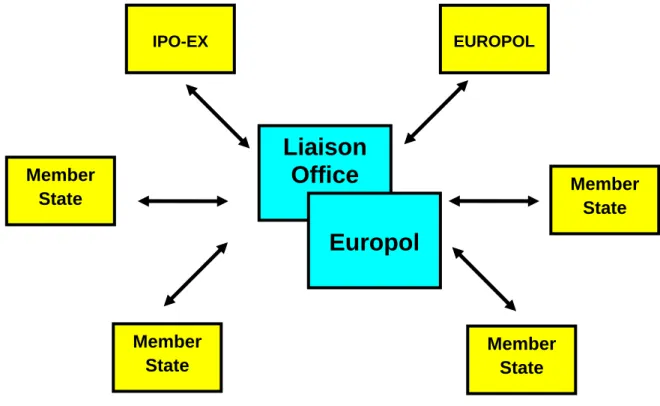
Figure 1.3: Information Exchange Between the member states and Data Transmission to Europol
Source: www.Europol, Access Date: 20.05.2010.
A project is ongoing to replace the InfoEx with a modern information Exchange tool (SIENA) in 2009. In addition to the Europol Headquarters, the SIENA will be directly accessible for authorized users in the member states’ Europol National Units.
2.2.3.1 Information System and Data Transmission of Europol
The purpose of the Information System of Europol (IS) as an intelligence database is to support member states, Europol and Europol’s co-operation partners in fighting all
EUROPOL Member State Member State Member State Member State IPO-EX
Liaison
Office
Europol
forms of serious international crime and terrorism. Member states may also use the data stored in the IS to combat other serious forms of crime.
The IS supports all operational activities within the Europol framework. It provides a rapid reference to information available to law enforcement agencies in the EU member states and to Europol on suspected and/or convicted persons, criminal structures/organizations, criminal offences and means used to commit them. The IS provides capabilities for storing, searching, visualizing and linking information related to trans-national crimes, allowing law enforcement agencies across Europe to co-operate efficiently in their investigations. The system supports automatic detection of possible hits between different investigations and facilitates the sharing of sensitive information in a secure and reliable way. The IS is a shared advantage and responsibility of the EU member states and Europol. Each member state and Europol can be considered as having an account in the IS for which they are responsible (Brown, 2009, pp.272).
Information deposited therein is made available to other EU investigators and is automatically compared with information in the IS deposited by other member states. The purpose of this is to look for matches with a view to enhancing intelligence and providing new leads for further investigation (Brown 2009, pp.272).
The IS was developed by Europol’s in-house software development unit. Hosted at Europol’s Headquarters in The Hague (The Netherlands), it is available in 21 languages to the law enforcement agencies of all EU member states
In 2000, the decision was taken to set up a Europol Information System (IS). The system became operational in 2002, but was limited to information and intelligence on counterfeiting of the euro. The second generation, covering all mandated crime areas, was implemented and made accessible to all member states in October 2005 (www.mvr.gov.mk/.../Europol%20Products%20 and%20Services-Booklet.pdf,).
The IS was the first move towards the establishment of a single crime information database for the whole of the EU, with the possibility of automatic uploading of data from national criminal databases.
0 10.000 20.000 30.000 40.000 50.000 60.000 70.000 80.000 90.000 Jan-2006 Aug-2006 Oct-2007 Jan-2007 Aug-2007 Oct-2007 Jan-2008 Aug-2008 Oct-2008 Jan-2009 Aug-2009
Figure 1.4: Quarterly progression of IS content, 0ctober 2005-April 2009 Source: www.Europol, Access Date: 20.05.2010.
In this period, Europol set up a number of other databases containing information on various aspects of international crime as seen at Figure 1.4. These include trade in stolen cars (European Vehicle Identification Database - EuVID), child abuse, counterfeiting, informants, and explosives (www.Europol.europa.eu).
2.2.3.2 Data Collection From EU Member States by Europol
Direct Data collection by Europol from the national units of the EU member states without incorporating the national unit it is not foreseen on the Europol Agreement. But if Europol employees desire to improve analysis cooperation and especially the file transfer trough the instrument of liaison by visiting local units, this activity is openly supported by the member countries. However, this measure must be conducted by providing accordance with the related unit and the limitation of the data shall be provided in accordance and selection is necessary (Çalışkan, Yılmazer, 2006, pp. 150). 2.2.3.3 Transmission Line in Europol
AWF data transmissions to authorized Europol Analyst, realized by using standard data protection provisions “handling codes” which are always made over the related specialized unit and liaison office of the member state due to the 5th Article of the
Europol Agreement. Transmission of the data’s to AWF by the Liaison office, always transmitted over the Info-ex system in Europol who gives a process number to each data. Participative states shall be remained as responsible data owners even after the data’s are transferred to Europol and registered on to the AWF. Beside the general data transmissions also the copies received from the information transactions transmitted over the liaison office in the Europol are submitting for use of AWF. Advantage of this process is to understand the same data on the related subject is also obtained by the other member states and also information is updated (Çalışkan, Yılmazer, 2006, pp. 151).
2.2.4 Initiation of a Project and Collaboration for Analyzing Purposes in Europol If any need for AWF is determined at the end of the first negotiations, then related project applications will be submitted by the EU member states to Europol for to build of an AWF. Then the EU member states takes a decision for starting an AWF (project) and mutually, they prepares a plan to determine which data’s must be entered in to the related analyze work file (Çalışkan, Yılmazer, 2006, pp. 151).
The goal of this exercise was to collate all national ‘JIT-related legislation’ with the aim of producing an overview of the different legal possibilities in all EU member states to set up JITs. First phase was intended to search for all documentation on JITs available in the member states, including national implementing legislation, and to compile it into a documentation folder per country. At that time, many member states had not yet adopted JIT legislation, even though the deadline for the implementation of the Framework Decision had already elapsed. second step in the project was drafting a questionnaire assembling the main elements of the JIT concept outlined in Article 13 of the 2000 MLA Convention (Council Act of 29 May 2000 establishing in accordance with Article 34 of the Treaty on European Union the Convention on Mutual Assistance in Criminal Matters Between the Member States of the European Union, OJ C197 of 12. 7. 2000, p. 1).
This questionnaire was intended to serve as a grid for describing all aspects regarding the setting up, composition and functioning of a JIT in each member state. Eurojust joined the venture in the first half of 2005 and a formal project structure was set up to
build on the work done by Europol and a project initiation document was agreed upon between Europol and Eurojust. A project team was installed, consisting of representatives of Eurojust and Europol, supervised by a Project Board (the Eurojust-Europol Steering Committee and heads of Legal Service). The project is managed by Europol and Eurojust in full partnership. The scope was approved: to produce a guide to EU member states’ legislation on Joint Investigation Teams which will give an overview of the legal possibilities in all EU member states to set up Joint Investigation Teams in the sense of Article 13 of the 2000 MLA Convention, as well as the means by which Europol and Eurojust can support these teams under each legal framework. The overview should provide a clear picture of how the principles of ‘Article 13 JIT s’ are regulated in all member states (Horvatits and Buck, 2007, pp.239-243).
2.2.4.1 Internal Regulations of Europol on Collaboration for Analyzing Purposes Obligations and tasks of the AWF collaboration partners have been resettled partially on the date of 01.01.2005. This new settlement is aiming to improve processes in Europol. Scope of the newly founded Operational Steering Group (OSG) is to render strategic decisions Europol related to analyzing activities. Deputy Director of the Serious Crime (SC), Head of national Unit (HENU), and Europol Liaison Officer (ELU) of the member state started AWF and important for the AWF are the members of the OSG. OSG takes in consideration; all the dimensions of the problem, possibility of success, available works on the subject and common grounds before giving recommendations on the opening or closing of AWF files (www.Europol.europa.eu,)
Project leader of the AWF will be assigned as SC Department Director (Head of Unit) of the related project. Head of the Unit shall be responsible to reach to goals have been agreed on and to solve unpredictable problems within the AWF. Project Manager undertakes the daily works of the AWF. Role of the Project Leader is to strength the activities. He is responsible directly to Associate Auditing Board about the result of the operational conclusions. Also he is responsible of AWF’s administrative works. Project Manager can be an expert or analyst and he is assigning by OSG. He is reporting to Project Leader and he must be authorized to give orders to analysts, experts and to the assistants of the analyst group in conformity with the Project Leader (www.Europol.europa.eu).