THE REPUBLIC OF TURKEY
ANTALYA BİLİM UNIVERSITY
INSTITUTE OF POSTGRADUATE EDUCATION
GLOBAL POLITICS AND INTERNATIONAL RELATIONS
AN ANALYSIS OF INTERACTION BETWEEN TOURISM
AND PUBLIC DIPLOMACY IN THE CONTEXT OF
MANUFACTURED SOFT POWER: THE CASE OF TURKEY
MASTER THESIS
Author
Sait YERSİZ
THE REPUBLIC OF TURKEY
ANTALYA BİLİM UNIVERSITY
INSTITUTE OF POSTGRADUATE EDUCATION
GLOBAL POLITICS AND INTERNATIONAL RELATIONS
AN ANALYSIS OF INTERACTION BETWEEN TOURISM
AND PUBLIC DIPLOMACY IN THE CONTEXT OF
MANUFACTURED SOFT POWER: THE CASE OF TURKEY
MASTER THESIS
Author
Sait YERSİZ
Advisor
APPROVAL/NOTIFICATION FORM
ANTALYA BİLİM UNIVERSITY
INSTITUTE OF POST-GRADUATE EDUCATION
SAİT YERSİZ, a student of Antalya Bilim University, Institute of Post Graduate Education, Global Politics and International Relations owning student ID 181115006, successfully defended the thesis/dissertation entitled “AN ANALYSIS OF INTERACTION BETWEEN TOURISM AND PUBLIC DIPLOMACY IN THE CONTEXT OF MANUFACTURED SOFT POWER: THE CASE OF TURKEY”, which he prepared after fulfilling the requirements specified in the associated legislations,
Academic Tittle, Name-Surname, Signature
Thesis Advisor : Prof. Dr. H. Tarık OĞUZLU
Jury Member : Prof. Dr. Şenol KANTARCI
Jury Member : Dr. Nermin AYDEMİR ÇAVUŞ
Director of The Institute : Prof. Dr. İbrahim Sani MERT
Date of Submission : 31/08/2020
ABSTRACT
This study emphasizes the concepts of "soft power" and "public diplomacy" which have gained importance in today's global political system, especially in recent years. After the bi-polar Cold War era, the multi-polar and crowded international atmosphere have emerged in the liberal world order. The new order has begun to force nation states to restrict the use of hard power capabilities in a traditional way. New concepts and factors, which are the outputs of globalization and digital age, have required the use of new generation methods and tools in international relations. Thus, it is intended to ensure that interstate relations are performed in a sustainable framework without the risk of destroying life on earth, with its high destructive power, military technologies and without undermining commercial dependencies.
In this study, the concepts of soft power and public diplomacy, shaped in a country's image and perception, is examined closely in the particular case of Turkey with its interaction with tourism.Especially in recent decades, tourism has become a significant sector of the global economy. Turkey, with its high potential for tourism, is being investigated in the study and as to whether tourism itself is used effectively in its strategies.
The study evaluates state policies implemented in practice, by conducting in-depth interviews with people in suitable positions to ask, without relying solely on related literature. Additionally, the strategic approach and coordinated policies are being tracked by interviews with tourism operators, based on common beliefs and benefits.
Turkey claims to be applying effective public diplomacy. This study conducts surveys and interviews with people from Norway, England and Germany, to test the success of Turkey in these areas.Interviews and survey groups are selected according to their interaction with the country and provide an evaluation of Turkey's public diplomacy and promotional activities in different categories and levels.Overall, it is aimed to measure the country's success and capability in reaching out to the target audience regarding Turkey's image and perception abroad.
ÖZET
Bu çalışma günümüz küresel siyasal sisteminde özellikle son yıllarda oldukça önem kazanan ‘yumuşak güç’ ve ‘kamu diplomasisi’ kavramlarını vurgulamaktadır. İki kutuplu Soğuk Savaş dönemi sonrası liberal dünya düzenin çok kutuplu ve çok aktörlü karakteri, ulus devletlerin sert güç kapasitelerini geleneksel şekilde kullanma konusunda kısıtlamalar ortaya çıkartmıştır. Küreselleşme ve dijital çağının çıktısı olan yeni konsept ve faktörler yeni nesil metot ve araçların kullanımını gerekli kılmıştır. Böylece devletler ticari bağımlılıklarını sarsmadan ve yüksek tahrip gücüne ulaşan askeri teknolojilerle dünya üzerindeki yaşamı yok etme riskini almadan uluslararası ilişkilerin sürdürülebilir bir çerçevede yürütülmesini sağlamaya çalışmaktadırlar.
Bu çalışma ülke imaj ve algıları üzerinden şekillenen yumuşak güç ve kamu diplomasisi kavramlarının turizmle olan etkileşimini Türkiye özelinde incelemektedir. Özellikle son yıllarda küresel ekonominin önemli bir sektörü haline gelen turizmin, yüksek potansiyele sahip Türkiye tarafından stratejik bir araç olarak kullanılıp kullanılmadığı araştırılmıştır.
Çalışma sadece literatüre bağlı kalmadan devlet politikalarının pratikteki işleyişini doğru konumlardaki kişilerle yapılan derinlemesine görüşmelerle değerlendirmiştir. Bunun yanı sıra, ortak fayda üzerinden beslenen turizm işletmecileri ile yapılan görüşmelerle stratejik yaklaşım ve koordinasyon politikalarının izi sürülmüştür.
Etkin bir kamu diplomasisi yürütme iddiasında olan Türkiye’nin bu konudaki başarısı Norveç, İngiltere ve Almanya kamuoyu üyeleriyle yürütülen anket ve derinlemesine görüşmelerle test edilmiştir. Görüşme ve anket grupları Türkiye ile olan etkileşimlerine göre seçilmiş olup ülkenin kamu diplomasisi ve ülke tanıtım faaliyetlerini değişik kategorilerde değerlendirme olanağı bulunmuştur. Bununla beraber, Türkiye’nin yurt dışındaki imaj ve algısı üzerinden ülkenin hedef kitleye ulaşma kapasitesinin ölçülmesi hedeflenmiştir.
Annem, babam, Esram, kızlarımız Sema ve Melek’e… Sevgi ve minnetlerimle…
TABLE OF CONTENTS ABSTRACT ... IV ÖZET ... V LIST OF ABBREVIATIONS ... IX LIST OF TABLES ... X INTRODUCTION ... 1 CHAPTER 1 ... 7
A THEORICAL ANALYSIS OF SOFT POWER AND PUBLIC DIPLOMACY ... 7
1.1. ATHEORETICAL ANALYSIS OF SOFT POWER AND PUBLIC DIPLOMACY ... 7
1.1.1. What is Power? ... 9
1.1.2. Hard Power ... 12
1.1.3. Resources of Hard Power ... 13
1.1.4. Soft Power ... 14
1.1.5. Differences Between Soft Power and Hard Power ... 17
1.1.6. Soft Power Critics ... 18
1.1.7. Resources of Soft Power ... 19
1.1.8. Smart Power ... 20
1.1.9. Soft Power is Related with Welfare and Prosperity ... 22
1.1.10. Does Soft Power Need Hard Power? ... 22
1.1.11. Manufactured Soft Power ... 23
1.2. PUBLIC DIPLOMACY ... 24
1.2.1. Twitter diplomacy ... 26
1.2.2. Public Diplomacy and Promotion Elements ... 26
1.3. TOURISM AS A PUBLIC DIPLOMACY TOOL ... 27
1.3.1. Domestic Tourism ... 28
1.3.2. International Tourism ... 30
1.3.3. Tourism in International Relations ... 32
1.3.4. Tourism as an Economic Figure in International Relations ... 33
1.3.5. Tourism as a Tool of Manufactured Soft Power ... 34
1.3.6. Tourism is Building Interdependency Between States ... 35
CHAPTER 2 ... 36
AN ANALYSIS OF MANUFACTURED SOFT POWER IN TURKEY DURING THE REIGN OF JUSTICE AND DEVELOPMENT PARTY ... 36
2.1. AN ANALYSIS OF SOFT POWER IN TURKISH FOREIGN POLICY ... 36
2.1.1. Public Diplomacy Methods and Institutes in Turkish Foreign Policy ... 40
2.1.2. Turkish Airlines (THY) ... 41
2.1.3. Turkey Radio and Television Corporation (TRT) ... 42
2.1.4. Yunus Emre Foundation (YEE) ... 43
2.1.6. Turkish Cooperation and Coordination Agency (TİKA) ... 44
2.1.7. Disaster and Emergency Management Presidency (AFAD) ... 45
2.1.8. Turkish Armed Forces (TSK) ... 45
2.1.9. Turkish Cinema and Tv Series ... 46
2.1.10. Water Wars ... 46
2.1.11. Think-Tank Organizations ... 47
2.1.12. Strong Passport Policy ... 47
2.2. HOW TO BUILD SOFT POWER TROUGH TOURISM AS APUBLIC DIPLOMACY TOOL ... 48
2.2.1. Analyzing the Activities of the Ministry of Foreign Affairs ... 48
2.2.2. Analyzing the activities of the Ministry of Culture and Tourism ... 56
2.2.3. Practices of Private and Semi-official Organizations ... 66
2.2.4. Private sector executive interviews ... 69
CHAPTER 3 ... 73
MEASURING THE SUCCESS OF TOURISM IN TURKISH PUBLIC DIPLOMACY OVER SURVEYS AND INTERVIEWS WITH FOREIGNERS ... 73
3.1. ASUCCESSFUL PUBLIC DIPLOMACY ... 73
3.2. THE STRUCTURE OF THE SURVEY AND ITS PURPOSE ... 74
3.3. THE SURVEY OF GROUP A ... 77
3.4. THE SURVEY OF GROUP B ... 92
3.5. THE SURVEY OF GROUP C ... 103
3.6. IN-DEPTH INTERVIEWS WITH SECOND HOMEOWNERS IN TURKEY ... 112
CONCLUSION ... 132
LIST OF ABBREVIATIONS
AFAD : Disaster and Emergency Management Presidency
AK Party : Justice and Development Party
BSEC : International Organization of the Black Sea Economic Cooperation
CIMER : Republic of Turkey Presidential Communication Center
EU : European Union
GDP : Gross Domestic Product
IDEA : International Development and Environment Association
KIZILAY : Turkish Red Crescent
MASİAD : Manavgat Industrialists and Businesspeople Association
MATSO : Manavgat Chamber of Commerce and Industry
NATO : North Atlantic Treaty Organization
THY : Turkish Airlines
TİKA : Turkish Cooperation and Development Agency
TRT : Turkey Radio and Television Corporation
TSK : Turkish Armed Forces
TUIK : Turkish Statistical Institute
UNWTO : The United Nations World Tourism Organization
YEE : Yunus Emre Foundation
LIST OF TABLES
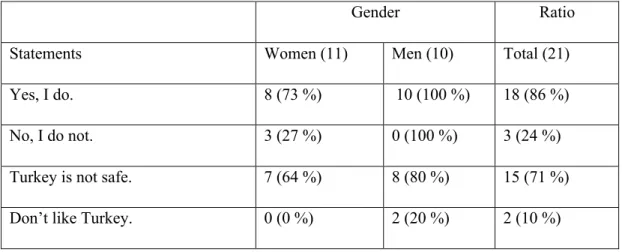
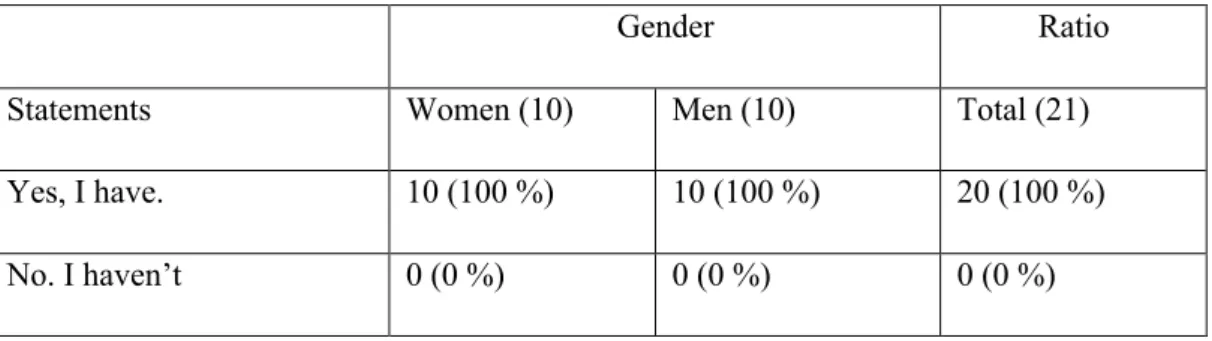
TABLE 1:GROUP A,VISITED OTHER COUNTRIES. ... 77
TABLE 2:GROUP A,THE VISITED COUNTRIES. ... 78
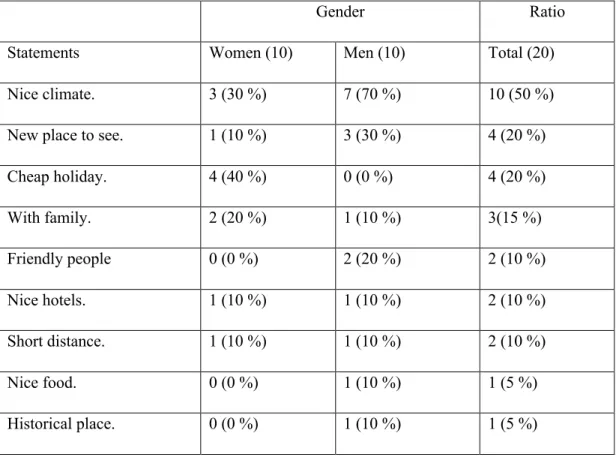
TABLE 3:GROUP A,REASONS TO CHOOSE TURKEY. ... 80
TABLE 4:GROUP A,GENERAL PERCEPTION OF TURKEY ABROAD. ... 81
TABLE 5:GROUP A,THE LEVEL OF TURKISH PERCEPTION. ... 82
TABLE 6:GROUP A,PEOPLE WHO DON’T WANT TO VISIT TURKEY AND REASONS. ... 84
TABLE 7:GROUP A,UNATTRACTIVENESS ABOUT TURKEY. ... 86
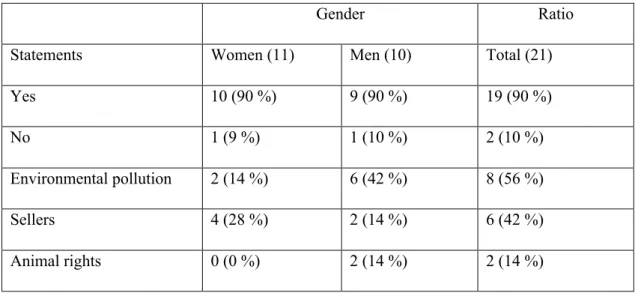
TABLE 8:GROUP A,RECOMMENDING TURKEY. ... 88
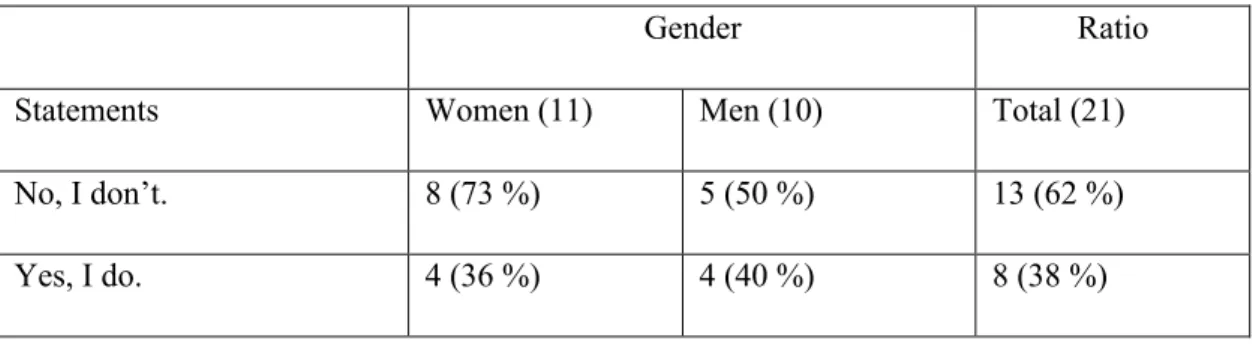
TABLE 9:GROUP A,SUFFICIENCY IN PROMOTING. ... 88
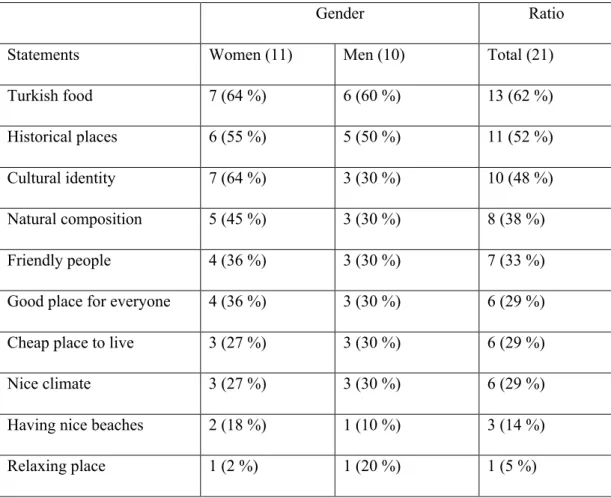
TABLE 10:GROUP A;THE FEATURES TO PROMOTE TURKEY WITH. ... 90
TABLE 11:GROUP B,FREQUENCY OF TRAVELING ABROAD. ... 93
TABLE 12:GROUP B,VISITING OTHER COUNTRIES. ... 94
TABLE 13:GROUP B,REASONS TO CHOOSE TURKEY. ... 95
TABLE 14:GROUP B,PERCEPTION BEFORE AND AFTER VISIT. ... 97
TABLE 15:GROUP B,WILL OF VISITING TURKEY AGAIN. ... 98
TABLE 16:GROUP B,RECOMMENDING TURKEY. ... 98
TABLE 17:GROUP B,THE PERCEPTION LEVEL OF TURKEY ABROAD. ... 99
TABLE 18:GROUP B,SUFFICIENCY IN PROMOTING. ... 100
TABLE 19:GROUP B,THE FEATURES TO PROMOTE TURKEY WITH. ... 101
TABLE 20:GROUP C,FREQUENCY OF TRAVELING ABROAD. ... 103
TABLE 21:GROUP C,THE VISITED COUNTRIES. ... 105
TABLE 22:GROUP C,THE REASONS TO CHOOSE COUNTRIES. ... 106
TABLE 23:GROUP C,THE THOUGHT OF VISITING TURKEY. ... 106
TABLE 24:GROUP C,REASONS OF THINKING TO VISIT TURKEY. ... 107
TABLE 25:GROUP C,REASONS OF THINKING NOT TO VISIT TURKEY. ... 107
TABLE 26:GROUP C,KNOWING PEOPLE WHO VISIT TURKEY. ... 108
TABLE 27:GROUP C,HAVING ENOUGH INFORMATION ABOUT TURKEY. ... 109
TABLE 31:SECOND HOMEOWNERS,CHANGING PERCEPTION IN TIME. ... 114
TABLE 32:SECOND HOMEOWNERS,CHANGES IN TURKEY. ... 116
TABLE 33:SECOND HOMEOWNERS,ENTITY OF SPECIFIC MEDIA TO FOLLOW TURKEY. .... 119
TABLE 34:SECOND HOMEOWNERS,SPECIFIC MEDIA TO FOLLOW TURKEY. ... 119
TABLE 35:SECOND HOMEOWNERS,PERCEPTION OF TURKEY ABROAD. ... 120
TABLE 36:SECOND HOMEOWNERS,THE ISSUES RELATED TO TURKEY ON MEDIA. ... 123
TABLE 37:SECOND HOMEOWNERS,UNATTRACTIVENESS ABOUT TURKEY. ... 125
TABLE 38:SECOND HOMEOWNERS,THE FEATURE TO PROMOTE TURKEY WITH. ... 128
INTRODUCTION
The world political order made a great transition to a ‘liberal order’ at the end of the Cold War bipolar era after the collapse of the Soviet Union. With the neo-liberal approach turning into dominant international policy, the globalization process has accelerated and caused the emergence of new non-state actors in global policy. The most important consequence of this was erosion of nation states which have been the dominant actors in international politics since seventeenth century. Non-state formations, which have gained the ability to act in large areas, started to play important roles in global politics. This new condition has led to international relations being adopted and practiced on a much more complex platform.
As it is generally known, because of the lack of trust, and not having a higher authority above them in international relations, states perceive each other as threats. Nation states develop different methods to protect their national interests and security; in an anarchical environment. Traditionally, balance of power politics, perused trough military and economic means, are assumed to contribute to peace and stability in international politics. However, these instruments have begun to lose their effect in the era of globalization. “Soft power”, which entered the International Relations literature in the early 1990s, has become one of the key topics of international politics with many states increasing their efforts to build up their soft power potential.
The approach of searching for ways to gain more power against their rivals in international relations is generally accepted.Perhaps this approach is one of the rare issues where international relation theories can be a consensus. Along with the changing dynamics in global and national politics, the concept of power is also
changing. Although “hard power”, “soft power”, “smart power” and “sharp power”
the importance given by states to the notion of soft power while protecting their national interests and national security.
The concept of soft power has gained importance, especially in the last two decades, and has become indispensable. In this context, this study evaluates the importance of soft power formed on two assumptions. The first one is the globalization process triggered by the neo-liberal approach in the 1980s, states needed each other in an intensive, dependency relationship. Thus, every country in the world has become a link in the global economic chain, or a gear of the global trade wheel; such that, even countries that have hostile feelings towards each other make a high degree of effort in maintaining commercial relations.This dependency has made countries sensitive in establishing and protecting a suitable and safe ground for conducting global issues, trade and commercial activities.
The second assumption is that destructiveness has reached an unacceptable level in regard to military technological developments. In this context, the new generation of atomic and nuclear weapons, with high military destructive power, has the ability to disrupt all balance and even destroy life on earth. In addition, each country is included in binding groups with many alliances and cooperative agreements. This situation allows even a country with the lowest attacking power, to challenge larger states. Even if the use of coercive military instruments continues to remain quite vital to states’ foreign policy success, it is no longer an action to be taken as decisive as it once was.
In the frame of these two assumptions, a great war would mean at the very least a loss of trade and impact welfare and could even lead to the consideration of destroying the entire world. These facts are using statistics to utilize soft power to attract others to achieve the preferred outcomes. In order to attract others requires self-acquainting, which in turn needs public diplomacy to present the country to others and to their people. Public diplomacy is the most effective tool for states to express themselves outside their borders, to promote themselves and to demonstrate what their true intentions are. Nowadays, high-level units and strategic evaluation departments of all countries are engaged in public diplomacy activities.
The study analyzes this subject, by examining Turkey in particular. Turkey is a very good example because it has had a hard-military, power-based policy at the heart of the country. This tradition in Turkish history has produced a negative image in the eyes of liberal western countries. Nowadays, Turkey struggles with a lack of foreign support from its long-allied western liberals. Never ending procedures with the European Union, fragile relations with the United States and skeptical, distrustful approaches of its neighbors is rooted in not effectively utilizing public diplomacy and soft power in its past. Changes and new requirements in world politics have also led Turkey to develop new strategies and pushed it to integrate in the world political system. Public diplomacy in Turkish foreign policy gained momentum in the first period of the AK Party government era. Since then, Turkey has thought a lot about public diplomacy as well as soft power. With an understanding of public diplomacy as being interaction with the foreign public, this draws attention to the high capacity of tourism that Turkey has. The interaction between public diplomacy and tourism is considerable, since both activities support each other. Moreover, both elements serve the appeal of the country which is related to the level of soft power. Therefore, tourism is worth studying and analyzing in this context. Using this example of Turkey, public diplomacy and tourism are relatively new notions in Turkish foreign policy. Consequently, tourism has not yet taken its rightful place in Turkish foreign policy and is not being used strategically as a tool of public diplomacy in order to increase its soft power. In this framework the research question of the study formed as: How do public diplomacy and tourism relate to each other in the context of manufactured soft power? This dissertation seeks to reveal this relation in light of Turkey’s experiences.
‘Soft power’, ‘public diplomacy’, and ‘tourism’ are three important elements which depend on the promotion of each other. Empowerment of one element contributes significantly to the rise of the others. This means successful public diplomacy would increase the number of tourists visiting the country. Consequently, more people will interact with the country which would contribute greatly to its public diplomacy and depending on their level of satisfaction each tourist becomes a promoting element for the country. Therefore, the study chose real
who have an important place and function in actual practice. With this in mind, it was aimed to examine state and non-state formations in order to analyze soft power and public diplomacy activities in practice, especially in tourism.Further, different levels of interviews were held with people who are in dominant positions. These actors, who have an important function in this field, give significant clues about the implementation of politics in “real” practice. State officials provide information about the government’s actions, while private sector managers test whether these responses are met. In the context of a country’s promotion, the government and private sector are as one in the unity of interest. Therefore, successful public diplomacy is an important issue and is desirable to both sides. In this framework, evaluation of the opinions and thoughts of the two parties provided important contributions to the study.
Based on the principle of ‘to be responsible for the message being correctly
perceived’, the success of Turkey’s public diplomacy and its promotional activities
were evaluated through the perception of foreigners.The basic principle of this study is that every country is responsible for their own external image. In this way, each country should introduce itself through an accessible and clear public diplomacy to other states and to their people, thus avoiding having an image that does not reflect the truth.A perception that does not reflect the truth is an important indicator of the failure of the country in public diplomacy.In other words, as long as the image of the country does not reflect the reality abroad, either positively or negatively, the country’s promotional policies should be questioned.
To measure the success of Turkey’s efforts to build soft power trough tourism and public diplomacy surveys were held with three groups of foreigners who have different status in the case of their interaction with the country. Group A consists of people who have bought property in Turkey, Group B consists of people who have been to Turkey at least once and Group C consists of people who have never been to Turkey. The different interaction levels of these three group members with Turkey determines their interest level in the country. Continuing with this idea, people who are more interested in Turkey are easier to communicate with for the state to conduct public diplomacy, because they are open to receiving messages and information from Turkey. On the contrary, it is much harder to communicate with people who are less
interested in the country. This fact provided an opportunity for this study to examine the issue at three different levels. The expectation is that members of Group A tend to follow the news and incidents in Turkey because they may even be affected themselves eventually. The members of Group B are also expected to have an interest in Turkey to some degree, due to having knowledge from their experience. However, the members of Group C are expected to be neutral, even if they don’t have any reason to a have a negative perception. This would mean that Turkey is an ordinary place for them, and it would require a special context to draw their attention to the country. Finally, in-depth interviews were held with second homeowners about the issues raised in these surveys. Since members of this interview group have been familiar with the country for a long time, they provide significant data, comments and contributions to this study.
A qualitative approach was chosen in order to analyze the aforementioned dynamics from real practice. A series of surveys and interviews were conducted as the data collection method. The research was focused on an exploration of practices of the Turkish states in the field, and to trace the possible impacts on foreign people. The methodology was functional to in order to allow the participants to express their interpretations as contributions to the study.In order to examine the practices of the ‘Culture and Tourism Ministry’ and the ‘Foreign Affairs Ministry’, in-depth interviews were held with the Antalya Representative of the Ministry of Foreign Affairs and with the Antalya Provincial Director of the Ministry of Culture and Tourism. Besides this, to analyze where the private tourism sector stands on the promotion of the country, in-depth interviews were held with five tourism business managers and the chairman of the Manavgat Chamber of Commerce and Industry.
On the other hand, to test the success of Turkish public diplomacy, three survey groups and ten in-depth interviews were conducted with foreigners who were from Norway, England and Germany. The total number of participants in the surveys was 55 and there were 10 in-depth interviewers; 31 of them were women and 34 were men. Group A had a total of 21 participants; 11 of them were women and 10 were men. Group B had a total of 20 participants; 10 of them were women and 10 were men. Group C has a total of 14 participants; 6 of them were women and 8 were
Most of the questions of the survey were intentionally composed and not too detailed, while also trying not to influence or persuade participants. This seems to be a weakness of the study, but the purpose is to lead the participants to express whatever they think straight away. In this way, the study aimed to reach the pure perceptions and intentions of the participants.
During the evaluation, details outside the scope of the research were removed. The results of the interviews and surveys were converted into data by coding and finally interpreted.
The population and samples were selected for analysis from three European countries - Norway, England and Germany, which constitute an important part of the country’s target audience in tourism.The interviewees and participants were selected in a manner that complied with the socio-economic status and gender representation of the countries in which they are located.
The strengths of the study are that it was conducted using research results without relying on literature alone and that the data utilized in the research was collected from real dynamics and from the field.In addition, since the author is an experienced entrepreneur within the tourism sector the study had a wide network and reflection of practices. A weakness of the study is that the representation criteria for data collection were not fully met.
As it is processed in the first chapter, the study explains the meanings of the concepts ‘soft power’, ‘public diplomacy’ and ‘tourism’ and emphasizes the importance of them in today’s world political system. In the second chapter, the general approach pointed to giving examples from Turkish foreign policy practices and examples of institutional initiatives of increasing soft power in purpose. Through in-depth interviews with people in power in the Ministry of Foreign Affairs, in the Ministry of Culture and Tourism and with private tourism sector players, the practical functioning of the previously mentioned concepts was examined. Finally, in the last chapter, the success of Turkish public diplomacy and promotional activities was tested and assessed in surveys and in-depth interviews with foreigners.
CHAPTER 1
A THEORICAL ANALYSIS of SOFT POWER and PUBLIC
DIPLOMACY
1.1. A Theoretical Analysis of Soft Power and Public Diplomacy
Over many centuries, an international political system has existed through different periods in time. It may commonly be divided into three marked stages. Firstly, the imperial world system whereby one imperial power ruled most of the world. A clear example of this system is the Roman Empire. The second system was the feudal system. Feudalism was common in Europe for a long period after the Roman Empire, taking its place in history in mainly the 10th to 13th centuries. This system is best described as a social, military and cultural hierarchy, based on political administration. Lastly, the world International political form is the anarchic system of nation states. This system has been shaping International politics since the age of revolutions, especially after the French Revolution. However, the system can be traced back to the Peace of Westphalia in 1648; thus, the present form of the International System is referred to as the “Westphalian System.” Sovereign states are the main principle players and there is no accepted higher authority. This fact drives international politics in a self-help system. Since states are unequal in terms of power, they work against each other for preferred outcomes and status. The lack of a legitimate participant having a monopoly on using force in international politics, does not enable the creation of a mechanism to regulate interstate relations. This situation leads the system to rule in a mistrusted and suspicious atmosphere (NYE J. S., 2014, pp. 6-12).
the stage of globalization. It doesn’t seem possible to define this era of globalization, triggered by neoliberalism, either in terms of borders, or its scope. The most obvious thing is that nation states are no longer the only actors and strong players in the international political system. This means that the international playground is more crowded, and the rules are more complicated, to the point, with the new players and the new technological international environment, that new strategies and methods are required to achieve goals in foreign policies. Power has its aims and objectives divided into hard and soft dimensions. These new strategies are mostly addressed to soft power, which is dependent on the increase of public diplomacy.
It may be seen that the concepts examined by this thesis are being subject to and analyzed in many other studies. In general, these concepts are being examined in more detail and with their functions in international relations. However, there are very few studies which inspect the links between tourism and soft power, together with public diplomacy. For instance, N. Gur has examined the potential Turkey has in tourism and the impact on the country’s soft power capacity (GÜR, July 2014). However, the study did not put emphasis on any strategic relationship network focused on tourism. In general, the contribution of tourism to soft power and its development is being studied.
W. Hunter et al have examined tourism and its impacts in a wide constructive perspective. The research is being conducted in a viewpoint of taking tourism as a form of soft power. Tourism is being conceptualized as ‘smart tourism’ which brings a different assessment to the subject (HUNTER, March 2015). However, in many other studies the term ‘smart tourism’ indicates the attempt to improve sustainable tourism. The study examines tourism as part of soft power and not a tool or autonomous element.
O. A. Bunakov et al emphasize the impacts of both soft power and tourism on each other and focus the support they provide for advancement (BUNAKOV, 2018). The study is being carried out specifically for Russia and its regions, while the importance of concepts is being examined.
Honggang Xu et al examined the Chinese exercise of using outbound tourism as a tool for increasing soft power. The article emphasizes the importance of tourism
for the host country, and the function of tourism in order to support the soft power of the country (XU, 2018).
1.1.1. What is Power?
“Simply put, power is the ability to affect the outcomes you want, and if necessary, to change the behavior of others to make this happen.” (NYE J. S., 2002,
p. 4).
Aside from the concept of power having different meanings in the literature, this study focuses on the capacity of power. In other words, it conducts the research through measuring the capacity of power, not the influence of it on the other party. ‘Capabilities do not automatically translate into influence.’ (OĞUZLU, 2020)
Before emphasizing the definition of power, it needs to be highlighted so that it can be divided by its direction as “power of destruction or power of producing.” A country which is generally known and accepted as a powerful state doesn’t necessarily mean that it has both equal power of destruction and power of production. For example, Russia is able to compete with the USA and China in the power of destruction, yet it is far behind in the case of power of production. This issue needs detailed research on its own, and this particular study analyzes power in the international arena.
First of all, it is important to note that power is a notion that could be flexible to determine matters, depending on the physical conditions and the effect of instruments to hand. In the logic of power meaning changing the other party’s behavior to serve the power holder’s interests, a state would be considered powerful as long as it can have influence on the others, to act in the direction of its own interests. In this sense, according to Machiavelli the main goal for a state is to gain power and influence. While doing so the methods and the instruments that have been chosen don’t matter. The only purpose is the response that the state gets for its demands (MACHIAVELLI, 2001, p. 16). If the state achieves its goal as a result of
this again, a state can be called powerful as long as the state has influence over others and able to change the others’ behavior towards its own political interests.
In contrast, if the state cannot gain the desired outcomes, then it cannot be considered a powerful state. For example, Napoleon Bonaparte and Hitler had very powerful and strong armies in terms of quantity, with the support of economic opportunities and having the masses backing them. However, when it came defeating the Russians, they both failed. Physical conditions and environment can determine and affect the means and instruments in this sense. For example, having a force of sharpshooters and heavily armed troops in a forest like Vietnam wouldn’t necessarily provide superiority as in the case of the USA in the Vietnam War. Having a well-equipped Army with armored vehicles operating in the geography of Afghanistan might not work as it is planned. Indeed, having a highly advanced navy in Gallipoli opposing dedicated soldiers might not bring the expected result.
Mearsheimer asserts that states have no other choice but to obtain power to survive. This has been ongoing throughout history. Thus, fear forces the states to gain a position to provide self-help and the maximization of power. The international order doesn’t have any higher authority to conduct a mechanism to determine the relation between states. This structure compels states to feel under threat from each other and forced to seek any possible ways to obtain the ability to protect and maintain their existence (MEARSHEIMER J. J., 2001, pp. 29-54). This ability is commonly called “Power” in the literature. It is a highly debated subject; there is not a clear and agreed definition of power. However, in general, it can be defined as ‘the ability to make others to do what the power holder would have them to do’.
The mainstream international relation theories have different approaches and understandings of power. It is important to analyze these approaches in order to have a better perspective and understanding of the topic. Realism keeps power as the core of the theory. The main scholars of Realism, Niccolò Machiavelli and Hans Morgenthau assert that power is the primary goal for states to provide national security. Machiavelli advised the Italian princes to conduct severity, persecution and military methods to remain as power holders. Power, which is required for national security and survival, is mostly considered as a military and economic capacity by realists. Morgenthau defines power as a kind of relation, an essential goal of
international politics and a tool for achieving a purpose. But Holst criticizes this approach for self-contradiction at the point of power being the essential goal, and a tool for achieving purposes as well as for the unclear definition. According to Holst; power is the ability of a country to use its capacity by various strategies as reward, punishment, convince and coercion to influence and orientate the behavior of other parties toward its self-interest (AYDOĞAN, 2011).
According to J. Nye, power is the ability to affect the others’ behavior for getting the desired outcomes. There are three ways to do so “coercion with treats,
payments or attract or co-opt.” (NYE J. S., 2008, pp. 27-29). Or in other words, it
can be described as such; ‘Power is the capacity to influence other actors and shape
their preferences through the possibilities in hand.’ (OĞUZLU, 09 March 2007).
Traditionally, the understanding of power is the superiority of military resources, military abilities and military capacities. Nevertheless, in the information age, it is also important whose story wins. It does not mean that military power is unimportant, but some of the new issues in this age can no longer be solved with pure military power alone. Nye explains his assumption with a different dimension of power. Thinking that there are three chess boards in the international relation arena; the top board is the military relationships among the states which means that military power still remains the most important element. The top board is unpopular with the American majority. The middle board relates to economic relations among the states. This board is multipolar with strong economic actors like the European Union, China and Japan. The third board is a chaotic dimension, with many transnational actors out of nation states control. Hence, it will not be correct to categorize this board as either unipolar or multipolar because power distributed is not in order. Here is where states need to cooperate with non-governmental actors. Again, the information age leads power to be redistributed, but this time non-governmental international players become involved too. Looking at the historical background of states, it is common to observe that power changes hands between states. A feature of the new age is that there are non-governmental actors which are also trying to gain power in the international arena. Nye calls power changing hands as “power transition and power
Power transition means power transferring from one state to another, but power diffusion means power transferring from states to non-state organizations, rather like terrorist organizations or transnational companies. According to Nye; there are three faces of power: - the first one is the ability to get others to do what you want them to do. The second one is the ability of agenda-setting, which provides the opportunity to choose the issues to be placed on the table. The third face is to influence set preferences which would lead the other party to want the same outcome as the power holder (NYE J. J., 2011, pp. 10-18).
Military power is, indeed, a very important element for the states and most likely has a large proportion of influence on interstate relations. In realist literature it is termed “high politics,” which gives priority to the “stick” because it is related to International relations and it concerns national interests. “Carrot” is also an element of hard power which provides the power holder the ability to buy the desired outcomes. In addition, a “carrot and stick” understanding has been the major method of conducting foreign policy in a “cost and benefit” manner in the current international order (OĞUZLU, 09 March 2007).
Whether states are enemies, rivals or friends, it is obvious that each and every state focuses on the self-interest and national security which requires having enough power in its hands to protect itself. It seems that nation states are confused at some point about how to influence the others on the complicated, chaotic chess board. It seems that implementing traditional approaches in international relations does not serve national interests as much anymore; in globalization the states need each other for trade and for cooperation in global issues.
1.1.2. Hard Power
The term hard power can be defined in short as “Hard power is the use of
coercion and payment.” (NYE J. S., July/August 2009). In basic logic hard power is
the physical ability, capability and capacity to influence others. From a hard power point of view, power is a countable and measurable element. In this sense, comparing
countries with their military units and capacities, economic accumulation, defense budgets, geopolitical locations, population, the number of atomic and nuclear weapons and their ranks as a total, can determine their hard power. Depending on this logic it is not very difficult to make a list to categorize countries and put them on a line. Comparing each country would determine their place on the list by counting the resources of the states. Nowadays, this list would only be called “military
strength ranking,” but it does not mean that the one on the top of the list can rule the
rest. A Power index of countries is published on the website www.globalfirepower.com (globalfirepower, 2020). But does this list really determine who is dominant on international issues?
According to Nye, power can be relative depending on the circumstances at the time. For example, having many tanks in a desert would be important as superiority, but it might not bring success in a place like Vietnam. Despite the United States being far more powerful than Vietnam in military and economic means, it did not change the result and the United States did not achieve victory in Vietnam. Additionally, al-Qaeda attacked America in 2001 while the United States was the only superpower in the world. At the end of the day, the world’s most powerful army could not prevent the September 11th attack coming from miles away from a terrorist group (NYE J. S., 2004, p. 3).
A highly significant security consideration in the information age is cyber-attacks for today’s world. It is not possible to prevent these kinds of cyber-attacks with traditional hard power weapons. The result of these cyber-attacks can cost a lot more than using traditional means of conflict. Again, a cyber-attack prevention capacity requires being well-organized which would also be tied up with technological and economic development.
1.1.3. Resources of Hard Power
economic sources, because economic resources allow the country to create, develop and maintain a strong military back-up.
Military resources and the use of military force is the main element for implementing threats and enforcing policies. Even though military power is losing its traditional place in international relations it still remains the most important factor on the board.
Geopolitical resources and geopolitics are another important issue for hard power. For example, the geopolitics of America played an essential role for this country to rise. America’s location provides security to the country and gave the government the chance to isolate from the rest of the world when it comes to getting involved with wars. Such a geopolitical location also allowed America to become a global power.
Population can also be counted as a resource for every stage and dimension of states. Since population is a resource for economic activities, military and technological advancement, it has always been a vital element and played an important role in the fate of countries.
Technology has been a critical factor which can provide supremacy against countable resources. For instance, having the technology to prevent any type of air strikes would eliminate enemy air capabilities, even without having a competing air deterrent. A technologically equipped army does not necessarily have to be equal with its enemies in terms of numbers.
1.1.4. Soft Power
The term soft power was developed by Joseph Nye after the very first time he used it in his book, “Bound to Lead: The Changing Nature of American Power,” published in 1990. Soft power is related to a changed World Order after the Cold War era; the transmission from a bipolar to a unipolar World Order and with dramatically developed technology. In world politics there are different methods for states to obtain their preferred outcomes. Traditionally, in the realistic political
approach, coercion and economic elements have been the first options that states have considered using to gain the preferred outcomes. Soft power, however, provides the possibility that a country can achieve its wanted outcomes, without using military or economic means. Not long ago, thinkers chose to separate hard and soft power from each other. In literature it is defined as, “Soft power is the ability to get what
you want by attracting and persuading others to adopt your goal.” (NYE J. S.,
January 10, 2003). Pursuing this theory further, soft power means not using pure military and economic means (which is called hard power), while obtaining the preferred outcomes. Basically, it is the idea of being followed by other countries for its values, emulating its example, aspiring to its prosperity and openness. Framing soft power like this would place it in a strong position and make it as important as threatening or using military force or economic elements to change others’ behavior. If one country is attacked by another, it will begin to do its requests spontaneously. Thus, a country having power does not need to spend effort to gain any desired outcomes. Nye asserts that influencing others by using soft power instead of hard power would cost a lot less, because the power holding country would save by not using “carrot or stick” (NYE J. S., 2004).
Indeed, observers of world politics support the idea of the importance of soft power in practice. The main hard power element of military force has been utilized less and less in recent years. The new age structure does not allow pure hard power to be utilized as easily as in the past. (GRAY, April 2011).
Since the term soft power emerged in the USA, the study applied the case to examine American soft power in order to illustrate certain points. Colin S. Gray also asserts eleven reasons for the USA’s policy and strategy which make utilizing hard power – alone - useless to some point and also fallible, as well as emphasizing the ability of soft power and sides to it. Colin S. Gary focuses on the popularity of respecting universal humanitarian values growing among countries. This makes the use of hard power difficult. However, it does not mean that hard power is less important in world politics. Using force cannot offer guidance to the future. “History
is not reliably linear.” Hard power is not a “fixed metric value.” Its results can
policymakers are, which is not a desired reputation. War and military force have violence which contrasts with liberal values. The USA shouldn’t see soft power as an instrument of policy directly because America is what it is. Trying to explain it might end up with “blow back”. Soft power cannot be a “substantial alternative” to using hard power. Soft power is dependent upon foreigners’ uncoerced choices which can be different to ours and even very unlikely. Soft power can be very easily used to influence others as well as being too difficult because of local interests or culture or maybe both. Soft and hard power should be complementary, but it cannot work this way all the time because of the nature of the soft power. The issue is not “coercion
versus attraction.” The two kinds of power are facilitators to achieve the goals.
(GRAY, April 2011, p. Summary).
Indeed, soft power has emerged as an element that countries needed in the information age. Although this term has been used frequently in the literature recently, it is possible to see its traces in the past. However, since the concept has started to take place in international relations, countries are developing strategies through soft power to get the results they request. Thus, increasing soft power capacity has become an important issue for states. The best way for a state to do so is to demonstrate and promote itself with successful public diplomacy.
Developed technology allows the public to reach information as fast as the states can. This means that people can follow domestic and foreign events very easily today. Any event, anywhere in the world, could have potential effects and consequences on everyone’s interests without any limitation of distance. As a result of this, everyone keeps an eye on domestic and global politics. As a simple example, a political statement by the President of a country could affect exchange rates or trade relations, meaning someone can lose or gain financial benefit miles away. For this reason, a globalized world has become a clear screen to be watched by sensitive and selective audiences. The same audience has some economic and political power at hand as individual actors. Each of these audiences get together and combine to create a public which turns them into a significant playing actor in domestic and global politics (DEBORAH, 2015).
The people have a forcing and influencing role on the decision makers, because the decision-makers somehow need to have the legitimacy from their own
people, no matter where in the world they are. This then, creates the opportunity for a population to become an interesting element able to provide influence and to serve its own interests. Nowadays, it is common for a leader to give a speech to a foreign nation about a debate between the governments. It could be said that this is a new age strategy for governments. Every country has departments and knowledgeable staff to conduct these kinds of activities in the name of “public diplomacy.” In addition, an outstanding practice in international politics as another method is to defame rival countries by showing itself better in competition. This is nowadays defined as ‘sharp power’ in the literature (WALKER, July 2018).
1.1.5. Differences Between Soft Power and Hard Power
There are several ways to utilize hard power instruments in order to increase soft power, for example, by using armies to help in humanitarian activities or by having soft power influence on the others allowing justification of the use of hard power. The interaction between soft and hard power needs to be analyzed on special occasions. It is clear that both types of power support and back each other when needed.
The main difference between soft power and hard power is that hard power uses coercion, threat or payment as a method, while soft power reaches the outcome without any demands and effort. For the reason that soft power holders have influence over others to attract them, so they would want the same thing anyway. On the other hand, utilizing hard power means calculating the costs and benefits of actions that have a strategy of ‘twisting arms’ or driving others into a corner. These kinds of actions can be irrevocable in time. If threats don’t solve the issue, then action would. However, soft power is an element that does not require its use. The soft power holder country reaches the desired results spontaneously with the admiration it awakens without doing anything.
Whether soft power needs hard power or not, it is obvious that both powers utilize the advantage of having each other. In the way that having a strong army could serve its soft power by using it for humanitarian issues, soft power could also support the hard power. The level of soft power in hand provides legitimacy for using hard power (KALIN, 2011, pp. 05-23).
1.1.6. Soft Power Critics
Soft power rapidly received notoriety in literature and is used in politics as well. The problem in this situation is that the terminology doesn’t have a clear definition; as well as politicians, academics use the term soft power like a
“buzzword.” Observing samples in political life it is not possible to have success in
attracting others without having some of the main hard power resources. American science and technology, for example, is greatly admired and attracts others; it is clear that to achieve this high level of hard power, resources need to be invested. Accordingly, the values and norms of a leading state can be taken as negative since the attraction of the leading country is based on the perceptions of the targeted country. Another fact to be considered is that a state must have success in attracting others to its ranks. This obviously means the state would rise with all its resources it had. However, in a political environment such as today’s world order, a state like this would have been seen as a threat more than being an attractive proposition. The rise of China as a major political and military player is a good case in point (KEARN, 25 November 2014, pp. 66-68). Similarly, power shifting worries other states which feel under threat with the rise of new powers (MEARSHEIMER, 2001).
Nye also mentions that after the Tsunami in Indonesia, help from the American army increased the sympathy for America. In effect it served the American soft power (NYE J. , 2020). Despite this event being related to obtaining soft power, using an army which is the main resource of hard power begs the question about the dimension of power, rather than a strategy of hard power.
Foreign Aid is also a strong and influential strategy which serves soft power. To be able to use this method, a state would definitely need considerable economic power. At the end of the day it ties up and links with the capacity of hard power. There are those who think soft power is needed to justify the hegemonic power relation because of the structure of the information age. Is soft power just a new, but also a different version of the traditional power of exploitation?
As a result of these arguments, one can conclude that soft power can only emerge and grow with the support of the provision of the security of hard power. This means that to be able to attract others, a country must have hard power elements to obtain soft power. From this point, soft power is only a product of hard power. Soft power can be evaluated as an embedded element of facilitating legitimacy for any political decisions and hard power related actions. The higher the level of soft power a country has, the easier it becomes to be accepted by the international community.
1.1.7. Resources of Soft Power
Some resources within soft power are involved with economic activities to a high degree. At this level, it can easily be mixed up with the relationship between each other. It is true that the elements of soft power generally have a commercial or costing side. However, the main approach is that the behavior must not change, as it is directly paid by the power holder. Paying to change the behavior would mean the result being bought which is a “carrot” strategy of hard power. For instance, education exchange programs can cost a lot of money and investment to the receiving country. With such spending, the hosting country is not buying a result of a specific issue which is demanded but is investing in the generation of a positive attitude towards itself from the sending country, regarding any topic related to itself in the future. In effect, the investment has a pay back in other ways.
to the other, political values must be regarded as at home and abroad, and finally foreign policies must be seen legitimate with having moral authority (NYE J. , 2004, p. 11).
In general, political values and institutions, culture, foreign policy, trustworthiness, story, moral values, ideologies and practices, education, knowledge, respect, business and innovation are the resources of soft power. These values overlap in all respects to form one entity.
1.1.8. Smart Power
At first glance soft power and hard power seem to be in contradiction with each other because of the two different approaches and how they are implemented. Hard power mainly applies to force or paying others to change their movement for a specific event. Contrary to hard power, soft power aims to “earn hearts and minds,” as a way of persuading and attracting others to the same end. Of course, it requires some good effort to maintain and hold status as a powerful country in soft power. There are some clear examples in history of losing soft power in a relatively short time. The Soviet Union lost sympathy in the eyes of Europeans by their ideology, fighting and standing against fascism alone. Even more recently, the USA lost respect in the eyes of Eastern people with its aggressiveness and infringement of liberal values in US Foreign Policy. At the end of the day, both soft and hard power are strategies to protect national self-interest and security. Because of their purpose, they address the same direction and it might be possible to combine both hard and soft power to back each other to achieve the goal. Yet, is it possible to do so in reality? According to Nye it is, and it is crucial to combine hard and soft power against global terrorism which is pretty strong with power diffusion (NYE J. S., July 2009, pp. 1-9).
Referring to the questions: why do the states need different dimensions of power? Is power flexible and able to adapt, depending on the current political environment? It is obvious that hard power is the strongest tool that states ever have to fall back on. Within the globalized world order of things, every actor has a role to
play and each state is needed by some others to trade and cooperate with. This situation forces states to have an economic interdependence relationship which neglects and negates them using pure military power against each other. On the other hand, achievements in weapon technology gives self-confidence to threaten another country as well as to challenge one, albeit a great power. There are two reasons behind this approach. One of them is the cooperation system, established to utilize the “balance of power,” which could equate the measurable power for both sides and make it unlikely to predict the consequences of any hard power related action at a high level. Of course, such an action would be contradicted with a cost and benefit calculation. Secondly, the self-confidence comes from the capability of a second strike in response to the attacker with its own resources or alliances, which ensures that it would cost the attacking country a lot in return.
At this point, using unlimited hard power would be a necessary avoidance strategy. In this case, the economic dimension of hard power becomes softer and results in economic aid and sanctions. Still, strategies cost directly or indirectly, by virtue of the economic interdependent systems in this kind of preventative damage in economic activities, to at least some degree. On the other hand, soft power is cost free, which makes it worth taking into account and utilizing as a tool and benefit.
It can also be said that soft power encourages countries themselves to advance and develop soft power elements, because it is a transparent screen and has greater benefit by having more. This way, the system triggers the dynamics, not to appear more attractive, but to become even more attractive. In addition, soft power can be considered as an active phenomenon which serves the countries in self-development.
One of the main points in the perspective of soft power is how it is perceived by other countries and foreign people. This fact makes the need for soft power to be clearly transparent, so that it gains much needed attention and recognition. At this level, public diplomacy, as a relatively new instrument, is being utilized to reflect the target groups.
1.1.9. Soft Power is Related with Welfare and Prosperity
Whether soft power is a product of hard power, antiquity and promises or not, it is clear that soft power comes into full bloom where there is attractiveness in abundance, happiness, justice or where there are promises for it in real life or the next one. Continuing this idea, a rich country attracts others by providing opportunities. People who do not have this opportunity in their homelands can only admire the attractive country. As a result of this attitude, they would feel the need to replicate this country, because trusting in the country would be the right thing - at least it’s better than their own. This situation would also make them want what the attractive country already has.
There is another way that soft power influences people to act when it comes to ideology itself. Ideologies and beliefs can be very attractive to their believers. Even the fervent believer can happily choose to sacrifice their own lives to such a cause. This also can be a dimension of soft power because of what the ideologies and beliefs promise to grant, if not in this life, then definitely in the next one.
1.1.10. Does Soft Power Need Hard Power?
Having a large army and strong economy can definitely help immensely in building a potent, positive image if it is desired and desirable. There are some examples of small hard power countries which relatively have more soft power: Norway, Holland, Singapore and South Korea. Again, there are some examples of strong hard power-holder countries which have less soft power like China and Russia. As a result of this, it can be said that hard power can help to increase soft power, but it is not sufficient on its own, without having a story behind it. For instance, if America didn’t have such a strong economy and powerful army to defend and protect itself throughout the centuries it would not have the appeal, nor even a story backing it up to support it. At this point, the attractiveness of the story plays a significant role. China has been putting a huge afford in rising its soft power capacity
(AYDEMİR, 2019). Using the example of China; the Chinese story is not particularly attractive to others, despite the rapid development and a huge budget being spent on increasing soft power. It does not seem to have worked very well so far.
Consequently, hard power is an element that could serve to increase soft power if it is the target. But the power holder has to have all the resources of soft power too, in order to attract others. Again, being a strong hard power holder may well attract others to some degree. At the very least, hard power is required in order to have a secured position and provide a ground to implement admired practices.
1.1.11. Manufactured Soft Power
In fact, manufactured soft power and public diplomacy are two concepts which have the same purpose. Both concepts move in the same parallel to serve the interests of a country. The study analyses the concepts under different headlines to be able to make more appropriate definitions.
According to Nye; there are two types of soft power. The first one is ‘bottom
up’ which is the American way, and the second one is, ‘top - down’ which is used by
others. Nye asserts that only the USA has the first type of soft power and it emerged itself. It is not the case for the rest of the world because they had to put some effort in to increase their soft power. Professor Oğuzlu uses ‘manufactured soft power’ to address the second type of soft power. The study doesn’t specifically focus on the roots of the soft power. Whether the USA has a different type of soft power or not, it works in the same way as others, depending on attraction. Hence, the term “manufactured soft power” is used in the study, referring to desired soft power.
Today's global political structure and real actors make having soft power essential and useful. For this reason, this concept is frequently emphasized by both policy makers and academics. ‘The increasing interconnectedness among different
power instruments appear to have led many pundits to argue that soft power would now become the new lingua franca of global power politics.’ (OĞUZLU, 7 April
2014).
This feature of soft power demonstrates why states attach importance to increasing their soft power in the international arena. Another situation which should be kept in mind, is that the soft power level provides legitimacy in the use of hard power in foreign policy (KALIN, 2011).
1.2.Public Diplomacy
The word diplomacy comes from Ancient Greek, “diploma” which meant a folded document at the time. The diploma was given to some elderly people (diplomats as we would say nowadays) by the authority representing the ruler inside and outside its territory. It is generally accepted in the literature that the foundation of modern diplomacy as described today was built with the “Peace of Westphalia” in 1648 which ended the “Thirty Years War” by the independent states (BLACK, 2010, p. 45), (SIRACUSA, 2010, pp. 15-19).
Since then, diplomacy has been a way of interstate communication. The next stage was public affairs, by which governments informed their domestic population about the activities and policies being conducted within the country. With the collapse of the Soviet Union, world order became reformed by Liberal principles. Under these conditions non-governmental organizations, transnational companies, individuals, civil societies (in other word populations), began playing important roles as determinative factors in politics and socio-economic dimensions. The need to inform people about public affairs became vital to public relations as was pursuing comprehensive communication including non-governmental organizations, which are also international actors in the new world system. This reality guides the governments to establish effective institutions in conducting public diplomacy. The main purpose is to promote the national interest by communicating openly with other countries. Owing to the fact that public diplomacy is characteristically transparent, this provides clear communication and interaction between the publics and states. In
this sense, public diplomacy has two functions as a tool of diplomacy. The first function is making contact with the individuals who are a part of governments or states. The second one is the rest of the potential elements and the people in the countries. Therefore, public diplomacy shows interest in activities like educational exchange programs, international participation with visitor programs, radio and television broadcasting, cultural promotion, displaying events locally as well as supporting large companies.
Public diplomacy has come increasingly into prominence with the development of communication technology. This technology allows everyone to access information very easily and inexpensively (DEMİRKIRAN, 2019). These great opportunities have made the news easy to follow, but at the same time, have opened a door to spread disinformation. In the age of information, disinformation and manipulation by states and governments can cost a country political and economic prestige. For this reason, states step in to inform foreign states and their people as well as its own people. This is important in maintaining national interests and preserving security.
Public diplomacy is not only about providing information. It has its roots back to the Ancient Greeks and Roman times, as a way of developing a positive image, propaganda and national identity. Furthermore, using radio as a propaganda machine during the second World War proved to be very persuasive. The Americans success in deeply influencing lifestyle by promoting “Rock N Roll,” Hollywood, Blue Jeans and Coca Cola are examples of more modern attempts on the world stage. Nowadays, there are two ways of conducting public diplomacy. One of them is a method of propaganda which is not preferred, much because of its negative impact and the second one is called the flexy approach which uses elements like culture, art and sport instruments (YILMAZ, 2018, pp. 14-17). Public diplomacy differs from propaganda, by reason of its aim alone. Whereas propaganda is based on disinformation, public diplomacy aims to connect with communication based on true information and objective facts. Therefore, successful public diplomacy requires being accepted by world communities which means sticking with international standards of morality, justice, the universal rules of law, respecting human rights and