KADIR HAS UNIVERSITY SCHOOL OF GRADUATE STUDIES
PROGRAM OF DESIGN
ISTANBUL AS A FASHION CITY
EZGİ AKPINARLISUPERVISORS:
ASSOC. PROF. DR. AYŞE ELİF COŞKUN ORLANDİ ASSOC. PROF. DR. AYŞE NUR EREK (Co-advisor)
MASTER’S THESIS İSTANBUL, 2019
ISTANBUL AS A FASHION CITY
SUPERVISORS:
ASSOC. PROF. DR. AYŞE ELİF COŞKUN ORLANDİ ASSOC. PROF. DR. AYŞE NUR EREK (Co-advisor)
MASTER’S THESIS
̇
KADIR HAS UNIVERSITY SCHOOL OF GRADUATE STUDIES
PROGRAM OF DESIGN
KABUL VE ONAY
EZGİ AKPINARLI tarafından hazırlanan ISTANBUL AS A FASHION CITY başlıklı bu çalışma 28.08.2019 tarihinde yapılan savunma sınavı sonucunda başarılı bulunarak jürimiz tarafından YÜKSEK LİSANS TEZİ olarak kabul edilmiştir.
Doç. Dr. Ayşe Elif COŞKUN ORLANDİ Doç. Dr. Ayşe Nur EREK (Eş Danışman) Doç. Dr. Ayşe BİNAY KURUL TAY Doç. Dr. Bahar AKSEL ENŞİCİ
Yukarıdaki imzaların adı geçen öğretim üyelerine ait olduğunu onaylarım.
Lisansüstü Eğitim titüsü
ONAY TARİHİ:. ... ./ ....
A�,l:�.r,G-TABLE OF CONTENTS
INTRODUCTION...1
1.FASHION AND CITY...6
1.1 City Space and Cultural Consumption...6
1.2 Fashion Theories...9
1.3 Fashion City Concept...14
2. METHODOLOGY...17
2.1 Aims and Objectives...17
2.2 Findings...20
2.2.1 Fashion Heritage...20
2.2.2 Institutionalization...20
2.2.3 Fashion Segmentation...21
2.2.4 City and Fashion Branding...21
2.2.5 Urban Spaces of Fashion...23
3. COMPONENTS OF THE FASHION CITY...26
3.1 The Case of Paris...26
3.1.1 Fashion heritage...26
3.1.2 Institutionalization...27
3.1.3 Fashion segmentation...30
3.1.4 City and Fashion Branding...30
3.1.5 Urban spaces of fashion...31
3.2 The Case of Berlin...35
3.2.1 Fashion heritage...35
3.2.2 Institutionalization...36
3.2.3 Fashion segmentation...38
3.2.4 City and fashion branding...39
3.2.5 Urban spaces of fashion...40
3.3 The Case of Istanbul...43
3.3.1 Fashion heritage...46
3.3.2 Institutionalization...51
3.3.3 Fashion segmentation...59
3.3.4 City and fashion branding...59
3.3.5 Urban spaces of fashion...64
4.CONCLUSION / DISCUSSION...74
BIBLIOGRAPHY...79
APPENDIX...89
LIST OF IMAGES
Image 1.1 The cultural diamond
Image 1.2: Adaptation of the cultural diamond to Hirsch Schema Image 3.1: The map of Paris's golden triangle
Image 3.2 The map of Paris on fabric Image 3.3 Berlin fashion map
Image 3.4 The green fashion tour map Image 3.5 Bon Marche at Istiklal Street
Image 3.6 : Community of tailors fashion exhibition Image 3.7 Historical milestones of Istanbul fashion Image 3.8: Fashion week locations (2008-2019) Image 3.9 : Culture triangle
Image 3.10 Fashion city requirements
LIST OF TABLES
Table 2.1 Components of the fashion city
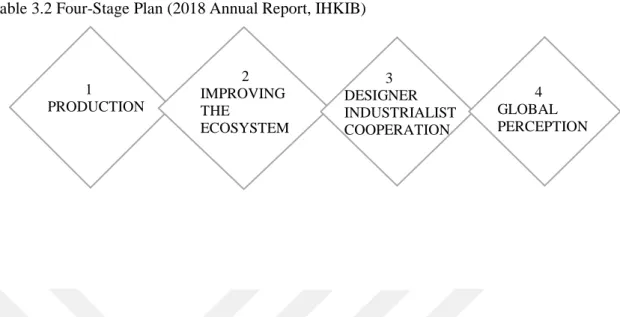
Table 3.1 Cities remembered by the concept of fashion city Table 3.2 Four-Stage Plan
Table 3.3 Master's and PHD degrees in fashion and textile design in Istanbul Table 3.4 Fashion-related neighborhoods in Istanbul
Table 3.5 Fashionable venues and events in Istanbul
ABSTRACT
This research aims to examine the Istanbul-based fashion design environment in the context of fashion city. As the main research question: Is it possible to define Istanbul as a fashion city? Istanbul; will be compared with the components of two fashion cities with their different dynamics such as Paris and Berlin. The concept of fashion city; within the framework of the fashion industry, gentrification, institutionalization and fashion as a cultural object in the city will be evaluated through fashion production and distribution channels. Looking at the formations of fashion capitals and fashion cities; institutionalization, segmentation, diffusion through cultural events and branding. In this context, the connection and the distance between fashion and the city of Istanbul will be examined. It is also important to examine Istanbul with the turning points in fashion history and current fashion, to analyze Istanbul on the fashion scene.
Key Words: Istanbul-Based Fashion Design, Fashion City, Cultural Production and
ÖZET
Bu araştırma, İstanbul merkezli moda tasarım ortamını moda şehri bağlamında incelemeyi amaçlamaktadır. Ana araştırma sorusu olarak: İstanbul'u bir moda başkenti olarak tanımlamak mümkün müdür? İstanbul; Paris ve Berlin gibi farklı dinamiklere sahip iki moda şehrinin bileşenleri ile karşılaştırılacaktır. Moda kenti kavramı; moda endüstrisi çerçevesinde, kentte soylulaştırma, kurumsallaşma ve kültürel bir nesne olarak moda üretim ve dağıtım kanalları üzerinden değerlendirilecektir. Moda başkentleri ve moda kentlerinin oluşumlarına bakılırsa; kurumsallaşma, kategorizasyon, kültürel olaylarla difüzyon ve markalaşma gibi konular ön plana çıkmaktadır. Bu çerçevede, moda ile İstanbul şehri arasında kurulan bağ ve mesafe irdelenecektir. Ayrıca İstanbul'u moda tarihindeki ve güncel modadaki dönüm noktaları ile incelemek, İstanbul'u moda sahnesinde analiz etmek için önemlidir.
Anahtar Kelimeler: İstanbul Merkezli Moda Tasarımı, Moda Şehri, Kültürel Üretim ve
Tüketim, Moda Mekanları, Moda Etkinlikleri
INTRODUCTION
There are many academic studies on fashion city subject feeding from different fields such as urban studies, fashion studies, sociology, marketing and more. (Wilson, 1985; Breward & Gilbert, 2006; Rocamora 2009; Crewe, 2017). Especially, Paris is the most important city in this area which is called fashion capital in the world. First of all, it is a pioneer of fashion at the history. From a broad perspective of Paris's fashion system structure; organizational structure, regulations and rigid rules, stealing any design idea was forbidden, over sixty fashion museums at country-wide, strong education system, marketing and branding skills are some reasons to be fashion capital besides that its global, economic and politic power of France. Another side, Berlin wants to be initial city about sustainable fashion through Berlin's Sustainable Fashion Week and Green Fashion Tours that a guided tour by bike in accordance with the spirit of the city gives a chance to know sustainable fashion brands in the city. Briefly, relations between fashion and city, established in different contexts, often have the power to increase visibility of city's fashion.
Cities are the place of spectacle of lifestyles with the discourse of Guy Debord. Debord mentions that, it was determined that the spectacle used mass media, space and fashion to accelerate consumption (Debord & Knabb, 2005, p. 33). It constantly adds new meaning to objects, increasing the effectiveness of fashion on the masses. The purpose of using fashion as part of the spectacle is to increase the consumption efficiency of individuals. Today's modern metropolitan cities show capitalism the venues. The city has become the center of the spectacle, entertainment and consumption. Each separate space in the city hosts the show itself. The lighting of the streets, the designs of shop windows, the exotic arrangement of a cafe show the relation of the city space with the spectacle. According to Mike Featherstone (2005), the city space is purified from factories and equipped with shopping malls. After the city's industrial structures were cleared, exhibitions and show areas were established in the city center. (Featherstone, 2005, p. 101)
Thus, the phenomenon of demonstration came to the forefront in the city center. Store, shopping center, exhibition areas created in the show; has directed the individual to consumption.
In cities where production and consumption are intense, fashion has a weight in terms of both production and consumption. This thesis will examine Istanbul's fashion in the context of Paris and Berlin cases through fashion-city concept. Istanbul, which has a consumer identity and is adorned with shopping malls all around. How is the relationship between designer fashion and the city? How are bridges established between the city and fashion? What are the conditions of being a fashion city? (From Paris and Berlin examples) Is Istanbul a fashion city? As a mega city, Istanbul is an unique city with its geopolitical location, being an industrial and port city, hosting important civilizations throughout history, cultural value and multi-layered population structure. According to 2018's data of Turkey Statistical Institute (TÜİK), Istanbul's population is 15 million 67 thousand 724.1 Also with its cultural heritage and multi-layered identity Istanbul joined the UNESCO Design City Network in 2017.2
Moreover, fashion is a concept arising from time and space. In this thesis, the relation of fashion with space rather than temporality will be emphasized. The visibility of fashion and the means of its existence in the city space will be tried to be analyzed with examples of fashion cities and the dna of Istanbul fashion.
1) Anadolu Ajansı. (2019, January 2). SON DAKİKA: Türkiye’nin nüfusu açıklandı (2018 TÜİK verileri). Retrieved from https://www.ntv.com.tr/turkiye/son-dakika-turkiyenin-nufusu-aciklandi-2018-tuik-verileri,QzFOktjusUex4xpyjjDRaw?_ref=infinite
John Urry (1999) states that time and space research must be involved in any social analysis at three different levels. He describes three different spatializations: First, empirical events (routines of daily life) are distributed over time. Second, a particular social self (production relations, state, civil society, classes, etc.) is built around a specific temporal and spatial structure. For example, the modern state is highly centralized and includes means of surveillance on its citizens temporally and spatially transformed. Third, social selfs are interrelated temporally and spatially, in a changing relationship over time and throughout space. A very important example here is the changing profile of capitalist relations of production with respect to time and space. In this context, it is possible to talk about the areas occupied by fashion in everyday life, the institutionalization of the chains that make up the fashion system from design to consumption, and the temporal and spatial changes of fashion in different countries. (Urry, 1999, p. 68)
As Lefebvre (2014) claims, fashion creates its own death through innovation magic and maintains its innovation only until it is achieved. Magically presented objects adorned with mass media lose their value as soon as they enter the consumption network. Therefore, it is necessary to add extra value to this culture product. Different cities can prove their existence by creating the fashion identity of the city through value mechanisms based on their own culture.
The aim of this research is to analyze the fashion environment of the city as fashion cities in a spatial, institutional and experiential context and to reveal the distance between fashion city and fashion. So the spesific aim of this course is to examine the fashion-city profiles of the cities of Paris and Berlin based on fashion practices which economic,
cultural, or symbolic aspects can be investigated. And to create a discussion area about
whether Istanbul is a fashion-city. Historically, this research will investigate a ten-year period between 2009 and 2019. 2009 is the year when fashion week started in Istanbul. A comparative perspective of fashion history of Paris, Berlin and Istanbul are included in order to investigate these main questions: What are the specific elements that make fashion-city considering Paris and Berlin? In comparison to Paris and Berlin, is Istanbul a fashion city? What can Istanbul learn from Paris and Berlin as models for fashion-city?
The birth of fashion has different dates in various sources. However, the rise of fashion was experienced in parallel with the rise of cities, that is, the industrial revolution. Democratization, the development of technology, increasing production opportunities, new lifestyles based on consumption, increased interest in fashion, which is considered as a status indicator. In particular, what does fashion mean as a term? In addition to garment fashion, the term refers to recent developments and trends in any subject.
According to The Barnhart Dictionary of Etymology (1988), the meaning of fashion in a society that manner of dress and the word appeared around 1300s.3 On the other hand, Fashion definiton for Lexico Dictionary: 'A popular or the latest style of clothing, hair, decoration, or behaviour.' And second meaning is: A manner of doing something.4 Fashion has strong ties with agenda of culture, everyday life, politics, and economy.
Kawamura states fashion as a 'a system of institutions that produces the concept as well as the phenomenon/practice of fashion' (Kawamura, 2005, p. 1). As it can be
understood, fashion is an accelerated phenomenon with the city and cannot be
considered independent of consumption. Sociologist Pierre Bourdieu (1984) argues
about fashion as a ‘specific capital’. It can be called as ‘fashion capital’ for our
framework, the capital specific to the field of fashion. Like other field-specific capitals, it is build up of economic and cultural capitals and social and symbolic capitals. The term cultural capital used by Pierre Bourdieu refers to the tendency to symbols, ideas, tastes and preferences that can be used strategically as a resource in social action. habitus becomes a concrete social action, and it is thought and felt to act in a certain way. Bourdieu (1984) uses the term ‘symbolic value’ to describe the value that cannot be calculated economically. Symbolic value is the manifestation of a product whose material value is not easy to measure compared to the symbolic capital it maintains through its accumulation of reputation and authority. Similarly, the value of things is not determined by that thing itself.
3) Barnhart, Robert K. (1988), The Barnhart Dictionary of Etymolohy, New York: The H.W. Wilson Company
4) Fashion. (n.d.). In Lexico Dictionary Powered by Oxford. Retrieved from https://www.lexico.com/en/definition/fashion
As Karl Marx (1973, p. 138) points out, the value of things emerges in the social relationship between individual goods. Marx gives an example of fabric on this subject; to show that the value of an object is something completely separate from the object of that object. The value of the fabric should be sought in a different place, such as a jacket. In this respect, the value of the city can be sought in the fashion city as a new product with added value derived from the city without completely breaking away from its context. Thus, the symbolic value gained through fashion integrates into the urban scene. And after that point the value of the city is sought in the fashion city. Fashion can turn into a parade in the city scene.
In this research both quantative and qualitative research methods were used. The data on urban and fashion relations required to find answers to the questions were provided by various methods for instance printed and online research, interview and survey. Comparative case study selected and sampling area was determined as Paris, Berlin and İstanbul. Two samples were selected as cases; Paris and Berlin. The reason Paris was chosen is, in addition to being the first fashion capital, that it has been carrying this title for more than a hundred years. On the other hand, the influence of French fashion in the westernization process of istanbul is also an effective reason.5 Berlin as a young fashion city; it was chosen for its potential to encourage the feasibility of the new with the comparison of the old and the new.
5) Westernization Period, II. Mahmut (1808-1876) entered the Tanzimat period (1839-1876) and began to experience the effect of westernization. And also in relation with this development, an adaptotion has been seen on European clothing and lifestyle. Meşrutiyet period caused the rise of the western line in women's
Both cities are part of the UNESCO Creative Cities Network like Istanbul. After the selection of the two cities, Paris and Berlin, which have created a unique style and fashion city recognition of the city, both current and historical data were obtained through online and printed publications and the same method was followed for Istanbul. In addition, interviews were held with five fashion professionals specializing in different fields, fashion editor, fashion author, fashion designer, fashion design assistant and fashion marketing specialist. However, for ethical reasons, the names of the interviewees will not be disclosed. Interviews were conducted in a semi-structured manner. The main focus of the interviews was Istanbul's fashion and Istanbul Fashion Week, the only platform where Istanbul fashion could provide international visibility. The questionnaire was shared with the fashion industry employees through online invitations. 18 professionals received feedback. The open-ended questionnaire was designed in such a way that the respondent could express his / her opinion clearly. As a result, the data obtained from comparative cases were analyzed with a holistic approach together with interview and survey data.
The structure of the thesis is established as follows; in the first part, the concepts of fashion and the city of fashion in the context of cultural consumption will be examined. In the second part, the research method will be discussed. In the third part, Paris and Berlin cases will be examined and the elements that make up the fashion city will be pointed out. In the third part, the structure of Istanbul fashion will be examined with the information obtained from Paris and Berlin examples. In the fourth and final section, conclusions and discussions will be given.
1.FASHION AND CITY
1.1 CITY SPACE AND CULTURAL CONSUMPTION
Creativity has become one of the important concepts of urban practice and research and has created new concepts such as; creative city, creative economy, creative class, creative industries. (Florida, 2002). Cities such as London, New York, Los Angeles, and Hollywood, where the culture industry develops intensely, nourish the mass media of almost all countries in the world and prevent cultural creativity at national level. In this context, it can be pointed out how Istanbul fashion, which differentiates itself from fashion identity in the process of westernization, becomes a mimetic and follower structure. Fashion has been a central focus in the study of cities' creative industries and cultural economies (Currid 2012; Scott 2000). The cultural economy approach emphasizes the global importance of urban activities, creating symbolic meaning and value.
In this framework, aesthetized everyday life, the importance given to cultural capital in the city, values attributed to cultural products and value creation, images, consumption areas designed as a field of experience within the city and the fashion theme of these areas will be tried to establish a relationship with the city. As Lefebvre remarks, in the contemporary city we have ‘consuming displays, displays of consuming, consuming of signs, signs of consuming’ (Lefebvre, 1971, p. 114). Fashion creates a continuous image in an ongoing production and consumption cycle in the city also through city. The aesthetization of everyday life represents the rapid flow of signs and images in everyday life. Theorisation of this process was nurtured in the theory of commodity fetishism. Marx, Benjamin, Lefebvre, Baudrillard and Jameson examined meta-fetishism in different ways. According to Karl Marx (1973), in a society where commodity is perceived and valued, social relations are based on the perceived value or cost of commodities. Billboards, shop windows, dressed bodies, styles and fashion passing through these areas in aesthetic urban landscape and architecture. Elements that aesthetize everyday life, namely shopping malls, shop windows, clothing that appear in the city, are all in touch with fashion. They are all available for an aesthetic look. It can be argued that
cities always have a certain culture in which they produce their own cultural products, works of art, buildings and different lifestyles. In other words, cultural products that make this everyday life aesthetic are produced with the unique cultural codes of the cities.
Featherstone argues that as an example of urban culture and lifestyles that have become thematic, some cities are referred to as a cultural center that includes cultural heritage and the image of cultural heritage it represents, from museums to buildings. These thematic elements can be regarded as a source of prestige or cultural capital, and in order to continue to be as being cultural centers, cities must also host the entertainment industries (Featherstone, 2005, p. 94). Certain metropolises (such as New York, Paris, Los Angeles, London) are cultural production centers and can be powerful in terms of cultural capital1. Moreover, it can be argued that they are effective in culture industries such as fashion, cinema, broadcasting, music, tourism and entertainment.The notion of cultural capital (Bourdieu, [1984], 2000) contributes to the image of the city. Therefore, city administrations, policy makers and private institutions are willing to invest in culture. (Fisher et al., 1987) In the contemporary city, shopping centers, museums, theme parks, tourist experiences are common features. Areas are created in the city where leisure time becomes an experience. Department stores display art exhibitions. These exhibits blur the distinctions between high culture and low culture and the differences between trade and culture. Contemporary fashion designs are exhibited in museums such as a monument or cultural heritage, while fashion stores host art events. From a fashion perspective, this is interpreted as the interaction of art and fashion. Or the use of fashion as a museum can be read as a method of spreading to the city and attracting tourists interested in fashion. On the other hand, it can be claimed that the brand of luxury fashion, which has become increasingly accessible, has the instinct to maintain the high culture level despite its falling price while exhibiting its cultural heritage in the museum opened by its name.
1) Cultural capital is the social situation and cultural competencies that arise from the accumulation of knowledge, behavior and skills. Bourdieu (1979) then places his research on cultural capital on a theoretical conceptual basis in his book "Distinction: A Social Critique of the Judgment of Taste."
Bourdieu ([1984], 2000, p. 243) mentions three kinds of cultural capital: in the embodied state (beauty, style, speech style, etc.), in the objectified state (machines, pictures, buildings, cultural products) and institutionalized (educational qualifications). Fashion uses three kinds of capital that Bourdieu proposes. It is compatible with the style and beauty that is embodied. Objectivated cultural capital is already the garment or fashion itself produced as cultural product. And in its institutionalized state, fashion easily continues its ongoing movement within the best institutionalized system.
Also to mention, in today's world, where aesthetization of everyday life gains importance, visual display is significant as an indicator of identity, especially in America and Europe. The display of fruit in an urban market or gourmet food shop is not the same. The symbolic economy demands gentrification of real estate . (Zukin, 1995). The symbolic economy requires the gentrification of real estate. In this context, gentrification leads to the revival of the symbolic economy to create favorable spaces for cultural consumption. With the effect of modernization, aesthetic concerns of fashion increase and direct people's lifestyles and production and consumption preferences. Although scholars saw the rising movement of the private garment design market (Zukin, 2008, Zukin and Maguire, 2004, Ley, 2003), there was no systematic bridge between these trends and urban development. Zukin (2008), while addressing the concept of originality, does not establish a clear communication between fashion and gentrification. The fashion here is expressed in two senses: aesthetic narrative, entrepreneurship activity and consumption preference. According to Smith, gentrification is a separate urban strategy (Smith, 2002), but the intersection of fashion with urban life has been observed. Fashion and gentrification can be established both on the basis of spaces produced to stimulate consumption and on the basis of creative class that play a mediating role in the gentrification of space. Streets with large showcases are indicative of this from the perspective of consumption space. On the other hand, it has been observed as the first emerging creative class in many urban transformation areas.
1.2 FASHION THEORIES
Following the rise of fashion, fashion and city get even more connected. Fashion and city are areas where identities can be produced and presented. Since 18th century, the development of industry and capitalism has redefined the relations of production- consumption and influenced the forms of public relations and common public spaces in urban life. This topic will focus on some fashion theories and concepts and the relation of fashion to the city. Fashion can accommodate collective production as well as collective selection. When talking about the creation of the new, it is also the subject of copy and imitation. It is guided by control mechanisms while allowing identification indicators. Even those who want to stay out of fashion are included in the fashion with anti-fashion movement. It is systematized from creation to consumption. It is a cultural product, an added symbolic value. Fashion touches many areas such as sociology, psychology, economy, city.
Thorstein Veblen's fashion debate ([1899] 1957) takes fashion in the context of the creation and institutionalization of leisure class through consumption activities. Veblen explains three features of fashion: 1) It is an expression of the user's wealth. The expenditure on clothing is a striking indicator of consumption. At first glance, clothing is proof and representation of economic prosperity. It is inexpensive, worthless and inadequate. 2) Veblen indicates that one does not need physical labor to earn a living. Extremely elegant, spotless clothes means fun. The more practical and functional a garment is, the higher the class symbol. Some styles require your help to wear them. 3) It should be current 'fashion', appropriate for the present time. Ultimately, people need to communicate their status and identity to others through their appearance and fashion.
Trickle across theory, also known as ''mass market'' or ''simultaneous adoption'', argues that new fashion trends emerge at the same time at different price levels in the market. In this context, the distribution of trends is not based on class difference. On the contrary, the fashion system allows trends to circulate through a variety of channels and spread throughout the market. Mass media, developing technologies, mass production and the growing middle class have made this possible (Brannon, 2005).
So the dissolution of a trend is not for the class. On the contrary, the fashion system enables the release of the trend through various channels. Mass communication is possible with mass production and the growing middle class. According to Trickle across theory, fashion diffusion does not depend on class difference. For instance, fashion weeks such as New York, Paris, London and Milan, which are attributed to trends, can be viewed online simultaneously, making it possible for the latest innovations to be produced and consumed by all segments. Experience culture is becoming widespread due to the rapid consumption of images through social media. For this reason, it can be said that the value of tourism has increased to live this experience on behalf of fashion cities. Because in the postmodern consumer society, experience has become an important form of consumption.
Knock-offs (copies), started after World War II with manufacturers copying couture designs. They can be produced quickly. Knock-offs argues that a new style created can be quickly copied and released (Reilly, 2014, p. 104). Thus, images can now be easily displaced, this makes copying easier, the images can be copied in different qualities and produced in series and marketed. This allows trends to reach more markets.
Imitation is the conceptual framework in which Gabriel Tarde develops fashion theory. For him, fashion is to oppose tradition. Tradition may be a routine imitation of the past of this being, while in fashion, spatial or temporal sense, it imitates the distant. Both are imitations. Tradition is the routine normality of imitation, which allows the reproduction of social beings in the same way, while fashion is a form of imitation that creates something more surprising and new. The distinguishing feature of imitation is that it takes place from a spatial perspective and from a temporal point of view. (Tarde, ([1890] 1903) While copy is an ethical issue, imitation is a social process in which something is repeated. According to Tarde, the repetition of tradition is a kind of imitation, like imitation of fashion.
The individual demonstrates his / her identity through certain actions in society. The most visible of these is fashion. Individuals confirm the religious, cultural, political or social groups to which they belong or do not belong, by choosing various clothing and accessories. Through fashion, they acquire certain identities with the individual. These identities are mostly collective. Fashion is a social production (Godart, 2012) and in this
context it is inevitable to be cultural. Control fashion has already been accepted in many areas from clothing, trade, travel, transportation to shows. Fashion, therefore, is one of the typical forms of collective behavior, a social phenomenon of continuous expansion rather than contraction, not only working in the fields of consumption, but also embracing art, entertainment, philosophy, and science (Sumner, 1940). Mostly, the distribution and consumption processes of fashion have been studied. Some examples of such theories are as follows: conspicuous consumption, simultaneous adoption, knocks-off. On the other hand, the steps of the fashion system and production processes as pre-consumption processes are available in the research. Paul Hirsch, Wendy Griswold, Yunika Kawamura have done studies in these areas. On the cultural level, fashion examines the values and beliefs of a group of people. These values are seen by attitudes that dominate in a certain period of time. The determinants of these attitudes are zeitgeist2, subsequent people, technology, events and ideals. Different groups of people who are fed by these elements may come into contact with each other and exchange them. Because cultures are generally geographically based, fashion can show inter-regional spread. In this way, fashion has the power to intervene in daily life practices and make changes. (Reilly, 2014)
Yuniya Kawamura (2005) states, concentrates on fashion as system of institutions, organizations, groups, producers, events, and practices in which such institutionalized system works as a powerful industry for cultural meanings. According to Grant’s definiton of fashion, together with advertisement, fashion is a a system that transfers cultural meanings to goods consumed by consumers. The fashion system able to create new cultural meanings (McCracken, 1985).
2) Herbert Blumer (1969), the term Zeitgeist, was used by Blumer to express that fashion is a product of the times when they were created and worn.
Social meanings and values given to objects, behaviors, events and relations make it possible to produce cultural objects. Culture is the expressive and relational part of life and becomes visible and expressed through behavior, objects and ideas. In the field of fashion, diamond is a visual representation of the way in which the production of social meaning. Wendy Griswold (1994) states fashion system as a cultural diamond that contains social world, creator, receiver and cultural object (see Image 1.1). According to cultural diamond, cultural meaning is the result of a social world, a creator, a recipient and a cultural object connections. The model describes the circulation of cultural objects through the relations established in a social world and the production of a creator and the sharing of a buyer. Cultural objects gain meaning through the stories they tell. In the words of Griswold, ‘shared significance embodied in form’. (Griswold, 1994, p. 179)
Image 1.1 The cultural diamond (Griswold, 1994, p. 15)
It is enriched by adapting the Griswold diamond to 'the cultural industry system' schema3 that was proposed by Paul Hirsch. (see Image 1.2)
3) Paul Hirsch (1972) breaks up the cultural industry four phases: Design, Production, Communication and Consumption. The names of these phases are known as Hirsch Schemes
Image 1.2: Adaptation of the cultural diamond to Hirsch Schema (Girswold, 1994, p. 94)
Griswold explains that the relationship between cultural object and culture with leopard frog and swamp metaphor (Griswold, 1994). The cultural object here is the leopard frog and culture swamp. In short, the mass culture approach, the object dominates the recipient subject, which is already regarded as a passive recipient of a message bearing the meanings encoded by the commodity; in the popular culture model, the buyer plays a role in building the meaning of the object and may be in the form of cultural resistance to the mainstream through unconventional consumption practices. (Griswold, 1994, p. 12) According to Marco Pedroni (2013), the advantages of the proposal expressed by Griswold and Hirsch are listed as follows. First, the relationship between consumption and production is discussed in a wider framework, the role of the social world and the cultural object used as context. Secondly, diamonds emphasize mutual relations: an enterprise (a cultural industry as an institutional system, for example: fashion), objects (cultural work) and subjects (creators). Third, it appears that there are processes between production and consumption that connect creatures and buyers rather than
circularity (Pedroni, 2013, p. xiii-xv).
At this point, production and consumption processes can be read without being detached from the context of space. Although related to culture, the same processes will vary in different cities, the structure of the city and the possibilities for the production and consumption of fashion as a cultural industry. At this point, it can be understood how much fashion culture is intertwined with the city.
1.3 FASHION CITY CONCEPT
The source of the concept of spatial difussion is the discipline of geography and shows the areas where fashion trends are developing and seen. Examples of cities that are defined as trendsetters and where trends first emerge are: London, New York, Paris, Milan or Tokyo. Adjacent areas which do not develop an original fashion style. Then adopts it by seeing this style and other. This can also be considered as a variation of the classic Trickle Down theory, the distribution of fashion from upper class to lower class, but they are sequential geographical areas that adopt fashion rather than consecutive classes that adopt fashion. This has been observed in many fashion trends, including the grunge style in Seattle and Casual Friday in Hawaii. Reilly argues that collective selection relates to spatial diffusion. (Reilly, 2014, p. 86)
Sometimes some groups can inspire a new fashion. Blumer (1969) calls this “collective selection”. When a subculture for a given aesthetic is known and this style is evaluated or appreciated by others, it is included in the mainstream, as has been seen in the hipster or nerd lately. Because they adopt the style (due to the geographical location) they also spread the cultural appearance (Blumer, 1969 p. 282). In addition, this phenomenon represents Ted Polhemus' concept of “street style'', where fashionable ones emerge on the street (Polhemus, 1994).
Today's metropolises are cities where multifaceted fashion, cultural infrastructure and diversity emerge. Personalization in metropolitan life takes place by identifying with body, behavior, objects and places. Individual identities are defined by consumer products. While cities surround the scope of communication, they contain indicators and
images necessary for identity building (Horkheimer 2002, p. 146). This is summarized by Lefebvre (2014) as follows: The transition from the production of objects in space to the production of space itself. On the other hand, according to Crewe, a geographically identifiable fashion is based on two basic elements (Crewe, 2017); the existence of an original national fashion and being considered as a model by other countries.
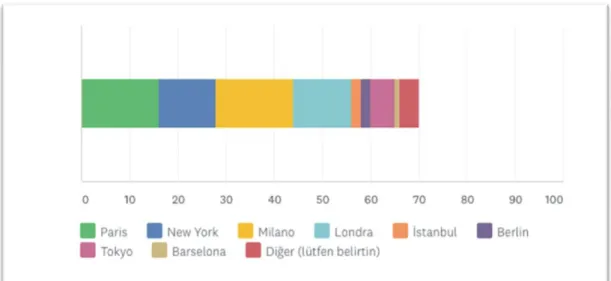
The centralization of fashion is provided by fashion houses that create and promote styles and designs in the shows of major fashion cities. Due to global competition, Paris is still not the only fashion capital in the world, although it is still a global fashion hub. London followed Paris in an innovative manner. After the Second World War, New York City and Milan became the city of fashion. (Godart, 2012, p. 54) On the other hand, Tokyo or Antwerp, Beijing, Mumbai, São Paulo etc. began to represent their own cities on the fashion scene. Additionally, some cities have a different dynamic, such as Berlin, Copenhagen, Stockholm, and have a certain stylistic influence, such as film or music. As you can see, now fashion has been opened to be influenced by different geographies. According to Steele (2003), Paris is still the capital in terms of capital. PPR and LVMH are Parisian as the world's largest luxury fashion group. Global Language Monitor argues Paris ranks 4th in the list of Top Global Fashion Capitals and Berlin ranks 5th.4 (see Appendix A)
Fashion capitals are characterized by a history. Fashion capitals have been confronted with situations such as history, globalization and the combination of global and local. In an economic context, fashion capitals have come to the place where the road brought them thanks to the paths they chose in the past. According to Krugman; This theory is called 'path dependence'. Advantages such as brand value and technical know-how are the result of years of accumulation (Krugman, 1993).
4) See 2018: New York Takes Top Global Fashion Capital Award Paris Falls to No. 4, 2018 https://www.languagemonitor.com/fashion-capitals/new-york-takes-top-global-fashion-capital-award-while-paris-falls-to-no-4/
Fashion week shows take place in impressive locations in Paris, New York, London and Milan. Fashion professionals can travel from one city to another without having to skip important shows thanks to a well-organized calendar. Agenda coordination is governed by associations of famous fashion capitals: In New York, Council of Fashion Designers of America, 1962 (CFDA); London, British Fashion Council, 1983; In Milan; Nazionale della Moda Italian (National Chamber of Italian Fashion) founded in 1958; and Fédération française de la couture in Paris, established in 1868, (French Couture, Apparel and Fashion Designers Federation). In addition to the four most popular and followed fashion weeks, new fashion weeks have started to be organized around the world. Europaregina web page has a list on fashion weeks
:
31 in Africa, 27 in Asia, 51 in Europe, 7 in the Middle East, 48 in North America, 7 in Central America, 6 in South America, 5 in Oceania fashion weeks are listed. Mercedes-Benz Fashion Week Istanbul is also not listed.55) (2019, July 20). Retrieved from World Fashion Week Calendar website: https://europaregina.eu/fashion-weeks/
2. METHODOLOGY
2.1 AIMS AND OBJECTIVES
This study aims to investigate the capacity of Istanbul to become a fashion city. For this reason, Paris and Berlin cases are discussed in order to determine the characteristics of a fashion city. Based on the findings obtained from the two cases, an assessment was made in Istanbul. In addition, interviews and surveys were conducted to consult the ideas of Istanbul's fashion actors. Again, the data obtained from these two cities were used as the insight of Istanbul when compared with the data of the other two cities.
As a selection criteria of cities, Paris is a well-established and world-renowned fashion city, and Berlin is a newly built city that has recently been added to the list of world cities. Among the cities of similar categories such as New York, London, Milan and Paris, Paris was chosen because of the French influence felt on Istanbul fashion since the 19th century. On the other hand, Berlin is chosen among its counterparts because of its opposite character to Paris and its position to create a fairer fashion space through micro and collective initiatives and civil society support. And both interviews and surveys were evaluated by Istanbul's fashion professionals.
Both qualitative and quantitative research methods were preferred and used for this thesis. The data was collected through various methods such as literature review, online and printed sources, interviews and online surveys. Data collection methods such as interviews and surveys, in terms of the source of the data, especially about the fashion of Istanbul has created the first-hand data thanks to the replying of 23 fashion professionals. On the other hand, comparative case study selected because the value of cases is not to try and generalize a particular population, but to reveal the richness of the details, the ways and the mechanisms, to show the daily effects and interaction of identity (Garson, 2008). The case study provides a critical insight into social phenomena and theoretical explanations through one or more examples in order to re-examine the social life flows from different perspectives. (Spencer, 2011). The sampling area of the case study was selected from both established and young-developing fashion cities. Two samples were chosen as Paris and Berlin first of all, Paris fashion has been the inspiration for Istanbul
fashion in the process of westernization. Moreover, the Turkish fashion language has received many words from French. On the other hand, at a different angle from the four main fashion capitals (New York, Paris, London, Milan), Berlin was chosen from the cities like Copenhagen, Florence, Antwerp, which are newly structured, where the fashion industry is on the rise and trying to gain a fashion city identity. Berlin, which brings together advanced industry and subculture and is on the way to positioning itself as a fashion city thanks to segmentation. So Paris and Berlin were selected in order to understand the difference between established and young-developing fashion cities. And the main focus case of research is Istanbul. Cases were also examined in the context of designer fashion in the city. Designer fashion is examined in terms of narrowing the frame. The three cities are also part of the UNESCO (United Nations Educational, Scientific And Cultural Organization) Creative City Network. The content analysis will be done through Paris and Berlin examples and the data will be tried to find the answer to the question of what the structure of a fashion city should be and which elements it contains. And Istanbul will be evaluated through the obtained elements.
Interview and survey have their own weaknesses and strengths. Many data collection and measurement processes are called surveys. The purpose of the survey is to produce statistics, quantitative or quantitative explanations on the subject of the study. The main method of gathering information is to ask people questions and to collect data that can be analyzed (Fowler, 2002). Often, information is collected about a sample by applying it to a portion of the population. Self-managed surveys are useful for reaching more people and can receive more responses from the topic in personal interviews. On the other hand, there is a possibility that the surveys will not be returned. But personal interviews are expensive in terms of time (Rea and Parker, 2005), again, it is important to avoid obstructing respondents from answering. Questionnaire should relate with a specifice objective of the research. The answers to the questions can be answered by multiple choice, closed-ended, or open-ended. Open-ended questions are highly preferred. This data can be more difficult to organize and analyze but mostly provides a rich qualitative insight (Kawamura, 2011). There is two types of interviews as structured and semi-structured interviews. In this research, semi-semi-structured interviews were chosen to shape questionnaire. During an unstructured interview, open-ended questions are posed and
participants are allowed to respond as they wish. In this frame, 5 people were interviewed and 18 people answered the questionnaire of survey which was sent by online invitation. Interviews and surveys were conducted with professionals of Istanbul fashion. A survey targets population was selected from individuals working in different parts of the fashion field.
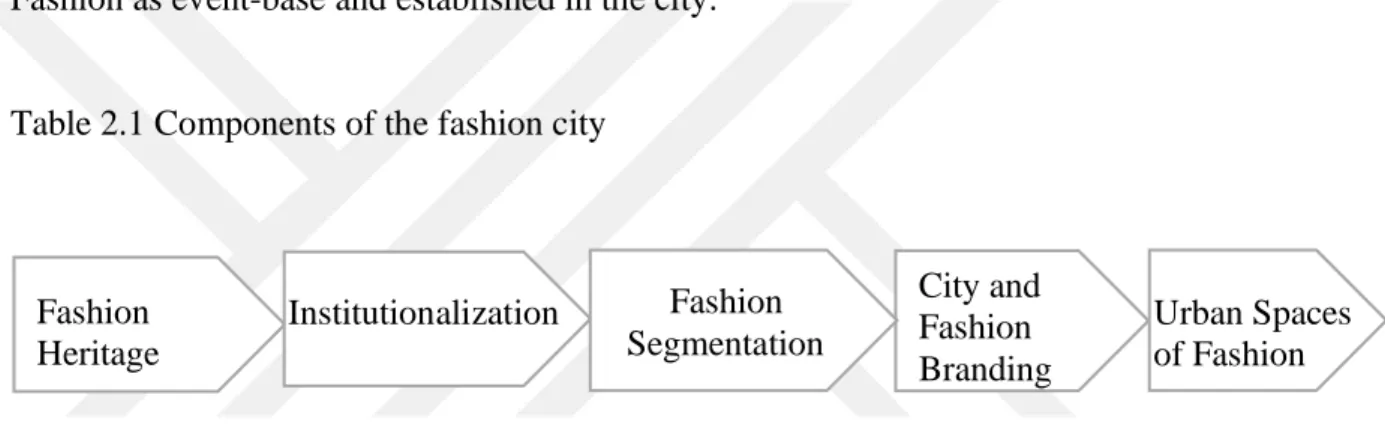
Comparative case study findings, as mentioned, the Paris and Berlin cases gave the elements of the structure of the fashion city concept as data. It is pointed out that the main structure is based on the following titles visible in Table 2.1: Fashion Heritage, Institutionalization, Fashion Segmentation, City and Fashion Branding, Urban Spaces of Fashion as event-base and established in the city.
Table 2.1 Components of the fashion city
On the other hand, as the most intensive service provider of conspicuous consumption, which Veblen (1957[1899]), advocated, a comparison was made through instagram where the visual is presented to the consumer through social media channels. In recent years, images of cities can be circulated internationally because of instagram. Online exchanges that do not use fashion's one-to-one contact with the city, but are so effective in increasing visibility; instagram trends investigated through hastags and included as social media content analysis. Fashion, the 4th most popular Instagram hashtag around the world and tagged 723M times. The most popular instagram hastags as follows: 1) #love 2) #instagood 3) #photooftheday 4) #fashion 5) #beautiful
#parisfashionweek tagged almost 100 times more from #istanbulfashionweek.1 Istanbul has been examined in different possibilities like #MBFWI (Mercedes-Benz Fashion Week Istanbul) but the highest number of tag used as a data
1) Instagram Hastags. (2019, January 8). Retrieved from https://blog.hootsuite.com/instagram-hashtags/ 2.2 FINDINGS Institutionalization Fashion Heritage Fashion
Segmentation Urban Spaces of Fashion City and
Fashion Branding
2.2.1 Fashion Heritage
A breakdown of the sociological and economic events of fashion in the city sheds light on which milestones took place with fashion, the city's cultural heritage. It can be said that it is effective in sweetening its relationship with the city and the way it develops in the city. Throughout the history; cities affected by industrial developments, wars, political and economic events. They have shaped their industries by being influenced by a number of influences. Also some cities use the 'path dependence' advantage (Krugman, 1993), especially when it comes to the textile and fashion history and industry of England and France. In addition, it can be stated that the administrative staff, capital owners and cultural carriers of the cities are the ones who decide the future of the cities. Fashion capitals (New York, London, Milan and Paris) In a way, the institutions they left to their successors and still exist through. Accordingly, today's textile pioneer countries (China, India) can create fashion cities tomorrow with the support of design (Godart, 2012). On the other hand, transfer of knowledge of traditional production methods, craft, sewing, meaning, and style from generation to generation is fashion heritage of the city culture. There are also fashion museums to preserve the cultural heritage and costume-garment history of fashion and to carry out research on these issues. This topic will be discussed under the title Urban Spaces of Fashion as well.
2.2.2 Institutionalization
In many stages of history, professional organizations have organized and acted within themselves. It is important to establish certain standards and to ensure continuity within certain rules. Institutionalization gives some groups more advantages than others, the participation of designers in the system affects their economic, social and cultural capital (Bourdieu 1984). According to Kawamura (2005), the institutionalization of the fashion system allows many things to be institutionalized, such as the recognition process of the members of the organization, government support, and the support of young designers. From education to production, institutionalization, creating and building the infrastructure of the sector can be pointed out as a tutor and continuity provider. The boundaries between fashion and non-fashion are created by the system, and within these
limits, social actors compete. A brand's collection takes control of the production area with the success of a designer; Fashion leader status is earned. Finally, it can be emphasized that the ability to convey / elaborate meaning about clothes becomes important. (Pedroni, 2013) Institutionalization has democratized fashion reserved for the elite and has become accessible to the masses. Institutional innovation has influenced the legitimization of new designers and new styles.
2.2.3 Fashion Segmentation
One of the characteristics of the clothing industry is its segmentation as a part of institutionalization. (Kawamura, 2005, p. 10). When evaluated historically, more production was made on womenswear. The recent competitive environment and changing consumption habits encourage brands and designers to produce different segments of menswear, children's clothing, underwear and home wear. In addition to functional segments such as business, entertainment and sports, it offers alternatives for the brand to choose the production area in options such as price lining and turnover speed. So the fashion industry is characterized by the presence of various segments for consumers in different categories. Doeringer and Crean (2006), describe various parts of fashion through a pyramid. In brief; Couture, Ready to Wear, Diffusion, Bridge, and Mass Market. Climbing to the top of the pyramid increases the price and quality of the products, increases the uncertainty in demand and the effort to differentiate the products. At the top of the pyramid is the 'Haute Couture' with undoubted high-quality clothing. The next “Designer Collections” are expensive and of good quality, but the models are not as unique as 'Haute Couture'; then 'Bridge Fashion Collections' revenue prices are scattered and moderate. 'Better Fashion' is categorized with lower prices. Under the pyramid are the 'Fashion Basics'.
2.2.4 City and Fashion Branding
The goal of place branding strategies is to build a symbolic, comprehensive image of a city and subsequently communicate this image both locally and internationally. Place branding literature includes studies of various entities such as cities, districts, regions,
countries and groups of countries (Költringer & Dickinger, 2015; Oguztimur & Akturan, 2016). Gilbert (2002) states that some cities are the hosts of global long-standing and strong brands. Such that the word Paris itself can refer to the French fashion of elegance. At this point, city names have become an integral part of branding. Likewise, fashion week is an important moment within the life of the industry globally, also acting as a key instrument in ‘fashion-branding in the city’ (Rocamora, 2009).
A fashion brand is used to make the image appear in the consumer's mind. After the increase in apparel, manufacturers and designers had to distinguish their goods from other manufacturers and attract the attention of consumers. Branding is a concept that is important for the fashion industry. Joseph Hancock (2009), “Branding creates not only identity for products, but also creates an identity and vision for consumers and brand employees for the company.
Branding enables companies to differentiate from their competitors. American designer Clare McCardell was a designer in the 1950s and 1960s, defending simple pieces that women could easily combine. Inspired by sports clothes, the designer made them fashionable. However, since Clare McCardell did not emphasize brand value, consumers preferred a cheaper version of the similar product in another brand (Arnold, 2000). Brand awareness and brand value could make a difference. In addition to differentiating a garment that looks similar, unique products that offer the brand's aesthetic tastes need to be branded. The brand creates a link between the product and the customer. Advertising, visual presentation and brand image are created in harmony for the customer. Shopping experiences are also in harmony with the image of the brand. The store experience offered by the Koton brand is different from the shopping experience offered by Vakko, from the location where the store is selected to the music played in the store, even to the behavior of customer representatives. The reason for this is that the image created by the brand must be maintained from design to consumption. Even Prada store workers wear black suits and black knitted gloves. Gloves prevent product contamination by fingerprints and at the same time point to the “museum quality' of the products.
World Fashion Cities in addition to special events, locations and topics, they are also certain places and places where historical landscapes and fashion and the cultures associated with them are part of the axiologically ordinary daily lives. (Buckley and Clark, 2017). Rocamora indicates fashion cities are both a discursive and a phenomenological reality.They are shaped by representations that feed perceptions through concrete practices. The center of the promotion of fashionable products. The creation and blessing of Paris as a fashion city at that time is the product of the emergence of material spaces and fashion practices, such as the product of many gaps that give such gaps and a worldwide resonance and auratic appeal (Rocamora, 2009).
A fashion city in general terms include fashion district, department stores, display window. It consists of images related to our perception on the street, definitely fashion week, events such as fashion fair and institutions such as fashion museum, and design school. The fashion district is usually located near the city's cultural and art areas. In these areas, it is possible to find the city's luxury brands and designer shops. The shopping route is a map that allows readers to find possible stores and fashion districts. It can be emphasized that it has been an appropriate method since tourism started to develop in Paris. Jean Baudrilliard (2012, p. 214) defines the display window in the Consumption Society as the focus of urban consumer practices and the opaque status of the commodity behind the transparency of glass and this specific space which is at the same time the street with the established distance. Display window are the place of a specific social relationship. In almost all of the city, windows show not only objects behind transparent glass but also represent the aesthetics of the city or neighborhood. 'Store entrance and windows communicate between the interior and the exterior of the stores and bring dreams and fantasy into tangible view' (Crewe, 2017, p. 19).
Fashion week is mentioned as the event that bridges the fashion cities. New York, London, Milan and Paris are held one after the other and important fashion shows do not intersect. Moeran & Pedersen (2011) argue about fashion week:
The ability of fashion week and other industry events to fix meaning is offset by their regular repetition. Like the frame in an old-fashioned film, fashion week presents a series of stills which freezes perpetual movement that would otherwise only be visible as a blur. In this respect, fashion week enables us to see both stabilization and flux (Moeran, B., & Pedersen, J., 2011, p. 28).
Fashion weeks build a spatial representation of organizational space. Fashion week offers the opportunity to see the fashion brands and designers of the city within the organization and with the city background. It presents the city's fashion identity in a multi-layered structure. The actors of the industry gather to see what is new. Besides, the participants both can see and can be seen. Fashion Week, which welcomes many international visitors, contributes greatly to cities.
Additionaly, there are also museums with fashion and textile contents established to protect, preserve, exhibit and research on cultural heritage in this field. Fashion viewer consumes fashion while wearing clothes. However, when the costumes or fashion were exhibited in a museum environment, the fashion audience also encounters a consuming practice of watching fashion as an art audience. Alexander McQueen: Savage Beauty Exhibition, Victoria and Albert Museum (4 May – 7 August 2011), The exhibition is a retrospective of the designer's work. And it was the most visited exhibition of V & A with a total of 493,043 visitors in 21 weeks. For the last two weekends of the exhibition, V&A opened the exhibition for the first time during the night to meet an unprecedented demand. Also Christian Dior at V&A Museum or Heavenly Bodies at The Museum of Metropolitan were very impressive as well. In addition, the Armani Silos and Yves Saint Lauren museums are the institutions that retain the brand's archives.2
On the other hand, shopping malls are also places where fashion is visible and the relationship between the city and fashion is established. In the 19th century, the development of the shopping center became a kind of entertainment and demonstration with its visual merchandising and architectural design; it was an elegant place to spend time and to see (McCracken, 1988).
2)https://www.forbes.com/sites/oliviapinnock/2019/03/14/the-growing-popularity-of-fashion-exhibitions/#3199caeabbb1
It can be argued that fashion provides its existence and its relationship with the city through temporary activity areas and places established in the city (such as shops, streets, districts or museums). It can be argued that, fashion week is the most impressive of the events. For most of the fashion cities and cities that have actually organized new fashion weeks in the last two decades, every fashion week adds shine to the city (Melchior et al., 2011). Fashion has a multifaceted. These relationship types will be divided into two headings: temporary fashion spaces (fashion week, fashion exhibition, fashion fair) and established fashion spaces (street / district, display window, shopping center, fashion museum).
3. COMPONENTS OF THE FASHION CITY
3.1 THE CASE OF PARIS
Paris has been researched many times in the literature through the subject of fashion city (Waquet & Laporte, 2011; Kawamura, 2005). Today's Paris fashion industry, founded on a long history, institutionalization, fashion heritage, city and fashion branding, fashion segmentation and urban spaces of fashion will be examined.
3.1.1 Fashion Heritage
From the 18th century, skilled tailors are discovered by the French rich. These tailors, the precursors of fashion designers of this century, settled in Palais-Royal. In the mid-nineteenth century, fashion established the Parisian industry through cotton milling through fabric and shawl production, using a large number of Parisian workers in 1847.1 Charles Frederick Worth (1858) began operating the maison de couture in Paris. One of his most famous clients was Empress Eugénie, the wife of Napoleon III. 2 This venue is preferred from the proximity to customers will then become a symbol of fashion power in Paris. In 1857 haute couture was created by Worth by courtesy of the Empress Eugenie. Likewise, incentives are given formal fashion in order to create innovation in Paris that had economic and political power. Paris became a cultural center in the 18th century and then became the capital of modernity in art and politics in the 19th century. Long before Tokyo, London and Milan, Paris-referenced luxury clothing stores could be seen in many foreign capitals. Additionally, As a result of the centralization of Paris production and retail activities, many people working in the growing fashion sector based in Paris contributed to the creation of a new information source. The Parisians became fashion trendsetters as fashionable urban dwellers.3
1) N.L. Green, Ready-to-Wear, Ready-to-Work: A Century of Industry and Immigrants in Paris and New York (London: Duke University Press, 1997), 2; H. Hahn,
‘Fashion Discourses’, 207.
2) See D. De Marly, Worth: Father of Haute Couture (London: Elm Tree Books, 1980).
The addition of a fashion museum to the Louvre in 1986 justified fashion history. However, France is quite old about the inclusion of textiles and costumes in museums. Lyon Historical Fabric Museum was founded in 1890 with the donations of Lyonian manufacturers. In addition, Galliera Palace was transformed into the Paris Fashion and Costume Museum in 1977 by the Ministry of Culture. The archive was founded in the 1920s at the Musee Carnavalet.4 In 1982, the Minister of Culture of the time, Jack Lang, presented the Louvre and Cour Carrée as a venue for fashion events. The fact that the area chosen for fashion display has a prestigious collective memory and is the area of artistic creation proves that fashion is seen as the heritage of the nation.5
In addition, the fashion press began to develop from the 18th century onwards. The oldest fashion magazine is said to be La Galerie des modes et cosutmes français, published in 1778 (Waquet & Laporte, 2011).
3.1.2 Institutionalization
Institutions are the suppliers of the means and context through which elites exercise power through them. The french fashion system has an autonomous power spanning global scale. (Kawamura, 2005). The system, among other things, institutionalizes the recognition process of the members of the organization, the timing of the fashion week, the support of the government and the upbringing of young designers.
4) Waquet, D., & Laporte, M. (2011). Moda (I. Ergüden, Trans.). Ankara: Dost Kitabevi Yayınları, 40. 5) Rocamora, A. (2009). Fashioning the city: Paris, fashion and the media. London ; New York : New York: I.B. Tauris ; Distributed in the USA by Palgrave Macmillan, 31.
In the French fashion world it is always necessary to attend fashion shows to maintain its reputation. Not having a fashion show anymore means that the designer has been removed from the list of official designers, which leads to loss of prestige and status.
Distinction and imitation apply to the fashion of nations. France has made some rules and regulations to maintain its specificity. The national institution of france, especially a parisian institution, has known to retain the name and prestige of Haute Couture. Accordingly, models created at least twice a year should be presented, the creation process of the models presented must be approved and external modeling is strictly prohibited. This attitude can be seen as an extension of the French culture. a fashion house that does not meet these requirements cannot carry the Haute Couture tag. (Waquet & Laporte, 2011). On the other hand, all regulations are controlled by the government cite. Accordingly, influential city, Paris, Created their ‘Haute Couture’ federation of business by designers (Chambre syndicale de la confection et de la couture pour dames et fillettes, 1868).6 The organization established by Frederick Charles Worth for bringing close together to haute couture designers. French fashion, set rules and boundaries, and draw the world's attention. these and similar institutions existed throughout the history of french fashion to develop regulations (Kawamura, 2005).
French fashion indicates that fashion as a system first emerged in Paris in 1868 with the institutionalization of exclusive custom-made clothes known as Haute Couture. The system consists of a number of subsystems comprised of a network of designers, manufacturers, wholesalers, public relations officers, journalists and advertising agencies. The fashion industry is not simply concerned with the production of adequate or pleasant clothing but is concerned with the production of new stylistic innovations that satisfy the image of fashion. (Kawamura, 2005, p. 45)
From the point of view of French education, design education as an extension of a school that prioritizes art and philosophical movements is also of considerable importance. Without doubt, there are famous fashion schools in Paris.
These are; l’Ecole de la Chambre Syndicale de la Couture, Studio Berçot, and the Institut Français de la Mode. Fashion education, which is built on both theoretical and nutritious and has a network that enables to get in contact with world famous designers and brands. As can be seen from the example of Paris fashion institutionalization, the designers under one roof, the fact that the effort to maintain symbolic value through rules, and that the fashion heritage is supported by education, can be seen as one of the reasons for the stable continuity of Parisian fashion. According to Bourdieu's theory, the institutional 'space' created refers to the existence of a semi-autonomously constructed position area defined by certain rules, values and principles, and the existence of institutions working for the proclamation and legitimation of all these rules and values.7 Industrialization and department stores were the centerpiece of the rapid rise of French fashion, the development of the 'prét-à-porter' in the late 1940s - the rapidly growing fashion press was the intermediaries that allowed fashion to democratize.8 However, the figure of hauture couture and couturier, which constitutes the main element of French fashion, is still at the center of Paris's fashion economy. Fashion Week plays a driving role in the Paris economy. 1.2 billion euros annually contributes to the economy with the influence of fashion shows, events and trade fairs. Sales figures amount to 10.3 billion. General data is € 150 billion in direct sales, 1 million jobs, 2.7% of the French GDP produced by the fashion industry. (“The Fédération de la Haute Couture et de la Mode.,” n.d.)
7) Bourdieu, The Field of Cultural Production.
8) P. Perrot, Les Dessus et les Dessous de la Bourgeoisie (Paris: Editions Complexe, 1984); N.J. Troy, Couture Culture: A Study in Modern Art and Fashion (London: The MIT Press, 2003), 13.
3.1.3 Fashion Segmentation
Fashion segmentation as a part of institutionalization, it can be argued that fashion cities can bring to mind a particular image through the creation of a cultural image associated with that city. This may be achieved with the iconic woman of Parisienne or it can be argued that it is possible by polishing a certain segment. In this context, it is indisputable that haute couture is the prominent segment for Paris. The haute couture segmentation in Paris still carries its impressive aura, which can be a part of the aura's influence in other segments, such as pret-porter (apparel), recently, demi-couture (semi-couture) as a new category has not been officially institutionalized, but has come together for training and acquaintance for young designers. cosmetics and accessories, and is a powerful means of promotion. This way, the city gains more visibility on the global fashion map.9
3.1.4 City and Fashion Branding
Fashion was used by the local authorities as a way of promoting the city and thus Paris was consolidated as a fashion center. In 2000, the Municipal Assembly in Paris, 'Paris, Capitale de la Mode' operation, renamed as 'Paris’s Capitale de la Création', twice a year, in September and January, fashion, interior decoration and design activities were promoted. The event, which took place on January 14, 2000, announced that the mayor of Paris, Jean Tibéri, was “the first world fashion meeting of 2000”.10
The City Council draws attention to the importance of culture and fashion in the promotion of cities. The fashion sector plays a key role in the cultural economy and is symbolically suitable for accumulation in economic capital. In the global struggle of cities, cities want to enter the field of fashion.11 As Gilbert points out, it is a clear aim of urban policies to transform a city into fashion, both narrowly and broadly.12
9) Scott, Cultural Economies of Cities, 198.
10) D. Savidan, ‘La Création en Capitale’, in Le Figaro (23 January 2003).
11) Gilbert, ‘Urban Outfitting’, 20; D. Hesmondhalgh, The Cultural Industries (London: Sage, 2002), 14; Scott, The Cultural Economies of Cities.