Dergi web sayfası:
www.agri.ankara.edu.tr/dergi www.agri.ankara.edu.tr/journalJournal homepage:
TARIM BİLİMLERİ DERGİSİ
—
JOURNAL OF AGRICUL
TURAL SCIENCES
19 (2013) 178-187
Antifungal Effect of Various Salts Against Fusarium oxysporum f.sp.
cepae, the Causal Agent of Fusarium Basal Rot of Onion
Muharrem TÜRKKANa
a Ordu University, Faculty of Agriculture, Department of Plant Protection, 52200, Ordu, TURKEY
ARTICLE INFO
Research Article ― Crop Production
Corresponding Author: Muharrem TÜRKKAN, E-mail: [email protected], Tel: +90 (452) 234 66 31/1406 Received: 23 January 2013, Received in Revised Form: 15 June 2013, Accepted: 10 July 2013
ABSTRACT
This study evaluated the efficacy of 26 different salts as possible alternatives to synthetic fungicides for the control of Fusarium oxysporum f.sp. cepae, the causal agent of Fusarium basal rot. Preliminary evaluation of salt tests was performed in vitro using 2% concentration (w/v). When compared to control, potassium acetate, potassium chloride, potassium nitrate, potassium phosphate dibasic, sodium chloride, sodium sulfate and trisodium phosphate significantly enhanced the mycelial growth of the fungus; diammonium phosphate had no significant effect; 15 other salts reduced mycelial growth to some extent (16.61-83.44%) (P ≤ 0.05); and ammonium bicarbonate, ammonium carbonate and sodium metabisulfite completely inhibited mycelial growth. No significant difference in the inhibitory effects of ammonium bicarbonate, ammonium carbonate and sodium metabisulfite was observed in vitro (P ≤ 0.05); however, the ED50, minimum inhibition concentration (MIC), and minimum fungicidal concentration (MFC) values indicated sodium
metabisulfite to be more toxic to F. oxysporum f.sp. cepae than ammonium carbonate and ammonium bicarbonate. Soil tests showed that 0.4% sodium metabisulfite completely inhibited fungal growth, whereas only the highest concentrations of ammonium bicarbonate and ammonium carbonate tested (2%) were able to inhibit growth (P ≤ 0.05). The present study also showed that F. oxysporum f.sp. cepae capable of growth in both acidic and basic environments. While the fungus showed uninhibited growth at pH values between 6-9, growth decreased significantly at both higher and lower pH values (P ≤ 0.05) and was completely inhibited at pH 12.
Keywords: Fusarium oxysporum f.sp. cepae; Alternative control; Salts; Toxicity; pH
Soğan Dip Çürüklüğü Etmeni Fusarium oxysporum f.sp. cepae’ya Karşı
Çeşitli Tuzların Antifungal Etkisi
ESER BİLGİSİ
Araştırma Makalesi ― Bitkisel Üretim
Sorumlu Yazar: Muharrem TÜRKKAN, E-posta: [email protected], Tel: +90 (452) 234 66 31/1406 Geliş Tarihi: 23 Ocak 2013, Düzeltmelerin Gelişi: 15 Haziran 2013, Kabul: 10 Temmuz 2013
Antifungal Effect of Various Salts Against Fusarium oxysporum f.sp. cepae, the Causal Agent of Fusarium Basal Rot of Onion, Türkkan
1. Inroduction
Onion (Allium cepa L.) is one of the many economically important vegetable crops grown in Turkey. In 2010, the total area of onion cultivation in Turkey was 85.784 ha, production volume was 2.295.193 tons, and the rate yield was 40.29 kg per hectare (FAO 2013). Fusarium basal rot caused by Fusarium oxysporum Schlechtend.: Fr. f.sp.
cepae (H.N. Hans.) W.C. Snyder & H.N. Hans is
one of the most devastating diseases of onion and causes important yield losses in all growing areas of the world (Brayford 1996). The pathogen delays seedling emergence and causes damping-off on onion seedlings as well as root and basal rot. Early symptoms of the disease include curving, wilting, yellowing and eventually dying-back of the leaves from the tips. In addition, diseased bulbs are discolored and the infected tissue appears brown and watery when the bulbs are cut open (Sumner 1995).
Various agronomic practices have been used to control Fusarium basal rot, including the use of resistant onion cultivars, long crop rotation, solarisation, treatments of seed with fungicides and soil fumigation (Özer & Köycü 1998; Cramer 2000).
Although the use of the pathogen-resistant cultivars may reduce the damage caused by F. oxysporum f.sp. cepae, variations in the aggressiveness and genetic structure of the pathogen make it difficult to breed resistant cultivars (Turkkan & Karaca 2006; Galván et al 2008; Bayraktar 2010). Seed treatments with fungicides such as benomyl, carbendazim, carboxin, maneb, methoxymehtyl mercury chloride, prochloraz, tebuconazole and thiram have been shown to reduce the disease on onion (Köycü & Özer 1997; Özer & Köycü 1998; Cramer 2000). Soil fumigation with fumigants such as methyl bromide and chloropicrin is the most effective method for controlling the disease (Jaworski et al 1978; Köycü & Özer 1997; Sumner et al 1997). However, the negative effects of these chemicals on both the environmental and public health has led to their banning in many countries (Fan et al 2008). The use of natural coumponds such as organic and inorganic salts represent one of the best alternative methods for controlling the disease. Organic and inorganic salts have low mammalian toxicity and are widely used in the food industry as preservatives, pH regulators and antimicrobial agents (Olivier et al 1998). Their antifungal effects have also been demonstrated on numerous pathogens including, Botrytis cinerea
ÖZET
Bu çalışma, soğan dip çürüklüğü etmeni Fusarium oxysporum f.sp. cepae’nın kontrolü için sentetik fungusitlere alternatif olabilecek 26 farklı tuzun etkinliğini değerlendirmiştir. Tuzların ön değerlendirilmesi in vitro testlerde % 2’lik (w/v) konsantrasyonda gerçekleştirilmiştir. Kontrole kıyasla potasyum asetat, potasyum klorit, potasyum nitrat, potasyum fosfat dibazik, sodyum klorit, sodyum sülfat ve trisodyum fosfat fungusun gelişimini artırmış; diamonyum fosfat etkilememiş; diğer 15 tuz misel gelişimini bir derece azaltmış (% 16.61-83.44) (P ≤ 0.05) ve amonyum bikarbonat, amonyum karbonat ve sodyum metabisülfit misel gelişimini tamamen engellemiştir. İn vitro’da amonyum bikarbonat, amonyum karbonat ve sodyum metabisülfitin engelleyici etkilerinde önemli bir farklılık gözlenmemiş (P ≤ 0.05); ancak ED50, minimum inhibisyon konsantrasyon (MIC) ve minimum fungisidal konsantrasyon (MFC) değerleri
sodyum metabisülfitin F. oxysporum f.sp. cepae için amonyum bikarbonat ve amonyum karbonattan daha toksik olduğunu göstermiştir. Ayrıca, toprak testleri sodyum metabisülfitin % 0.4 konsantrasyonda fungus gelişimini tamamen engellediğini gösterir iken test edilen amonyum bikarbonat ve amonyum karbonatın yalnızca en yüksek konsantrasyonu (% 2) fungus gelişimini engelleyebilmiştir (P ≤ 0.05). Çalışma F. oxysporum f.sp. cepae’nın hem asidik hem de bazik çevrede gelişebildiğini göstermiştir. Fungus pH 6 ile 9 arası değerlerde engellenmeksizin gelişirken, daha yüksek ve daha düşük pH değerlerinde gelişmesi önemli bir şekilde azalmış (P ≤ 0.05) ve pH 12’de tamamen engellenmiştir. Anahtar Kelimeler: Fusarium oxysporum f.sp. cepae; Alternatif mücadele; Tuzlar; Toksisite; pH
Soğan Dip Çürüklüğü Etmeni Fusarium oxysporum f.sp. cepae’ya Karşı Çeşitli Tuzların Antifungal Etkisi, Türkkan
(Palmer et al 1997), Monilinia fructicola (Biggs et al 1997), Helminthosporium solani (Olivier et al 1998), Fusarium oxysporum f.sp. asparagi and F.
proliferatum (Reid et al 2001), F. oxysporum f.sp. cyclaminis (Elmer 2002), F. sambicinum (Mecteau
et al 2002), Alternaria alternata, B. cinerea, F.
solani var. coeruleum, Phytophthora erythroseptica, P. infestans, Verticillium albo-atrum, and V. dahliae (Mills et al 2004), F. solani var. coeruleum
(Mecteau et al 2008), F. oxysporum f.sp. melonis,
Macrophomina phaseolina, Rhizoctonia solani, and Sclerotinia sclerotiorum (Arslan et al 2009) and A. solani, F. solani, F. oxysporum and Pythium sp.
(Abdel-Kader et al 2012).
The aim of the present study was to evaluate the efficacy of different salts in controlling F. oxysporum f.sp. cepae. In vitro testing was performed to determine the fungistatic effects of 26 salts, and those with the highest toxicity were evaluated in soil tests. Also, the effects of pH on mycelial growth of
F. oxysporum f.sp. cepae were investigated in this
study.
2. Material and Methods
2.1. Fungal isolate
The F. oxysporum f.sp. cepae isolate used in this study was obtained from the culture collection of the Ankara University, Faculty of Agriculture, Department of Plant Protection. The isolate was maintained on potato dextrose agar (PDA; Merck, Darmstadt, Germany). PDA slants were stored at 4 °C and served as stock cultures for future use.
2.2. Chemicals
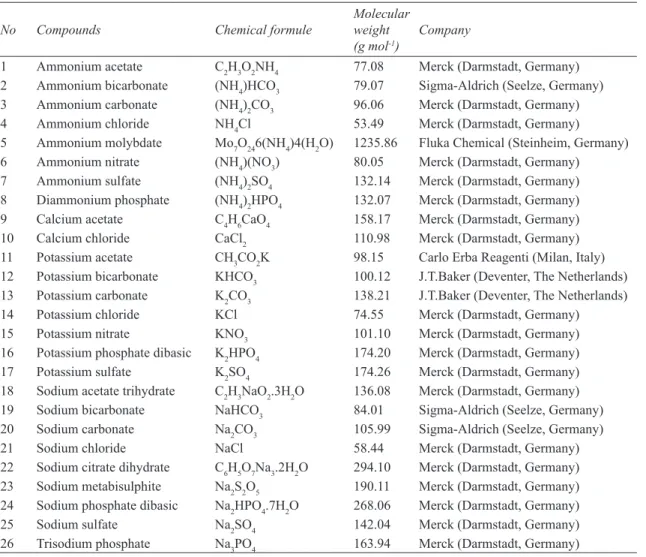
The salts used in this study were purchased from Merck Chemicals (Darmstadt, Germany), Sigma-Aldrich (Seelze, Germany), J.T.Baker (Deventer, The Netherlands), Fluka Chemical (Steinheim, Germany) and Carlo Erba Reagenti (Milan, Italy) (Table 1).
2.3. Effect of the salts on mycelial growth
The effect of salts on F. oxysporum f.sp. cepae mycelial growth was assayed according to Mecteau
et al (2002) with a slight modification. Salts (2%, w/v) were added to autoclaved and cooled PDA medium at 50 oC, and the pH of each treatment
was measured using a pH meter (Hanna HI 2211, Hanna Instruments, Germany). The medium was dispensed aseptically into 7-cm-diameter Petri plates. Plates with unamended PDA were used as control. Mycelial disks of 5 mm in dia. from 7-day-old fungal cultures were placed in the center of the plates with 10 mL of PDA. The plates were then sealed with Parafilm and incubated at 24±1 °C. Mycelial growth was measured daily at two perpendicular colony diameters until the growth in the control plates reached the edge of the Petri plates. Mycelial growth values were converted into the inhibition percentage of mycelial growth inhibition (MGI) in relation to controls using the formula,
3
9 Calcium acetate C4H6CaO4 158.17 Merck (Darmstadt, Germany)
10 Calcium chloride CaCl2 110.98 Merck (Darmstadt, Germany)
11 Potassium acetate CH3CO2K 98.15 Carlo Erba Reagenti (Milan, Italy)
12 Potassium bicarbonate KHCO3 100.12 J.T.Baker (Deventer, The Netherlands) 13 Potassium carbonate K2CO3 138.21 J.T.Baker (Deventer, The Netherlands)
14 Potassium chloride KCl 74.55 Merck (Darmstadt, Germany)
15 Potassium nitrate KNO3 101.10 Merck (Darmstadt, Germany)
16 Potassium phosphate dibasic K2HPO4 174.20 Merck (Darmstadt, Germany)
17 Potassium sulfate K2SO4 174.26 Merck (Darmstadt, Germany)
18 Sodium acetate trihydrate C2H3NaO2.3H2O 136.08 Merck (Darmstadt, Germany)
19 Sodium bicarbonate NaHCO3 84.01 Merck (Darmstadt, Germany)
20 Sodium carbonate Na2CO3 105.99 Merck (Darmstadt, Germany)
21 Sodium chloride NaCl 58.44 Merck (Darmstadt, Germany)
22 Sodium citrate dihydrate C6H5O7Na3.2H2O 294.10 Merck (Darmstadt, Germany)
23 Sodium metabisulphite Na2S2O5 190.11 Merck (Darmstadt, Germany)
24 Sodium phosphate dibasic Na2HPO4.7H2O 268.06 Merck (Darmstadt, Germany)
25 Sodium sulfate Na2SO4 142.04 Merck (Darmstadt, Germany)
26 Trisodium phosphate Na3PO4 163.94 Merck (Darmstadt, Germany)
2.3. Effect of the salts on mycelial growth
The effect of salts on F. oxysporum f.sp. cepae mycelial growth was assayed according to Mecteau et al (2002)
with a slight modification. Salts (2%, w/v) were added to autoclaved and cooled PDA medium at 50 oC, and the
pH of each treatment was measured using a pH meter (Hanna HI 2211, Hanna Instruments, Germany). The medium was dispensed aseptically into 7-cm-diameter Petri plates. Plates with unamended PDA were used as control. Mycelial disks of 5 mm in dia. from 7-day-old fungal cultures were placed in the center of the plates with 10 mL of PDA. The plates were then sealed with Parafilm and incubated at 24±1 °C. Mycelial growth was measured daily at two perpendicular colony diameters until the growth in the control plates reached the edge of the Petri plates. Mycelial growth values were converted into the inhibition percentage of mycelial growth
inhibition (MGI) in relation to controls using the formula, (%)[ ]100
dcdt
dc
MGI , where dc and dt
represent mycelial growth diameters in controls and amended Petri plates, respectively. Each treatment was replicated 3 times and the experiment was repeated twice.
2.4. Effect of pH on mycelial growth
Mycelial growth of F. oxysporum f.sp. cepae was examined on adjusted PDA at pH 2.0, 3.0, 4.0, 5.0, 6.0, 7.0, 8.0, 9.0, 10.0, 11.0 and 12.0 using 1.0 N NaOH (Riedel-de Haen AG, Buchs SG, Switzerland) or HCI (Merck, Darmstadt, Germany). The Petri plates containing unmodified PDA were used as controls. Mycelial disks of 5 mm in dia. from 7-day-old fungal cultures were placed in 9-cm-dia. plates that were then sealed with Parafilm and incubated at 24±1 °C for 7 days. Mycelial growth was determined by measuring colony diameter. Each experiment was replicated 3 times and repeated twice.
2.5. ED50, MIC and MFC values of the salts
Probit analysis was used to calculate concentrations of salts causing 50% reduction (ED50) in mycelial growth of
F. oxysporum f.sp. cepae (StatPlus, AnalystSoft Inc.). Mycelial growth was determined in PDA amended with
where dc and dt represent mycelial growth diameters in controls and amended Petri plates, respectively. Each treatment was replicated 3 times and the experiment was repeated twice.
2.4. Effect of pH on mycelial growth
Mycelial growth of F. oxysporum f.sp. cepae was examined on adjusted PDA at pH 2.0, 3.0, 4.0, 5.0, 6.0, 7.0, 8.0, 9.0, 10.0, 11.0 and 12.0 using 1.0 N NaOH (Riedel-de Haen AG, Buchs SG, Switzerland) or HCI (Merck, Darmstadt, Germany). The Petri plates containing unmodified PDA were used as controls. Mycelial disks of 5 mm in dia. from 7-day-old fungal cultures were placed in 9-cm-dia. plates that were then sealed with Parafilm and incubated at 24±1 °C for 7 days. Mycelial growth was determined by measuring colony diameter. Each experiment was replicated 3 times and repeated twice.
2.5. ED50, MIC and MFC values of the salts
Probit analysis was used to calculate concentrations of salts causing 50% reduction (ED50) in mycelial
growth of F. oxysporum f.sp. cepae (StatPlus, AnalystSoft Inc.). Mycelial growth was determined in PDA amended with salts at concentrations of
Antifungal Effect of Various Salts Against Fusarium oxysporum f.sp. cepae, the Causal Agent of Fusarium Basal Rot of Onion, Türkkan
Table 1- Salts used in the study
Çizelge 1- Çalışmada kullanılan tuzlar
No Compounds Chemical formule Molecular weight
(g mol-1) Company
1 Ammonium acetate C2H3O2NH4 77.08 Merck (Darmstadt, Germany)
2 Ammonium bicarbonate (NH4)HCO3 79.07 Sigma-Aldrich (Seelze, Germany)
3 Ammonium carbonate (NH4)2CO3 96.06 Merck (Darmstadt, Germany)
4 Ammonium chloride NH4Cl 53.49 Merck (Darmstadt, Germany)
5 Ammonium molybdate Mo7O246(NH4)4(H2O) 1235.86 Fluka Chemical (Steinheim, Germany)
6 Ammonium nitrate (NH4)(NO3) 80.05 Merck (Darmstadt, Germany)
7 Ammonium sulfate (NH4)2SO4 132.14 Merck (Darmstadt, Germany)
8 Diammonium phosphate (NH4)2HPO4 132.07 Merck (Darmstadt, Germany)
9 Calcium acetate C4H6CaO4 158.17 Merck (Darmstadt, Germany)
10 Calcium chloride CaCl2 110.98 Merck (Darmstadt, Germany)
11 Potassium acetate CH3CO2K 98.15 Carlo Erba Reagenti (Milan, Italy)
12 Potassium bicarbonate KHCO3 100.12 J.T.Baker (Deventer, The Netherlands)
13 Potassium carbonate K2CO3 138.21 J.T.Baker (Deventer, The Netherlands)
14 Potassium chloride KCl 74.55 Merck (Darmstadt, Germany)
15 Potassium nitrate KNO3 101.10 Merck (Darmstadt, Germany)
16 Potassium phosphate dibasic K2HPO4 174.20 Merck (Darmstadt, Germany)
17 Potassium sulfate K2SO4 174.26 Merck (Darmstadt, Germany)
18 Sodium acetate trihydrate C2H3NaO2.3H2O 136.08 Merck (Darmstadt, Germany)
19 Sodium bicarbonate NaHCO3 84.01 Sigma-Aldrich (Seelze, Germany)
20 Sodium carbonate Na2CO3 105.99 Sigma-Aldrich (Seelze, Germany)
21 Sodium chloride NaCl 58.44 Merck (Darmstadt, Germany)
22 Sodium citrate dihydrate C6H5O7Na3.2H2O 294.10 Merck (Darmstadt, Germany)
23 Sodium metabisulphite Na2S2O5 190.11 Merck (Darmstadt, Germany)
24 Sodium phosphate dibasic Na2HPO4.7H2O 268.06 Merck (Darmstadt, Germany)
25 Sodium sulfate Na2SO4 142.04 Merck (Darmstadt, Germany)
26 Trisodium phosphate Na3PO4 163.94 Merck (Darmstadt, Germany)
0.05, 0.1, 0.2, 0.4, 0.6, 0.8, 1.0, 1.5 and 2.0% (w/v) as described above. Probit analysis was performed to determine the minimum inhibition concentration (MIC) value that completely inhibited mycelial growth.
Salt toxicity (fungistatic/fungicidal) was determined according to Thompson (1989) and Tripathi et al (2004). The inhibited fungal discs with no growth were taken from the salts amended Petri plates, and then re-inoculated separately into
the fresh medium, and revival of their growth was observed for 9 days at 24±1 °C. The concentration that inhibited the fungi completely and irreversibly after transference to fresh medium was recorded as the minimum fungicidal concentration (MFC) value.
2.6. Soil tests
Soil tests were performed using a cornmeal-sand medium to further evaluate those salts that had completely inhibited mycelial growth at 2% concentrations in vitro. The medium was prepared
as described by Arslan et al (2009) using a 1:8 ratio of sand to corn. Medium (45 g) was placed in glass 7-cm-dia. Petri plates and sterilized in an oven (Ecocell LSIS-B2V/EC111, MMM Group, Germany) at 130 °C for 5 h. Mycelial disks (5-mm dia.) were taken from 7-day-old fungal cultures grown on PDA medium and placed in the center of cornmeal-sand medium at a depth of 0.5 cm. Salt concentrations (described above) were prepared using sterile distilled water, 10 mL of solution was added to each Petri plate, and plates were incubated in the dark at 24±1 °C for 7 days. Images of fungal mycelial growth were photocopied on transparent paper, with a 5 cm scale placed on the lid of each plates. Images were then digitally scanned using a Mustek 1200 UB Plus desktop scanner (Mustek, China) and saved as bmp 24 bit files. Surface areas were digitally measured by using Digimizer (Version 4.0, Belgium). Inhibition of mycelial growth was expressed as a percentage of mycelia growth of each sample in comparison to the control.
In addition, pH values of the cornmeal-sand medium were determined by randomly sampling 45 g of medium per treatment replicate. Measurements were performed by inserting the electrode of the pH meter into the sample after adding 20 mL of deionized water.
2.7. Statistical analysis
Results were separately subjected to one-way analysis of variance (ANOVA) using the IBM SPSS Statistics Program (Version 19, Property of SPSS, Inc., IBM Company, USA). Significant differences between means were determined using the Tukey– HSD test (P ≤ 0.05).
3. Results and Discussion
This study evaluated the inhibitory activity of 26 inorganic and organic salts against Fusarium
oxysporum f.sp. cepae in vitro at 2% concentration.
Ammonium bicarbonate, ammonium carbonate and sodium metabisulfite completely inhibited mycelial growth of the fungus whereas potassium
sulfate and sodium carbonate strongly reduced mycelial growth. Sodium citrate dihydrate, sodium bicarbonate, ammonium molybdate, potassium carbonate inhibited mycelial growth to a lesser extent (43.65-68.10%) (Figure 1).
The differences in the inhibitory effects of the salts were in general statistically significant (P ≤ 0.05). Although sodium carbonate had a grater inhibitory effect than potassium sulfate, the difference between the two was not statistically significant (P ≤ 0.05). These results are in line with those reported by previous studies. Arslan et al (2009) reported that mycelial growth of F.
oxysporum f.sp. melonis was totally inhibited
by ammonium bicarbonate, potassium benzoate, potassium sorbate and sodium benzoate, but not by sodium carbonate, sodium bicarbonate, or sodium citrate dihydrate. Mills et al (2004) determined that mycelial growth and spore germination of
Alternaria alternata, Botrytis cinerea, Fusarium solani var. coeruleum, Phytophthora erythroseptica, P. infestans, Verticillium albo-atrum, and V. dahliae
were strongly limited by sodium metabisulfite and propyl-paraben. The present study revealed that 10 salts (ammonium acetate, ammonium chloride, ammonium nitrate, ammonium sulfate, calcium acetate, calcium chloride, diammonium phosphate, potassium bicarbonate, sodium acetate trihydrate and sodium phosphate dibasic) inhibited the mycelial growth of F. oxysporum f.sp. cepae to a certain extent (6.22 and 31.62%). Diammonium phosphate, had the lowest inhibitory effect, which did not differ significantly from the control (P ≤ 0.05). No statistically significant differences were observed among ammonium acetate, ammonium nitrate, calcium acetate, calcium chloride and potassium bicarbonate or between ammonium chloride and sodium phosphate dibasic (P ≤ 0.05), all of which had significantly higher inhibitory effects than diammonium phosphate and the control. These results are in line with those of previous studies. Abdel-Kader et al (2012) found that calcium chloride concentrations of 1% and 2% gradually reduced mycelial growth of F. solani and
Antifungal Effect of Various Salts Against Fusarium oxysporum f.sp. cepae, the Causal Agent of Fusarium Basal Rot of Onion, Türkkan
whereas no further reductions were observed at a higher concentration (4%). Bigss et al (1997) reported that calcium acetate and calcium chloride did not inhibit growth of Monilinia fructicola on PDA as strongly as 4 other calcium salts (calcium oxide, calcium propionate, calcium pyrophosphate, calcium cilicate). However, Reid et al (2001) reported that sodium chloride was more effective than other chloride salts (calcium chloride, ammonium chloride and manganese chloride) in controlling Fusarium crown and root rot caused by F. oxysporum f.sp.
asparagi and F. proliferatum. This contrasts with
the finding of the present study showing calcium and ammonium chloride to be more effective than sodium chloride in inhibiting mycelial growth of
F. oxysporum f.sp. cepae. Moreover, the present
study found that sodium chloride, sodium sulfate, trisodium phosphate, potassium acetate, potassium chloride, potassium nitrate and potassium phosphate dibasic did not reduced the mycelial growth of F.
oxysporum f.sp. cepae, but in fact had a stimulatory
effect on mycelial growth when compared to the control (P ≤ 0.05). Potassium phosphate dibasic had the greatest stimulatory effect, followed by potassium acetate, potassium chloride and trisodium phosphate. No differences were found in the effects of potassium nitrate, sodium chloride and sodium sulfate (P ≤ 0.05). This is in line with previous studies such as Elmer (2002), which found no reductions in the severity of Fusarium wilt caused by F. oxysporum f.sp. cyclaminis when 0.25 g and 0.50 gL-1 concentrations of sodium chloride were
5 Figure 1- Effects of salts at 2% concentration on mycelial growth of Fusarium oxysporum f.sp. cepae (See Table 1 for salt details, 27=control)
Şekil 1- % 2 konsantrasyonda Fusarium oxysporum f.sp. cepae’nın miselyal gelişimi üzerine tuzların etkileri (Tuzlar için Çizelge 1’e bakınız, 27=kontrol)
The differences in the inhibitory effects of the salts were in general statistically significant (P ≤ 0.05). Although sodium carbonate had a grater inhibitory effect than potassium sulfate, the difference between the two was not statistically significant (P ≤ 0.05). These results are in line with those reported by previous studies. Arslan et al (2009) reported that mycelial growth of F. oxysporum f.sp. melonis was totally inhibited by ammonium bicarbonate, potassium benzoate, potassium sorbate and sodium benzoate, but not by sodium carbonate, sodium bicarbonate, or sodium citrate dihydrate. Mills et al (2004) determined that mycelial growth and spore germination of Alternaria alternata, Botrytis cinerea, Fusarium solani var. coeruleum, Phytophthora
erythroseptica, P. infestans, Verticillium albo-atrum, and V. dahliae were strongly limited by sodium
metabisulfite and propyl-paraben. The present study revealed that 10 salts (ammonium acetate, ammonium chloride, ammonium nitrate, ammonium sulfate, calcium acetate, calcium chloride, diammonium phosphate, potassium bicarbonate, sodium acetate trihydrate and sodium phosphate dibasic) inhibited the mycelial growth of
F. oxysporum f.sp. cepae to a certain extent (6.22 and 31.62%). Diammonium phosphate, had the lowest
inhibitory effect, which did not differ significantly from the control (P ≤ 0.05). No statistically significant differences were observed among ammonium acetate, ammonium nitrate, calcium acetate, calcium chloride and potassium bicarbonate or between ammonium chloride and sodium phosphate dibasic (P ≤ 0.05), all of which had significantly higher inhibitory effects than diammonium phosphate and the control. These results are in line with those of previous studies. Abdel-Kader et al (2012) found that calcium chloride concentrations of 1% and 2% gradually reduced mycelial growth of F. solani and F. oxysporum by 22.2% and 33.3%, respectively, whereas no further reductions were observed at a higher concentration (4%). Bigss et al (1997) reported that calcium acetate and calcium chloride did not inhibit growth of Monilinia fructicola on PDA as strongly as 4 other calcium salts (calcium oxide, calcium propionate, calcium pyrophosphate, calcium cilicate). However, Reid et al (2001) reported that sodium chloride was more effective than other chloride salts (calcium chloride,
Figure 1- Effects of salts at 2% concentration on mycelial growth of Fusarium oxysporum f.sp. cepae (See Table 1 for salt details, 27=control)
Şekil 1- % 2 konsantrasyonda Fusarium oxysporum f.sp. cepae’nın miselyal gelişimi üzerine tuzların etkileri (Tuzlar için Çizelge 1’e bakınız, 27=kontrol)
applied to potting mix. Similarly, Palmer et al (1997) reported that out of 26 salts tested, sodium chloride, sodium phosphate monobasic, sodium sulfate and sodium thiosulfate had no effect on the mycelial growth of Botrytis cinerea. Moreover, sodium phosphate monobasic was found to provide additional nutrients for development of pathogen. In contrast to the findings of the present study, Mecteau et al (2002, 2008) reported that trisodium phosphate completely inhibited mycelial growth of
F. sambicinum and F. solani var. coereuleum at 0.2
M (7.6%) on PDA. This implies that the sensitivity of Fusarium spp. to trisodium phosphate may vary and that higher concentrations of the salt may be required to completely inhibit mycelial growth of F.
oxysporum f.sp. cepae.
In terms of pH, the present study found pH values to range from 2.94 (potassium sulfate) to 10.75 (sodium carbonate) at 2% salt concentrations (Figure 1). Whereas 23 salts had pH values that differed significantly from the control (5.65), the pH values of 3 salts (calcium chloride, potassium chloride and sodium sulfate) did not differ significantly from the control (P ≤ 0.05). However, calcium
chloride inhibited mycelial growth (28.18%), both potassium chloride and sodium sulfate stimulated mycelial growth (-9.19% and -7.19%, respectively). Ammonium bicarbonate, ammonium carbonate and sodium metabisulfite had pH values of 7.80, 7.76 and 4.83, respectively, and all 3 salts completely inhibited mycelial growth (Figure 1). Overall, this study showed that F. oxysporum f.sp. cepae was able to grow both in acidic and basic environments (Figure 2). While no negative effects were observed with pH values ranging from 6 to 9, mycelial growth was significantly inhibited at both higher and lower pH values (P ≤ 0.05) and halted completely at a pH of 12. Moreover, no significant differences were found between mycelial growth of the fungus at pH 5, 10 and the unmodified pH (5.65) (P ≤ 0.05). In other words, toxic effects of salts appear to be pH-independent. In line with this finding, a previous study also found that the pH values of organic and inorganic salts have a minor role in their toxic effects (Mecteau et al 2002).
Of the various salts examined in the present study, sodium metabisulfite had the most toxic effect on the mycelial growth of F. oxysporum
6
ammonium chloride and manganese chloride) in controlling Fusarium crown and root rot caused by F. oxysporum f.sp. asparagi and F. proliferatum. This contrasts with the finding of the present study showing calcium and ammonium chloride to be more effective than sodium chloride in inhibiting mycelial growth of F. oxysporum f.sp. cepae. Moreover, the present study found that sodium chloride, sodium sulfate, trisodium phosphate, potassium acetate, potassium chloride, potassium nitrate and potassium phosphate dibasic did not reduced the mycelial growth of F. oxysporum f.sp. cepae, but in fact had a stimulatory effect on mycelial growth when compared to the control (P ≤ 0.05). Potassium phosphate dibasic had the greatest stimulatory effect, followed by potassium acetate, potassium chloride and trisodium phosphate. No differences were found in the effects of potassium nitrate, sodium chloride and sodium sulfate (P ≤ 0.05). This is in line with previous studies such as Elmer (2002), which found no reductions in the severity of Fusarium wilt caused by F. oxysporum f.sp. cyclaminis when 0.25 g and 0.50 gL-1 concentrations of sodium chloride were applied to potting mix. Similarly, Palmer et al (1997) reported that out of 26 salts tested, sodium chloride, sodium phosphate monobasic, sodium sulfate and sodium thiosulfate had no effect on the mycelial growth of Botrytis cinerea. Moreover, sodium phosphate monobasic was found to provide additional nutrients for development of pathogen. In contrast to the findings of the present study, Mecteau et al (2002, 2008) reported that trisodium phosphate completely inhibited mycelial growth of F. sambicinum and F. solani var. coereuleum at 0.2 M (7.6%) on PDA. This implies that the sensitivity of Fusarium spp. to trisodium phosphate may vary and that higher concentrations of the salt may be required to completely inhibit mycelial growth of F. oxysporum f.sp. cepae.
In terms of pH, the present study found pH values to range from 2.94 (potassium sulfate) to 10.75 (sodium carbonate) at 2% salt concentrations (Figure 1). Whereas 23 salts had pH values that differed significantly from the control (5.65), the pH values of 3 salts (calcium chloride, potassium chloride and sodium sulfate) did not differ significantly from the control (P ≤ 0.05). However, calcium chloride inhibited mycelial growth (28.18%), both potassium chloride and sodium sulfate stimulated mycelial growth (-9.19% and -7.19%, respectively). Ammonium bicarbonate, ammonium carbonate and sodium metabisulfite had pH values of 7.80, 7.76 and 4.83, respectively, and all 3 salts completely inhibited mycelial growth (Figure 1). Overall, this study showed that F. oxysporum f.sp. cepae was able to grow both in acidic and basic environments (Figure 2). While no negative effects were observed with pH values ranging from 6 to 9, mycelial growth was significantly inhibited at both higher and lower pH values (P ≤ 0.05) and halted completely at a pH of 12. Moreover, no significant differences were found between mycelial growth of the fungus at pH 5, 10 and the unmodified pH (5.65) (P ≤ 0.05). In other words, toxic effects of salts appear to be pH-independent. In line with this finding, a previous study also found that the pH values of organic and inorganic salts have a minor role in their toxic effects (Mecteau et al 2002).
Figure 2- Effects of pH on mycelial growth of Fusarium oxysporum f.sp. cepae
Şekil 2- Fusarium oxysporum f.sp. cepae’nın miselyal gelişimi üzerine pH’nın etkileri Figure 2- Effects of pH on mycelial growth of Fusarium oxysporum f.sp. cepae Şekil 2- Fusarium oxysporum f.sp. cepae’nın miselyal gelişimi üzerine pH’nın etkileri
Antifungal Effect of Various Salts Against Fusarium oxysporum f.sp. cepae, the Causal Agent of Fusarium Basal Rot of Onion, Türkkan
f.sp. cepae, followed by ammonium bicarbonate, ammonium carbonate, ammonium molibdate, potassium sulfate, sodium carbonate and potassium carbonate, respectively. ED50 values of 10 other
salts (ammonium acetate, ammonium chloride, ammonium nitrate, calcium acetate, calcium chloride, potassium bicarbonate, sodium acetate trihydrate, sodium bicarbonate, sodium citrate dihydrate and sodium phosphate dibasic) were above 2%. ED50 values were not calculated for those
salts found to stimulate mycelial growth (Table 2).
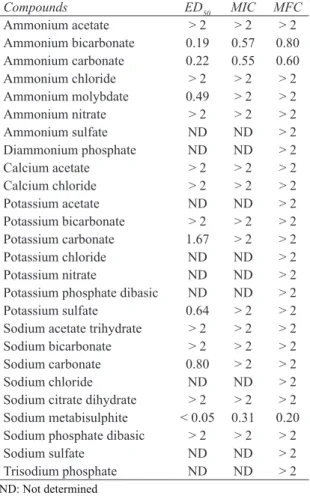
Table 2- ED50, MIC, and MFC values (%, w/v) of the salts inhibiting the mycelial growth of Fusarium
oxysporum f.sp. cepae
Çizelge 2- Fusarium oxysporum f.sp. cepae’nın miselyal gelişimini engelleyen tuzların ED50, MIC, and MFC değerleri(%, w/v) Compounds ED50 MIC MFC Ammonium acetate > 2 > 2 > 2 Ammonium bicarbonate 0.19 0.57 0.80 Ammonium carbonate 0.22 0.55 0.60 Ammonium chloride > 2 > 2 > 2 Ammonium molybdate 0.49 > 2 > 2 Ammonium nitrate > 2 > 2 > 2 Ammonium sulfate ND ND > 2 Diammonium phosphate ND ND > 2 Calcium acetate > 2 > 2 > 2 Calcium chloride > 2 > 2 > 2 Potassium acetate ND ND > 2 Potassium bicarbonate > 2 > 2 > 2 Potassium carbonate 1.67 > 2 > 2 Potassium chloride ND ND > 2 Potassium nitrate ND ND > 2
Potassium phosphate dibasic ND ND > 2
Potassium sulfate 0.64 > 2 > 2
Sodium acetate trihydrate > 2 > 2 > 2
Sodium bicarbonate > 2 > 2 > 2
Sodium carbonate 0.80 > 2 > 2
Sodium chloride ND ND > 2
Sodium citrate dihydrate > 2 > 2 > 2
Sodium metabisulphite < 0.05 0.31 0.20
Sodium phosphate dibasic > 2 > 2 > 2
Sodium sulfate ND ND > 2
Trisodium phosphate ND ND > 2
ND: Not determined
MIC values were consistent with ED50 values in
all the salts tested, with the exception of ammonium bicarbonate. Moreover, ammonium bicarbonate had a lower ED50 value than ammonium carbonate,
whereas ammonium carbonate had lower MIC value (0.55%). However, sodium metabisulfite had the lowest MIC value with 0.31% (Table 2). These results are supported by previous studies. Mecteau et al (2002) found that aluminium acetate, aluminium lactate, aluminium chloride, sodium benzoate, sodium metabisulfite and potassium sorbate had a higher toxic effect, and sodium carbonate and sodium citrate dihydrate had a lower toxic effect on Fusarium sambucinum spores. Ammonium bicarbonate showed greater fungucidal activity against F. oxysporum f.sp. melonis than potassium carbonate, potassium bicarbonate, sodium bicarbonate, sodium carbonate and sodium citrate dihydrate (Arslan et al 2009). Similarly, Montville & Shih (1991) observed that ammonium bicarbonate at 1 and 2% completely inhibited monocultures of F. graminearium, Aspergillus
ochraceus and Penicillium griseofulvum on
cracked corn. The present study showed sodium metabisulfite to have a higher fungistatic effect than ammonium bicarbonate and ammonium carbonate (Table 2). Whereas fungal discs taken from medium amended with 0.2–2.0% of sodium metabisulfite did not grow in the fresh medium for 9 days, discs taken from medium amended with 0.6% ammonium carbonate grew in fresh medium after 4 days, discs taken from medium amended with ammonium bicarbonate did not grow for 9 days. In contrast, Arslan et al (2009) reported ammonium bicarbonate to have an MFC value of 1% for F. oxysporum f.sp.
melonis and an ED50 value of 0.35%, which was nearly twice as high as the value reported in the present study (ED50=0.19). These results indicate
that F. oxysporum f.sp. cepae is more sensitive to ammonium bicarbonate than F. oxysporum f.sp.
melonis. In soil tests, sodium metabisulfite had a
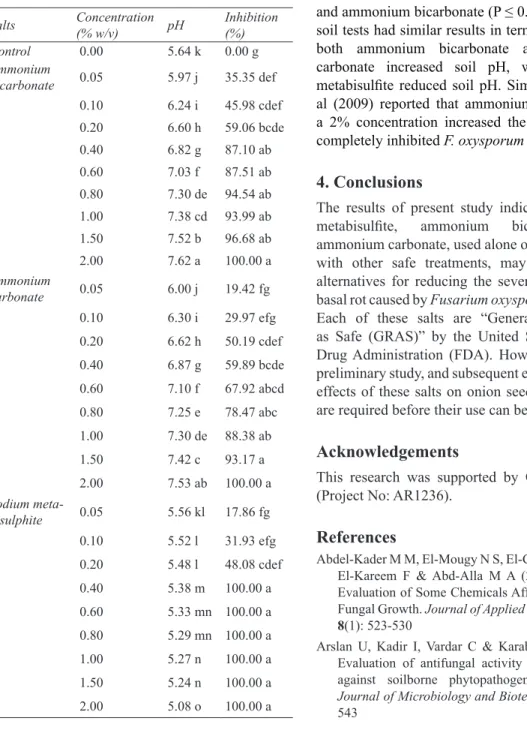
higher toxic effect on F. oxysporum f.sp. cepae than ammonium bicarbonate and ammonium carbonate (Table 3). Sodium metabisulfite at a 0.4% concentration completely inhibited the fungus, whereas ammonium bicarbonate and ammonium
carbonate managed to control the fungus only at the highest concentration used in the study (2%). Differences in the inhibitory effects of the three salts were statistically significant (P ≤ 0.05). However, no significant differences were observed between 0.4 and 2% concentrations of sodium metabisulfite and ammonium bicarbonate (P ≤ 0.05). In vitro and soil tests had similar results in terms of pH values; both ammonium bicarbonate and ammonium carbonate increased soil pH, whereas sodium metabisulfite reduced soil pH. Similarly, Arslan et al (2009) reported that ammonium bicarbonate at a 2% concentration increased the pH of soil and completely inhibited F. oxysporum f.sp. melonis.
4. Conclusions
The results of present study indicate that sodium metabisulfite, ammonium bicarbonate and ammonium carbonate, used alone or in combination with other safe treatments, may be appropriate alternatives for reducing the severity of Fusarium basal rot caused by Fusarium oxysporum f.sp. cepae. Each of these salts are “Generally Recognized as Safe (GRAS)” by the United States Food and Drug Administration (FDA). However, this was a preliminary study, and subsequent evaluations of the effects of these salts on onion seeds and seedlings are required before their use can be recommended.
Acknowledgements
This research was supported by Ordu University (Project No: AR1236).
References
Abdel-Kader M M, El-Mougy N S, El-Gammal N G, Abd-El-Kareem F & Abd-Alla M A (2012). Laboratory Evaluation of Some Chemicals Affecting Pathogenic Fungal Growth. Journal of Applied Sciences Research
8(1): 523-530
Arslan U, Kadir I, Vardar C & Karabulut O A (2009). Evaluation of antifungal activity of food additives against soilborne phytopathogenic fungi. World
Journal of Microbiology and Biotechnology 25:
537-543
Table 3- Effects of ammonium bicarbonate, ammonium carbonate and sodium metabisulfite on
Fusarium oxysporum f.sp. cepae in soil tests
Çizelge 3- Toprak testlerinde Fusarium oxysporum f.sp. cepae üzerine amonyum bikarbonat, amonyum karbonat ve sodyum metabisülfitin etkileri
Salts Concentration(% w/v) pH Inhibition (%)
Control 0.00 5.64 k 0.00 g Ammonium bicarbonate 0.05 5.97 j 35.35 def 0.10 6.24 i 45.98 cdef 0.20 6.60 h 59.06 bcde 0.40 6.82 g 87.10 ab 0.60 7.03 f 87.51 ab 0.80 7.30 de 94.54 ab 1.00 7.38 cd 93.99 ab 1.50 7.52 b 96.68 ab 2.00 7.62 a 100.00 a Ammonium carbonate 0.05 6.00 j 19.42 fg 0.10 6.30 i 29.97 efg 0.20 6.62 h 50.19 cdef 0.40 6.87 g 59.89 bcde 0.60 7.10 f 67.92 abcd 0.80 7.25 e 78.47 abc 1.00 7.30 de 88.38 ab 1.50 7.42 c 93.17 a 2.00 7.53 ab 100.00 a Sodium meta-bisulphite 0.05 5.56 kl 17.86 fg 0.10 5.52 l 31.93 efg 0.20 5.48 l 48.08 cdef 0.40 5.38 m 100.00 a 0.60 5.33 mn 100.00 a 0.80 5.29 mn 100.00 a 1.00 5.27 n 100.00 a 1.50 5.24 n 100.00 a 2.00 5.08 o 100.00 a
Antifungal Effect of Various Salts Against Fusarium oxysporum f.sp. cepae, the Causal Agent of Fusarium Basal Rot of Onion, Türkkan
Bayraktar H (2010). Genetic diversity and population structure of Fusarium oxysporum f.sp. cepae, the causal agent of Fusarium basal plate rot on onion, using RAPD markers. Tarım Bilimleri
Dergisi-Journal of Agricultural Sciences 16: 139-149
Biggs A R, El-Kholi M M, El-Neshawy S & Nickerson R (1997). Effects of calcium salts on growth, polygalacturonase activity, and infection of peach fruit by Monilinia fructicola. Plant Disease 81:399-403
Brayford D (1996). Fusarium oxysporum f.sp. cepae.
Mycopathologia 133: 39-40
Cramer C S (2000). Breeding and genetics of Fusarium basal rot resistance in onion. Euphytica 115: 159-166 Elmer W H (2002). Influence of inoculum density of
Fusarium oxysporum f.sp. cyclaminis and sodium
chloride on cyclamen and the development of Fusarium wilt. Plant Disease 86: 389-393
Fan C M, Xiong G R, Qi P, Ji G H & He Y Q (2008). Potential biofumigation effects of Brassica oleracea var. caulorapa on growth of fungi. Journal of
Phytopathology 156: 321-325
FAO (2013). Statistical database. Available: http://www. fao.org (accessed 10.01.2013)
Galván G A, Koning-Boucoiran C F S, Koopman W J M, Burger-Meijer K, González P H, Waalwijk C, Kik C & Scholten O E (2008). Genetic variation among Fusarium isolates from onion, and resistance to Fusarium basal rot in related Allium species.
European Journal of Plant Pathology 121: 499-512
Jaworski C A, McCarter S M, Johnson A W & Williamson R E (1978). Response of onions grown for transplants to soil fumigation. American Society for Horticultural
Science 103: 385-388
Köycü N D & Özer N (1997). Determination of seed-borne fungi in onion and their transmission to onion seeds. Phytoparasitica 25: 25-31
Mecteau M R, Arul J & Tweddell R J (2002). Effect of organic and inorganic salts on the growth and development of Fusarium sambucinum, a causal agent of potato dry rot. Mycological Research 106: 688-696
Mecteau M R, Arul J & Tweddell R J (2008). Effect of different salts on the development of Fusarium solani var. coeruleum, a causal agent of potato dry rot.
Phytoprotection 89: 1-6
Mills A A S, Platt H W & Hurta R A R (2004). Effect of salt compounds on mycelial growth, sporulation and spore germination of various potato pathogens.
Postharvest Biology and Technology 34: 341-350
Montville T J & Shih P L (1991). Inhibition of mycotoxigenic fungi in corn by ammonium and sodium bicarbonate. Journal of Food Protection 54: 295-297
Olivier C, Halseth D E, Mizubuti E S G & Loria R (1998). Postharvest application of organic and inorganic salts for suppression of silver scurf on potato tubers. Plant
Disease 82: 213-217
Özer N & Köycü N D (1998). Evaluation of seed treatments for controlling Aspergillus niger and
Fusarium oxysporum on onion seed. Phytopathologia Mediterranea 37: 33-40
Palmer C L, Horst R K & Langhans R W (1997). Use of bicarbonates to inhibit in vitro colony growth of
Botrytis cinerea. Plant Disease 81: 1432-1438
Reid T C, Hausbeck M K & Kızılkaya K (2001). Effects of sodium chloride on commercial asparagus and of alternative forms of chloride salt on Fusarium crown and root rot. Plant Disease 85: 1271-1275
Sumner D R (1995). Fusarium basal plate rot, In: Schwartz H.F. and Mohan S.K. (eds.). Compendium of Onion
and Garlic Diseases. St. Paul, MN, USA, APS press,
pp 10-11
Sumner D R, Gitaitis R D, Gay J D, Smittle D A, Maw B W, Tollner E W & Hung Y C (1997). Control of soilborne pathogenic fungi in fields of sweet onion.
Plant Disease 81: 885-891
Thompson D P (1989). Fungitoxic activity of essential oil components on food storage fungi. Mycologia 81: 151-153
Tripathi P, Dubey N K, Banerji R & Chansouria J P N (2004). Evaluation of some essential oils as botanical fungi toxicants in management of post-harvest rotting of citrus fruits. World Journal of Microbiology and
Biotechnology 20: 317-321
Türkkan M & Karaca G (2006). Amasya ili soğan ekiliş alanlarında bulunan fungal kök çürüklüğü hastalık etmenlerinin belirlenmesi. Tarım Bilimleri