T.C.
ISTANBUL AYDIN UNIVERSITY INSTITUTE OF GRADUTE STUDIES
RANKING OF CONSTRUCTION CONTRACTORS OFMUNICIPALITY BASED ON MULTI CRITERIA DECISION MAKING IN HERAT
PROVINCE
THESIS Baktash RAOUF
Department of Business Administration Business Administration Program
T.C.
ISTANBUL AYDIN UNIVERSITY INSTITUTE OF GRADUATE STUDIES
RANKING OF CONSTRUCTION CONTRACTORS OFMUNICIPALITY BASED ON MULTI CRITERIA DECISION MAKING IN HERAT
PROVINCE
THESIS BAKTASH RAOUF
(Y1612.130026)
Department of Business Administration Business Administration Program
Thesis Advisor: Assist Prof Dr. Ögr. Üyesi Özge EREN
Baktash Raouf, a M.Sc. student of IAU Institute of Social Sciences Business
Administration Department, successfully defended the thesis entitled “RANKING OF CONSTRUCTION CONTRACTORS USING (FUZZY-TOPSIS) MULTI CRITERIA DECISION MAKING TECHNIQUE IN HERAT PROVINCE”,
which he prepared after fulfilling the requirements specified in the associated legislations, before the jury whose signatures are below.
Thesis Advisor: Original Members: Original Members: Substitute members: Substitute members: Date of Submission: Date of Defense:
DECLARATION
I declare that this thesis titled as “Ranking Construction Contractors of Municipality Based On (Fuzzy-Topsis) Multi Criteria Decision Making in Herat Province” has been written by me in accordance with the academic rules. I also declare that all materials benefited in this thesis consist of the mentioned resources in the reference list. I verify all these with my honor.
FOREWORD
I offer my thanks to Allah, who gave me the capability to do this project efficiently and successfully, the most merciful and the most compassionate and the entire source of all knowledge and wisdom.
The writing of this thesis has been one of the most significant academic projects with the guidance, and support of my lovely mom and wife, also a lot of thanks to my dear advisor Dr. Özge EREN, this study would not have been completed without them. It is to them that I owe my gratitude.
I also would like to offer my thanks to my lovely brothers who are supported me in every moment of life.
TABLE OF CONTENTS
Page
FOREWORD ... iv
TABLE OF CONTENTS ... v
ABBREVIATIONS ... vii
LIST OF TABLES ... viii
LIST OF FIGURES ... ix
ABSTRACT ... x
ÖZET ... xi
1. INTRODUCTION ... 1
1.1 Necessity and Importance of Research... 3
1.2 Research Questions ... 5
1.3 Research Objectives ... 5
1.4 Methodologies ... 5
1.4.1 Type of research based on the purpose ... 5
1.4.2 Type of research based on method ... 5
1.4.3 Method of collecting data ... 6
1.4.4 Statistical population in Herat city, sampling method and sample size... 6
1.4.5 Data analysis method ... 6
1.5 Defining the Concepts and Vocabulary of The Project ... 7
1.6 Problems and Possible Research Bottlenecks ... 8
1.7 Related Contractor Selected Criteria ... 8
1.8 Summary of Chapter ... 9
2. THE LITERATURE AND RESEARCH BACKGROUND ... 11
2.1 Project Definition ... 11
2.1.1 Organization of a project ... 11
2.1.2 Time period of the project ... 12
2.1.3 Theoretical stage ... 12
2.1.4 Designing and Planning Stage ... 13
2.1.5 Implementation stage ... 13
2.1.6 Final stage (complement)... 14
2.2 Construction Projects ... 15
2.3 General Contractors ... 15
2.3.1 Overview of goals and tasks of general contracts... 16
2.4 Importance of Contractor Selection ... 16
2.5 Process of Contractors Selection ... 17
2.6 Contractor Selection Criteria ... 18
2.7 Contractor Selection Models ... 18
2.7 Preliminary Evaluation Models for Contractors... 23
2.8 Multi-Criteria Decision Making Techniques ... 27
2.8.1 Evaluation of MADM models ... 28
2.8.3 The fuzzy Set Concept ... 28
2.8.4 TOPSIS Method Calculation steps ... 32
2.9 Summary of the Chapter ... 33
3. RESEARCH METHODOLOGY ... 34
3.1 Research Method ... 34
3.1.1 Research Type Based on the Purpose ... 34
3.1.2 Type of research based on the method ... 34
3.2 Research Area ... 35 3.2.1 Time domain ... 35 3.2.2 Subject area ... 35 3.2.3 Spatial Territory ... 35 3.3 Statistical Community ... 35 3.4 Research Objectives ... 35 3.5 Research Questions ... 36
3.6 Methods and Tools Used Resources... 37
3.6.1 Use of scientific library resources ... 37
3.6.2 Using databases and scientific journals of the World Wide Web... 37
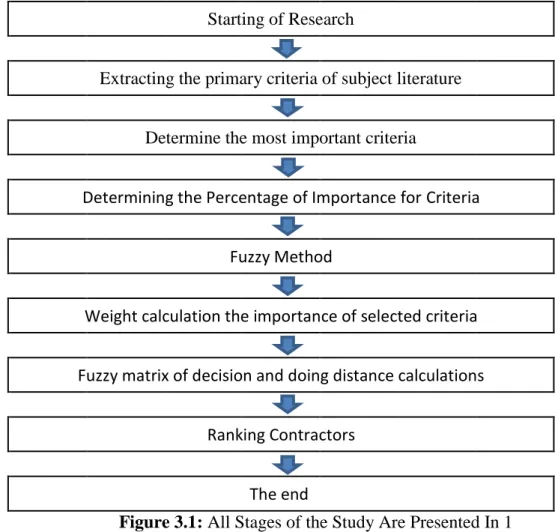
3.7 Research Processes ... 38
3.8 Methods and Tools for Data Collection and Analysis of Information ... 38
3.8.1 Extracting Primary Criteria ... 38
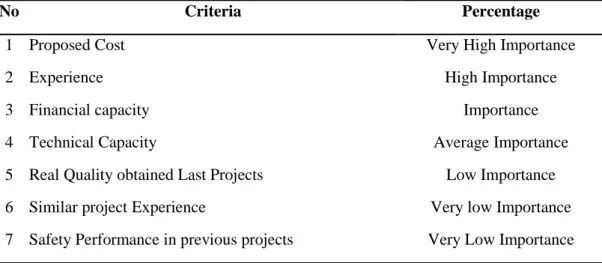
3.9 Determining the Percentage of Importance of the Criteria ... 39
3.10 Summary of the Chapter ... 40
4. ANALYSIS ... 41
4.1 Final Accepted Criteria... 41
4.2 Final Contractor Selection Criteria Method ... 43
4.3 Evaluating Contractors by Using Fuzzy-TOPSIS Technique. ... 43
5. CONCLUSION AND RECOMMENDATIONS ... 48
5.1 Research Findings ... 48
5.1.1 Identification and Determination of Contractor Selection Criteria ... 48
5.1.2 Ranking of Contracting Companies ... 49
5.2 Research Suggestions ... 50
5.2.1 Practical suggestions ... 50
5.2.2 Recommendations for future research ... 50
ABBREVIATIONS
AHP : Analytical Hierarchy Process
APP : Appendix
DEA : Data Envelopment Analysis
MAUT : Multi Attribute Utility Theory
MAX : Maximum
MCDM : Multi Criteria Decision Making
MIN : Minimum
SAW : Simple Additive Weighting
SMART : Simple Multi Attribute Rating Technique
LIST OF TABLES
Page
Table 2.1: Models Used To Select a Contactor ... 21
Table 2.2: Specification of Contractor Selection Methodologies ... 22
Table 2.3: Preliminary Assessment Models for Contractors ... 26
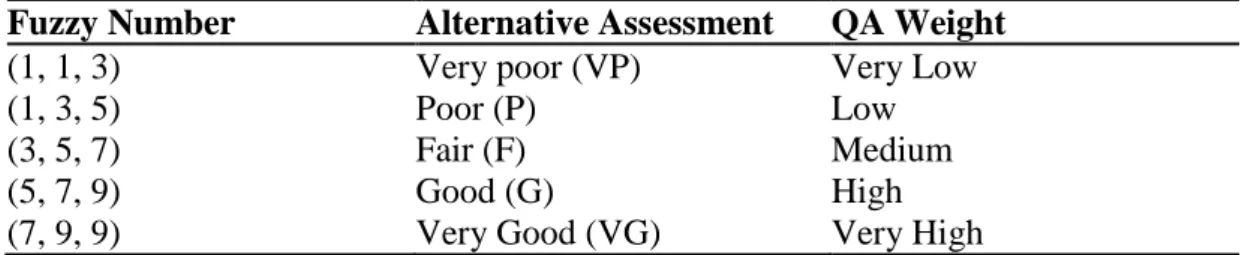
Table 2.4: Fuzzy Rating Linguistic Variables ... 32
Table 4.1: Important Criteria Selected ... 43
Table 4.2: A1 to A13 Behalf of Company Names ... Hata! Yer işareti tanımlanmamış. Table 4.3: Table C1, C3, C7 are Financial Criteria ... 44
Table 4.4: The Combine Fuzzy Matrix Table ... 44
Table 4.5: The Normalized Combine Matrix ... 45
Table 4.6: The Weighted Normalized Decision Matrix ... 46
Table 4.7: The Weighted Normalized Decision Matrix ... 46
Table 4.8: The Positive Distance of FPIS Matrix ... 46
Table 4.9: The Negative Distance of FNIS ... 47
Table 4.10: The CCi and Rank Table as Follow ... 47
LIST OF FIGURES
Page
Figure 2.1: Organization of a Project 1 ... 12
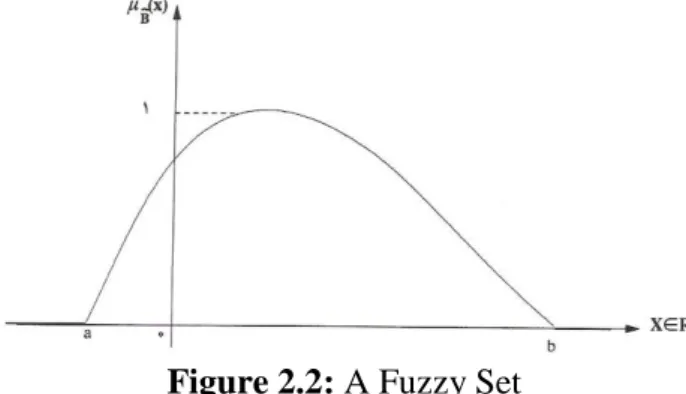
Figure 2.2: A Fuzzy Set ... 29
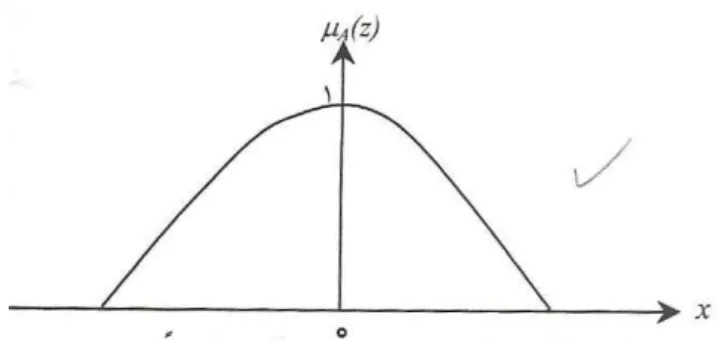
Figure 2.3: The Graph Shows the Fuzzy Number ... 31
Figure 2.4: The Graph is Triangle Fuzzy Number 1 ... 31
RANKING OF CONSTRUCTION CONTRACTORS USING (FUZZY-TOPSIS) MULTI CRITERIA DECISION MAKING TECHNIQUE IN HERAT
PROVINCE
ABSTRACT
In this research, efforts have been made to introduce comprehensive indicators for the selection of contractors of municipal construction projects with a comprehensive overview of the literature on the selection of contractors. The growth and development of the business market over the last few decades, also the increasingly competitive business market, caused the organizations and large corporations have to be more specialized and scientific approaches to the contractor selection process of projects.
What is certain is that the selection of the contractor will ensure that the project is successful and, on the contrary, the inability to identify and select the appropriate contractor will result in inefficiency and losses.
According to the municipality's policy of outsourcing activities every day more contracting companies to participate in various municipal projects and including construction projects; and this multiplicity contracting companies have led to the selection of the right contractor a crucial and decisive thing for the municipality as an employer.
Therefore, choosing the right contractors is the first step towards achieving the desired goal employers that mean executing the project within the desired timeframe at a specified cost and quality that is desired.
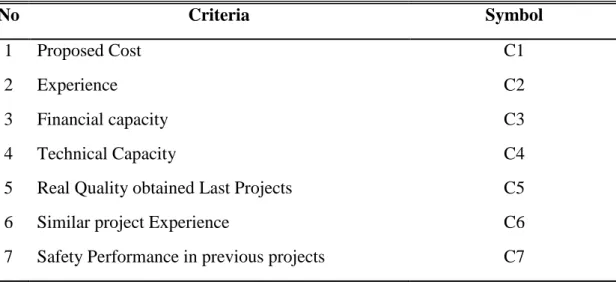
After reviewing the literature that belongs on identifying the criteria and interview with experts, 13 primitive criteria for contractor selection and evaluation then, 7 criteria were identified as the most important criteria affecting contractors were selected.
Then, the fuzzy analysis technique was used to determine the criteria and finally, by fuzzy TOPSIS method, 13 municipal construction’s contractors were evaluated and ranked.
RANKING OF CONSTRUCTION CONTRACTORS USING (FUZZY-TOPSIS) MULTI CRITERIA DECISION MAKING IN HERAT PROVINCE
ÖZET
Bu araştırmada, belediyelerdeki inşaat projelerinin yüklenicilerin seçimi ile ilgili önce literatüre kapsamlı bir bakış atılmış daha sonra ise yüklenici seçim problemi olarak kurgu senaryo üzerinden analizler yapılmıştır. Son yıllarda iş piyasasının büyümesi ve gelişmesi, aynı zamanda gittikçe daha rekabetçi hale gelen iş piyasasını, gerek devlet gerekse özel firmaların, yüklenici seçim projelerine daha özel ve bilimsel yaklaşımlar oluşturmasına neden olmuştur.
Yüklenici firmaların doğru seçimi projenin başarılı olmasını sağlayacak iken aksine, uygun yükleniciyi belirleyememe ve seçememenin verimsizlik ve kayıplarla sonuçlanacağıdır.
Çalışma da kurgu senaryosu için belediyeler üzerinden yaratılmıştır. Bununda en önemli sebebi, belediyenin dış kaynak kullanımı politikasına göre her gün daha fazla yüklenici firma çeşitli belediye projelerine katılmakta ve inşaat projeleri dahil; ve bu çokluk müteahhitlik şirketleri, doğru yüklenicinin seçilmesine işveren olarak belediye için çok önemli ve belirleyici bir şey sağlamıştır. Bu nedenle, doğru yüklenicilerin seçilmesi, istenen hedef işverenlere ulaşmanın ilk adımıdır; bu, projenin istenen zaman aralığında istenen bir maliyet ve kalitede yürütülmesi anlamına gelir.
Kriterlerin belirlenmesi ve uzmanlarla görüşme ile ilgili literatür incelendikten sonra yüklenici seçimi ve değerlendirmesi için 13 alternatif, müteahhitleri etkileyen en önemli 7 kriter seçilmiştir. Ardından en iyi alternatifi bulabilmek için bulanık analiz tekniği kullanılmış ve son olarak bulanık TOPSIS yöntemi ile 13 belediye inşaatı yüklenicisi değerlendirilmiş ve kendi aralarında sıralanmıştır.
1. INTRODUCTION
In this research, efforts have been made to show the comprehensive indicators selection of contractors in municipal construction projects with a comprehensive overview of the literature on the selection of contractors. This is the first step in providing a practical and effective contractor selection model. The criteria and indicators should be formulated in such a way as to cover the concepts of Cost, Quality, time, and etc. Based on these three basic concepts, a list of criteria can be created of these three indicators; quality is a more complex category, which determines how much it requires extensive research. The scope of the implementation of a project in a timetable is determined by the employer, which means that the failure of this period will usually result in heavy fines for the contractor. The cost is generally interpreted as the cost the employer pays to finalize the project, cost is also important, but it is not limited to the failure of the contractor to complete the contract, the re-execution parts of the project, the conduct of the tender also be made.
Also, in the real world, due to incomplete and vague information for decision making is usually inaccurate. In these circumstances, for more realistic decision making theory of fuzzy sets is more efficient. In this study, the fuzzy-TOPSIS method is used for evaluating and selection of the contractor.
In this chapter, we try to provide a proper definition of the research problem, goals and questions.
Choosing the appropriate contractor will be a guarantee of success in the implementation of the project, and vice versa, the inability to identify and select the appropriate contractor will result in inefficiencies and losses. Each employer, according to his/her strategy, defines the expectations of the contractor and the various aspects of a project. An organization's strategy determines the organization's attitude to the primary concepts of selecting a contractor, i.e. time, cost, and quality, and ultimately, the employer's expectations from the contractor of a project determine the framework for the selection.
The employer's commitment to successful implementation of the project is an important factor in achieving the expected results.
The trend of growth and development over the last few decades, as well as the more competitive business market, has led large companies to find a specialized and scientific approach for the process of contractor selection and implementation of projects. Today advertisements for tender’s small or large, public or private projects can be viewed on daily basis in newspapers and magazines. For an organization, the first step in achieving the desired outcomes for outsourced projects is to choose the right contractor. A time-consuming project will be successful at a given time; its cost will be determined within the framework and ultimately meet the expected quality. By using these three basic concepts we can make a list of criteria.
Time: The completion time of the project is defined as making it possible to use the design near a certain day determined by the employer's future plans. The degree of employer's willingness to use only contractors that match the purpose of the date distinguishes them from each other. Some contracts are awarded for rewards in order to encourage contractors to increase the speed of the construction process and avoid for delays.
Cost: Historically, cost is considered as the most important factor by employers. Most employers are looking for the value of money they spend. One of the results of this is that the cost calculated through the price offered by the contractor is often considered as the sole criterion of contractor selection. The vast majority of projects, however, end up at a higher cost than the original bid.
Quality: Quality in the project is defined as "the general characteristics of a product or service in order to meet a particular need." There is always an alternative relationship between cost, time, and quality, so that the employer tries to put the balance between these variables and the importance assigned to each one that has the ability to overcome the decision to choose the contractor (Holt and Colleagues, 1995).
In this research, we will try to build comprehensive indicators for choosing a contractor for the municipal construction projects with a comprehensive overview of the subject matter of contractor selection. This is the first step in providing a functional and effective model of contractor selection.
With regard to the above, it can easily be concluded that the nature of the contractor's choice is raised as a multi-criteria issue. As a result, selection and prioritization of options are based on selected criteria and multi-criteria decision-making models. TOPSIS is one of the multi-criteria decision-making methods first proposed by Huang in 1981. But what's important is that data in today's world is not usually clear, and human judgment is sometimes ambiguous and cannot be quantified by numerical values. Therefore, it can be said that decision-makers are confronted with uncertainty about the choice of contractor; in this regard, the use of inaccurate logic, or so-called Fuzzy Logic, can work. Using this logic and this kind of attitude toward natural phenomena was first proposed by Dr. Lotfollah Asgarizadeh in 1965 (Kasko, 1998). In this research, we specifically seek for criteria weighting we used the Fuzzy Method and for ranking we used the TOPSIS Method.
In general, for evaluation and ranking of municipality contractors with Fuzzy TOPSIS method, after identifying contractors and determining criteria by experts and managers, appropriate language variables for weighting and ranking should be used. Linguistic variables should be converted to fuzzy numbers using tables containing linguistic expressions (Chen and colleagues. 2005). Different scales are used to translate linguistic terms into fuzzy numbers. The purpose of introducing different scales is one of the forms in terms of numbers the language is the language that the decision makers use (Momeni, 2006).
1.1 Necessity and Importance of Research
In a highly competitive market today and the policy given by the governments every day, all contracting companies are taking steps to participate in various municipal projects, including construction projects. The managers have to made the selection of the contractor deserves to be regarded for the municipality as an employer. Therefore, the right choice of contractors is the first step in achieving the desired goal. The implementation of the project in the desired time range and at a specified cost and quality.
Managers are faced with a multi-criteria decision-making process to choose appropriate contractor which it include many elements. On the other hand, having a large number of contractors in the selection of eligible contractors for the
municipality managers it is very important to make compression. Therefore managers have to choose a sample and precise method for selection process of contractors.
Nowadays unfortunately mostly selection of the contractors processing without a scientific and non-logic method, the selection happening with proposed price of the contractors and the other criteria doesn’t consider.
By considering the problems mentioned above, this research is looking for a method to remove the current trend for the selection of contractors in the municipality from the tastes and to give them a scientific structure. Therefore, in order to select the appropriate contractor the index collected and used to cover all aspects of the implementation of a project (cost, time, and quality), and the final choice of the contractor should be made in a way that gives the right answer to the more integral the guarantor of the business, a good result for the municipality.
In general, the necessity of doing this research can be summarized as follows:
A) More competitive business conditions, increasing contracting companies and more complex management practices require more precise and scientific knowledge of contractor selection. Choosing the appropriate contractor in the municipality that runs government plans with government funds is critical issue.
B) The systematic review of contractor selection methods is an activity that needs to be done in a scientific and specialized way to achieve applied results in order to provide a solution to existing problems. Collecting and editing of important and functional indicators of contractor selection with a comprehensive overview on the subject matter can be a source of many current problems in this area. A set of indicator to contractor selection will certainly be a useful list for future activities in this area.
C) Each of the decision-making models has the strengths and weaknesses, and sometimes each one is used in a specific field. In this research, an attempt is made to provide a functional and effective model for selecting contractors.
1.2 Research Questions
• The main question
What is the ranking of construction contractors on municipal construction projects with regard to related criteria and indicators?
• Sub Questions
1) Criteria and indicators that provide a comprehensive assessment of the suitability of contractors for municipality projects
2) What is the importance and weight of each of the selected criteria for selecting a contractor for municipal projects in the unit under study?
1.3 Research Objectives
The objectives of this research are divided into two categories: • Main Purpose
Presentation of a model for choosing the appropriate contractor using multi-criteria decision making methods in government sectors especially in municipalities.
• Sub-goals
A) Identification and categorization of comprehensive criteria and indicators for assessing municipal contractors.
B) Determining the weight and importance of selected criteria for selecting a contractor for municipal projects.
1.4 Methodologies
1.4.1 Type of Research Based on the Purpose
The research in terms of research purpose is an applied research type.
1.4.2 Type of Research Based on Method
The research method used in this study is descriptive-survey. In descriptive research, the researcher wants to know what phenomenon, variable or subject is. In other
words, this research examines the status quo and provides a systematic description of its current status. Studying its features and attributes and studying the relationship between variables (Hafez Nia, 2001).
1.4.3 Method of Collecting Data
In this research, a part of the information which is the basis of theoretical and research literature content is collected through a library study including researches done in books and articles and searches on the Internet sites, and another part of the information that forms the scientific aspect of the research. It is obtained through interviews with senior experts and relevant directors and surveys through a questionnaire.
1.4.4 Statistical Population in Herat city, Sampling Method and Sample Size
The study population in this study can be defined at two levels. At one level, in order to determine the criteria for selection and extraction of weights, the importance of the criteria affecting the selection of contractors in municipal projects is used by experts and decision makers in the municipality. On the other hand, in order to evaluate and select the contractors, information is available on the contractors participating in the scheme that previously interacted with the municipality.
1.4.5 Data Analysis Method
In this section, the data analysis method is briefly described:
Early studies and studies have suggested that research on selecting contractors and related articles, although covering a wide range of criteria and indicators, however, has led to a very different categorization and classification of these indicators and criteria. Of course, many similarities can be found, but this does not mean that there is an accepted pattern for categorizing the criteria.
According to the above, at the beginning of the research, a set of indicators and criteria that are capable of evaluating the various dimensions of the capabilities and competencies of the contractors is necessary. In order to achieve this goal, first of all, the history of the research has to be done and the books and related articles have been examined and a set of indicators that are most frequent to be identified. Then we classify the criteria using experts' opinion. In the next step, the opinion of the
experts and managers of the municipality should be considered for the 13 selected contractors according to the criteria set.
In the last step, according to the obtained data, by using the fuzzy matrix decision and we are ranking the contractors according to the fuzzy TOPSIS method.
The form of the research process is presented in Chapter 3.
1.5 Defining the Concepts and Vocabulary of the Project
Fuzzy Logic: As a system of concepts, principles, and methods for a type of reasoning based on an approximate basis, it can be defined. More specifically, fuzzy logic is the generalized state of multi-value logic that emerged at the beginning of the last century. In general, fuzzy logic is the practical and functional range of the theory of fuzzy sets. This logic is used by using the concepts, principles and values used in fuzzy sets to formulate various forms of reasonably comprehensible reasoning (Adel Azar, 2008).
The theory of fuzzy sets: Fuzzy theory provides a precise mathematical method for modeling ambiguous conditions and priorities, and makes it easy to describe the phrase "the x-criterion can weigh about 0.8" (DeBoer and Colleagues. 2001).
The criterion is the characteristics, qualities and performance parameters that are used to select decision options. These indicators can be quantitative or qualitative (Ghodsipour, 2006).
Employer: A person who is a party to the treaty signatory and has assigned the contractor to the Sub-contractor on the basis of the contract documents. Representatives and legal substitutes of the employer are in the territory of the employer (Management and Planning Organization, 1999).
Contractor: Providing remuneration for the provision of services to an organization other than the members of the organization itself (Alwani & Ashrafzadeh, 2004). Contractor: The legal person is the other party to the treaty, and has undertaken the implementation of the treaty subject to the treaty documents. Contractors' legal representatives and substitutes are contractors (Management and Planning Organization, 1999).
1.6 Problems and Possible Research Bottlenecks
1) Multiplicity, lack of categorization and categorization and qualities of criteria and indicators
2) Lack of transparency in some information and statistics for contractors 3) Time limitation for conducting research
1.7 Related Contractor Selected Criteria
The mandate suggest criteria such as project cost, duration, experience, qualitative performance, teamwork, facilities, financial strength, and the ability to carry out the project for the selection of the contractor (July and Task, 2007).
Based on the regulations of the management organization and the examination of the objectives of different employers, the criteria of experience, financial sustainability, company background, quality, current work, resources, company management, and technology can be used as the basic criteria for determining the competence of contractors (Rajaya and Hazrati, 2007).
The Ismailis and Rabieh also used indicators of profitability, flexibility, technological capabilities, quality and delivery times to select contractors (Ismailis and Rabieh, 2007). In Marquez's view, criteria such as suggested price, financial ability, industry background, management organization, technical records, safety plans and fault records in previous projects were suitable for choosing contractors (Marzouk, 2005). Holt and others have identified the classification of time, quality, and cost criteria from the perspective of private employers, government employers, and contractor counselors in order to select contractors (H0lt, 1995), and in the other categories of Holt and others. The five organizational, financial, Management, experience and performance has been written. (Holt, 1994).
In this study, criteria such as proposed price, legal activity, insurance status, contractor claims, failures in previous contracts, competitors, quality assurance, number of technical staff, experience, type and size of previous projects, environmental protection and health and safety at work selection criteria are considered as benchmarks (Banaitiene, 2006). In another category, the criteria for experience in work, technology, management, experience and knowledge of the
team, quality, familiarity with the region and the workplace, fame, creativity, and innovation are also considered as selection criteria (Darvish and colleagues. 2008). Kumaraswamy and P. Varta formulate a comprehensive model based on three major groups of criteria (Responsiveness: Agility – Realism - Evolution, Accountability: Adaptation – Performance – Quality – Safety – Environment - Participation and Competency: Resources-Specialization-Constraints- Management - organization) have suggested (Kumaraswamy and P.Varta, 2004).
A comprehensive review of the papers presented in this area suggests that most researchers believe that the cost criterion (bid-bid) lonely is not enough to select a contractor, and other criteria should also be considered in this decision-making process. Unfortunately, in most projects, since the budget of the project is financed by government funds, the desire to choose the price is always lower, which leads to a poor quality of the project.
1.8 Summary of Chapter
In this chapter, we have tried to define and explain the problem, as well as a brief overview on the literature. After designing the questions and goals of the research, the importance and necessity of the research have been discussed. The research method is one of the topics that have been considered in this chapter. Chapter One with Definition of Specific Vocabulary for Reader's Introduction to Concepts and Expressions of Concerns and Concerns Ended.
2. THE LITERATURE AND RESEARCH BACKGROUND
2.1 Project Definition
A project can be defined as a set of activities that are performed to achieve a particular purpose. Projects include activities that must be carried out on specific dates, with specified costs and qualities determined. Projects may be tasks that are required at specific intervals. For example, closing plant accounts at the end of the fiscal year, major refurbishment of a refinery every two years etc. Projects may also include tasks that will only be carried out once by the organization, such as construction, development projects, organization development, research projects etc. (Haj Shir Mohammadi 2008). According to what was said, such things as: forming a seminar, compiling or publishing a book, setting up a factory, producing a new product, running a spatial plan, making a trip plan, and doing thousands of other things done by humans by itself, is a project.
2.1.1 Organization of a project
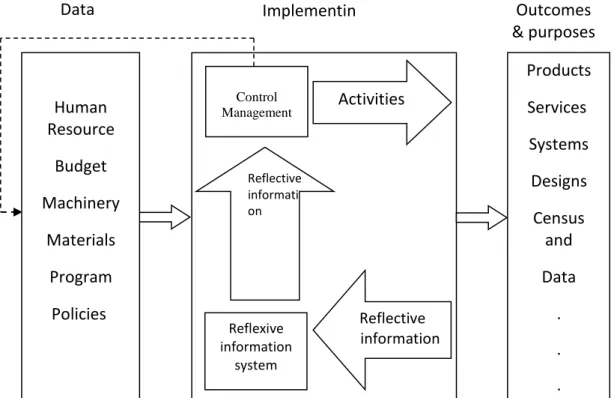
In order to achieve the goal or purpose of a project, an organization must be formed to carry out the necessary activities. The organization must have sufficient resources and facilities to implement the project, resources and facilities are entered into the organization as data (inputs). Policies, procedures, and implementation programs are also part of the inputs to the organization. Management and control matters are the proper functioning of the resources and facilities for the implementation of activities in order to achieve the objectives of the project. This purpose or the ultimate goal is the organization’s (outputs) and includes the factors that the organization is designed to achieve and perform the necessary activities by applying the inputs. Reflexive information system, by establishing a communication channel between (outputs) and management continuously extracts information from the outputs and reflects on project executives. The communication channel between managerial and control affairs, with the organization's data, is shown in Figure 2-1 in the form of the Chinese line. (Haj Shir Mohammadi 2008).
Figure 2.1: Organization of a Project 1 2.1.2 Time period of the project
Generally, in each project, there are four distinct phases can be defined. These four steps are:
Steps 1 - Theoretical stage Step 2 - Designing and Planning Step 3 - Implementation
Step 4 - Final Step (complement)
Each of the four phases of the project is described belowb (Haj Shir Mohammadi, 2008):
2.1.3 Theoretical stage
The starting point of a project, with any nature and feature, is a theory or thought, or a desire created by a person or group of individuals or an institution and organization. These comments should, in any event, be explored and studied carefully before being planned for implementation, in terms of feasibility and economics. If the results of such studies indicate that the implementation of the project, taking into account all the local conditions, such as economic, cultural and
Products Services Systems Designs Census and Data . . . Activities Reflective information Reflexive information system Reflective informati on Control Management Human Resource Budget Machinery Materials Program Policies Data Implementin g Outcomes & purposes
political, etc., is feasible and economically feasible, then a variety of possible options for project implementation will be designed and defined, and each of these options will be evaluated. (Obviously, the initial design activities in this phase are to illustrate the overall framework of the options and do not include details) (Haj Shir Mohammadi, 2008).
2.1.4 Designing and Planning Stage
At this stage, the affairs of the project in terms of organization are similar to the first stage, but designing and planning are more accurately implemented and more detailed. At this stage, the information between different activities goes round and back and using this exchanged information, the necessary details are tried to be considered and be reflected on the maps and reports. During the implementation of this step, it is necessary to receive the worker's consent in certain periods. One of the important points at this stage is that the designer should be able to design the necessary support system for the system in conjunction with the core design of the system.
One of the important points at this stage is that the designer should be able to design the necessary support system for the system in conjunction with the core design of the system. For example, if the project involves the design and construction of an industrial and manufacturing center, it is necessary, that with the design of the factory and the manufacturing machinery, to provide the necessary facilities for the design, maintenance and repair of the plant. For example, the plans of repair workshops and the necessary equipment in this workshop should also be designed. Obviously, this does not have to be dedicated to a factory, and for each system, the availability of support at the very first moments of the start of the operation of the system will be necessary) (Haj Shir Mohammadi, 2008).
2.1.5 Implementation stage
At the end of the second phase of the project, almost all of the activities that are required to be implemented are identified and scheduling methods and schedules are defined for the implementation of the activities. In the third phase, the goal is to make the progress of the project’s implementation in accordance with the plans, principles and qualities that are defined in the second phase. It is certain that in this phase, the executive organization will be much larger than the organizations that
were active in the previous phases of the project. Expenditures spent on the implementation of activities are far more than the costs of the previous steps of the project. In this phase, the controller factor plays a fundamental role, and it is necessary to control the progress of the work, and the cost and other resources, by taking appropriate information and statistics on the progress of the work, and comparing the various characteristics of the work performed with what is planned. Providing materials, equipping, hiring a workforce specializing in technical, financial, personnel, etc. are the primary required tasks at this stage. In a number of cases, the work that the contractor enters into may be in a volume greater than or different from the tasks that the contractor can handle with the permanent cadre. In this case, the contractor will conclude second-hand contracts with other contractors to carry out a group of activities with the use of the specialties or equipment they are in possession of them. To conclude second-hand contracts, the consent of the employer must be obtained (Haj Shir Mohammadi, 2008).
2.1.6 Final stage (complement)
The final stage of the project can be called a project on its own. At this stage, it is necessary that the work be planned in a way that it is easily acceptable by the monitoring and delivery system to the worker. Obviously, such conditions depend entirely on how the activities are carried out during the implementation phase, but in most cases it has been observed that in the final stage and delivery of the project, the complexity of the issues between the contractor, the supervisor and the owner of the work has reached its limit and consequently, the temporarily delivery task and the reoperation of the system became suspended. Such conditions will cause the using capital not to be used for a while, and on the other hand, the contractor will not be able to use its resources and facilities in other projects due to the involvement and dependence on the project. At the final stage of the project, providing accurate reports and notes on how the work is carried out will cause the contractor to have accurate information sources to participate in new tenders and to implement new projects. It can be briefly said that the accuracy in the implementation of tasks in the fourth stage, and the correct planning for the fast delivery of the project, in addition of being economically beneficial to the owner and the contractor, in terms of
obtaining credit for the contracting company and providing Suitable backgrounds for receiving new projects also play a significant role (Haj Shir Mohammadi, 2008).
2.2 Construction Projects
Construction projects are the organized effort to construct a building or structure. In the fields of civil engineering and architecture, construction projects involve the process that consists of tangibly assembling an infrastructure or building.
Construction Projects has three main elements as follow:
1. Scope: Each project must have a unique goal and have requirement written in documents which are necessary to the operation.
2. Schedule: Each Project must have a time period in the other word, each project must have a definite time of beginning and definite time of ending. 3. Budget: Each project must have limited funding resource which will cover
the requirements of the project in the other word every project needs a budget initially define its funding.
The construction project has many steps like project initiation, planning and funding, environmental, design, permitting, real property acquisition, bid and award, construction, commissioning and operation (Federal Transit Administration, 2012).
2.3 General Contractors
The general contractor is a legal person with the capability and authority in engineering, resource provision, procurement, implementation, and management, in order to carry out all activities related to the design and implementation of the project.
The general contractor can assign the implementation of different parts of the project to the consultant engineers or other qualified contractors after the approval of the employer by division of the project into the projects or stages of implementation, but in any case, the contractor undertakes the responsibility, management, control and coordination of the whole project.
2.3.1 Overview of goals and tasks of general contracts
Independently taking responsibilities of implementing a project which start from the survey of elementary studies, scheduling, planning till the complement of a project is the contractor job. It doesn’t matter the project is small, medium or a huge project, the important is that contractor could do its responsibility. As the companies specialization we should focus on these points.
Preliminary identification and presenting major plan in special part.
Technical and economic justification
Basic engineering
Consulting services
Supply of equipment
The right of exploit and transfer of technical knowledge
Create, installation and sitting up services
Operation service
On time project implementation (Samimi Dehkordi, 2005).
2.4 Importance of Contractor Selection
There are many companies and organizations that may delegate part of their activities to other companies on a contractual basis. In most countries, executive projects are carried out by contractors. Failure to select an appropriate contractor can lead to a decrease in the quality of the project, an increase in time and even an abnormal increase in the cost of the project, and in some cases leads to the project's suspension and unfinished. The choice of the contractor in the traditional way (the lowest bidder price) and the failure in considering other factors may cause the contractors to be persuaded to carry out the project with the lowest price and not paying attention to the identification of other factors (Rajaee and Hazrati, 2007). Considering that municipal projects usually have significant budgets, the selection of unsuitable contractors for these projects can cause a lot of damage.
2.5 Process of Contractors Selection
When outsourcing is performed, the outsourcing organization should have a deep understanding of what a contractor wants to do. After that, the project team should examine the contractors. A step-by-step approach is needed to investigate contractors and select an appropriate contractor.
Greaver and Minard outlined the contractor selection process as follows (Greaver, 1999):
1. Identification of potential contractors: The first goal of the project team is to identify the best number of contractors with the appropriate capabilities and competencies and are interested in providing services. This requires to be in contact with the industry and inquiry from aware people.
The next goal is to reduce this list through preliminary studies. If the team sends more than ten to fifteen RFPs, it may not have done enough research.
1. Identifying of the necessary capabilities: One of the goals pursued in the list of abilities and competencies is an attempt to give more emphasis to the evaluation and selection process of the contractors.
2. Determining of Evaluation Criteria: All competencies and capabilities are not easily measurable. These capabilities should be converted into measurable criteria. And these criteria are not equally important. The team should also determine the weight of these criteria.
3. Deciding about one or more contractors
4. Preparing and setting up an RFP (Request for proposal): What should be considered in RFP setup is that the RFP (Request for proposal) should be written and clear and have reasonable time to respond to it and contain enough information. The RFP includes cases in which the organization expects each contractor to include in its proposal such as: reasons for outsourcing, territory of service, contractor's competencies, standards and performance criteria, pricing model.
5. Comparison and Evaluation of Proposals: Proposals are evaluated based on the information requested in the RFP (Request for proposal).
6. Competency appraisal: At this stage, the proposals are assessed and evaluated with the criteria for assessing the suitability of the contractor.
7. Ensuring of job accuracy and Seriousness: This includes viewing existing operations, interviewing key people, reviewing documentation, discussing with competitors and industry advisors.
8. Contractor selection
9. And at the end, there are negotiation and conclusion of the contract.
2.6 Contractor Selection Criteria
Choosing criteria in the process of choosing a contractor is an important step, so that organizations must pay particular attention to this in order to succeed in their projects. For example, an organization that provides services to five large contractors may find a particular activity, but is size in this example an important factor? If that activity is important to the organization, financial stability and high investment power are required for the contracting company; otherwise, the contractor's services and responsiveness are sufficient, and a small, high-quality contracting in a nearby location can be the right choice; It may seem like a simple research task, but information is often not readily available or complete. Indeed, the outsourcing market is very large and varied, and everything from outsourcing simple activities up to now has covered all the support activities of large companies. Organizations have been challenged in choosing a contractor whose capabilities are tailored to their needs. Therefore, selecting criteria in the contractor selection process is an important step.
2.7 Contractor Selection Models
In most studies, the importance and difficulties associated with the scoring of various specifications and criteria related to the selection of contractors are specified. According to (David and colleagues (2006), (Gallien and Wein (2005), (Dobler and Burt (1996), (Patil (2006), (Beil and Wein (2003), and (Arsalan Partner (2006) considering several features in bidding is important, but it's hard to implement these priorities in evaluating the bidding process and choosing a contractor (Padeh and Mahapatra, 2009).
One of the most commonly used methods for choosing contractors is the use of competitive bidding, the method in which the bidder accepts the lowest price, has a
deep root in the US. The main idea behind this approach was the bidding system with the lowest bidder that protects the public section from extremism, corruption, and other inappropriate behaviors that might have occurred (Thomas and Skitemor, 2001).
In Afghanistan, the National Procurement Law is based on the same biding model, which is currently used in all governmental contracts and volunteering construction bids.
In France, this method is used after the bidder has been removed with the lowest bidder list. In the countries of Italy, Portugal, Peru and Korea, after the elimination of the bidder with the highest bidder and the lowest bidder, among the remaining bidders, the contractor whose offer price is closer to the average offered price is accepted. The same method is used in Denmark, with the difference that first two bidders with the highest bidder and two bidders with the lowest price suggestion are removed and then the remained contractor that whose offer price is closer to the average of the suggested prices is accepted. (Topcu, 2004). Paul and Guthy Yerz studied the project contract at auctions. They have used a common probability model that can be used to compare the expected price (Paul and Gothy Yorzes, 2005). Many researchers such as JS Russell, Skitemour, Wang, Kim Molner, Jason, Tachko, and others have used common methods for identifying, evaluating, and evaluating pricing. Halt and Advar have also introduced qualitative analyzes, in which identification methods, such as, the time of evaluation, and the selection of contractors participated are discussed (Banaitiene, 2006).
Cheng and Lee in a model, after identifying the indicators and checking them based on the paired matrix, compared all the indices and sub-indicators simultaneously and then performed the ranking of the contractors (Cheng and Li, 2004).
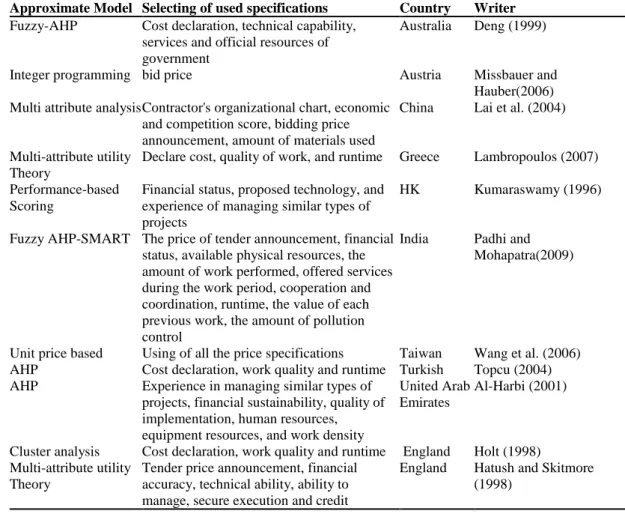
Deng (1999) and Padhi and Mohapatra (2009) used Fuzzy AHP and Fuzzy AHP-SMART and Al-Harbi (2001) and Topcu (2004) techniques and AHP technique to award contractors. These techniques can also evaluate the scores that were assessed by the group. Contractors are mentally evaluated by decision making using the hourly scale which then converts these points into numbers, in this there is the possibility of comparing two to two in terms of specifications and also to contractors (Hour, 1980). However, this technique cannot be safely used as a tool for evaluating
the superiority of contractors. The fuzzy that is used in AHP fuzzy scale has overcome this problem by placing the range on this scale that are determined by experts. Anyway, AHP, Fuzzy AHP, Fuzzy AHP-SMART have the problem of no rating existence. Such a problem occurs when the relevant categories of contractors are changed whenever one or more contractors are removed or added (Wang, 2008). Hatush and Skitmore (1998) and Lambropoulos (2007) used the multi-index utility theory technique to scorecard contractors. In essence, they combined the main advantages of simple scoring methods with optimization models. In addition, in situations where satisfaction is doubtful, the utility functions of this property have the advantage that expected utility can be used as a guide for rational decision making. All decisions include choosing one among several options. For instance, each option is evaluated for determining the degree of utility in relation to a number of scoring criteria. What measures the values of the criteria with the degree of utility is the utility function. In this technique, the contractor's score is determined by the comparison of the optimal value of each characteristic (determined by the government) with the actual values of the contractor's performance. In this technique, the contractor's score is determined by the comparison of the optimal value of each characteristic (determined by the government) with the actual values of the contractor's performance. However, it cannot handle and manage the Fuzzy model data and cannot function properly for group decision problems (Sawalhi et al., 2007). Lee and colleagues used a multi-criteria analysis technique to award contractors. A simple scoring technique that evaluates contractors on a descriptive scale can be a reliable measure of decision making. But at the same time, there is no uniformity in the decision making about the characteristics, and in addition, Lia and colleagues did not consider the specifications that have a numerical nature (Lai KK Liu., 2004). Kumarasawami used a performance-based scoring technique and aggregate individual privileges for the final score for each contactor. This technique is easy to use, but it depends on the decisions of the experts. Additionally, this technique cannot match specifications by measuring non-similar scales. This technique is also unable to determine the weight of the specifications (Kumarasawami, 1996).
Huber and Misser used the single-objective method (bidding price) and the integrated planning model for contractor selection. However, they did not consider other
important non-financial features such as quality, runtime, physical resources, and prior contractor performance (Huber and Maser, 2006).
Wang and colleagues chose the selection method based on the unit price to select features to convert into a single view. However, it is difficult to determine the various characteristics of the price (Wang, 2006).
Table 2.1: Models Used To Select a Contactor
Writer Country
Selecting of used specifications Approximate Model
Deng (1999) Australia
Cost declaration, technical capability, services and official resources of government Fuzzy-AHP Missbauer and Hauber(2006) Austria bid price Integer programming Lai et al. (2004) China
Contractor's organizational chart, economic and competition score, bidding price announcement, amount of materials used Multi attribute analysis
Lambropoulos (2007) Greece
Declare cost, quality of work, and runtime Multi-attribute utility
Theory
Kumaraswamy (1996) HK
Financial status, proposed technology, and experience of managing similar types of projects Performance-based Scoring Padhi and Mohapatra(2009) India
The price of tender announcement, financial status, available physical resources, the amount of work performed, offered services during the work period, cooperation and coordination, runtime, the value of each previous work, the amount of pollution control
Fuzzy AHP-SMART
Wang et al. (2006) Taiwan
Using of all the price specifications Unit price based
Topcu (2004) Turkish
Cost declaration, work quality and runtime AHP
Al-Harbi (2001) United Arab
Emirates Experience in managing similar types of
projects, financial sustainability, quality of implementation, human resources, equipment resources, and work density AHP
Holt (1998) England
Cost declaration, work quality and runtime Cluster analysis
Hatush and Skitmore (1998)
England Tender price announcement, financial
accuracy, technical ability, ability to manage, secure execution and credit Multi-attribute utility
Theory
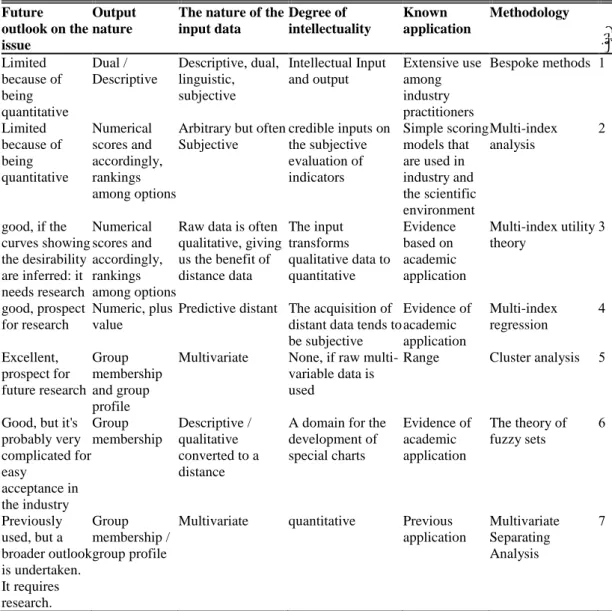
Gary Halt in 1988 in an article entitled “Which method to choose a contractor?” collects the studies conducted in this field so far. In his article, he analyzes the methods used in selecting contractors. Because of the importance of these methods, the results of the Halt studies are described here. These methods in a general category are: BASPOCK Approach (BA), Multi- Attribute Analysis (MAA) Multi- Attribute Utility Theory (MAUT) Multiple Regression (MR) Cluster Analysis (CA) Fuzzy Set Theory (FST) and Multivariate Separation Analysis (MDA) are briefly outlined in order to clarify the subject matter and characteristics of each one, and the differences are presented in the form of a table.
Besspock Approaches (BA)
• Multi-Attribute Analysis (MAA)
• Multi-Attribute Utility Theory (MAUT) Multiple regressions (MR)
• Cluster Analysis (CA) • Fuzzy set theory (FST)
• Multivariate Separating Analysis (MAD)
Table 2.2: Specification of Contractor Selection Methodologies Future
outlook on the issue
Output nature
The nature of the input data Degree of intellectuality Known application Methodology ف ید ر Limited because of being quantitative Dual / Descriptive Descriptive, dual, linguistic, subjective Intellectual Input and output Extensive use among industry practitioners Bespoke methods 1 Limited because of being quantitative Numerical scores and accordingly, rankings among options
Arbitrary but often Subjective credible inputs on the subjective evaluation of indicators Simple scoring models that are used in industry and the scientific environment Multi-index analysis 2 good, if the curves showing the desirability are inferred: it needs research Numerical scores and accordingly, rankings among options
Raw data is often qualitative, giving us the benefit of distance data The input transforms qualitative data to quantitative Evidence based on academic application Multi-index utility theory 3 good, prospect for research Numeric, plus value
Predictive distant The acquisition of distant data tends to be subjective Evidence of academic application Multi-index regression 4 Excellent, prospect for future research Group membership and group profile
Multivariate None, if raw multi-variable data is used
Range Cluster analysis 5
Good, but it's probably very complicated for easy acceptance in the industry Group membership Descriptive / qualitative converted to a distance
A domain for the development of special charts Evidence of academic application The theory of fuzzy sets 6 Previously used, but a broader outlook is undertaken. It requires research. Group membership / group profile
Multivariate quantitative Previous application Multivariate Separating Analysis 7 Source: Holt, 1996
2.7 Preliminary Evaluation Models for Contractors
An initial assessment of contractors is a preliminary step in the process of contractor selection, in which contractors are evaluated based on a set of criteria and indicators. In fact, an initial assessment is a critical step, which results the classification and refinement of contractor companies. Based on the preliminary assessment, a suitable contractor can be selected according to criteria such as "workload" and "bid price". Also, in order to provide a one-stop model for contractor selection, we can use the models and criteria of preliminary evaluation of contractors. Preliminary evaluation models of contractors in many cases have similarities with contractor selection models. In other words, the study of the characteristics, capabilities and characteristics of contractors in the financial, technical, functional, organizational and etc. and classification of them are located in the domain and scope of the initial assessment models of contractors and on the other hand, the relevance of the conducted research carried out in this field to the issue of contractor selection as well as the extent of these studies, requires the evaluation of the preliminary evaluation models of contractors to provide a practical and reliable model for contractor selection in terms of scientific and research. Therefore, in this section, the initial evaluation models of contractors are described briefly, and the advantages and disadvantages of each one are explained and then examined in the procedures section and the contractor selection models.
An initial assessment of contractors is an important step in the project's [successful] implementation. An initial assessment is the result of contractor's screening process. The selection of an appropriate contractor gives the employer the confidence that the selected contractor can accomplish the objectives of the project. The preliminary assessment issues distinct from many multi-index issues, when the decision maker may need to provide uncertain, incomplete or non-accurate estimates due to lack of information, time lag, or weaknesses in expertise. In order to search for the most up-to-date model, a summary and critical overview of the models that have the highest rate of publication for the preliminary evaluation of the contractors have been presented. Some of these models are linear, while others are not. Some gadgets have both quantitative and qualitative data.
The initial assessment process for contractors involves setting up a standard relationship to measure and evaluate the potential of participants in the bidding process. Several experts have formulated a preliminary assessment model for contractors. One of the approaches to qualitative evaluation is statistical models. Other models that allow multiple categories, such as Appraisal and Appraisal (PERT), are also being explored for preliminary evaluation of contractors. The combination of statistical models and multiple categorization provides advances in relation to linear species. Multi-index utility theory, fuzzy sets, case-based arguments, and knowledge-based expert system models have been adopted by many researchers to support the employer in terms of non-linearity, uncertainty and inaccuracy. Lam and colleagues suggested the use of artificial neural networks as a nonlinear model. Furthermore, Lam and colleagues proposed fuzzy neural network models (FNNs) for preliminary evaluation of contractors. Another approach provided by Mehdi and partners and Tapco is using AHP (Process Analytical Hierarchy Process) (AHP) methods to select contractors. Pong Peng and Listeron have used a combination of the utility function and social welfare function to evaluate the ability of contractors during the review of proposals. Recently, Wang and colleagues have used a multivariate diagnostic method to improve and develop a model for ranking contractors for specific project criteria. Russell and Skiniosky presented dimensional weight aggregation model (DWA). Dimensional weighing aggregation model makes it possible to determine the decision-makers characteristics of each decision criterion and relative weight of its significance. The decision maker can then classify the contractors according to the decision criteria.
Russell and Skinsky developed a computer program called "Descriptor-1" to help decision makers to easily find the initial evaluation data. This program is based on the aggregated weighting for each contractor, which is obtained by ranking inputs for each decision criterion. Russell and colleagues described "Descriptor-2" as an attempt to overcome the "descriptor-1" defects. Descriptor-2 is a knowledge-based system in which the decision to make a preliminary assessment through the modeling of rules the user's decision is taken and not the calculated scores.
Holt and colleagues introduced a quantitative method for selecting a contractor, which uses multi-factor analysis (MAA) and utility theory (UT). Hatush and Skitmore recommended the application of a PERT evaluation methodology to
measure the criteria for the initial assessment of contractors against the employer's goals in terms of time, cost, and quality. The PERT approach is used to create a linear model for estimating contractor data.
Several studies have been used in the field of preliminary assessment of contractors and contractor selection, the Analytical Hierarchy Process (AHP). Nydick and Hill define AHP as "a methodology for the action-oriented ranking of alternating courses based on decision-maker judgments about the importance of criteria and the values they obtain in one option." Monaev has considered the AHP for contractor selection methods. This model combines the initial evaluation criteria of contractors with the proposed price as one of the criteria for the decision in order to achieve the best concession proposal. Nanwein has constructed a model for the preliminary evaluation of contractors by using the same fuzzy sets. This model meets the uncertainty involved in the preliminary evaluation system. NG introduced a Case-Based Argument Model (CBR) for introductory evaluation. Case-based argument is an artificial intelligence technology that solves new issues by adapting solutions that are used to solve past issues. Taha and Khosroshahi, Lam and colleagues suggested the application of neural network models for preliminary evaluation of contractors. Lam and colleagues also suggested the use of fuzzy models of the neural network for the same purpose. A model that offers the best results should be able to adapt to the specific characteristics of the preliminary assessment problem. Important details of the preliminary assessment are:
• Preliminary evaluation is a multi-criteria issue. The hypothesized model should perform the analysis of the criteria on a symmetric basis. Preliminary assessment includes the risk of crowded and unknown data provided by different contractors.
• A preliminary assessment of the risks is taken from different opinions of the decision-makers.
• An initial assessment includes mental judgments of decision makers.
• Preliminary evaluation includes nonlinear relationships between the contractor's indices and their corresponding preliminary assessment decisions.
• The model should be able to match the results with a sequence of correlated changes among different contractors.
• The ability to process qualitative data should also be as good as quantitative data (Sawalhi et al., 2007).
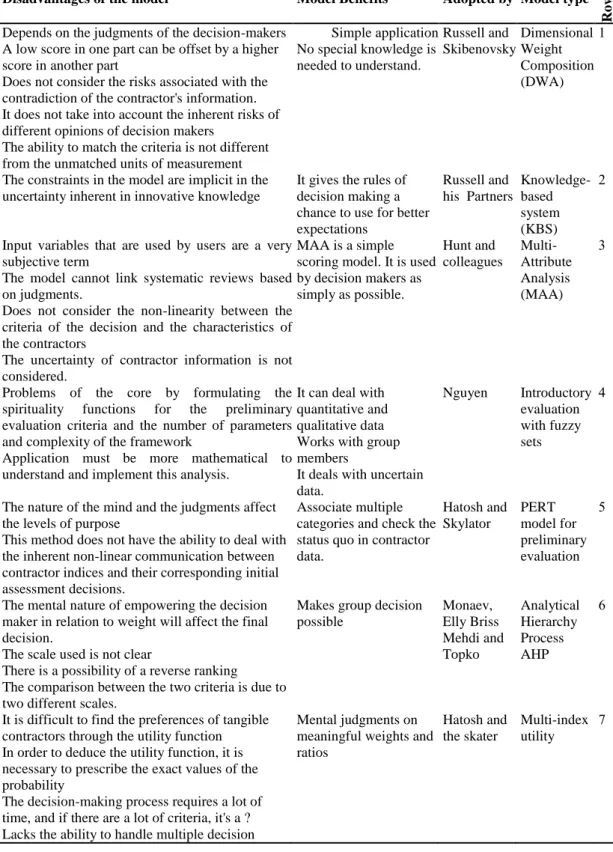
A comprehensive overview of the advantages and disadvantages of these models is presented in Table 2.3.
Table 2.3: Preliminary Assessment Models for Contractors
Disadvantages of the model Model Benefits Adopted by Model type
Ro
w
Depends on the judgments of the decision-makers A low score in one part can be offset by a higher score in another part
Does not consider the risks associated with the contradiction of the contractor's information. It does not take into account the inherent risks of different opinions of decision makers
The ability to match the criteria is not different from the unmatched units of measurement
Simple application No special knowledge is needed to understand. Russell and Skibenovsky Dimensional Weight Composition (DWA) 1
The constraints in the model are implicit in the uncertainty inherent in innovative knowledge
It gives the rules of decision making a chance to use for better expectations Russell and his Partners Knowledge-based system (KBS) 2
Input variables that are used by users are a very subjective term
The model cannot link systematic reviews based on judgments.
Does not consider the non-linearity between the criteria of the decision and the characteristics of the contractors
The uncertainty of contractor information is not considered.
MAA is a simple scoring model. It is used by decision makers as simply as possible. Hunt and colleagues Multi-Attribute Analysis (MAA) 3
Problems of the core by formulating the spirituality functions for the preliminary evaluation criteria and the number of parameters and complexity of the framework
Application must be more mathematical to understand and implement this analysis.
It can deal with quantitative and qualitative data Works with group members
It deals with uncertain data. Nguyen Introductory evaluation with fuzzy sets 4
The nature of the mind and the judgments affect the levels of purpose
This method does not have the ability to deal with the inherent non-linear communication between contractor indices and their corresponding initial assessment decisions.
Associate multiple categories and check the status quo in contractor data. Hatosh and Skylator PERT model for preliminary evaluation 5
The mental nature of empowering the decision maker in relation to weight will affect the final decision.
The scale used is not clear
There is a possibility of a reverse ranking The comparison between the two criteria is due to two different scales.
Makes group decision possible Monaev, Elly Briss Mehdi and Topko Analytical Hierarchy Process AHP 6
It is difficult to find the preferences of tangible contractors through the utility function In order to deduce the utility function, it is necessary to prescribe the exact values of the probability
The decision-making process requires a lot of time, and if there are a lot of criteria, it's a ? Lacks the ability to handle multiple decision
Mental judgments on meaningful weights and ratios Hatosh and the skater Multi-index utility 7
makers simultaneously.
The model requires entering a large number of items at the time of initial setup, which may be difficult in practice.
In systems where there is no similar and approximate solution, the system will provide an inverse solution.
This system is not an adaptive system to has the ability to learn and make new solutions.
A simple application solution can be provided when awareness of the system is weak for the preliminary assessment. The solutions obtained from the above can be modified and adapted to conform to the current position through the conformance functions embedded in the system.
NG Case-based argument
8
For the Neural Network model, it is difficult to provide an explanation of why a qualified contractor was qualified or not.
The nervous system has often been criticized for demonstrating a low degree of perceptual ability. The neural network model suffers from difficulties in acquiring training couples for private employer projects.
Neural networks require a large amount of past data to train.
Self-adapted data-driven methods, in which there are few precedents for assumptions about the models of the underlying study. There is no need to know about statistical distribution of data. Apart from the internal structure of the neural networks, the divergence of data is implicitly computed. It is suitable for analyzing nonlinear relationships among output variables. The results of neural networks can be generalized.It has the ability to perform both calculations and inferences based on a complex combination of quantitative and qualitative data. Uncertainties and inaccuracies are reduced to a minimum. Taha Khosroshahi Lam and prtners Artificial Neural Networks 9 Source: Sawalahi, 2007
2.8 Multi-Criteria Decision Making Techniques
The optimization models from the era of industrial movement in the world, especially since the Second World War, have attracted the attention of mathematicians and industry executives. The main emphasis on classical optimization models is to have a criterion (or a target function), so that the model can be linear, nonlinear, or mixed altogether. But the attention of researchers in recent decades has been focused on multidimensional models (MCDMs) for measuring complex decision making. In this decision-making process, instead of using an optimality measure, several measurement criteria may be used.