Effects of Form of Dietary Trace Mineral Premix on Fertility and
Hatchability of Broiler Breeder Hens and Post-Hatch Performance
and Carcass Parameters of Their Progenies
Seyyednaeim SABER
1,a
Hasan Rustu KUTLU
1,bYusuf UZUN
1,cLadine CELIK
1,dOzcan YUCELT
1,eMikail BAYLAN
1,f1 Çukurova University, Faculty of Agriculture, Department of Animal Science, TR-01330 Adana - TURKEY a ORCID: 0000-0002-9635-7105; b ORCID: 0000-0002-3891-1534; c ORCID: 0000-0002-0493-7787; d ORCID: 0000-0003-3352-9181 e ORCID: 0000-0002-7371-5440; f ORCID: 0000-0002-6299-5811
Article ID: KVFD-2019-22647 Received: 16.05.2019 Accepted: 21.09.2019 Published Online: 21.09.2019
How to Cite This Article
Saber S, Kutlu HR, Uzun Y, Celik L, Yucelt O, Baylan M: Effects of form of dietary trace mineral premix on fertility and hatchability of broiler breeder hens and post-hatch performance and carcass parameters of their progenies. Kafkas Univ Vet Fak Derg, 26 (2): 171-180, 2020.
DOI: 10.9775/kvfd.2019.22647
Abstract
The present study was conducted to investigate the effects of dietary inorganic and/or organic based trace mineral premix in full or half doses in broiler breeders’ diet on hatchability, fertility, post hatch performance, and carcass parameters of broiler progeny. A total of 220 Ross-308, 36 wk-old broiler breeders were divided into 4 dietary treatments (100% inorganic, 50% organic + 50% inorganic, 50% organic, and 100% organic trace mineral premix) with 5 replicates of 10 females and 1 male in each pen having similar body weight and egg production. The results of this experiment showed that inclusion of trace minerals source type in broiler breeders’ diet did not have a significant effect on hatching egg characteristic. The results, however, showed that diets containing full (100%) or half (50%) doses of organic and/or inorganic minerals in broiler breeder hens’ diet have a significant effect on fertility rate (P<0.05). The results also showed that growth performance of offspring was, however, not affected by the trace mineral sources or level used in the maternal diets at the end, while carcass weight and carcass yield were significantly affected. It may be concluded that replacing inorganic based trace mineral premix with half or full dose of organic based trace mineral premix in the broiler breeder hens’ diet could improve hatching performance, growth and carcass performances of their progenies.
Keywords: Broiler breeder hen, Reproduction, Hatchability, Trace minerals, Progeny
Broyler Dişi Damızlık Rasyonlarında Kullanılan İz Mineral Premiksi
Formunun Üreme Performansı, Kuluçka Özellikleri ve Kuluçka Sonrası
Civcivlerde Büyüme Performansı ve Karkas Parametreleri Üzerine Etkileri
ÖzMevcut çalışma, rasyon bileşiminde kullanılan organik ve inorganik iz mineral premikslerinin broyler damızlıklarda döllülük oranı, kuluçka randımanı ve kuluçka sonrası civcivlerde büyüme performansı ve karkas parametreleri üzerine etkisini belirlemek amacıyla yürütülmüştür. Canlı ağırlık, yumurta verimleri benzer olan 36 haftalık yaşta toplam 220 adet Ross-308 broyler damızlık tavuk 4 muamele grubuna %100 inorganik, %50 organik + %50 inorganik, %50 organik ve %100 organik iz mineral premiks) her bir grup, her birinde 10 dişi ve 1 erkek bulunan 5 alt gruptan oluşturulmuştur. Rasyonda organik ve/veya inorganik premikslerin broyler damızlıkların beslenmesinde kullanımının kuluçkalık yumurta kalitesi üzerine önemli etkiye sahip olduğu saptanmıştır. Öte yandan, damızlık tavukların rasyonlarında %100 veya %50 oranında organik ve inorganik kaynaklı minerallerin kullanımının döllülük oranı üzerine olan etkisi önemli (P<0.05) bulunmuştur. Denemeden elde edilen sonuçlara göre dişi ebeveyinleri organik ve/veya inorganik iz mineral kaynakları ile beslenen civcivlerin performanslarının benzer; ancak rasyon organik iz mineral kaynağının civcivlerin karkas ağırlığı ve karkas randımanı üzerinde etkisinin olumlu olduğu saptanmıştır. Sonuç olarak broyler damızlık tavuk rasyonlarında inorganik iz mineral yerine %100 veya %50 organik iz mineral premiksi kullanımının broyler damızlıklarda kuluçka randımanı ve civcivlerinde büyüme performansı ve karkas verimini iyileştirdiği gözlenmiştir.
Anahtar sözcükler: Broyler dişi damızlık, Üreme, Kuluçka Randımanı, İz Mineral, Civciv
INTRODUCTION
Producing fertile eggs for gaining the highest hatchability is one of the important needs of having profitable chicken
breeding. In poultry, many factors such as parents and environment may influence on production of egg characteristics [1] and its fertility [2]. In poultry, diets trace minerals are essential as they play important roles on
İletişim (Correspondence)
+90 531 3296266male and female breeders’ reproduction performance, bio-chemical processes required and embryo development [3-5]. It has been reported that good nutritional condition of the parents is vital for transferring of required nutrients for development of the embryo [6,7]. Some important inter-relationships between several micronutrients and other nutrients have been reported and these interrelationships may affect the reproduction and production of hens, especially during the last period of production [8]. Zinc is one of the most important essential trace minerals for the growth, immune system function, reproduction, biochemical processes, and also is a cofactor for many metalloenzymes. During embryogenesis, zinc is reported to be a very important nutrient for embryo as utilizing of zinc during 11th to 17th days decreases from 0.99 mg to 0.01 [9]. Source of this mineral could also be an important factor as the inclusion of organic zinc (80 ppm zinc-methionine) in broiler breeders’ diet improves cellular immune response [10]. It was reported that Cu has an influence on 17 beta-estradiol and enzymes involved in carbohydrate, lipid, and amino acid metabolism in mature laying hens [11]. Replacements of 30% inorganic sources of Zn, Mn, and Cu with organic sources of this micro-element in broiler breeders’ diet have been reported to improve humoral immune responses [12] and gastro intestinal development of their offspring’s [13]. It has also been reported that supplementation of broiler breeder hen’s diets with simultaneous inorganic and organic forms of Zn, Mn, and Cu had significant effects on egg shell quality, embryo mortality, some bone mineralization parameters, tibia calcification, and thickness [14,15]. Iron (Fe) is also known an essential trace mineral for all living organisms, and it is required for several metabolic processes, including oxygen and electron transport as well as DNA synthesis [16]. Selenium is normally provided in the diet in the form of inorganic sodium selenite. An organic form can be provided, which is selenium-enriched yeast. Yeast, like plants, form selenoamino acids and other organic selenocompounds that exist in very reduced form in comparison to the highly oxidized inorganic selenium forms (selenite and selenate). The protective effects of organic selenium are reported to be especially apparent during the highly oxidative state of late incubation and the first few days after hatch [17,18]. Although some advantages have been obtained in recent years, inclusion of organic-based trace minerals in poultry diets could not be a common practice as they are expensive. It has been speculated that as the digestibility and bio-availability of organic based trace minerals are high, half dose of inorganic sources could be used in the premixes and then the cost could be reduced. The present experiment was conducted to determine if dietary inorganic vs. organic based trace mineral premix used in half (50%) or full (100%) or doses would affect fertility and hatching performance of broiler breeder hens and post-hatch performance and carcass parameters of their progenies.
MATERIAL and METHODS
The present study was carried out in the Broiler Unit of Experimental Farm of the Department of Animal Science, Faculty of Agriculture, University of Cukurova-Turkey. All the protocols used in this experiment were approved by the Animal Experiments Local Ethics Committee of Cukurova University, Adana-Turkey.
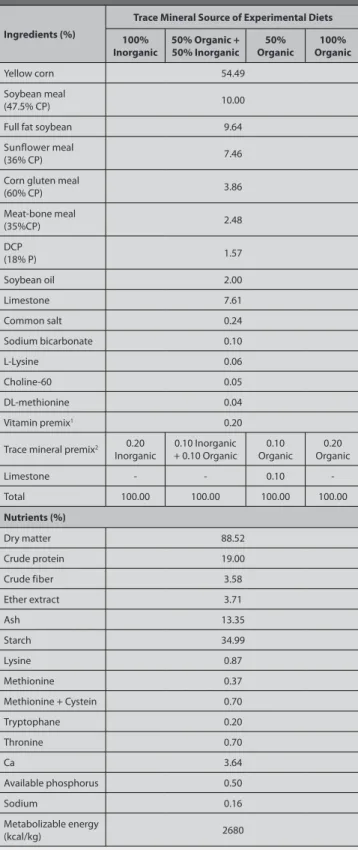
General Experimental Procedure and Trial Groups In this experiment, two hundred and twenty, aging 36 weeks Ross-308 broiler breeders (200 female + 20 male) were used for 10 weeks. During pre-feeding period (36th to 39th weeks), all broiler breeder hens (Table 1) or cocks (Table 2) were fed with standard breeder hen’s or cock’s diets based on corn and soybean which were formulated according to the recommendation of Ross Breeding Company [19].
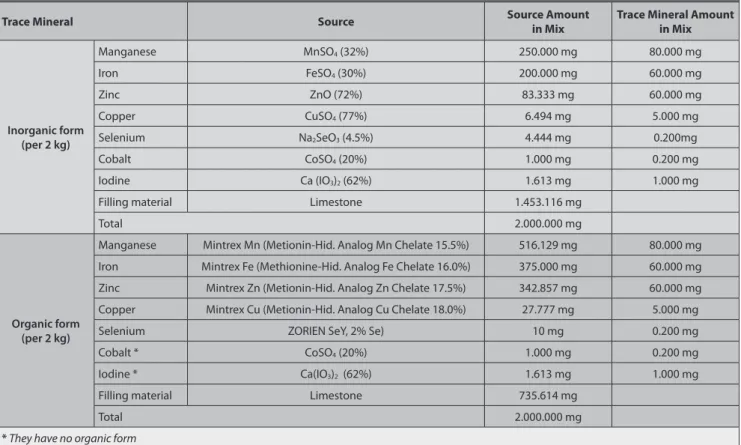
All birds after pre-feeding period were divided into four treatment groups according to mean body weight and mean egg production in a complete randomized design. The treatment groups were differ in dietary trace mineral premixes (A: 100% inorganic, B: 50% organic + 50% inorganic, C: 50% organic, and D: 100% organic) with five replicate pens. The contents of organic and inorganic trace minerals in premixes were shown in Table 3.
The birds were accomodated in 20 pens, each (2×1.5×2 m) included ten females and one male, wood shaving litter (7-8 cm height), female tubular feeder, one individual male feeder, and nipple drinkers. A 16:8 light:dark photoperiod program was applied and feeds were given to breeders (female: 163 g/day, male: 130 g/day) according to the recommendation of Ross Breeding Company [19] with ad libitum access to drinking water. During the experiment, environmental temperature (18-22°C) and humidity (55-60% RH) were maintained within the animal comfort zone using foggers and tunnel ventilation. Throughout the experiment, males’ mating performances were watched every day. The male with low mating performance was replaced with a spare one.
Fertility and Hatching Performance
At the 43th week of age, eggs were checked and collected for fertility test (with bright light) to understand male broiler breeders reproduction performance before incubation. Hatching performance of the eggs obtained from the birds was examined at the end of 21 day incubation. For this purpose, at 44th and 45th weeks of age all eggs were selected (removing double yolk eggs, dirty eggs, thin shell eggs, broke eggs, and crack eggs) and stored in a cool room (12°C with 70% RH) until obtaining 700 eggs (35 for each replicate) The eggs were incubated in a single stage incubator (Cimuka Inc., Ankara, Turkey) at 37.2°C and a 10 RH of 55%) according to McQuoid [20]. At the end of 21st day
incubation, all hatched broilers were carefully taken from the pouches and weighted by a digital scale with 0.01g sensitivity. After weighting, the chicks were sexed by wing feathers according to Ross [21] recommendation. Eggs that
did not hatch were then broken to determine embryo diagnosis for classification of eggs as infertile or dead embryos. A visual estimation of the age at death stage was carefully performed and embryonic mortality was separated as early (1 to 7 days), intermediate (8 to 14 days) or late (15 to 21 days) dead in shell [22]. The percentage of hatching chicks considered improper for placement as well as pips were calculated. The difference between total eggs set and infertile eggs allowed the calculation of present hatchability of fertile eggs. So, fertility rate (%), total hatchability (%), and hatchability of fertile eggs (%) were calculated [23] as given below;
Fertility rate (%) = (No of fertile eggs/No of eggs placed in hatchery) ×100
Total hatchability (%) = (No of chicks hatched/No of eggs placed in hatchery) × 100
Hatchability of fertile eggs (%) = (No of chicks hatched/No of fertile eggs placed in hatchery) × 100
Growth Performance of Progeny
At the end of the incubation, all chicks obtained from the eggs were carefully taken and divided into 20 pens by name of the maternal group/subgroup number to follow on the same axis to maternal to its chicks. Each treatment group had five pens sized 2×3 m that were equipped with a tube feeder, an automatic water-bowl on litter, and wood shaving litter with 7-8 cm height. During the experiment, all chicks were fed with starter (0-10 days of age), grower
Table 1. Ingredient and nutrient compositions of the experimental diets given broiler
breeder hens
Ingredients (%)
Trace Mineral Source of Experimental Diets 100%
Inorganic 50% Organic + 50% Inorganic Organic50% Organic100%
Yellow corn 54.49
Soybean meal
(47.5% CP) 10.00
Full fat soybean 9.64
Sunflower meal
(36% CP) 7.46
Corn gluten meal
(60% CP) 3.86 Meat-bone meal (35%CP) 2.48 DCP (18% P) 1.57 Soybean oil 2.00 Limestone 7.61 Common salt 0.24 Sodium bicarbonate 0.10 L-Lysine 0.06 Choline-60 0.05 DL-methionine 0.04 Vitamin premix1 0.20
Trace mineral premix2 0.20
Inorganic + 0.10 Organic0.10 Inorganic Organic0.10 Organic0.20
Limestone - - 0.10 -Total 100.00 100.00 100.00 100.00 Nutrients (%) Dry matter 88.52 Crude protein 19.00 Crude fiber 3.58 Ether extract 3.71 Ash 13.35 Starch 34.99 Lysine 0.87 Methionine 0.37 Methionine + Cystein 0.70 Tryptophane 0.20 Thronine 0.70 Ca 3.64 Available phosphorus 0.50 Sodium 0.16 Metabolizable energy (kcal/kg) 2680
1 Vitamin premix (per 2 kg of diets) 15.000.000 IU Vit. A, 5.000.000 IU Vit. D3, 100.000 mg
Vit. E, 3.000 mg Vit. K3, 3.000 mg Vit. B1, 8.000 mg Vit. B2, 60.000 mg Niasin, 15.000 mg
Ca-D-Pantotenat, 5.000 mg Vit. B6, 20 mg Vit. B12, 2.000 mg Folic Acid, 200 mg D-Biotin,
100.000 mg Vit. C; 2 see Table 3
Table 2. Ingredient and nutrient compositions of the experimental diets given
broiler breeder cocks
Ingredients (%) Nutrients (%)
Yellow corn 62.44 Dry matter 86.89
Wheat middling 23.76 Crude protein 12
Sunflower meal-36 10.79 Crude fiber 5.96
Limestone (Grn) 1.18 Ether extract 3.30
DCP-18 0.70 Ash 4.80
Sodium bicarbonate 0.22 Starch 45.58
Salt 0.22 Ca 0.70
Carboxylic acid (Salkil) 0.20 TOT-P 0.63
L-Lysine 0.13 Na 0.16 Vitamin premix1 0.10 Metabolizable Energy (kcal/kg) 2750 Mineral premix2 0.10 DL-methionine 0.06 Choline-60 0.05 Availa Se 1000 (Zinc-L-selenomethionine) 0.05 Total 100
1 Vitamin premix (per 2 kg of diet): Vit. A, 16.000 IU; Vit. D
3, 3.000 IU; Vit. E, 40
IU; Vit. K3, 2.5 mg; Vit. B1, 2.5 mg; Vit. B2, 10 mg; Nicotinamide, 50 mg; Calcium
D-pantothenate, 15 mg; Vit. B6, 6.25 mg; Vit. B12, 0.035 mg; Folic acid, 15 mg;
D-biotin, 0.045 mg; Choline chloride, 150 mg; 2 Mineral premix (mg/kg of diet):
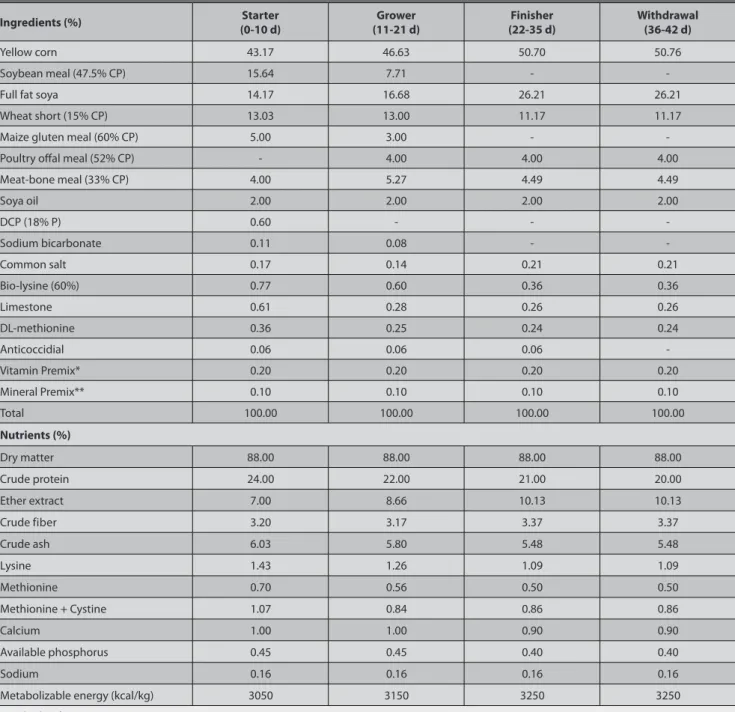
(11-21 days of age), finisher (22-35 days of age), and with-drawal (36-42 days of age) diets (Table 4) that they were formulated by Ross [21] recommendation.
During the experiment (42 days) all chicks were fed ad libitum under 23:1 light: dark photoperiod. Environmental temperature in animal house was controlled by heating and tunnel ventilation system starting from 33°C in the first week and gradually decreased by 3°C per week until the fourth week then it fluctuated between 22-24°C. During the experiment, live weight, feed intake, and feed efficiency were recorded weekly.
Carcass Parameters of Progeny
In order to determine the carcass weight, abdominal fat and carcass yield, at 42nd day of age all chicks were weighted and 6 chicks (3 males + 3 females) from each subgroup were selected according to the average body weight and then slaughtered.
Statistical Analysis
The data obtained in the study were analyzed using GLM (General Linear Model) procedure of the Statistical Analysis System [24] to obtain the effect of trace mineral source. Duncan’s New Multiple Range Test in SAS was used to identify significant differences among treatments means [24]. Results obtained in this study were presented as means per bird with standard errors of the difference between means [SED; √(S^2/n)] with P values, except for feed intake of
breeders as feeds were given to the them in equal amounts according to the recommendation of the Breeding Company [19].
RESULTS
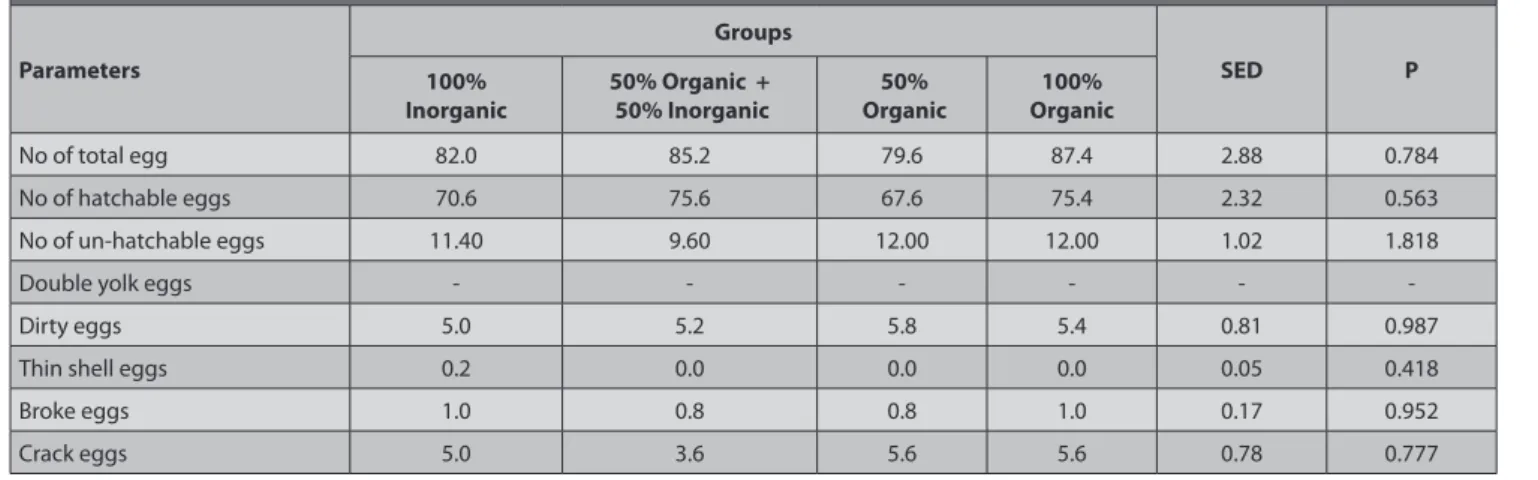
Effects of dietary trace mineral sources on number of hatchable eggs in broiler breeders were given in Table 5. The results showed that source or dose of dietary trace minerals did not have any significant effects on number of hatchable eggs (P>0.05). But use of organic based trace minerals in broiler breeder hens’ diet numerically increased number of hatchable eggs.
Results related fertility and hatching performance of broiler breeder hens were given in Table 6.
The data obtained from this experiment revealed that the inclusion of trace minerals in broiler breeders’ diet have significant effects on some hatching performance such as number of fertile eggs, fertility rate, and offspring (female) livability (P<0.05). But inclusion of organic and inorganic trace minerals did have no significant effects on embryonic mortality, number of chicks hatched alive, chicks’ weight at hatching, post-hatch mortality, hatchability of fertile eggs, total hatchability, and offspring (male) livability (P>0.05). In broiler breeders, some of hatching performance such as embryonic mortality in late stage, number of chicks hatched alive, hatchability of fertile eggs, post-hatch mortality, total hatchability and offspring (male) livability
Table 3. Sources and contents of trace mineral premixes in organic or inorganic forms used in the experiment
Trace Mineral Source Source Amount in Mix Trace Mineral Amount in Mix
Inorganic form (per 2 kg) Manganese MnSO4 (32%) 250.000 mg 80.000 mg Iron FeSO4 (30%) 200.000 mg 60.000 mg Zinc ZnO (72%) 83.333 mg 60.000 mg Copper CuSO4 (77%) 6.494 mg 5.000 mg Selenium Na2SeO3 (4.5%) 4.444 mg 0.200mg Cobalt CoSO4 (20%) 1.000 mg 0.200 mg Iodine Ca (IO3)2 (62%) 1.613 mg 1.000 mg
Filling material Limestone 1.453.116 mg
Total 2.000.000 mg
Organic form (per 2 kg)
Manganese Mintrex Mn (Metionin-Hid. Analog Mn Chelate 15.5%) 516.129 mg 80.000 mg
Iron Mintrex Fe (Methionine-Hid. Analog Fe Chelate 16.0%) 375.000 mg 60.000 mg
Zinc Mintrex Zn (Metionin-Hid. Analog Zn Chelate 17.5%) 342.857 mg 60.000 mg
Copper Mintrex Cu (Metionin-Hid. Analog Cu Chelate 18.0%) 27.777 mg 5.000 mg
Selenium ZORIEN SeY, 2% Se) 10 mg 0.200 mg
Cobalt * CoSO4 (20%) 1.000 mg 0.200 mg
Iodine * Ca(IO3)2 (62%) 1.613 mg 1.000 mg
Filling material Limestone 735.614 mg
Total 2.000.000 mg
were numerically improved in the groups received diets containing organic based trace minerals. According to Table 5, the number of fertile eggs, fertility rate, total hatchability, hatchability of fertile eggs, and livability of broiler seemed to be higher in groups which received diets containing organic-based trace minerals than the groups which received 100% inorganic-based trace minerals. Table 7 summarizes the impacts of dietary organic and inorganic trace minerals used in maternal diet on progeny performance.
The results indicated that source of trace mineral used
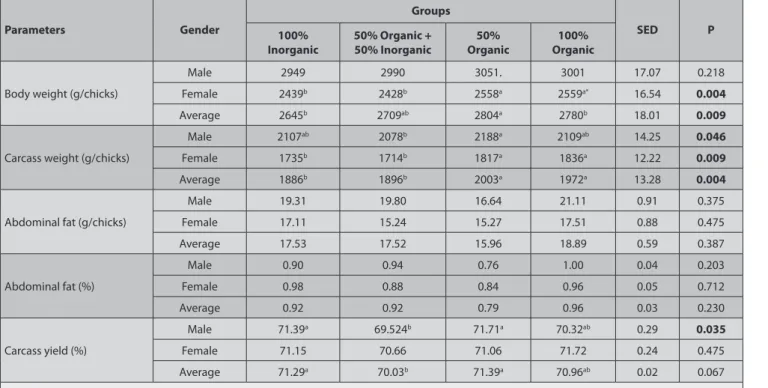
in maternal diet did not have a significant effect on feed intake, feed conversion ratio, male livability, and male body mass of offspring (P>0.05). However, it was seen that source or amount of trace minerals in their female parents’ diets had a significant effect on progenies’ body weight at 21th days of age (P<0.05), while it was disappeared at the 42th days of age. The results also showed that inclusion of organic and inorganic trace minerals in broiler breeders’ diet have significant effects on female livability, female body mass, and average body mass in offspring (P<0.05). Table 8 illustrates the data obtained from carcass parameters of offspring. The results indicated that the inclusion of
Table 4. Ingredient and nutritional compositions of broiler chicks’ diets
Ingredients (%) (0-10 d)Starter (11-21 d)Grower (22-35 d)Finisher Withdrawal(36-42 d)
Yellow corn 43.17 46.63 50.70 50.76
Soybean meal (47.5% CP) 15.64 7.71 -
-Full fat soya 14.17 16.68 26.21 26.21
Wheat short (15% CP) 13.03 13.00 11.17 11.17
Maize gluten meal (60% CP) 5.00 3.00 -
-Poultry offal meal (52% CP) - 4.00 4.00 4.00
Meat-bone meal (33% CP) 4.00 5.27 4.49 4.49 Soya oil 2.00 2.00 2.00 2.00 DCP (18% P) 0.60 - - -Sodium bicarbonate 0.11 0.08 - -Common salt 0.17 0.14 0.21 0.21 Bio-lysine (60%) 0.77 0.60 0.36 0.36 Limestone 0.61 0.28 0.26 0.26 DL-methionine 0.36 0.25 0.24 0.24 Anticoccidial 0.06 0.06 0.06 -Vitamin Premix* 0.20 0.20 0.20 0.20 Mineral Premix** 0.10 0.10 0.10 0.10 Total 100.00 100.00 100.00 100.00 Nutrients (%) Dry matter 88.00 88.00 88.00 88.00 Crude protein 24.00 22.00 21.00 20.00 Ether extract 7.00 8.66 10.13 10.13 Crude fiber 3.20 3.17 3.37 3.37 Crude ash 6.03 5.80 5.48 5.48 Lysine 1.43 1.26 1.09 1.09 Methionine 0.70 0.56 0.50 0.50 Methionine + Cystine 1.07 0.84 0.86 0.86 Calcium 1.00 1.00 0.90 0.90 Available phosphorus 0.45 0.45 0.40 0.40 Sodium 0.16 0.16 0.16 0.16
Metabolizable energy (kcal/kg) 3050 3150 3250 3250
* Each 2 kg of vitamin premix contains 15.500.000 IU Vit. A, 5.000.000 IU Vit. D3, 100.000 mg Vit. E, 3.000 mg Vit. K3, 3.000 mg Vit. B1, 8.000 mg Vit. B2, 60.000 mg Niacin,
15.000 mg Ca-D-Pantotenate, 5.000 mg Vit. B6, 20 mg Vit. B12, 2.000 mg Folic acid, 200 mg D-biotin, 100.000 mg Vit. C; ** Each kg of inorganic trace mineral premix
different forms and levels of trace minerals in maternal’ diet had a significant effect on offspring carcass weight, and carcass yield (P<0.05) without a significant effect on abdominal fat (P>0.05).
DISCUSSION
It is well known that fulfilment of dietary trace mineral needs of poultry is very important to maintain production and product quality. Trace minerals such as iron, manganese, zinc, copper and selenium play many significant roles as enzyme cofactors and as constituents of metalloenzymes, either individually or in combination, in supporting growth, production and maintenance of the structural integrity of tissues. As the efficacy of the use of microelements is an important issue in modern poultry nutrition, various
studies on sources and their bioavailability of trace minerals have been under investigation [25]. The availability of minerals from feed materials of plant origin, as well as from traditional inorganic sources, i.e., oxides, sulphates, or carbonates, is relatively low, while the requirements of modern, high-producing lines of laying hens and broiler chickens for microelements are very high. These facts, along with advanced knowledge of the importance of micro- elements in immunological processes and reproduction and the variable content of trace minerals in feed materials, has lead, in commercial practice, to their being added to poultry diets in high amounts, with a large safety margin, often exceeding the birds’ requirements [26], leading to soil and water pollution through excrete. In recent years, use of organic based trace minerals in poultry could be of value in terms of fulfilment of trace mineral needs of farm
Table 5. The effect of maternal dietary trace minerals on hatching egg characteristic (Number/group/2 weeks)
Parameters
Groups
SED P
100%
Inorganic 50% Organic + 50% Inorganic Organic 50% Organic100%
No of total egg 82.0 85.2 79.6 87.4 2.88 0.784
No of hatchable eggs 70.6 75.6 67.6 75.4 2.32 0.563
No of un-hatchable eggs 11.40 9.60 12.00 12.00 1.02 1.818
Double yolk eggs - - -
-Dirty eggs 5.0 5.2 5.8 5.4 0.81 0.987
Thin shell eggs 0.2 0.0 0.0 0.0 0.05 0.418
Broke eggs 1.0 0.8 0.8 1.0 0.17 0.952
Crack eggs 5.0 3.6 5.6 5.6 0.78 0.777
Table 6. Effect of maternal dietary trace minerals on hatching performance in broiler breeders
Parameters
Groups 100%
Inorganic 50% Inorganic50% Organic + Organic 50% Organic 100% SED P
Number of eggs placed hatchery (no/replication) 39 39 39 39 -
-Number of fertile eggs (number/replication) 33.00b 37.00a 34.60ab 36.00ab 0.48 0.058
Embryonic mortality in early stage 1.66 1.33 1.00 2.00 0.19 0.731
Embryonic mortality in mid stage - - - -
-Embryonic mortality in late stage 3.50 3.00 2.20 2.33 0.32 0.509
Number of chicks hatched alive 26.00 31.00 30.20 30.75 1.31 0.542
Male (number) 11.75 15.40 15.80 15.25 0.94 0.452
Female (number) 14.25 15.60 14.40 15.50 0.79 0.892
Chicks’ weight at hatching (g/chick) 48.71 48.15 47.50 46.91 0.29 0.174
Post-hatch mortality (number) 2.66 2.20 2.00 2.25 0.38 0.962
Fertility rate (%) 84.62b 94.87a 88.71ab 92.30ab 1.24 0.058
Hatchability of fertile eggs (%) 78.21 83.42 87.03 85.17 2.97 0.763
Total hatchability (%) 66.66 79.48 77.43 78.84 3.35 0.542
Offspring - livability - male (%) 82.69 95.00 84.17 100.00 3.00 0.181
Offspring - livability female (%) 96.87a 95.24a 85.41b 96.65a 1.54 0.051
animals while having less pollution and health problems as advised to use almost half as its high bioavalilibility. Recommendation for using organic based (chelated)
trace minerals, containing a central metal atom (acceptor of electrons) together with ligands (i.e., proteins, amino acids, carbohydrates, or lipids), at relatively low levels in
Table 7. The effect of maternal dietary trace minerals on growth performance of offspring
Day Parameters
Groups
SED P
100%
Inorganic 50% Organic +50% Inorganic Organic50% Organic100% 7
Feed intake (g/chicks) 190.9 166.40 192.88 160.91 12.22 0.717
Body weight (g/chicks) 96.54 111.52 102.79 108.10 2.53 0.213
Feed Conversion Rate 1.99 1.52 1.87 1.49 0.12 0.414
14
Feed intake (g/chicks) 508.4 506.52 515.33 518.95 11.98 0.980
Body weight (g/chicks) 383.3 407.93 398.03 404.97 5.17 0.367
Feed Conversion Rate 1.32 1.24 1.28 1.28 0.02 0.684
21
Feed intake (g/chicks) 1193 1187 1230 1291 31.76 0.645
Body weight (g/chicks) 789.1b 831.7ab 837.2ab 866.2a 8.23 0.032
Feed Conversion Rate 1.51 1.42 1.46 1.49 0.03 0.796
28
Feed intake (g/chicks) 2223 2254 2287 2362 49.66 0.781
Body weight (g/chicks) 1402 1332 1315 1371 21.24 0.482
Feed Conversion Rate 1.59 1.69 1.73 1.73 0.04 0.618
35
Feed intake (g/chicks) 3225 3444 3570 3569 63.19 0.214
Body weight (g/chicks) 1940 1969 1973 2046 21.84 0.389
Feed Conversion Rate 1.66 1.74 1.80 1.74 0.03 0.389
42
Feed intake (g/chicks) 4638 4757 4998 4974 69.78 0.238
Body weight (g/chicks) 2614 2645 2709 2764 30.11 0.329
Feed Conversion Rate 1.77 1.80 1.84 1.80 0.02 0.699
a,b Means within a row lacking a common superscript differ significantly (P<0.05)
Table 8. The effect of maternal dietary trace minerals on carcass parameters of offspring at 42 days old
Parameters Gender Groups SED P 100% Inorganic 50% Organic + 50% Inorganic 50% Organic 100% Organic Body weight (g/chicks)
Male 2949 2990 3051. 3001 17.07 0.218
Female 2439b 2428b 2558a 2559a* 16.54 0.004
Average 2645b 2709ab 2804a 2780b 18.01 0.009
Carcass weight (g/chicks)
Male 2107ab 2078b 2188a 2109ab 14.25 0.046
Female 1735b 1714b 1817a 1836a 12.22 0.009
Average 1886b 1896b 2003a 1972a 13.28 0.004
Abdominal fat (g/chicks)
Male 19.31 19.80 16.64 21.11 0.91 0.375 Female 17.11 15.24 15.27 17.51 0.88 0.475 Average 17.53 17.52 15.96 18.89 0.59 0.387 Abdominal fat (%) Male 0.90 0.94 0.76 1.00 0.04 0.203 Female 0.98 0.88 0.84 0.96 0.05 0.712 Average 0.92 0.92 0.79 0.96 0.03 0.230 Carcass yield (%) Male 71.39a 69.524b 71.71a 70.32ab 0.29 0.035 Female 71.15 70.66 71.06 71.72 0.24 0.475 Average 71.29a 70.03b 71.39a 70.96ab 0.02 0.067
poultry diets has become widespread, especially due their ecological and physiological contributions; however there still is not enough experiment [27]. In fact, supplementing hens with highly bioavailable chelated sources of trace minerals would be expected to support not only the quality of eggs from breeder hens, but also hatching rate and progeny quality. The results obtained from the present study showed that replacing inorganic based trace mineral premix with half or full dose of organic based trace mineral premix in the broiler breeder hens’ diet could improve hatching performance, growth and carcass performances of their progenies, as expected. The increments could be attributed to relatively high bioavilability and fulfilment capacity of animal needs for the trace minerals. Zinc is known to be a component of the carbonic anhydrase enzyme, which is crucial for supplying the carbonate ions during eggshell formation [28]; manganese is the metal activator of enzymes that are involved in the synthesis of mucopolysaccharides and glycoproteins that contribute to the formation of the organic matrix of the shell [29], and copper plays the role of cofactor of the lysyl-oxydase enzyme that is important in the formation of collagen cross links present in the egg shell membrane [30]. Not only zinc but also adequate Fe levels are also needed to maintain egg production and as well as hatching chicks’ indexes. Taschetto et al.[31] reported that the average of dietary Fe requirement for broiler breeders’ hen estimated to be about 100 ppm total. In the present study we provided 60 ppm supplemental Fe, but it is unknown what was the total Fe and other trace minerals in the diet, as no measurements for the trace elements examined in the present study were done for the diet before supplementation. Although we did not measure the contents of the trace minerals in the egg, our results with respect to growth and carcass performances of progenies suggest that organic based trace minerals had positive effects on, not only maternal, also progeny through eggs, as zinc is reported to be a very important nutrient for embryo as utilizing of zinc during 11th to 17th days decreases from 0.99 mg to 0.01 through embryonal development [9]. Sahin and Tasdemir [32] reported that 60 mg/kg organic based zinc (Zn-RedoxMin) supplementation instead of inorganic sources (ZnSO4, ZnO and ZnCl2) to breeder diets improved their chick quality and weight, but not feed conversion rate. Zamani et al.[33] reported that feeding layer hens with a diet containing different levels of manganese and zinc reduced number of crack-broken eggs while increasing egg production. The results of the present experiment revealed that replacing inorganic source with organic based source in half or full dose of trace mineral in broiler breeder hens’ diets does not have a significant effect on hatching egg characteristics (P>0.05), however, some hatching performance parameters were affected by dietary trace mineral forms. The results obtained from this study were in line with Chen et al.[34] and Attia et al.[35] studies. Chen et al.[34] reported that inclusion of 250 mg copper (CuSO4) in layer hens’ diet increased concentration of copper in blood plasma and yolk, induced
cholesterol content in yolk and blood plasma, and induced fertility rate but did not have any significant effect on total hatchability (P>0.05). On the other hand, it was reported that adding manganese, zinc, copper, and chromium in organic and inorganic form in layer breeders’ diet did not have significant effects on laying performance and egg quality (P>0.05) but organic form of these minerals improved hatchability and hatching yield parameters [36]. In fact, it has been speculated that inorganic trace element does not fulfill trace element requirements of modern poultry due to their less bioavailability and negative interaction [37,38]. Organic based trace minerals could be of value as many reports have been published on their positive effects in layer, broiler and also turkey performance [14,15,39,40]. Previous studies also revealed that efficacy of organic based trace minerals in broilers could decrease as birds age increased [41,42]. However, no observations have been reported on efficacy of organic based trace minerals in breeders differing in age. Inclusion of inorganic (sulfate) and organic (amino acid chelate) forms on zinc in broiler breeders’ diet improved reproduction performance while the immunity was positively affected by amino acid chelate form of zinc [43]. Inclusion of different forms of trace mineral in broiler breeders’ diet does not have a significant effect on offspring receiving conventional (inorganic) trace mineral premix feed intake, feed conversion ratio (P>0.05), but there was a significant effect on female livability and average body mass (P<0.05). Rebel et al.[44] indicated that contents of lymphocyte resistance to various infections in offspring are increased due to feeding of their parents with a diet containing high levels of vitamin and minerals. The results with respect to positive effects of organic based trace elements on fertility and hatching performance of breeder hens and growth performance of progenies could be attributed to their higher bio-efficacy in their physiological roles from egg to hen. Sun et al.[45] reported that adding of organic form of Zn, Mn, and Se (Mintrex) instead of inorganic form of these microelements in broiler breeders’ diet protected breeders from lipid peroxidation, increase their retention in the egg, and had a positive effect on growth performance of their offspring. Our results with respect to inclusion level of organic based trace minerals also supported the report of Aksu et al.[46], they concluded that organically complexed trace minerals can be used at a much lower concentration than the current recommended as inorganic based minerals, without a negative impact on performance, while also decreasing the excess mineral excretion.
In could be concluded that use of organic-based trace mineral (50% or 100%) in broiler breeder’s diet improve number of total eggs and hatching eggs, fertility rate, total hatchability, hatchability of fertile eggs and also progeny livability. It would also be concluded that using organic-based trace mineral (50% or 100%) in broiler breeder’s diet improve body mass and carcass yield of offspring.
A
cknowledgementsWe thank to TÜBITAK (project no: 114O749) for financial support. We also grateful to the Staff of Research and Application Farm of Agricultural Faculty, University of Cukurova for their valuable help and contribution.
REFERENCES
1. Wilson PB: Recent advances in avian egg science: A review. Poult Sci, 96, 3747-3754, 2017. DOI: 10.3382/ps/pex187
2. Fouad AM, Chen W, Ruan D, Wang S, Xia WG, Zheng CT: Impact of heat stress on meat, egg quality, immunity and fertility in poultry and nutritional factors that overcome these effects. Int J Poultry Sci, 15, 81-95, 2016. DOI: 10.3923/ijps.2016.81.95
3. Ruan H, Zhang Z, Wu Q, Yao H, Li J, Li S, Xu S: Selenium regulates gene expression of selenoprotein W in chicken skeletal muscle system.
Biol Trace Elem Res, 45, 59-65, 2012. DOI: 10.1007/s12011-011-9166-y
4. Olgun O, Yazgan O, Cufadar Y: Effects of boron and copper dietary supplementation in laying hens on egg shell quality, plasma and tibia mineral concentrations and bone biomechanical properties. Rev Méd Vét, 163 (7): 335-342, 2012.
5. Juniper DT, Phipps RH, Bertin G: Effect of dietary supplementation with selenium-enriched yeast or sodium selenite on selenium tissue distribution and meat quality in commercial-line turkeys. Animal, 5, 1751-1760, 2011. DOI: 10.1017/S1751731111000796
6. Zhang L, Wang YX, Xiao X, Wang JS, Wang Q: Effects of zinc glycinate on productive and reproductive performance, zinc concentration and antioxidant status in broiler breeders. Biol Trace Elem Res,178, 320-326, 2017. DOI: 10.1007/s12011-016-0928-4
7. Chen F, Jiang Z, Jiang S, Li L, Lin X, Gou Z, Fan Q: Dietary vitamin A supplementation improved reproductive performance by regulating ovarian expression of hormone receptors, caspase-3 and Fas in broiler breeders. Poult Sci, 95, 30-40, 2016. DOI: 10.3382/ps/pev305
8. El-Husseiny OM, Abd-Elsamee MO, Omara II, Fouad AM: Effect of dietary zinc and niacin on laying hens performance and egg quality. Int J
Poultry Sci, 7, 757-764, 2008. DOI: 10.3923/ijps.2008.757.764
9. Yair R, Uni Z: Content and uptake of minerals in the yolk of broiler embryos during incubation and effect of nutrient enrichment. Poult Sci, 90, 1523-1531, 2011. DOI: 10.3382/ps.2010-01283
10. Soni N, Mishra SK, Swain R, Das A, Chichilichi B, Sethy K: Bioavailability and immunity response in broiler breeders on organically complexed zinc supplementation. Food Nutr Sci, 4, 1293-1300, 2013. DOI: 10.4236/fns.2013.412166
11. Pearce J, Jackson N, Stevenson MH: The effects of dietary intake and of dietary concentration of copper sulphate on the laying domestic fowl: Effects on some aspects of lipid, carbohydrate and amino acid metabolism.
Br Poult Sci, 24, 337-348, 1983. DOI: 10.1080/00071668308416748
12. Oviedo-Rondon EO, Leandro NM, Ali R, Koci M, Moraes V, Brake J: Broiler breeder feeding programs and trace minerals on maternal antibody transfer and broiler humoral immune response1. J Appl Poult
Res, 22, 499-510, 2013. DOI: 10.3382/japr.2012-00708
13. Moraesa VMB, Oviedo-Rondón EO, Leandro NSM, Winelanda MJ, Malheirosa RD, Eusebio-Balcazara P: Broiler breeder trace mineral nutrition and feeding practices on embryo progeny development. Avian
Biol Res, 4 (3): 2011 122-132, 2011.
14. Favero A, Vieira SL, Angel CR, Bess F, Cemin HS, Ward TL: Reproductive performance of Cobb 500 breeder hens fed diets supplemented with zinc, manganese, and copper from inorganic and amino acid-complexed sources. J Appl Poult Res, 22, 80-89, 2013. DOI: 10.3382/japr.2012-00607
15. Favero A, Vieira SL, Angel CR, Bos-mikich A, Lothhammer N, Taschetto D, Cruz RFA, Ward TL: Development of bone in chick embryos from Cobb 500 breeder hens fed diets supplemented with zinc, manganese, and copper from inorganic and amino acid-complexed
sources. Poult Sci, 92, 402-411, 2013. DOI: 10.3382/ps.2012-02670 16. Abbaspour N, Hurrel R, Kelishadi R: Review on iron and its importance for human healt: J Res Med Sci, 19 (2:) 164-174, 2014. 17. Renema RA: Reproductive responses to Sel-Plex® organic selenium in male and female broiler breeders: Impact on production traits and hatchability. Poult Indus, https://en.engormix.com/poultry-industry/ articles/ sel-plex-organic-selenium-in-male-female-broiler-breeders-t33862.htm;
Accessed: 21.06.2019.
18. Zia MW, Khalique A, Naveed S, Hussain J: Organic and inorganic selenium in poultry: A review. Indian J Anim Res, 52 (4): 483-489, 2018. DOI: 10.18805/ijar.v0iOF.6837
19. Ross: Parentstock Performance Objectives, Ross 308 FF-2016. www. aviagen.com; Accessed: 24.06.2016.
20. McQuoid, D: Operation of multiple-stage and single-stage incubation systems. World Poult, 18 (2): 18-22, 2000.
21. Ross: Broiler 308 Nutrition, Specifications, 2014; www.aviagen.com;
Accessed: 24.05.2014.
22. Penuela A, Aureliano P: Characterization of embryonic mortality in broilers. Rev MVZ Córdoba. 23 (1): 6500-6513, 2018. DOI: 10.21897/ rmvz.1245
23. Sahin EH, Sengor E, Yardimci M, Cetingul S: Relationship between pre-incubation egg parameters from old breeder hens, egg hatchability and chick weight. J Anim Vet Adv, 8 (1): 115-119. 2009.
24. SAS Institue: SAS User’s Guide. Statistics. Version. 5th edn., SAS Institue Inc., Cary, NC.USA, 2005.
25. Świątkiewicz S, Arczewska-Włosek A, Józefiak D: The efficacy of organic minerals in poultry nutrition: review and implications of recent studies. Worlds Poult Sci J, 70, 475-485, 2014. DOI: 10.1017/ S0043933914000531
26. Aksu DS, Aksuy T, Onel SE: Does inclusion at low levels of organically complexed minerals versus inorganic forms create a weakness in performance or antioxidant defense system in broiler diets? Int J Poult Sci, 11 (10): 666-672, 2012. DOI: 10.3923/ijps.2012.666.672
27. Swinkels JWGM, Kornegay ET, Verstegen MWA: Bology of zinc and biological value of dietary organic zinc complexes and chelates. Nutr Res
Rev, 7, 129-149, 1994. DOI: 10.1079/NRR19940009
28. Nys Y, Hincke MT, Arisa JL, Carscia-Ruiz JM, Solomon SE: Avian egg shell mineralization. Poult Avi Biol Rev. 10,143-166, 1999.
29. Georgievski VI: Mineral Nutrition of Animals. 475, Butterworts, London, Boston, 1982.
30. Chowdhury SD: Shell membrane system in relation to lathyrogen toxicity and copper deficiency. Worlds Poult Sci, 46, 153-169, 1990. 31. Taschetto D, Vieira SL, Angel CR, Stefanello C, Kindlein L, Ebbing MA, Simões ST: Iron requirements of broiler breeder hens. Poult Sci, 96, 3920-3927, 2017. DOI: 10.3382/ps/pex208
32. Sahin T, Tasdemir AN: The effects of organic and inorganic zinc supplemented in breeder hens’ rations on hatching traits and chick quality (II). Vet Hekim Der Derg, 88 (1): 3-12, 2017.
33. Zamani A, Rahmani HR, Pourreza J: Effect of different levels of manganese and zinc on performance traits and breaking eggs in laying hens. Pakistan J Biol Sci, 8 (7): 1035-1040, 2005. DOI: 10.3923/ pjbs.2005.1035.1040
34. Chen S, Li T, Yeh R, Lien T, Huang C, Chen K: Impact of high dietary copper on the reproductive characteristics of laying hens and growth of newly hatched chicks. J Chin Soc Anim Sci, 43 (3): 11-24, 2014.
35. Attia YA, Abdalah AA, Zeweil HS, Bovera F, Tag El-Din AA, Araft MA: Effect of inorganic or organic copper additions on reproductive performance, lipid metabolism and morphology of organs of dual-purpose breeding hens. Arch Geflügelk, 75 (3): 169-178, 2011.
36. Yenice E, Mızrak C, Gültekin M, Atik Z, Tunca M: Effects of dietary organic or inorganic manganese, zinc, copper and chrome supplementation on the performance, egg quality and hatching characteristics of laying breeder hens. Ankara Üniv Vet Fak Derg. 62, 63-68, 2015. DOI: 10.1501/ Vetfak_0000002659
in copper proteinate, copper lysine, and cupric sulfate using the rat as an experimental model. J Anim Sci, 74, 1657-1663, 1996.
38. Mondal MK, Das TK, Biswas P, Samanta CC, Bairagy B: Influence of dietary inorganic and organic copper salt and level of soybean oil on plasma lipids, metabolites and mineral balance of broiler chickens. Anim
Feed Sci Technol, 139, 212-233, 2007. DOI: 10.1016/j.anifeedsci.2007.01.014
39. Lu L, Ji C, Luo XG, Liu B, Yu SX: The effect of supplemental manganese in broilers diets on abdominal fat deposition and meat quality. Anim Feed
Sci Technol, 129, 49-59, 2006. DOI: 10.1016/j.anifeedsci.2005.12.005
40. Baloch Z, Yasmeen N, Pasha TN, Ahmad A, Taj MK, Khosa AN, Marghazani IB, Bangulzai N, Ahmad I, Hua YS: Effect of replacing inorganic with organic trace minerals on growth performance, carcass characteristics and chemical composition of broiler thigh meat. Afr J Agric
Res, 12 (18): 1570-1575, 2017. DOI: 10.5897/AJAR2016.12104
41. Smith MO, Sherman LL, Miller LC, Robbins KR, Halley JT: Relative biological availability of manganese sulfate, and manganese monoxide in broilers reared at elevated temperatures. Poult Sci, 74, 702-707, 1995. DOI: 10.3382/ps.0740702
42. Bao YM, Choct M, Lji PA, Bruerton K: Optimal dietary inclusion of
organically complexed zinc for broiler chickens. Br Poult Sci, 50, 95-102, 2009. DOI: 10.1080/00071660802590377
43. Hudson BP, Fairchild BD, Wilson JL, Dozier WA, Buhr RJ: Breeder age and zinc source in broiler breeder hen diets on progeny characteristics at hatching. J Appl Poult Res, 13, 55-64, 2004. DOI: 10.1093/japr/13.1.55 44. Rebel JMJ, Dam JTP, Zekarias B, Balk FRM, Post J, Flores A, Ter Huurne AAHM: Vitamin and trace mineral content in feed of breeders and their progeny: Effects of growth, feed conversion and severity of malabsorption syndrome of broilers. Br Poult Sci, 45 (2): 201-209, 2010. DOI: 10.1080/00071660410001715803
45. Sun Q, Guo Y, Ma S, Yuan J, An S, Li J: Dietary mineral sources altered lipid and antioxidant profiles in broiler breeders and posthatch growth of their offsprings. Biol Trace Elem Res, 145, 318-324, 2012. DOI: 10.1007/ s12011-011-9196-5
46. Aksu T, Özsoy B, Aksu DS, Yörük MA, Gül M: The effects of lower levels of organically complexed zinc, copper and manganese in broiler diets on performance, mineral concentration of tibia and mineral excretion. Kafkas Univ Vet Fak Derg, 17 (1): 141-146, 2011. DOI: 10.9775/ kvfd.2010.2735