ORIGINAL
ARTICLE
Ergun Oksuz
1Fisun Sozen
1Ece Kavas
2Elif Pinar Arik
2Yasemin Akgun
2Puren Bingol
2Pinar Kotuz
2Ersin Ogus
31
Baskent University, Faculty of Medicine, Department of Family Medicine,Ankara, Turkey
2
Baskent University, Faculty of Medicine, Ankara, Turkey
3Baskent University, Faculty of Medicine, Department of Biostatistics, Ankara, Turkey
Corresponding Author:
Ergun Oksuz
Baskent University, Faculty of Medicine, Department of Family Medicine, Baglica Kampusu, Saglik Merkezi Etimesgut- Ankara, Turkey Tel: +90 312 246 67 73 E-mail: [email protected]
Received: 30.06.2017 Acceptance: 29.08.2017 DOI: 10.18521/ktd.324267
Konuralp Medical Journal
e-ISSN1309–3878
[email protected] [email protected] www.konuralptipdergi.duzce.edu.tr
Usage of Analgesics among Young Girls and
Dysmenorrhea
ABSTRACT
Objective: This study aimed to determine dysmenorrhea prevalence and menstruation characteristics among young girls and whether dysmenorrhea affects the use of analgesics.
Methods: This cross-sectional study was conducted in female university students who applied to Baskent University’s Medicosocial Center.
Results: There were 190 participants in the dysmenorrhea group and 80 participants in the control group. The prevalence of dysmenorrhea was 70%. Reading of the drug prospectus in the dysmenorrhea group was higher than in the control group (69.9% vs. 46.8%, p <0.05). Recommending her own drug to someone else (67.8% versus 53.3%, p <0.05) and not paying attention to the recommended drug use period (72.5% vs. 59.7%; p <0.05) was higher in the dysmenorrhea group than in the control group. In the dysmenorrhea group, the reasons to take the last pain relievers were headache or abdominal pain in the same order as the control group and the rate of abdominal pain was higher in the study group (30.0% versus 11.5%, p <0.05). The inability to remember the name of the last used pain reliever was higher in the study group (24.2% versus 17.5%, p <0.05). The rate of knowing the name of any three different pain relievers was higher in the study group (81.6% versus 80.4%, p <0.05).
Conclusion: University students who are in need of medication due to diseases more frequently encounter drugs. Developing behaviors on rational drug use in these students may provide productive results. It may be effective to organize contact meetings for students on the use of non-prescription drugs.
Keywords: Adolescent, Analgesics, Dysmenorrhea, Self-Medication.
Genç Kızlarda Analjezik Kullanımı ve Dismenore
ÖZETAmaç: Bu çalışmada; genç kızlarda dismenore prevalansının, menstrüasyon özelliklerinin ve dismenorenin analjezik kullanımında herhangi bir fark oluşturup oluşturmadığının belirlenmesi amaçlanmıştır.
Yöntem: Bu kesitsel çalışma Başkent Üniversitesi Medikososyal Merkezi’ne başvuran kız öğrencilerde yapılmıştır.
Bulgular: Çalışma grubunda 190 ve kontrol grubunda 80 katılımcı bulunmaktadır. Dismenore prevalansı %70’dir. Dismenore grubunda ilaç prospektüsünün okunması kontrol grubuna göre daha yüksektir (%69,9’e karşı %46,8; p<0,05). Dismenore grubunda kendi ilacını bir başkasına önerme (%67,8’e karşı %53,3; p <0,05) ve önerilen ilaç kullanım süresine dikkat edilmemesi kontrollere göre yüksek (%72,5’e karşı %59,7; p<0,05) bulunmuştur. Dismenore grubunda son kullandıkları ağrı kesiciyi alma nedeni kontrol grubundakisırayla aynı olarak k baş ağrısı veya karın ağrısı olup karın ağrısı oranı çalışma grubunda daha yüksektir (%30,0’a karşı %11,5;p<0,05). Son kullanılan ağrı kesicinin adını hatırlayamama oranı çalışma grubunda daha yüksek bulunmuştur (%24,2’ye karşı %17,5; p<0,05). Herhangi üç farklı ağrı kesici ilacın adını bilme oranı çalışma grubunda daha yüksek olmuştur (%81,6’ya karşı %80,4; p<0,05).
Sonuç: Hastalıkları nedeniyle ilaç kullanmak durumunda olan üniversite öğrencileri ilaçlarla daha sık karşılaşmaktadır. Bu öğrencilerde akılcı ilaç kullanımı konusunda davranışların geliştirilmesi verimli sonuçlar sağlayabilecektir. Öğrencilere reçetesiz ilaç kullanmanın zararlarına yönelik bilgilendirme toplantıları düzenlenmesi bu konuda etkili olabilecektir. Anahtar Kelimeler: Adolesan, Analjezikler, Dismenore, Kendi Kendine İlaç Kullanımı.
INTRODUCTION
It has been shown that university students in Turkey unconsciously and wrongly consume drugs for various reasons (1-3). Rational drug use consists of using the drug, which is convenient with the clinical symptoms and individual characteristics, with an appropriate duration and dosage, and easily offering it with the lowest price (4).
According to the World Health Organization’s (WHO) estimates, more than 50% of the drugs are inappropriately prescribed, supplied, or sold. In addition, half of all patients do not properly use their drugs. Irrational drug use continues to be a serious problem affecting public health our country as well as the rest of the world (5).
People’s preference for self-care is growing due to the inadequacy of health services, high costs, high technology opportunities that are constantly renewed in health, and increasing dominance of communication tools. Self-medication or drug use on the basis of someone else's suggestion without physician control is a behavior with possible dangerous consequences. A situation that can be defined as drug abuse may also arise.
WHO describes self-medication as the selection and use of drugs by the individuals themselves to treat the diseases or symptoms diagnosed themselves (6). Self-medication is a practice that is part of self-care where patients have a contribution to health-related decisions (7).
However, self-medication without physician's examination and/or recommendation may be inappropriate (8-11). This is a common problem for developing countries. Self-medication is an ordinary but important part of the patient's behavior in coping with illness. Self-medication can be described as self-care practice that people use in solving health problems they frequently encounter and do not believe they need a physician's examination (9). "Reliable" self-medication describes the appropriate use of drugs that are only needed in limited circumstances, such as over-the-counter medications (OTC). Reliable self-medication requires a certain level of knowledge (9, 12). The WHO considers self-medication acceptable provided that it is properly taught and controlled until its full integration into social behavior (13). Studies have shown that antibiotics are often improperly consumed with self-medication in self-limiting situations such as colds and diarrheal diseases (14-17).
The reasons for self-medication may differ by sociocultural characteristics. The reasons for self-medication may include high level of education, the presence of drugs remaining from previous treatments, chronic diseases, non-serious health problems, long waiting times for examinations, high cost of physician examination, reduction of reimbursements for drugs, presence of
OTC drugs, presence of pharmaceutical products in media, and availability of purchasing drugs online.
Self-medication is often the first referenced method in cases of diseases in people with low income. It also seems to be a cheaper method according to the amount of payment to be made for health service. Monetary constraints are one of the major reasons for self-medication (18).
The world market in analgesics grew by 27% between 2006 and 2010 (19). According to the 2013 figures, 11 of the 20 top-selling drugs, 9 of the drugs in reimbursement, and 16 of the OTC drugs were analgesics in Turkey. Analgesics rank number 3 (10.6%) in total box sales and first in OTC sales (40.4%). Three top-selling analgesics in the Turkish market were Dolorex® (Diclofenac potassium 50 mg, Abdi Ibrahim Ilac AS), Parol® (Paracetamol 500 mg, Atabay AS), and Arveles® (Dexketoprofen 25 mg, UFSA AS) in 2012-2013 (20).
Dysmenorrhea is defined as periodic, painful uterine cramps that frequently affect 33 to 95% of women of reproductive age. This causes women to experience pain during menstrual cycles and is often repeated every month. Dysmenorrhea may occur frequently or periodically, and it requires the consumption of analgesic drugs. These properties provide an important potential for the use of analgesics.
MATERIAL AND METHODS
This study aimed to determine whether dysmenorrhea affects the usage of analgesics for female university students, and, the characteristics of the differences when a difference was detected. The participants of the research, which was designed as a cross-sectional study, were female students who applied to Baskent University Baglica Campus Medicosocial Health Center in the fall of 2016. Of 309 participants, 39 (12.6%) had a previously diagnosed gynecological disease other than dysmenorrhea. Polycystic ovary syndrome was the most reported diagnosis (43%) among these diagnosed diseases. After these participants were excluded from the study, the analyses were completed with a total of 270 female students (87.4%) without any diagnosed gynecological disease other than primary dysmenorrhea.
Since there was no reference study to obtain the relevant parameters in the literature for the statistical preliminary evaluation before the study, the required sample size was calculated as 76 female students in each group, which will provide 80% power at a 95% confidence level and 30% effect size for a multi-span chi-squared test. According to that, the study was terminated when there were 80 girls who applied with acute pain due to dysmenorrhea. The allocation of 270 participants into two groups as female students with dysmenorrhea and female students without
dysmenorrhea who applied for any reason (Control group) was realized as 190:80.
A questionnaire including questions about sociodemographic characteristics, menstruation characteristics, and the use of pain relievers was applied to the students. Participants who signed a voluntary consent form answered the questionnaires under the supervision of the researchers.
Pearson, Yates, and Fisher’s exact chi-square tests were used in the data analysis. Normal distribution was measured by the Kolmogorov-Smirnov and variance homogeneity was measured by the Levene test. The t-test and Mann-Whitney U tests were used to compare the differences between the groups. P <0.05 was accepted as statistical significance. The analyses were performed with IBM SPSS Statistics for Windows, Version 22.0. Armonk, NY: IBM Corp.
This study was ethically approved by the Başkent University Medical and Health Sciences Research Council (Project No: KA16 / 83) and supported by Başkent University Research Fund.
RESULTS
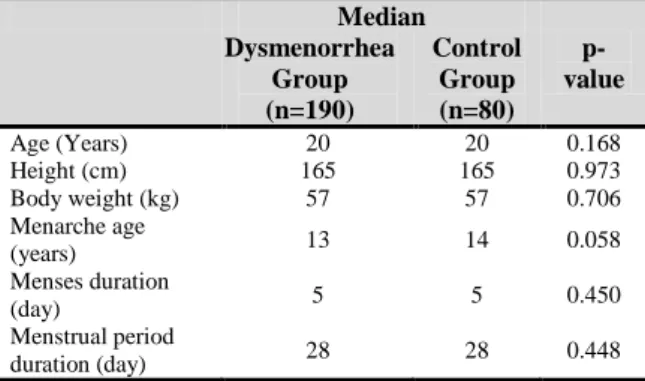
The prevalence of dysmenorrhea was 70.4%. The encounter rate for acute pain with dysmenorrhea was 42.0%. The ages (D (190)=0.175, p=0.000) (D (80)=0.175, p=0.000), body weights (D (190)=0.118, p=0.000) (D (80)=0.123, p=0.005), menarche ages (D (190)=0.158, p=0.000) (D (80)=0.165, p=0.000), menses duration (D (190)=0.172, p=0.000) (D (80)=0.251, p=0.000), and menstrual period duration (D (190)=0.234, p=0.000) (D (80)=0.305, p=0.000) of the study group and control group were not appropriate for normal distribution. Height was not appropriate for normal distribution in the study group (D (190)=0.092, p=0.000), while it showed normal distribution in the control group (D (190)=0.096, p=0.065). The Mann-Whitney U test was performed to detect any differences between the study group and control group in age (median 20, median 20), height (median 165, median 165), body weight (median 57, median 57), menarche age (median 13, median 14), menses duration (median 5, median 5), and menstrual period duration (median 28, median 28). According to the result of Mann-Whitney U test, age between the study group and control group (U = 6805.000 p=0.168, z=-1.379, r=-0.08) is not different. Similarly, there is no difference in height (U = 7580.000 p=0.973, z=-0.034, r=-0.002) or body weight (U = 7379.500 p=0.706, z=-0.377, r=-0.02). There is no significant difference between the groups in menarche age (U = 6521.000 p=0.058, z=-1.893, r=-0.11), menses duration (U = 7172.500 p=0.450, z=-0.755, r=-0.04), and menstrual period duration (U = 7165.500 p=0.448, z=-0.758, r=-0.05) (Table 1).
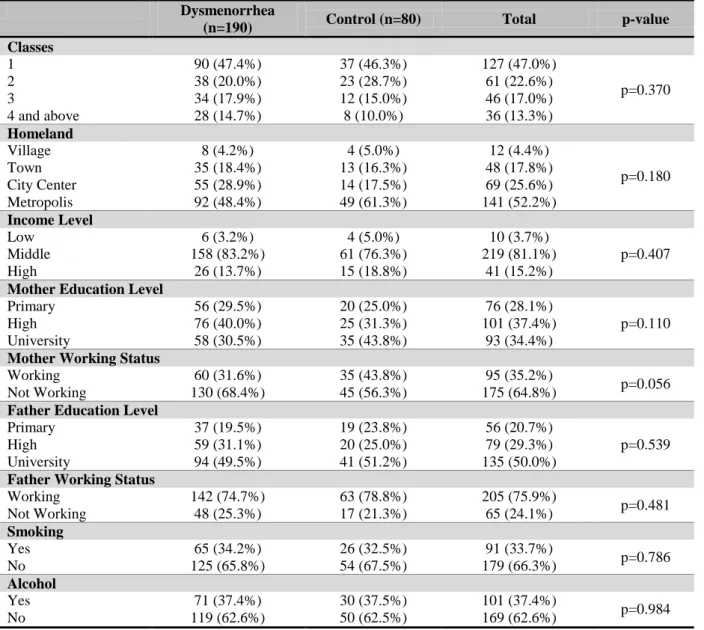
A total of 47.4% of the study group and 46.3% of the control group were first-year students (p = 0.370).
Table 1. Age, Body Weight, and Menstrual
Characteristics for the Study Group and Control Group
Median p-value Dysmenorrhea Group (n=190) Control Group (n=80) Age (Years) 20 20 0.168 Height (cm) 165 165 0.973 Body weight (kg) 57 57 0.706 Menarche age (years) 13 14 0.058 Menses duration (day) 5 5 0.450 Menstrual period duration (day) 28 28 0.448
A total of 48.4% and 28.9% of the study group had grown up in metropolis and city centers, respectively. These rates were 61.3% and 17.5% for the control group (p = 0.180). A total of 83.2% of the study group and 76.3% of the control group had a middle-income level (p = 0.407). The education level of the mother with the highest level was high school in the study group, with a rate of 40.0%, while it was university in the control group, with a rate of 43.8% (p = 0.110). A total of 68.4% of the study group and 56.3% of the control group consisted of mothers that were not actively working (p = 0.110). The educational level of the father was university in 49.5% of the study group and 56.3% of the control group (p = 0.539), and they were not actively working in 25.3% of the study group and 21.3% of the control group (p = 0.481). In the study group, 34.2% of students were smoking and 37.4% were using alcohol. These rates were 32.5% (p = 0.786) and 37.5% (p = 0.984) for the control group (Table 2).
75.9% of participants reported regular menstrual periods. This rate was 73.7% in the study group and 81.3% in the control group. 88.9% of the students had information about menstruation. Sources of information were as follows: 59.0% mother, 26.8% a health professional l, 5.7% a family member other than the mother, 3.5% friends, and 5.0% teacher.
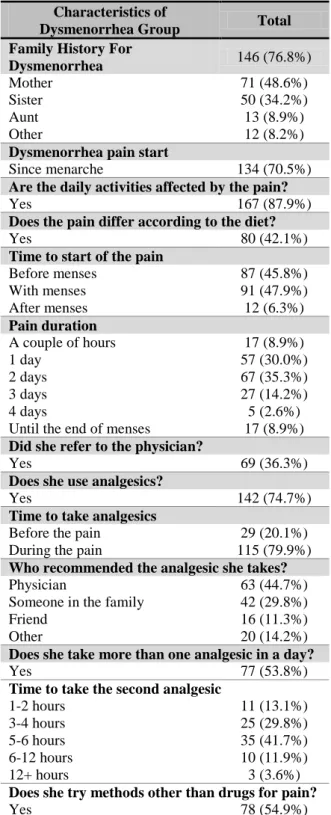
Of the female students with dysmenorrhea, 76.8% were found to have positive family history. 48.6% of the participants’ mother and 34.2% of their sisters had dysmenorrhea. In 70.5% of the students, dysmenorrhea was present since menarche. In 87.9% of cases, dysmenorrhea caused problems in daily activities. In 47.9% of cases, pain started with menses, and in 45.8% of cases, it started before menses. A total of 35.3% of the female students had 2 days of pain. Of the female students, 36.3% were examined by a physician due to dysmenorrhea. A total of 74.7% students were using an analgesic. In 44.7% of the female students, the analgesic used was proposed by a physician. For 29.8% students, an analgesic recommended by someone in the family was being consumed, and 53.8% were using more than one analgesic in a day. In 13.1% of the female students, the time between two analgesics was 1-2 hours (Table 3).
Table 2. Sociodemographic Characteristics of the Participants Dysmenorrhea
(n=190) Control (n=80) Total p-value
Classes 1 90 (47.4%) 37 (46.3%) 127 (47.0%) p=0.370 2 38 (20.0%) 23 (28.7%) 61 (22.6%) 3 34 (17.9%) 12 (15.0%) 46 (17.0%) 4 and above 28 (14.7%) 8 (10.0%) 36 (13.3%) Homeland Village 8 (4.2%) 4 (5.0%) 12 (4.4%) p=0.180 Town 35 (18.4%) 13 (16.3%) 48 (17.8%) City Center 55 (28.9%) 14 (17.5%) 69 (25.6%) Metropolis 92 (48.4%) 49 (61.3%) 141 (52.2%) Income Level Low 6 (3.2%) 4 (5.0%) 10 (3.7%) p=0.407 Middle 158 (83.2%) 61 (76.3%) 219 (81.1%) High 26 (13.7%) 15 (18.8%) 41 (15.2%)
Mother Education Level
Primary 56 (29.5%) 20 (25.0%) 76 (28.1%)
p=0.110
High 76 (40.0%) 25 (31.3%) 101 (37.4%)
University 58 (30.5%) 35 (43.8%) 93 (34.4%)
Mother Working Status
Working 60 (31.6%) 35 (43.8%) 95 (35.2%)
p=0.056
Not Working 130 (68.4%) 45 (56.3%) 175 (64.8%)
Father Education Level
Primary 37 (19.5%) 19 (23.8%) 56 (20.7%)
p=0.539
High 59 (31.1%) 20 (25.0%) 79 (29.3%)
University 94 (49.5%) 41 (51.2%) 135 (50.0%)
Father Working Status
Working 142 (74.7%) 63 (78.8%) 205 (75.9%) p=0.481 Not Working 48 (25.3%) 17 (21.3%) 65 (24.1%) Smoking Yes 65 (34.2%) 26 (32.5%) 91 (33.7%) p=0.786 No 125 (65.8%) 54 (67.5%) 179 (66.3%) Alcohol Yes 71 (37.4%) 30 (37.5%) 101 (37.4%) p=0.984 No 119 (62.6%) 50 (62.5%) 169 (62.6%)
The pain area was reported as the abdomen at a rate of 74.2%, while inguinal pain was reported at a rate of 65.3%, and low-back pain at a rate of 64.2%. The rates of the most common symptoms accompanying pain were 62.6% for irritability, 53.2% for mood disorders, 44.7% for contractions, 31.6% for nausea and vomiting, 25.8% for loss of appetite, 20.5% for headache, and 16.8% for sleep disorders.
A total of 54.9% of the female students were trying a pharmacologic method. Among non-pharmacologic methods, rest at a rate of 50.9%, and shower and hot application at a rate of 49.0% are in the first two ranks. Massage at a rate of 29.8%, exercise at a rate of 14.4%, nutritional changes at a rate of 9.6%, meditation at a rate of 1.9% were other applied methods.
Headache (87.4%) was the most frequently observed pain among painful situations that female students had previously experienced. The frequency
rates were 74.8% for neck-back pain, 55.9% for muscle and joint pain, 54.8% for waist pain, 54.4% for abdominal pain, 38.9% dental pain, 27.8% for pain due to any infection, and 20% for post-traumatic pain. The frequency of other pains was 11.5%.
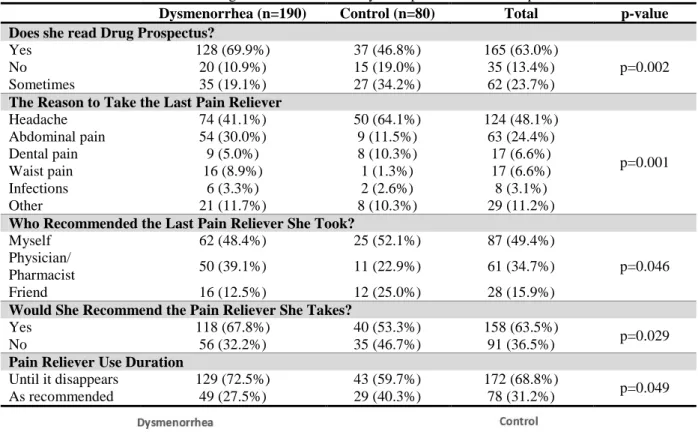
The rate of reading the drug prospectus was found to be 69.9% in the study group and 46.8% in the control group (p=0.002). The rate of the last used pain reliever being a nonprescription drug was 65.5% in the study group and 67.1% in the control group (p=0.463). The rate of the last used pain reliever being preferred by the student herself without the recommendation of someone else was 48.4% in the study group and 52.1% in the control group (p=0.046). In the study group, the reason to take the last pain reliever without a prescription was taking it before at a rate of 88.6% and intensive lessons at a rate of 4.2%. These rates were 94.0% and 1.8% for the control group (p=0.677).
Table 3. Characteristics of Dysmenorrhea in Female Students
Characteristics of
Dysmenorrhea Group Total Family History For
Dysmenorrhea 146 (76.8%)
Mother 71 (48.6%)
Sister 50 (34.2%)
Aunt 13 (8.9%)
Other 12 (8.2%)
Dysmenorrhea pain start
Since menarche 134 (70.5%)
Are the daily activities affected by the pain?
Yes 167 (87.9%)
Does the pain differ according to the diet?
Yes 80 (42.1%)
Time to start of the pain
Before menses 87 (45.8%) With menses 91 (47.9%) After menses 12 (6.3%) Pain duration A couple of hours 17 (8.9%) 1 day 57 (30.0%) 2 days 67 (35.3%) 3 days 27 (14.2%) 4 days 5 (2.6%)
Until the end of menses 17 (8.9%) Did she refer to the physician?
Yes 69 (36.3%)
Does she use analgesics?
Yes 142 (74.7%)
Time to take analgesics
Before the pain 29 (20.1%)
During the pain 115 (79.9%)
Who recommended the analgesic she takes?
Physician 63 (44.7%)
Someone in the family 42 (29.8%)
Friend 16 (11.3%)
Other 20 (14.2%)
Does she take more than one analgesic in a day?
Yes 77 (53.8%)
Time to take the second analgesic
1-2 hours 11 (13.1%)
3-4 hours 25 (29.8%)
5-6 hours 35 (41.7%)
6-12 hours 10 (11.9%)
12+ hours 3 (3.6%)
Does she try methods other than drugs for pain?
Yes 78 (54.9%)
A total of 67.8% of the female students in the study group and 53.3% in the control group recommended the pain reliever they use to another person (p=0.029). A total of 27.5% of the female students in the study group and 40.3% in the control group were using pain relievers within the period they were recommended (p=0.049). In the study group, the reason to take the last used pain reliever was headache at a rate of 41.1% and abdominal
pain at a rate of 30.0%. These rates were 64.1% and 11.5% for the control group (p=0.001) (Table 4).
For both groups, the time to take the last pain reliever was a median of 7 days before (p=0.224). Participants' ratings of pain severity during the time they were using the last pain reliever were found to be a median of 7.0 in the study group and 6.0 in the control group (Mann- Whitney U 5756.000 z=-1.655 p=0.098). Time to analgesia after taking the pain reliever was 1 to 2 hours at a rate of 51.7% in the study group and 56.0% in the control group (p=0.370).
The rate of not recalling the trademarks of the last used pain relievers was 24.2% in the study group and 17.5% in the control group (p=0.031). The rates of the last used pain relievers were 30.1% for Majezik® (Flurbiprofen), 24.5% for Parol® (Paracetamol), and 14.0% for Arveles® (Dexketoprofen) in the study group and 36.4% for Parol® (Paracetamol), 24.2% for Majezik® (Flurbiprofen), and 13.6% for Arveles® (Dexketoprofen) in the control group (Figure 1). A total of 38 different trademark drug names were written by participants when they wrote 3 of the analgesics they know with their trademarks. Of the written drugs, 5 (13.1%) were not analgesics. In the study group, known analgesics were Majezik® (Flurbiprofen), Parol® (Paracetamol), and Arveles® (Dexketoprofen) with a rate of 22.6%, 20.7%, and 7.9%, respectively. In the control group, known analgesic brands were Parol® (Paracetamol), Majezik® (Flurbiprofen), and Arveles® (Dexketoprofen) with a rate of 21.7%, 18.8%, and 8.3%, respectively. The rate of non-response for this question was 18.4% in the study group and 19.6% in the control group (p = 0.042) (Figure 2).
DISCUSSION
Irrational drug treatment may have negative consequences for patients. These may be summarized as inadequate treatment of the disease, an increase in the risks related to adverse effects, an increase in the probability of drug interactions, unnecessary treatment costs, and economic losses, such as loss of jobs and loss of earnings.
In our study, the prevalence of dysmenorrhea in female students was found to be 70.4%. No significant difference was found in menarche age and menstruation characteristics between dysmenorrhea and the control group. The average age of menarche was 13 in the dysmenorrhea group and 14 in the control group (p = 0.058). Menarche age was similar in similar studies on university students in Turkey to the age determined in our study. However, the reported prevalence of dysmenorrhea was slightly higher. In a study conducted on 200 university students in Ankara in 2013, the prevalence of dysmenorrhea was found to be 84%. The average menarche age was 13.2 years. Menses duration was determined as
Table 4. The Characteristics of Analgesics Used in the Study Group and Control Group
Dysmenorrhea (n=190) Control (n=80) Total p-value Does she read Drug Prospectus?
Yes 128 (69.9%) 37 (46.8%) 165 (63.0%)
p=0.002
No 20 (10.9%) 15 (19.0%) 35 (13.4%)
Sometimes 35 (19.1%) 27 (34.2%) 62 (23.7%)
The Reason to Take the Last Pain Reliever
Headache 74 (41.1%) 50 (64.1%) 124 (48.1%) p=0.001 Abdominal pain 54 (30.0%) 9 (11.5%) 63 (24.4%) Dental pain 9 (5.0%) 8 (10.3%) 17 (6.6%) Waist pain 16 (8.9%) 1 (1.3%) 17 (6.6%) Infections 6 (3.3%) 2 (2.6%) 8 (3.1%) Other 21 (11.7%) 8 (10.3%) 29 (11.2%)
Who Recommended the Last Pain Reliever She Took?
Myself 62 (48.4%) 25 (52.1%) 87 (49.4%)
p=0.046 Physician/
Pharmacist 50 (39.1%) 11 (22.9%) 61 (34.7%)
Friend 16 (12.5%) 12 (25.0%) 28 (15.9%)
Would She Recommend the Pain Reliever She Takes?
Yes 118 (67.8%) 40 (53.3%) 158 (63.5%)
p=0.029
No 56 (32.2%) 35 (46.7%) 91 (36.5%)
Pain Reliever Use Duration
Until it disappears 129 (72.5%) 43 (59.7%) 172 (68.8%)
p=0.049
As recommended 49 (27.5%) 29 (40.3%) 78 (31.2%)
Figure1. The Distribution of the Last Used Analgesics According to Trademarks by Groups.
Figure 2. The Distribution of Three Analgesics Recalled by the Participants According to Their Trademarks by Groups.
6 days and shorter at a rate of 67% (21). A study conducted in Istanbul in 2010 with the participation of 1,515 university students determined a similar prevalence of dysmenorrhea of 85.7% (n = 1298) to the study in Ankara. Menarche age was determined to be 13 to 14 at a rate of 62%. Ninety percent of the students had regular menses periods (22-34 days), and the duration of the menses was less than 7 days at a rate of 74%. Sixty-four percent had a positive family history (22). In our study, the rate of positive family history was 76% in the dysmenorrhea group.
In another study conducted with 488 university students in Manisa, the average age of menarche was 13.3. A total of 87.7% of the students had dysmenorrhea. On average, menses periods were 28.5 days, and menses duration was 5.7 days (23). In our study, menstrual period duration was determined to be a median of 28 days and menses duration was a median of 5 days.
In studies conducted abroad, the prevalence of dysmenorrhea was reported as a very wide range. In a study conducted in Pakistan with 356 students in the 18 to 25 age group who were working in a university hospital, dysmenorrhea was detected in 56% of the students. The average age of menarche was 12.9 years, and the mean duration of menses was 4.8 days (24).
Prevalence close to 90% was reported in studies conducted with female high school students in Turkey. In a study conducted in Erzurum in 2005 with 1,408 female high school students, menses duration was found to be between 3 and 6 days at a rate of 71% and period duration between 21 and 40 days at a rate of 70%. Dysmenorrhea was detected in 87.5% of study participants, and 45.8% reported that the pain starts with menses. It lasts 1 to 3 days at a rate of 56.6% (25). In another study conducted in Elazığ with 879 high school students, the frequency of dysmenorrhea was 92.5%. The average age of menarche was 12.7, the mean duration of the period was 28.7 days, and menses duration was 5.9 days. Moderate-severe dysmenorrhea was detected in 72% of participants. It has been reported that 52% of the female students were using analgesics. Thirty-four percent of the female students reported that menses cycles were irregular. Dysmenorrhea caused 32% of the students lose school days (26).
In our study, the rate of dysmenorrhea-related healthcare applications was 36%. This rate was 29% (25) in a study conducted in Erzurum with female high school students and 29% in Elazığ (26). In studies conducted with female university students, the rate of physician applications was 24% in Istanbul and 25% in Ankara (21, 22).
In our study, the severity of pain was determined as a median of 7. The rate of analgesic use was 74.7% in the dysmenorrhea group, of which 44.7% was recommended by a physician. In the study conducted in Ankara with university
students, the average severity of pain was reported as 5.8. The most common symptoms that accompanied pain were irritability (35%) and fatigue (22%). The rate of analgesic use was 69%. Hot application (57%) and rest (71%) were the most commonly applied methods among non-pharmacologic therapies (21). In our study, the rates of most common symptoms that accompany pain were 62.6% for irritability, 53.2% for mood disorders, and 44.7% for contractions. Further, 54.9% of the students also reported trying treatment methods other than analgesics. Rest (50.9%), shower (49.0%), and hot application (49.0%) were the most commonly applied methods among non-pharmacologic therapies.
In the study conducted in Istanbul, the mean severity of pain for dysmenorrhea in university students was determined as 6.3. Further, 80.3% of the students with dysmenorrhea had a regular analgesic use. A total of 8.7% of the students were using analgesics before the pain started. The rates of the most common non-pharmacologic methods were 60% for rest, 49% for hot application, 32% for shower, and 32% for use of herbal teas. Dysmenorrhea was affecting daily activities in 68% of the students and caused school day loss in 18% (22). In our study, it was determined that dysmenorrhea was affecting daily activities of the girls at a rate of 87.9%.
In the study conducted in Manisa, the severity of pain in students with dysmenorrhea was 5.1. Mostly used non-pharmacologic applications were hot application (92%), shower (88%), and massage (77%). The rate of family history was 65% (23).
In Erzurum, the rate of analgesic use in high school students was 46%. Further, 39% of the drugs were recommended by the mother, and 20% were taken on their own. Time to take the drug was reported as the time when the pain becomes unbearable at a rate of 65.5%. A total of 86.3% of the participants reported taking drugs 1 to 2 times in total. The rates of the most commonly used non-pharmacologic methods were 36.5% for hot application and 31% for sleeping. The rates of the most common symptoms that accompany the pain were found to be 30% for sweating, 28% for loss of appetite, and 26% for headache (25).
In the study conducted in Pakistan, it was found that only 4% of the women were receiving medical assistance, but 66% were using analgesics. The rates of the most commonly used analgesics were 26% for paracetamol, 15% for aspirin, and 15% for ibuprofen. Further, 25% of the women reported a 1.5-day job loss per month due to pain (24).
In a study conducted in India with 641 women with dysmenorrhea who were in a slightly older age group (18-30 years) than those in our study, mean duration of pain was 2.2 days and workforce loss due to menses was found to be 2 to
7 days/month at a rate of 63%. A total of 42% of the participants were using self-medication. Only 5% of the participants were using a drug prescribed by a physician. Non-pharmacologic methods were applied at a rate of 53%. The rates of the 3 most commonly used drugs were 35% for dicyclomine (anticholinergic), 29% for a drug whose name they do not know, and 26% for mefenamic acid. It has been established that the drugs were used at the recommended standard dose and reported that 9% of the self-medication users were using the drugs above the standard dose (27).
In our study, it was determined that at least 13.1% of the 74.7% female students who use analgesics had analgesic use above the standard dose and 72.5% above the recommended duration. The most commonly used analgesics were flurbiprofen, paracetamol, and dexketoprofen. Further, 35.3% of the students reported taking 2 days off due to pain. In 35.3% of the students, the pain lasted 2 days.
In a study investigating self-treatment characteristics in adolescents with moderate (42%) and severe (58%) primary dysmenorrhea under 19 years of age, the concomitant symptoms were found to be nausea in 55% of the participants and vomiting in 24%. The most common methods used
in girls who lose school days due to dysmenorrhea for one to two days a month were found to be sleeping and hot application. Almost all girls had to take at least one drug. It was established that 31% had two different drugs and 15% had three different drugs. 91% of the participants were taking an over the counter drug. Only 21% were using a prescription drug. It has been determined that the drugs taken were used at sub-therapeutic doses. The 3 most commonly used pain relievers were ibuprofen, acetaminophen, and naproxen. The median duration of pain was found to be 2 days. In 12% of the participants, the pain lasted 4 days or longer. The mean severity of pain was found to be 8.6 (28).
CONCLUSION
University students who are in need of medication due to any disease more frequently encounter drugs. Developing behaviors on rational drug use in these students may provide productive results. It may be effective to organize informational meetings for students on the use of non-prescription drugs. University students should be provided with information about the objectives of rational drug use.
REFERENCES
1. Iptes S, Khorshid L. The investigation of the university students' drug usage. Journal of Ege University Nursing Faculty. 2004; 20(1):97-106.
2. Karakurt P, Hacihasanoglu R, Yildirim A, et al. [Medication Use among University Students]. TAF Prev Med Bull. 2010; 9(5): 505-512.
3. Yildirim Bas F, Cankara FN, Yesilot S. Evaluation of nonprescription drug usage on faculty of medicine students. SDU Journal of Health Science Institute. 2013; 4(2): 46-53.
4. Amanda LG. Hans VH. Flora MH. Intervention Research in Rational Use of Drugs: A Review. Healt Policy and Planning. 1999; 14: 89-102.
5. Aksoy M, Alkan A, Isli F. Rational Drug Use Promotional Activities of Ministry of Health. Türkiye Klinikleri J Pharmacol-Special Topics 2015;3(1):19-26.
6. Wertheimer AI, Serradell J. A discussion paper on self-care and its implications for pharmacists. Pharm World Sci. 2008 Aug;30(4):309-15.
7. Mansouri A, Sarayani A, Ashouri A, et al. Is 'self-medication' a useful term to retrieve related publications in the literature? A systematic exploration of related terms. PLoS One. 2015 May 1;10(5):e0125093.
8. James H, Handu SS, Al Khaja KA, et al. Evaluation of the knowledge, attitude and practice of self-medication among first-year medical students. Med Princ Pract. 2006;15(4):270-5.
9. Klemenc-Ketis Z, Hladnik Z, Kersnik J. Self-medication among healthcare and non-healthcare students at University of Ljubljana, Slovenia. Med Princ Pract. 2010;19(5):395-401.
10. Pereira FS, Bucaretchi F, Stephan C, et al. Self-medication in children and adolescents. J Pediatr (Rio J). 2007 Sep-Oct;83(5):453-8.
11. Azami-Aghdash S, Mohseni M, Etemadi M, et al. Prevalence and Cause of Self-Medication in Iran: A Systematic Review and Meta-Analysis Article. Iran J Public Health. 2015 Dec;44(12):1580-93.
12. Aljinovic-Vucic V, Trkulja V, Lackovic Z. Content of home pharmacies and self-medication practices households of pharmacy and medical students in Zagreb, Croatia: findings in 2001 with a reference to 1977. Croat Med J 2005;46:74–80.
13. World Health Organization. Guidelines for the medical assessment of drugs for use in self-medication. Copenhague: WHO, Regional Oce for Europe, 1986.
14. Togoobaatar G, Ikeda N, Ali M, et al. Survey of nonprescribed use of antibiotics for children in an urban community in Mongolia. Bull World Health Organ. 2010; 88(12): 930–936.
15. Ilhan MN, Durukan E, Ilhan SO, et al. Self-medication with antibiotics: questionnaire survey among primary care center attendants. Pharmacoepidemiol Drug Saf. 2009; 18(12): 1150–1157.
16. Skliros E, Merkouris P, Papazafiropoulou A, et al. Self-medication with antibiotics in rural population in Greece: a cross-sectional multicenter study. BMC Fam Pract. 2010; 11: 58.
17. Nazir S, Goel K, Mittal A, et al. Parent induced self-medication among under five children:an observational cross sectional study. TAF Prev Med Bull 2015;14(2):81-86.
18. Grigoryan L, Haaijer-Ruskamp FM, Burgerhof JG, et al. Self-medication with antimicrobial drugs in Europe. Emerg Infect Dis. 2006 Mar;12(3):452-9.
19. Chagas OF, Éckeli FD, Bigal ME, et al. Study of the use of analgesics by patients with headache at a specialized outpatient clinic (ACEF). Arq Neuropsiquiatr. 2015 Jul;73(7):586-92.
20. Ministry of Health Turkish Medicine and Medical Devices Agency Economic Assessments and Laboratory Services. Turkish Pharmaceutical Market Report. Ankara, 2014.
21. Aktas D. Prevalence and Factors Affecting Dysmenorrhea in Female University Students: Effect on General Comfort Level. Pain Manag Nurs. 2015 Aug;16(4):534-43.
22. Potur DC, Bilgin NC, Komurcu N. Prevalence of dysmenorrhea in university students in Turkey: effect on daily activities and evaluation of different pain management methods. 2014 Dec;15(4):768-77.
23. Midilli TS, Yasar E, Baysal E. Dysmenorrhea Characteristics of Female Students of Health School and Affecting Factors and Their Knowledge and Use of Complementary and Alternative Medicine Methods. Holist Nurs Pract. 2015 Jul-Aug;29(4):194-204.
24. Yasir S, Kant B, Dar MF. Frequency of dysmenorrhoea, its impact and management strategies adopted by medical students. J Ayub Med Coll Abbottabad. 2014 Jul-Sep;26(3):349-52.
25. Eryilmaz G, Ozdemir F. Evaluation of menstrual pain management approaches by Northeastern Anatolian adolescents. Pain Manag Nurs. 2009 Mar;10(1):40-7.
26. Esen I, Oğuz B, Serin HM. Menstrual Characteristics of Pubertal Adolescent Girls: A Questionnaire Based Study in Turkey. J Clin Res Pediatr Endocrinol. 2015 Dec 18.
27. Sugumar R, Krishnaiah V, Channaveera GS, et al. Comparison of the pattern, efficacy, and tolerability of self-medicated drugs in primary dysmenorrhea: a questionnaire based survey. Indian J Pharmacol. 2013 Mar-Apr;45(2):180-3.
28. O'Connell K, Davis AR, Westhoff C. Self-treatment patterns among adolescent girls with dysmenorrhea. J Pediatr Adolesc Gynecol. 2006 Aug;19(4):285-9.