ABSTRACT
Objective: Renal toxicity and hypocalcemia are two com-monest adverse effects of zoledronic acid reported in can-cer patients with bone metastasis. Similar data are lacking in postmenopausal women with osteoporosis treated with zoledronic acid infusion. We aimed to evaluate the effects of annual treatment of postmenopausal osteoporotic women with intravenous infusion of zoledronic acid on their renal and hepatic functions. The effects of the drug on the bio-chemical parameters of the patients were also assessed. Methods: We reviewed the electronic medical records (EMRs) of postmenopausal women with osteoporosis treat-ed with 5 mg of zoltreat-edronic acid once in a year. Changes in the serum levels of calcium, phosphorus, alkaline phos-phatase, creatinine, blood urea nitrogen (BUN) as well as alanine and aspartate transaminases were determined af-ter infusing zoledronic acid relative to the base line results. Information about the documented adverse effects of zole-dronic acid were extracted from the EMRs.
Results: All the biochemical parameters, except calcium, demonstrated no statistically significant changes in their serum levels when the results, before and after treatment with zoledronic acid, were compared. The serum Ca lev-el slightly and significantly decreased from 9.6±0.6 mg/ dl (before treatment) to 9.4±0.9 mg/dl (after treatment) (p=0.018). A few but important adverse effects associated with zoledronic acid infusion in the patients were influenza-like symptoms (6), myalgia (4), arthralgia (4), headache (4), and pyrexia (3).
Conclusions: The once in a year use of zoledronic acid in-fusion for osteoporosis in postmenopausal women was not associated with a statistically significant renal and hepatic adverse effects. Among the biochemical parameters evalu-ated, only serum calcium level decreased slightly and sta-tistically significantly after using zoledronic acid infusion, despite prophylactic calcium use before treatment.
Keywords: bisphosphonate, hepatic function, renal function, serum calcıum, zoledronic acid
ÖZ
Postmenapozal Osteoporozlu Hastalarda Zoledronik Asit İnfuzyonunun Olumsuz Etkileri
Amaç: Kemik metastazlı kanser hastalarında uygulanan zoledronik asit sonrası renal toksite ve hipokalsemi sık rast-lanan olumsuz yan etkilerdir. Postmenapozal osteoporozlu hastalarda ise zoledronik asit infuzyonu ile oluşabilecek bu yan etkiler açısından yetersiz veri mevcuttur. Bu çalışma ile amacımız, postmenapozal osteoporozlu hastalarda yıllık zoledronik asit uygulaması sonrası hepatik ve renal fonksi-yonları incelemektir. Aynı anda bu ilacın uygulanması ile oluşabilcek biyokimyasal değişiklikleri de saptadık. Gereç ve Yöntem: Postmenapozal osteoporoz tanısı almış ve yıllık zoledronik asit (5 mg) infüzyonu uygulanan hasta-ları elektronik medikal kayıtlar üzerinden tarandı. Serumda ki kalsiyum,fosfor, alkalin fosfat, kreatinin, kan üre azotu, alanin ve aspartat transaminazlar bazal değerlere göre de-ğişimi değerlendirildi ve yan etki (olumsuz) ile ilgili veriler-de elektronik kayıt sistemleri kullanılarak tarandı.
Bulgular: Klasiyum dışındaki tüm parametreler zoledronik asit uygulamasından önce ve sonra değerlendirildiğinde istatiksel olarak anlamlı değişiklik saptanmadı. Serum kal-siyum seviyesinde istatiksel olarak anlamlı şekilde azalma mevcuttu, uygulama öncesi 9,6±0,6 mg/dl ikne uygulama sonrası 9,4±0,9 mg/dl idi. Zoledronik asit uygulaması son-rası görülebilecek grip benzeri sendrom (6), myalji (4), artralji (4), baş ağrısı (4), kaşıntı (3) gibi yan etkilere rast-landı.
Sonuç: Postmenapozal osteoporoz hastalarında kullanılan yıllık zoledronik asit infüzyonu renal ve hepatik yan etki açısından istatiksel olarak anlamsız bulunmuştur.
Anahtar kelimeler: bifosfanat, böbrek fonksiyonu, karaciğer fonksiyonu, serum kalsiyum, zoledronik asit
Adverse Effects of Zoledronic Acid Infusion in
Patients Treated for Postmenopausal Osteoporosis
Ersin Kuyucuİstanbul Medipol Üniversitesi
Alındığı Tarih: 06.04.2017 Kabul Tarihi: 18.04.2017
Yazışma adresi: Yrd. Doç. Dr. Ersin Kuyucu, İstanbul Medipol University TEM Avrupa Otoyolu Göztepe Çıkışı Bağcılar - 34214 - İstanbul - Türkiye e-posta: [email protected]
InTROduCTIOn
Most bisphosphonates are administered orally with
good effects in reducing the risk of fracture (1).
Ho-wever, intravenous bisphosphonates are found to be an excellent option for the treatment of patients who either could not tolerate the oral use or comply poorly with oral medication (2).
Zoledronic acid is a tertiary nitrogen-containing bisphosphonate that is approved for the treatment of postmenopausal osteoporosis in the United States and Europe. It is also approved for the treatment of metastatic bone diseases; malignancy-related hyper-calcemia and multiple myeloma. Higher doses were, however, recommended for oncology related osteo-porosis compared to the 5 mg once in a year dose
recommended for postmenopausal osteoporosis (2,3).
Renal toxicity has been reported with the use of zoled-ronic acid in a heterogeneous group of cancer patients in a post-marketing study, based on the number of ca-ses reported to the Food Drug Administration (FDA) in the United States. Although 18 of the patients died, zoledronic may not be the cause of the death, and it was not indicated as the cause in the report3. Another study evaluated the effects of zoledronic acid on renal and hepatic functions, as well as the serum levels of calcium (Ca) and phosphorus (P), in patients with bre-ast cancer and bone metbre-astases. Zoledronic acid was administered in doses of 4 mg every four weeks for
a mean period of ten months (4). The authors reported
that serum phosphorus level significantly decreased after the administration of the final dose of the drug4. Also, there are two reported cases of hypocalcemia after intravenous use of zoledronic acid in patients with bone metastasis from prostate cancer and
anot-her patient with Paget’s disease of the bone (5,6).
The Health-Related Outcomes and Reduced Inciden-ce with Zoledronic Acid OnInciden-ce Yearly (HORIZON) study is a pivotal fracture trial. HORIZON trial sho-wed a significant but a small increase (>0.5 mg/dl) in serum creatinine concentration 9-11 days after in-fusion of the drug in patients with osteoporosis. Ho-wever, no data is presented on liver function tests and
biochemical parameters (7). Minimal or absence of
major adverse effects with the use of zoledronic acid in postmenopausal osteoporosis would likely
encou-rage its use in this group of patients. It is, therefore, necessary to generate more data on the adverse effect profile of the drug in postmenopausal osteoporotic patients.
The objective of this study was to evaluate the effects of zoledronic acid on the renal and hepatic functions of postmenopausal osteoporotic patients. We also evaluated the changes in serum levels of some bioc-hemical parameters (ALP, Ca and P) in postmenopa-usal women with osteoporosis after treatment with zoledronic acid infusion.
MATERIAL and METHOdS Patients and outcome measures:
This is a retrospective study involving the use of EMR of postmenopausal women treated for osteoporosis with zoledronic acid infusion, 5 mg once in a year. We searched the records of patients who attended orthopedics outpatient clinics between January 2012 and July 2013, using the computer registries of a state hospital. Only the patients diagnosed with postme-nopausal osteoporosis and treated with intravenous zoledronic acid, once during the study period, were included in this study. Patients were excluded if they were not admitted for observation after the infusion or their post-treatment follow-up records were absent. At our facility, osteoporosis was diagnosed accor-ding to the criteria of the World Health Organizati-on (WHO): T-score (bOrganizati-one mineral density values as compared to a young adult) less than - 2.5 standard deviation (SD) as measured by dual-energy X-ray
ab-sorptiometry (8). The protocol for zoledronic acid
ad-ministration to postmenopausal osteoporotic women at our hospital include (1) pre-treatment laboratory investigation are usually carried out and include se-rum creatinine, aspartate transaminase (AST), alani-ne transaminase (ALT), serum Ca, P and ALP levels, complete blood count, erythrocyte sedimentation rate, C-reactive protein (CRP). This is to exclude patients with renal, kidney or malignancy problems as they are not eligible for zoledronic treatment, (2) patient with hypocalcemia are treated with oral calcium da-ily (2500 mg calcium carbonate equivalent to 100mg calcium) and vitamin D (880 IU) for at least six
we-eks prior to zoledronic treatment, (3) intravenous cal-cium gluconate (0.5 mg/kg/hr) is used to correct the hypocalcaemia if response to oral calcium was poor after six weeks, (4) prophylactic administration of 400 mg ibuprofen and 150000 IU vitamin D orally prior to zoledronic administration, and (5) patients are encouraged liberal oral fluid intake of at least 500 mL prior to treatment so as to improve hydration. At our centre, patients were recommended a very high dose of prophylactic vitamin D prior to zoledronic acid infusion because such dose was rarely associated with adverse toxicity (9).
After observing all the recommendations in the pro-tocol, 5 mg/100 ml zoledronic acid was infused int-ravenously for at least 30 minutes. Nurses were well informed about the protocol guidelines, the infusion time, consequences of drug extravasation and the po-tential adverse effects of the drug when administered intravenously. The nurses were, therefore, required to report any suspected adverse effects observed during the infusion.
After the infusion, patients are under observation for, at least, an hour. Often time, they were informed abo-ut the possible adverse effects and advised to contact the doctor in case of an emergency. Post-infusion ad-verse effects are common after zoledronic acid infu-sion and are thought to result from increased levels of inflammatory mediators in circulation as a response
to infusion (10). Therefore, we prescribed oral
ibupro-fen 800 mg/day for three daysto prevent post-infusion adverse effects that are induced by inflammatory me-diators. Patients were followed up for two weeks after Zoledronic infusion.
Only the adverse effects reported within 72 hours post-zoledronic infusion were recorded in this study. These were those documented in the summary of the product label or previously reported in the HORI-ZON trial and include pyrexia, myalgia, ınfluenza-like symptoms, headache, and arthralgia. We, howe-ver, did not inquire about other adverse effects such as palpitation, atrial fibrillation, stroke, myocardial infarction. Biochemical adverse effects are usually recorded during patients’ follow ,up based on the re-sults of the g hepatic and renal function tests as well as serum creatinine, Ca and phosphorus levels orde-red.
We used a proforma form to extract information about the age, baseline and post-treatment serum levels of the biochemical parameters, renal and hepatic func-tion tests. We also extracted the documented adverse effects of zoledronic acid infusion.
Statistical analysis
All the data obtained in this study were analyzed using the Statistical Package for Social Sciences for Windows, Version 23. We presented numerical vari-ables as means with their standard deviations (SD). Categorical variables were presented as frequencies (n) and percentages (%).
We used the descriptive statistics for descriptive data and paired samples t-test to compare the differences in the baseline and post-treatment serum levels of the biochemical parameters as well as hepatic and renal function tests. The P-values were considered to be statistically significant if <0.05. For some bioche-mical parameters that showed wide disparity or no statistically significant difference between their mean values, before and after zolendronic acid infusion, data were presented in box plots so as to show inter-individual avariability in their results.
RESuLTS
Only 50 patients with postmenopausal osteoporo-sis who met the inclusion criteria were evaluated in this study. The mean age of the patient was 74.0±7.4 years. Zoledronic acid was administered for the first time to 40 (80%) patients and for the second time to 10 (20%) patients. The mean time interval between the post-treatment visit and evaluation of the labora-tory parameters was 19.0±8.4 days.
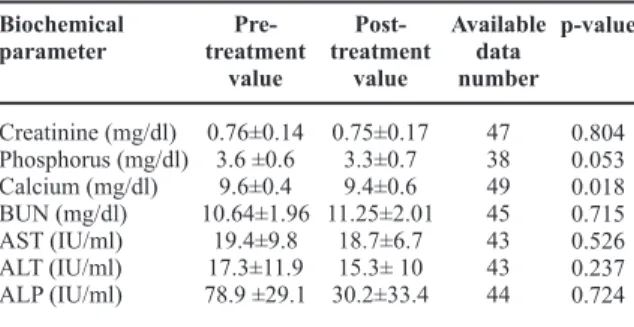
Table 1. The biochemical parameters before and after intrave-nous infusion of zoledronic acid.
Biochemical parameter Creatinine (mg/dl) Phosphorus (mg/dl) Calcium (mg/dl) BUN (mg/dl) AST (IU/ml) ALT (IU/ml) ALP (IU/ml) Pre-treatment value 0.76±0.14 3.6 ±0.6 9.6±0.4 10.64±1.96 19.4±9.8 17.3±11.9 78.9 ±29.1 Post-treatment value 0.75±0.17 3.3±0.7 9.4±0.6 11.25±2.01 18.7±6.7 15.3± 10 30.2±33.4 Available data number 47 38 49 45 43 43 44 p-value 0.804 0.053 0.018 0.715 0.526 0.237 0.724
In Table 1, the biochemical parameters of the patients
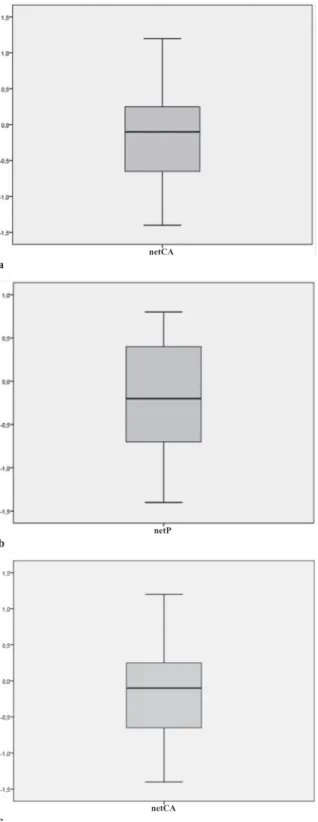
were compared before and after zoledronic infusion. The mean serum levels of Cr and P decreased slightly after treatment but this was not statistically signifi-cant. However, the slight decrease in serum Ca level after treatment was statistically significant (p=0.018), but all other biochemical parameters that either inc-reased or decinc-reased after treatment did not change significantly. For Ca and P their box plot before and after zoledronic infusion, were compared in Figure 1. There was wide inter-individual variability in their mean serum levels, before and after zolendronic acid infusion.
Most common adverse effects were influenza-like symptoms (6), myalgia (4), arthralgia (4), headache (3), and pyrexia (3). Myalgia and arthralgia were re-ported concomitantly in four patients. All the patients with pyrexia also reported influenza-like symptoms.
dISCuSSIOn
The objective of this study was to evaluate the effects of zoledronic acid on serum creatinine, ALP, AST, ALT, Ca and P levels and to document adverse effects reported in patients with postmenopausal osteoporo-sis following the treatment. Despite the prophylactic use of oral calcium and vitamin D before treatment, we observed a significant decrease in serum Ca level after zoledronic acid infusion. There was no signifi-cant change in the serum levels of other biochemical parameters that were investigated in the study. Our patients experienced adverse events inclusing myal-gia, arthralmyal-gia, pyrexia, influenza-like symptoms and headache. These symptoms were considered to be mild adverse events since they resolved
spontaneo-usly without any intervention (7). Zoledronic acid is
a very potent bisphosphonate and due to its annual use, hypocalcemia is an anticipatory adverse effect (11). Product information for zoledronic acid cites a 3% incidence of asymptomatic hypocalcemia (http:// www.zometa.com). There were reported cases of hypocalcemia after zoledronic acid infusion despite serum Ca level monitoring and prophylactic oral Ca use. Ferraz-de-Souza et al. (6) reported the sympto-matic and prolonged hypocalcemia after zoledronic acid infusion in a patient with Paget’s disease. Ho and Sundar also reported prolonged hypocalcemia in a patient with prostate carcinoma which required intravenous calcium gluconate for urgent calcium ion replacement. The increased osteoblastic activity of
netCA
netP
netCA
Figure 1. Boxplot analysis of biochemical test. The net chan-ge was calculated as the subtracting the baseline value of the parameter from the post-infusion value. a: Boxplot analysis of change in serum calcium levels b: Boxplot analysis of change in serum phosphorus levels c: Boxplot analysis of change in serum ALP levels.
a
b
bone metastases has been proposed for the hypocal-cemia rather than zoledronic acid infusion being the cause (5).
Pre-treatment hypocalcemia may be worsened or result in symptomatic hypocalcaemia after zoledro-nic treatment. This was the basis for ensuring that pre-treatment calcium deficiency was appropriately corrected as entrenched in the protocol guidelines of our hospital before zoledronic acid infusion, Zoledro-nic acid inhibits bone resorption after infusion, thus blocking one of the resources of serum calcium. We, therefore, administered 150000 IU vitamin D orally before the infusion. Although the dose is far higher than the recommended daily allowance, such a high
dose has not been associated with adverse toxicity (9).
Given the high anti-resorptive potency of zoledro-nic acid, minimal or lack of adverse effects, and low cost of Vitamin D treatment, its administration before
zoledronic infusion is justified in this study (12). The
patients were interviewed during follow up visits to know if they experienced any clinical manifestations of hypervitaminosis D (nausea, vomiting, altered sen-sorium, constipation, pancreatitis, acute kidney injury and weight loss). However, none of them experienced such symptoms. When we compared the pre-treatment and post-treatment serum calcium levels, we found a statistically significant decrease. All of the patients were asymptomatic to the hypocalcemia; although they claimed to have complied withv regular use of Ca and vitamin D supplements. Similarly, Chennuru et al. and Zuradelli et al. reported hypocalcemia af-ter zoledronic acid infusion to a heaf-terogenous group of cancer patients (prostate carcinoma, breast cancer,
multiple myeloma, and lung cancer) (13,14). To the best
of our knowledge, this is the first study documenting asymptomatic but statistically significant decrease in serum Ca levels in postmenopausal osteoporosis. It is suggested that patients should envisage hypocal-cemia when using zoledronic acid. Clinicians should, however, inform their patients about symptoms of hypocalcemia and encourage them to comply with the use of prophylactic oral Ca use before and after zoledronic infusion.
Black et al. (7) reported more than 0.5 mg/dl increase
in the serum creatinine level at 9 to 11 days after zo-ledronic acid infusion in their HORIZON trial. The increase was transient and resolved in 30 days.
More-over 72 cases in which physicians reported renal fai-lure associated with zoledronic were identified by the Food and Drug Administration (FDA) Adverse Event Reporting System from August 2001 to March 2003 (3). Fidan et al. (4) reported no significant change in serum creatinine level in their retrospective analysis of breast cancer patients treated with zoledronic acid. By contrast, in our study, the serum creatinine levels decreased after administering zoledronic acid to our patients. However, this change was not statistically significant. Changes in serum creatinine level may in-dicate a renal problem or may be due to dehydration. We, however, attributed the non-significantly incre-ased serum creatinine level to good hydration of the patients. The mean age of the postmenopausal women with osteoporosis that we studied was 74±7.37 years. This mean age was similar to those of the patients involved in the HORIZON trial (73.1±5.34 years). Mean age is younger in studies reporting results of
oncologic series (4,7). A previous study by McDermott
et al. has shown that the risk of adverse renal effects of zoledronic acid increased with age, suggesting that elderly people were more at risk than the young ones. Despite the old age of our patients, none developed adverse renal effects. The fact that the previous renal adverse effects were reported in cancer patients rather than postmenopausal osteoporotic patients, we conc-lude that the underlying disease causing the osteopo-rosis that required zoledronic acid infusion may be contributory to the risk of adverse renal effects. An ‘acute phase reaction’ characterized by myalgia, arthralgia, pyrexia, influenza-like symptoms and he-adache is common after intravenous administration
of zoledronic acid (15). The exact mechanism
underl-ying these reactions is unclear. However, it is thought to result from the activation of γδT cells which may lead to an increased circulating levels of interleukin-6
and tumor necrosis factor-α (10). These reactions were
the only ones by the patients in our study. We docu-mented influenza-like symptoms in infusion related adverse effects. Previous studies have documented a decreased severity of the adverse effects following a
repeated infusion of zoledronic acid (7).
This study was retrospective. Therefore, rare advise-effects such as jaw osteonecrosis and atrial fibrillati-on that requires mfibrillati-onitoring for them to be identified could have been missed. A prospective study in the
future could help address this problem. A study with small sample size may not be adequately powered to detect a statistically significant difference between the base line and post-treatment parameters evaluated in this study. This would suggest a need for caution in the interpretation of our data. Another limitation of this study is that the serum potassium level; another important marker of renal function, was not reported in this study. This was due to either non-inclusion of this test in the routine investigation or inadvertent omission of the result in the case files of the patients. A prospective study would have avoided this missing data and present us with real-life experience of the patients.
We concluded that postmenopausal osteoporotic pa-tients treated with 5 mg once in a year dose of int-ravenous zoledronic infusion experienced neither a significant change in the renal nor hepatic functions. However, there was a statistically significant decrea-se in decrea-serum Ca level after treatment with zoledronic acid, despite prophylactic use of oral calcium and vi-tamin D before treatment. Also, some of the patients experienced mild adverse events which were not life threatening.
REFEREnCES
1. Ringe JD. Development of clinical utility of zoledronic acid and patient considerations in the treatment of oste-oporosis. Patient Prefer Adherence 2010;21:231-45. https://doi.org/10.2147/PPA.S10917
2. Lewiecki EM, Miller PD. Renal safety of intravenous bisphosphonates in the treatment of osteoporosis.
Ex-pert Opin Drug Saf 2007;6:663-72.
https://doi.org/10.1517/14740338.6.6.663
3. Chang JT, Green L, Beitz J. Renal failure with the use of zoledronic acid. N Engl J Med 2003;349:1676-9. https://doi.org/10.1056/NEJM200310233491721 4. Fidan E, Yildiz B, Kavgaci H, Ozdemir F, Aydin F.
Ef-fects of zoledronic acid and ibandronic acid on renal functions and calcium, phosphorus and alkaline phosp-hatase levels in breast cancer patients with bone metas-tases: a retrospective analysis. Contemp Oncol (Pozn) 2012;16:176-8.
https://doi.org/10.5114/wo.2012.28799
5. Ho JW, Sundar S. Prolonged hypocalcemia after zo-ledronic acid in a patient with metastatic prostate car-cinoma: did zoledronic acid trigger osteoblastic acti-vity and avid calcium uptake? Cin Genitourin Cancer 2012;10:50-3.
https://doi.org/10.1016/j.clgc.2011.11.004
6. Ferraz-de-Souza B, Martin RM, Correa PH. Sympto-matic intracranial hypertension and prolonged hypo-calcemia following treatment of Paget’s disease of the skull with zoledronic acid. J Bone Miner Metab 2013;31:60-5.
https://doi.org/10.1007/s00774-012-0395-8
7. Black DM, Delmas PD, Eastell R, Reid IR, Boonen S, Cauley JA, et al. HORIZON Pivotal Fracture Trial. Once-yearly zoledronic acid for treatment of postmeno-pausal osteoporosis. N Engl J Med 2007;356:1809-22. https://doi.org/10.1056/NEJMoa067312
8. Kanis JA, Melton LJ 3rd, Christiansen C, Johnston CC, Khaltaev N. The diagnosis of osteoporosis. J Bone
Mi-ner Res 1994;9:1137-41.
https://doi.org/10.1002/jbmr.5650090802
9. Vieth R. Vitamin D supplementation, 25-hydroxyvitamin D concentrations, and safety. Am J Clin Nutr 1999;69(5):842-56.
10. Dicuonzo G, Vincenzi B, Santini D, Avvisati G, Rocci L, Battistoni F, et al. Fever after zoledronic acid admi-nistration due to increase in TNF-alpha and IL-6. J
In-terferon Cytokine Res 2003;23:649-54.
https://doi.org/10.1089/107999003322558782
11. Agaçayak KS, Yuksel H, Atilgan S, Koparal M, Uçan MC, Ozgöz M, et al. Experimental investigation of re-lationship between trauma and bisphosphonate-related osteonecrosis. Niger J Clin Pract 2014;17:559-64. https://doi.org/10.4103/1119-3077.141417
12. Bilge U, Ünalacak M, Ünlüoglu I, Ipek M, Çeler Ö, Akalin A. Relationship between 1,25-dihydroxy Vita-min D levels and homeostatic model assessment insulin resistance values in obese subjects. Niger J Clin Pract 2015;18:377-80.
https://doi.org/10.4103/1119-3077.151757
13. Chennuru S, Koduri J, Baumann MA. Risk factors for symptomatic hypocalcemia complicating treatment with zoledronic acid. Intern Med J 2008;38:635-7. https://doi.org/10.1111/j.1445-5994.2007.01580.x 14. Zuradelli M, Masci G, Biancafiore G, Gullo G,
Scorset-ti M, Navarria P, et al. High incidence of hypocalcae-mia and serum creatinine increase in patients with bone metastases treated with zoledronic acid. Oncologist 2009;14:548-56.
https://doi.org/10.1634/theoncologist.2008-0227 15. Lyles KW, Colon-Emeric CS, Magaziner JS, Adachi
JD, Pieper CF, Mautalen C, et al. Zoledronic acid and clinical fractures and mortality after hip fracture. N
Engl J Med 2007;357:1799-809.