İSTANBUL BİLGİ UNIVERSITY INSTITUTE OF SOCIAL SCIENCES
CLINICAL PSYCHOLOGY MASTER’S DEGREE PROGRAM
THERAPEUTIC ALLIANCE IN
PSYCHODYNAMIC CHILD PSYCHOTHERAPY:
GROWTH TRAJECTORIES AND RELATIONS WITH OUTCOME
DENİZ ÖZSOY 115637004
SİBEL HALFON, FACULTY MEMBER, PhD
İSTANBUL 2018
ACKNOWLEDGEMENTS
First and foremost, I thank my advisor Sibel Halfon. Without her guidance, encouragement, and dedicated involvement in every step of the process, this thesis would not have been possible. Her enthusiasm for shedding light on psychotherapy processes of children has inspired and motivated me greatly. I also thank my jury members, Alev Çavdar Sideris and Yasemin Sohtorik İlkmen, for giving their precious time and for their valuable contributions and kind words during my defense.
I am deeply thankful to the ones who contributed to the data collection and analysis processes. I thank the children, parents and therapists who participated in the research process of Istanbul Bilgi University Psychotherapy Research Laboratory. I am grateful to Merve, Ece, Yasin, Burcu, Meltem, Nurşen, Özge and Selin who eagerly and patiently coded the therapy sessions of children and helped me make this study happen. I want to express my gratitude for Bryce McLeod, who provided me with information about his scale whenever I needed. Furthermore, I would like to thank Salih Durhan and Demet for teaching me how to conduct the analyses.
I feel fortunate to experience and complete this journey with Ayşenur, motivating each other through the process made it all easier. Moreover, I appreciate Meltem for all of her emotional and practical support. I would also like to thank Gamze, Merve, Emre and Esra for making the months with my thesis more enjoyable.
I am forever grateful to my parents for being right by my side in whatever I pursue and for teaching me the value of creating. I am also thankful to my extended family for always believing in and wishing the best for me. I thank my friends for their understanding during the times that I was barely present and for their ultimate cheerleading skills. Finally, I thank Alper for his endless love, care and support.
I dedicate this thesis to the memory of Jeremy Safran; due to his prominent work on alliance ruptures and repairs I could make sense of the findings of this study.
This thesis was funded by Scientific and Technological Research Council of Turkey (TÜBİTAK) Project Number 215K180.
TABLE OF CONTENTS
Title Page ... i
Approval ... ii
Acknowledgements ... iii
Table of Contents ... v
List of Figures ... vii
List of Tables ... viii
Abstract ... ix
Özet ... x
Chapter 1: Introduction ... 1
1.1. Psychodynamic Background of Therapeutic Alliance ... 3
1.1.1. Therapeutic Alliance in Adult Psychotherapy ... 3
1.1.2. Therapeutic Alliance in Child Psychotherapy ... 7
1.2. Empirical Literature on Therapeutic Alliance ... 14
1.2.1. Operational Definitions of Therapeutic Alliance ... 14
1.2.2. Therapeutic Alliance in Adult Empirical Literature ... 17
1.2.2.1. Outcome Research ... 17
1.2.2.1.1. Relation Between Alliance and Outcome ... 17
1.2.2.1.2. Therapeutic Alliance as Outcome ... 21
1.2.2.2. Process Research ... 22
1.2.2.3. Measuring Alliance in Adult Psychotherapy ... 24
1.2.3. Therapeutic Alliance in Child Empirical Literature ... 25
1.2.3.1. Outcome Research ... 25
1.2.3.1.1. Relation Between Alliance and Outcome ... 26
1.2.3.1.2. Therapeutic Alliance as Outcome ... 29
1.2.3.3. Measuring Alliance in Child Psychotherapy ... 33
1.3. Purpose of the Study ... 37
Chapter 2: Method ... 39 2.1. Participants ... 39 2.1.1. Children ... 39 2.1.2. Therapists ... 41 2.1.3. Treatment ... 41 2.2. Measures ... 42 2.2.1. Outcome Measures ... 42 2.2.2. Process Measure ... 43 2.3. Procedure ... 44 Chapter 3: Results ... 46 3.1. Data Analysis ... 46 3.2. Results ... 46
3.2.1. Child Characteristics of Alliance and Growth Trajectories ... 46
3.2.2. Relation Between Therapeutic Alliance and Outcome ... 50
Chapter 4: Discussion ... 51
4.1. Implications for Clinical Practice ... 63
4.2. Limitations and Recommendations for Future Research ... 65
Conclusion ... 69
References ... 70
Appendices ... 91
Appendix A: Child Behavior Checklist for Ages 1.5-5 (CBCL/1.5-5) ... 91
Appendix B: Child Behavior Checklist for Ages 6-18 (CBCL/6-18) ... 95
Appendix C: Scoring Sheet for the Therapy Process Observational Coding System-Alliance Scale (TPOCS-A) ... 103
LIST OF FIGURES
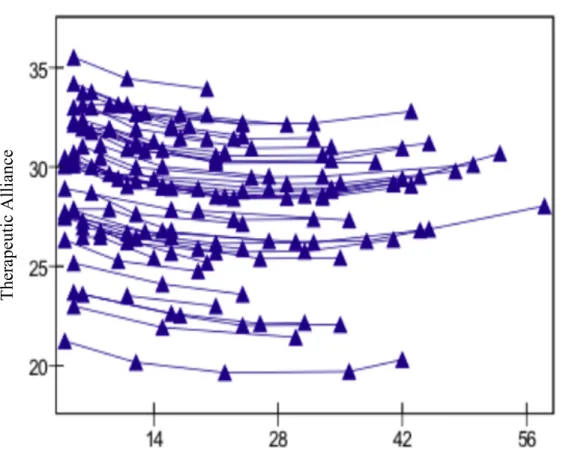
Figure 3.1 Growth Trajectories of Therapeutic Alliance over Time When Controlled for Age, Gender, Psychosocial Functioning, Internalizing and Externalizing Problems. ... 49
LIST OF TABLES
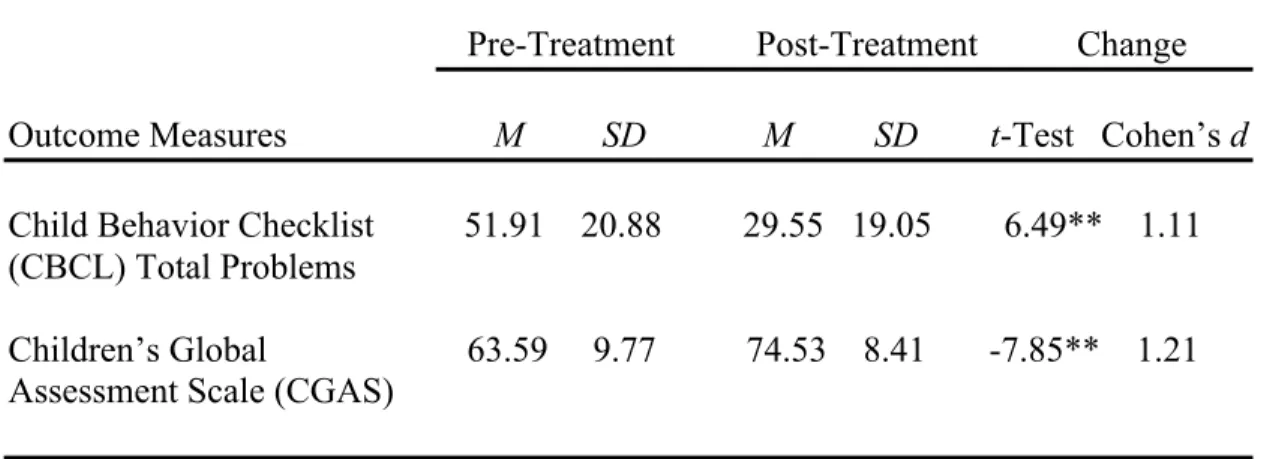
Table 2.1 Comparison of Pre-Treatment and Post-Treatment Scores for Outcome Measures. ... 40 Table 3.1 Descriptive Statistics and Inter-Correlations Between Measures per
Sessions. ... 48 Table 3.2 Summary of Multilevel Model Predicting Therapeutic Alliance by
Age, Gender, Psychosocial Functioning, Internalizing and
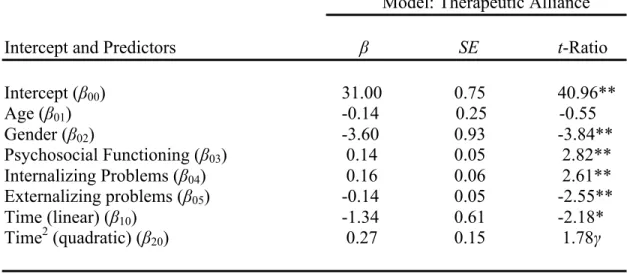
Externalizing Problems and Time in Treatment. ... 48 Table 3.3 Linear Regressions with Therapeutic Alliance Scores and Outcome
ABSTRACT
Therapeutic alliance is the emotional and collaborative relationship between patient and therapist. The concept has attracted substantial theoretical and empirical interest in adult and youth psychotherapy literature as it carries a potential for promoting therapeutic growth. However, the research on therapeutic alliance in psychodynamic child treatment is considerably scarce and newly developing. This study examines the child characteristics of therapeutic alliance, development of therapeutic alliance throughout the process and the association between alliance and treatment outcome in psychodynamic child therapy. In order to measure the quality of therapeutic alliance, 179 therapy sessions from the beginning, middle and end phases of the treatment of 49 children with behavioral problems, who completed psychodynamic therapy with good outcome, were coded with the Therapy Process Observational Coding System-Alliance scale (TPOCS-A). To assess treatment outcome, as in improvement in symptoms and level of psychosocial functionality, the Child Behavior Checklist (CBCL) internalizing and externalizing problem scores and Children's Global Assessment Scale (CGAS) ratings were collected pre- and post-treatment. Hierarchical linear modeling results portrayed a U-shaped quadratic growth trajectory of therapeutic alliance. Girls showed higher alliance scores than boys. Internalizing problems and psychosocial functioning were positively related; whereas externalizing problems were negatively related to therapeutic alliance. No significant associations were found between therapeutic alliance and treatment outcome. These results provide preliminary findings on the growth trajectory and idiographic characteristics of therapeutic alliance over the course of psychodynamic child treatment.
Keywords: therapeutic alliance, psychodynamic therapy, child psychotherapy, process research, outcome research
ÖZET
Terapötik ittifak, hasta ile terapist arasındaki duygu ve işbirliğine dayalı ilişkidir. Terapötik ittifak kavramı, terapötik gelişime olan olası katkısından dolayı, hem yetişkin hem de genç ve çocuk psikoterapi literatüründe teorik ve ampirik açıdan oldukça ilgi çekmiştir. Ancak, psikodinamik çocuk terapisinde terapötik ittifak üzerine olan araştırmalar epey sınırlıdır ve gelişmektedir. Bu çalışma, psikodinamik çocuk terapisinde terapötik ittifakın çocuklara dair özelliklerini, terapi süreci boyunca gelişimini ve sağaltım ile ilişkisini incelemektedir. Terapötik ittifak düzeyini ölçmek için, davranış problemi olan ve psikodinamik terapi sürecini iyi sonuç elde ederek tamamlamış olan 49 çocuğun 179 terapi seansı baş, orta ve son kısımlar olmak üzere, Gözleme Dayalı Terapötik İttifak Aracı ile kodlanmıştır. Sağaltımı, yani semptomların ve psikososyal işlevsellik düzeyinin gelişimini değerlendirmek için Çocuk Davranış Değerlendirme Ölçeği içe ve dışa yönelim problem puanları ile Çocukların Global İşlevsellik Skalası puanları sürecin başında ve sonunda toplanmıştır. Hiyerarşik doğrusal modelleme sonuçlarından elde edilen bulgulara göre, terapötik ittifak U şeklinde kuadratik bir büyüme eğrisi göstermiştir. Kızların terapötik ittifak puanları erkeklere kıyasla daha yüksek olmuştur. Terapi sürecinde, içe yönelim problemleri ve psikososyal işlevsellik terapötik ittifak ile olumlu yönde bir ilişki göstermiş; dışa yönelim problemleri ise terapötik ittifak ile olumsuz yönde bir ilişki göstermiştir. Terapötik ittifak ile sağaltım arasında anlamlı bir ilişki bulunamamıştır. Bu sonuçlar, psikodinamik çocuk terapisinde terapötik ittifakın büyüme eğrisi ve danışanlara özgü özelliklerine dair ön bulgular sunmaktadır.
Anahtar Kelimeler: terapötik ittifak, psikodinamik terapi, çocuk psikoterapisi, süreç araştırması, sonuç araştırması
CHAPTER 1 INTRODUCTION
In a psychotherapy session, a wide range of interactions takes place between the patient and the therapist (Schneider, Midgley, & Duncan, 2010). The affective and collaborative nature of these interactions is called therapeutic alliance (Kazdin, Marciano, & Whitley, 2005). It is the emotional bond of the dyad, in addition to their mutual work on the tasks and goals of the therapy (Bordin, 1979). The concept is rooted in psychoanalytic theory (Freud, 1913) and it has drawn great theoretical and empirical attention since then. As exploring the effective ingredients of psychotherapy has been intriguing for theorists and researchers for many years, therapeutic alliance has been one of the most remarkable candidates that may contribute to a successful psychological treatment (Martin, Garske, & Davis, 2000).
The interest in the beneficial impacts of therapeutic alliance has led researchers to develop various alliance measures and conduct a large number of studies, particularly in adult field (Green, 2009). These studies have been produced primarily in psychotherapy outcome and process research. In outcome research, end results of psychotherapy are analyzed (Orlinsky & Howard, 1986). The most recent meta-analysis (Horvath, Del Re, Flückiger, & Symonds, 2011) of adult psychotherapy outcome studies has shown that strong therapeutic alliance has a robust and consistent association with positive treatment outcomes. In process research, features of psychotherapy process, which includes everything that happens between and within the patient and the therapist, are examined (Orlinsky & Howard, 1986). As therapeutic alliance has a dynamic nature, various studies have been conducted in order to investigate its trajectories throughout the therapy process, and to identify the alliance pattern that facilitates optimal therapeutic gains (Ardito & Rabellino, 2011).
Although there is a substantial body of research in adult literature, studies on therapeutic alliance with child patients are relatively scarce, newly developing and
requires more attention (Shirk, Karver, & Brown, 2011). The most recent and comprehensive meta-analysis of youth alliance studies (McLeod, 2011) found a significant yet, compared to adults, less reliable link between therapeutic alliance and clinical outcomes of youth psychotherapy. McLeod (2011) indicated that more research is needed to be done in order to establish the consistency of the findings on the role therapeutic alliance plays in youth psychotherapy. Moreover, as various therapeutic alliance trajectories have been discovered in the adult process research, there is considerably limited empirical knowledge on the changes in therapeutic alliance over the course of youth treatment (Bickman et al., 2012).
It addition to its empirical value, studying therapeutic alliance between child and therapist is clinically useful and meaningful for several reasons. First of all, unlike adults, children are brought to therapy by their parents; thus they commonly participate in the process involuntarily (Chethik, 2003). Therefore, it is specifically important to form therapeutic alliance with children as it engages the child in the process and promotes further therapeutic work (Shirk & Karver, 2003). Therapeutic alliance may be an instrument for collaborative work (A. Freud, 1946) or it may facilitate growth in child on its own as it provides an experience of a secure bond (Axline, 1947). Latter aspect of therapeutic alliance is particularly relevant for non-behavioral child therapies such as the treatment approach of the current study, psychodynamic child therapy. By any means, there is a high potential for therapeutic alliance to contribute to the clinical improvement of children (McLeod & Weisz, 2005). For instance, as children with externalizing problems have particular difficulty in interpersonal processes (Garcia & Weisz, 2002), they may benefit from a well-established therapeutic alliance. In order to provide an effective treatment for children, it is essential to gain more knowledge on their therapeutic alliance with their therapists, as in what contributes to its formation, how it grows throughout a successful treatment and whether it ensues therapeutic change. Hence, in the current study, child characteristics of therapeutic alliance, changes in therapeutic alliance
over the course of therapy and the link between alliance and treatment outcome will be explored.
In the following literature review, theoretical background, operational definitions, outcome and process studies and measurements of therapeutic alliance will be presented. Theoretical literature includes adult psychotherapies, as the concept in child literature is derived from the adult field. Moreover, it is grounded in the psychodynamic literature, since the concept originates in psychoanalytic theory and the current study is based on psychodynamic child therapy. Empirical literature includes adult studies and measures because the large body of work done with adult patients supports the relatively small research on children. The child empirical literature involves solely the child-therapist alliance studies and measures, as the main focus of the current study is treatment outcome: According to literature, therapeutic alliance with children predicts symptom reduction, whereas alliance with parents prevents premature termination (Hawley & Weisz, 2005). Subsequently, purpose of the current study will be explained.
1.1. PSYCHODYNAMIC BACKGROUND OF THERAPEUTIC ALLIANCE
1.1.1. Therapeutic Alliance in Adult Psychotherapy
The concept of therapeutic alliance, its definition and knowledge of its contributions to psychological treatment have evolved theoretically and empirically in the last century, primarily in adult psychotherapy literature. It originates in psychoanalytic theory and development of the construct dates back to the writings of Freud in 1910s. In On Beginning the Treatment, Freud (1913) argued that strong rapport with a patient, which is one of the vital elements of a successful analysis, is built through establishment of an effective transference. Analyst’s serious interest, sympathetic understanding and removal of patient’s initial resistances pave the way for the patient to form an attachment and unconsciously link the analyst with ¨one of
the imagos of the people by whom he was accustomed to be treated with affection¨ (pp. 139-140). In his earlier papers, therapeutic alliance was portrayed as only based on positive transference, the unconscious distortions of the real relationship (Freud, 1912/1958, 1913). However later in Analysis Terminable and Interminable, Freud (1937/1964) revised his understanding of therapeutic alliance and asserted that a good relationship between an analyst and a patient develops as a result of both positive transference and positive relations that are based on reality.
Zetzel (1956) further elaborated the work of Freud (1937/1964) and coined the term ¨therapeutic alliance¨ that refers to the real aspect of patient-therapist relationship. She theorized that, when the analyst makes an interpretation of transference, therapeutic relationship helps the patient to differentiate between the fragments of past relationships and the actual, current relationship between himself and the analyst. Moreover, she indicated that, as a successful analysis is based on strong therapeutic alliance, existence of healthy parts of patient’s ego functions is a prerequisite for the formation of therapeutic alliance (Zetzel, 1956). Greenson (1965), who was influenced by the work of Zetzel (1956), pointed out the error analysts make in analyzing what actually is an unestablished therapeutic alliance as a negative transference. Therefore he split reactions of patients in two: transference neurosis, which is ¨the experiencing of feelings, drives, attitudes, fantasies, and defenses toward a person in the present which are inappropriate to that person and are a repetition, a displacement of reactions originating in regard to significant persons of early childhood¨ and working alliance, which is ¨nonneurotic, rational rapport which the patient has with his analyst¨; ¨the patient's capacity to work purposefully in the treatment situation¨ (Greenson, 1965, pp. 156-157). He claimed that it is important to establish and sustain working alliance as much as transference neurosis in order to accomplish a successful treatment. In addition, contrary to stances of the analysts in his time period, he discussed that avoiding an aloof and distant attitude, showing understanding, compassion and consideration for the patient help the analyst to establish working alliance (Greenson, 1965).
In 1976, based on the concept of Zetzel (1956), Luborsky introduced two types of therapeutic alliance that evolve consecutively throughout therapy process. In the early period of therapy, when the patient perceives the therapist as warm, supportive, helpful and the treatment as effective it is called Type 1 alliance. In the later period, Type 2 alliance forms when the patient and the therapist share a sense of working collaboratively to attain the treatment goals that are agreed upon mutually. He suggested that establishing both types of alliance promotes therapeutic growth in psychodynamic therapy (Luborsky, 1976). Bordin (1979), who was influenced by the work of Greenson (1965), used his term ¨working alliance¨ and introduced a broad pantheoretical definition that can be used with any therapy approach. He formulated three components of working alliance: goals, tasks and bonds. The concept of goals refer to the mutual agreement and collaboration of patient and therapist on treatment goals; tasks relate to equal efforts of patient and therapist in carrying out the tasks that the treatment demands and bonds pertain to deep, strong relationship of patient and therapist that is based on mutual trust. He proposed that such three means promote strong working alliance that adds to the efficacy of therapy (Bordin, 1979).
In contrast to Zetzel (1956) and the follower theorists that viewed therapeutic alliance and transference as separate concepts, some others perceived patient-therapist relationship solely as a transferential interaction. Brenner (1979) strictly claimed that what has been called as therapeutic or working alliance is simply a part of transference that ¨neither deserve a special name nor require special treatment¨ (pp. 156). In the same manner, Curtis (1979) argued that warm or supportive attitudes of the therapist would only gratify the transferential needs of the patient and lessen the transference interpretation that therapist ought to make. Moreover, he asserted that collaborative attitudes of the patient must be interpreted, which may actually be a disguised form of infantile wishes of parental approval (Curtis, 1979).
On the other hand, Gelso and Carter (1985) agreed with the ones that endorse the formation of a real relationship between therapist and patient alongside of transference relationship; and introduced a threefold quality to therapeutic
relationship: the working alliance, the transference relationship and the real relationship. They indicated that three components are interrelated and experienced as one, rather than distinct entities. Ingredients of working alliance are some of the essential motives that bring both parties to therapy; transferential aspects of the relationship give the interaction a form and depth; strength and positive valence of the real relationship boost working alliance; and working alliance strengthens the real relationship and opens the patient a space to work through his transference reactions without fully harming the relationship or the treatment process (Gelso & Carter, 1985).
Although there had been an ongoing debate in psychodynamic literature on whether therapeutic relationship has a real, current and collaborative element or not; Gaston (1990) concluded that most theorists agree upon a concept that consists of current and real aspects as well as distorted parts that are rooted in the past. Beyond the controversy, in the most recent conceptual work, definition of therapeutic alliance is based on its conscious relationship processes and collaborative features (Horvath et al., 2011).
Gaston (1990) bridged theoretical work and research and hypothesized three roles of alliance in therapeutic change: ¨(a) the alliance as being therapeutic in and of itself; (b) the alliance as being a prerequisite for therapist interventions to be effective; and (c) the alliance as interacting with various types of therapist interventions¨ (Gaston, 1990, pp. 148). The theory of alliance as being curative itself has its origins in the work of Rogers (1957). He stated that for positive change to take place, therapist’s ¨genuineness¨, ¨empathic understanding¨ and ¨unconditional positive regard¨ of the patient are necessary and sufficient (Rogers, 1957, pp. 96). As another advocate of the theory, Bowlby (1988) referred to therapeutic alliance as a secure base where empathic, responsive and trusted therapist promotes exploration of the patient’s inner world. He suggested that secure attachment relationship facilitates change in the patient (Bowlby, 1988). In contrast, Bordin (1979) argued that, rather than being curative itself, therapeutic alliance adds to the improvement of patient, by
means of letting the patient accept, trust and follow the treatment process. In line with Bordin, majority of psychodynamic theorists view therapeutic alliance as a necessary but not sufficient element for successful therapeutic change to take place (Gaston, 1990).
Lastly, Meissner (2007) introduced the ingredients of therapeutic alliance that are fundamental to build and sustain an effective psychotherapy with adults. These are therapeutic framework, which consists of time, frequency, setting, payment and boundaries of therapy; participation, which is for both parties to meet their responsibilities as patient or therapist; empathy, which is the capability of both participants to understand and respond to each other; trust, which is for patient to feel secure and believe in therapist and the process; autonomy, which is the opposite of patient to be highly dependent, suggestible, eager to please, or willing to gain approval from therapist; initiative, which represents patient to lead the therapy session, to make meanings with or independent from the therapist; freedom is for both patient and therapist to participate in the therapy process with their own free will; neutrality and abstinence, which refer to therapist’s objective, observational and non-judgmental therapeutic stance; and ethical considerations such as confidentiality of therapist and truthfulness of both participants (Meissner, 2007).
1.1.2. Therapeutic Alliance in Child Psychotherapy
Parallel with adult literature, literature on therapeutic alliance between child patient and therapist has a long history. In The Psycho-analytical Treatment of Children, Anna Freud (1946) discussed that child’s ¨affectionate attachment¨ to analyst is a ¨prerequisite for all later work¨ in child analyses (pp. 31). She perceived the affective aspect of therapeutic alliance, which includes child’s positive feelings for the analyst, as less mature level of alliance that calls forth the more mature level of alliance, which is to work on child’s problems (Sandler, Kennedy, & Tyson, 1980). She referred to therapeutic relationship as a catalyst for successful interventions to
take place; she advised an establishment period of affectionate relationship prior to analyst’s initial interpretations (A. Freud, 1946). Therefore, she pointed out two qualities of therapeutic alliance: affective, relationship-based aspects and collaborative, work-based aspects.
Contrary to the view of therapeutic relationship as a mediator to successful therapeutic work, Axline (1947) argued that it is the relationship that facilitates therapeutic change, serves as an opportunity for growth of the child. In her book Play Therapy, she described the curative nature of the relationship as follows: The empathic, warm, nonjudgmental and stable therapist sets adequate limits, engages sensitively in the affective and expressive experience of child; thus provides a safe haven to child. Child, who feels secure, respected, accepted and understood in the relationship, begins to discover his inner world, to reveal his true self and to grow as a mature, independent individual (Axline, 1947). Aforementioned, Rogers (1957) contributed to this perspective. He identified the ¨unconditional positive regard¨ of therapist with ¨a mother’s love for her child¨, which he designated as a sufficient ingredient for therapeutic change alongside her empathy and genuineness (pp. 101). Whether the affective quality of therapeutic alliance is perceived as ¨a means to an end¨ or ¨an end in itself¨, establishment of a strong therapeutic relationship is considered as a crucial part of child psychotherapy, throughout the history (Shirk & Saiz, 1992, pp. 716).
There are numerous theorists that further investigated the nature and therapeutic benefits of the relationship that develops between therapist and child. According to the pioneers of attachment theory, Ainsworth (1978) and Bowlby (1979), when child’s primary caregiver, who is generally the mother, is available, supportive, sensitive and responsive to child’s needs, he lives in a secure and confident mode of being. He explores the world with an assurance of a safe base where he can return to when needed. On the other hand, when the caregiver is incapable of serving as such a secure base to the child, child endures a generalized discomfort and insecurity throughout his life; cannot engage in exploratory
experiences or does so with full of anxiety (Ainsworth, 1978; Bowlby 1979). In therapy, therapist forms an emotional bond with child; establishes and maintains a new attachment relationship by virtue of being consistently available, supportive, sensitive and responsive to child. She provides a holding environment where child feels contained, loved, protected and cared about in a way that evokes the healthy maternal-child interactions (Winnicott, 1971). Therefore, if the child is devoid of secure attachment figures, he repairs his early attachment experiences, and within his therapeutic relationship, fulfills his current need of a safe base (Fitton, 2012). Bowlby (1975) underlined the fact that therapist is a temporary attachment figure who should delicately maintain an equilibrium of being the internal representation of the primary caregiver and the external real person at the same time. This temporary attachment helps child to successfully go through individuation-separation process, strengthen self-regulatory capabilities, build interpersonal skills, and establish new, healthy and permanent attachments to others (Diamond et al., 2003).
Furthermore, Gardner (1993) introduced several agents embedded in therapeutic relationship that generate change such as, child spending quality time alone with another, receiving therapist’s focused attention and affection, having a protective but objective adult as an ally in the face of conflict with his parents, being spoken to in a developmentally appropriate yet adult-like manner and experiencing the therapist as an adult who can be fun, humorous and comfortably regressive. He indicated that child may benefit from these qualities of the therapeutic relationship especially if he is deprived of them in his relationships with significant others (Gardner, 1993).
It is inevitable to count play in the therapeutic relationship of child and therapist. Play, the native language of children, has been a component of child psychotherapy techniques since the practices of Melanie Klein and Anna Freud in 1930s. In psychodynamic child psychotherapy, child uses play in order to explore and express his feelings, thoughts, needs, wishes and fantasies which are at times conflicting or burdening to the child. Along with verbalization, child communicates
his inner world to therapist through play, and therapist understands and interprets the meaning of the play to child who then feels understood and gains insight about himself. Therapeutic change takes place through these communications of play that enable child’s affective expression, resolution of conflicts, mastery over burdening events and rehearsal of expressing diverse ideas and behaviors (Russ, 2004). Moreover, as the therapist understands child’s language of play, the communication contributes to construction of a therapeutic relationship that promotes healthy interpersonal representations and functioning (Russ, 2004).
As play is one of the major modes of communication for child, his relationships involve his play relationships to a great extent. Child’s play relationships are rooted in his early childhood, in the plays with his parents. Winnicott (1968) states that play, thus the play relationship, developmentally emerges in the transitional space between baby and mother. The good enough mother creates this space in between inner psychic reality and outer world where the baby and the mother play together, share mutual pleasure and trust, and within their play interactions form an intimate bond with each other. For child, to be able to play is to be healthy, and play itself promotes growth (Winnicott, 1968). Therefore, the quality of his play relationships is closely linked with the well-being of child. In the same manner, Chethik (2001) hypothesized that; a child’s therapeutic alliance with his therapist is associated with the early play relationship with his parents. He conceptualized therapeutic alliance as child’s libidinal attachment to therapist; in which child experiences therapist as a new object that provides him an opportunity to relive and repair his early play relationships. Within the relationship, child uses the therapist as a dependable and constant object in order to play, create, explore and express variety of feelings with the confidence in therapist’s capability to understand and regulate whatever is to come out of child’s internal world (Chethik, 2001).
Chethik (2001) proposed that play relationship of child and therapist consists of two parts: therapeutic alliance and transference relationship. Between the dyad, transference relationship emerges when the child displaces another object onto
therapist and plays out the feelings, themes and conflicts attached to the certain object. Therapeutic alliance, on the other hand, represents the real relationship between the two players. It is child’s experience of therapist as his partner in pretend, whom he safely discloses, narrates and discovers his inner life with, and by whom he feels supported, accepted, welcomed and valued. It includes the child’s actual positive emotions toward his therapist, the trusting, loving and caring bond between the two. Chethik (2001) underlined the fact that aforementioned qualities of therapist and therapy atmosphere facilitate the successful establishment of therapeutic alliance and the appropriate interpretations of transference relationship, which are both curative components of play relationship.
In addition to play relationship, during the periods of therapy hour that the two are not engaged in a play activity but are simply interacting, similar to adults, child exhibits transference reactions and demonstrates pathological patterns of relating, especially when the relationship with therapist deepens (Gardner, 1993). For instance, child may treat the therapist in a hostile manner or push the boundaries of therapist and therapy setting. Unlike his other relationships, in the therapeutic relationship, therapist does not fulfill the pathological relational expectations of child but introduces a healthier way of behaving and relating to others. Furthermore, Gardner (1993) claimed that, strongly established therapeutic bond plays a pivotal role in successfully working through the negative transferential acts of child.
Chused (1999) drew attention to cases where it is difficult for therapist to work through the intense transference reactions of child. For instance, when child verbally attacks to therapist, it may lead to enactments of therapist such as reacting in a defensive, retaliating or conciliatory manner. Conversely, overly deferential, compliant and pleasing behaviors of child may also challenge therapist’s therapeutic abstinence. In another case, instead of therapist’s attuned listening, understanding and reflecting, child may require a more concrete way of experiencing therapist as an available other, through action rather than words, such as via hugging. The neutral therapeutic stance of therapist may be perceived as cold or rejecting by child. Such
instances possibly create an uncomfortable therapy atmosphere, disrupt the therapy process and deteriorate the therapeutic relationship. He underlined that it is specifically difficult with certain children to establish or sustain therapeutic alliance by means of listening, understanding and naming child’s conflicts and distressing emotions. These children include the ones who are traumatized, who have ingrained deprivations, stiff defenses, immature ego functioning, who do not have developed object constancy, self and other differentiation, reality testing, or those with learning disabilities. He suggested therapists that the most crucial thing to do in the face of a relational rupture is to understand how the child perceives the therapist at that moment, to assess the intolerable emotions child feels as the result of his experience of the therapist, to explore what the child’s reactions portray transferentially and to respond in an authentic way that the child can hear and also can feel heard, understood and accepted (Chused, 1999).
As Anna Freud (1946) depicted, therapeutic alliance with children has both relationship-based and work-based aspects. Although it is difficult to segregate the two, thus far, emotional relationship component had been predominantly portrayed. According to Shirk and Saiz (1992), psychodynamic literature on therapeutic alliance with children has focused mainly on the bond, the therapeutic relationship between child and therapist. However, with the emergence of cognitive and behavioral therapies for children, placing an emphasis on child’s collaboration in specific treatment tasks, agreement on treatment goals and involvement in therapy process has increased (Shirk & Saiz, 1992).
Engaging children in therapy process is particularly important, due to the fact that unlike adults, children are brought to therapy by their parents. Frequently, children question why they are in treatment, and they do not feel motivated to participate in therapy; which make it difficult for therapists to form therapeutic alliance with children. Chethik (2003) stated that, children often perceive the stranger who is named therapist within the new setting called therapy as an anxiety-provoking occurrence. They come to therapy in a resistant manner due to their immature ego
functioning and unawareness of their internal difficulties. It is therapist’s mission to support the child to recognize his internal difficulties and thereby establish therapeutic alliance in the initial sessions (Chethik, 2003). Schowalter (1976) claimed that, children who are aware of their distress and seek a relief from anxiety are more apt to establish therapeutic alliance compared to those who do not suffer consciously, who present symptoms that are related to rigid defenses against anxiety and whose anxiety increases due to the nature of therapy throughout the early period of treatment. He added that, therapist contributes to creating therapeutic alliance in the early period by correctly interpreting child’s affects and defenses, noticing first impressions of child that evoke discomforting feelings in herself and resolving countertransference issues (Schowalter, 1976).
In contrast to cognitive and behavioral psychotherapies, which have specific therapeutic procedures to follow and structured therapeutic tasks to perform, in psychodynamic child therapy the tasks are not structured nor directed, therefore the respective responsibilities of child and therapist are subtler. Primarily, therapist is in charge of fixating and sustaining the time, frequency, duration and place of therapy sessions, which all promote a sense of safety in child (Chethik, 2003). Child is expected to come to sessions and produce material (Chethik, 2003); to choose any means, such as toys, art and craft materials or solely words; to express, explore and elaborate his inner life through play or only through verbalization. Reciprocally, therapist affectively engages in child’s experience; emphasizes child’s feelings and defenses, comments on recurrent patterns of child and discovers the meanings embedded in child’s expressions (Chethik, 2003). In order to make meaning, child’s active collaboration is needed; child and therapist work together with equal effort to understand, untangle and link the feelings, impulses, wishes, needs and experiences that arise within the therapy hour (Chazan, 2002). This contribution of child to therapeutic work is possible with a formed therapeutic alliance, which comprises of observing rather than experiencing ego of the child (Greenson, 1965). Moreover,
when the child refuses to collaborate, it is therapist’s duty to persistently work with child’s resistances (Chethik, 2003).
Another task of child is to abide by the therapy rules, which are not to harm self, therapist or room materials, not to take the room materials, such as toys, outside of the therapy room, and not to leave the room, except to go to the bathroom, until the therapy hour is over. Therapist, on the other hand, is responsible of setting limits and reminding child of the rules when needed. In accordance with Axelman (2006), therapist has a vital and delicate work of setting limits and simultaneously tolerating child’s strong affects, impulses, demands and defiances. In the face of aggressive acts of child, therapist survives child’s destruction by not retaliating or retreating but by keeping a tolerant attitude and setting clear and definite limits. The limits conveyed by therapist paves the way for child to discover the limits of self and other, the boundaries of the relationship between the dyad, and therefore to engage in a mutual partnership with the other (Axelman, 2006). Boundaries of child, therapist and therapy setting enhance therapeutic alliance and enable the child to unfold his inner world safely and freely (Chethik, 2003).
Concisely, a relationship that contains mutual trust, understanding, caring and liking and a collaboration in unraveling child’s inner world constitute therapeutic alliance between therapist and child in psychodynamic child psychotherapy. Theoretical literature repeatedly reveals the importance of cultivating therapeutic alliance throughout therapy process in order to promote a fruitful treatment for children.
1.2. EMPIRICAL LITERATURE ON THERAPEUTIC ALLIANCE
1.2.1. Operational Definitions of Therapeutic Alliance
In theoretical and empirical adult literature, there has been diversity in labeling and defining the concept of therapeutic alliance. It has been labeled as
¨therapeutic alliance¨, ¨working alliance¨, ¨helping alliance¨, ¨treatment alliance¨ and so on (Barber & Muran, 2010). Aforestated, Zetzel (1956) coined the term ¨therapeutic alliance¨ and conceptualized it as the real aspect of patient-therapist relationship, as the development of a therapeutic bond between patient and therapist. Greenson (1965) named it ¨working alliance¨, which he defined as patient working purposefully with therapist in order to achieve mutually agreed goals. Luborsky (1976) called it ¨helping alliance¨ that consists of two types: patient experiencing therapist as warm and supportive, and patient and therapist working together on mutually agreed problems. Dare, Dreher, Holder and Sandler (1992) labeled it “treatment alliance” which is patient’s awareness of and agreement on his difficulties, his willingness to work on the difficulties and his cooperation with therapist in the therapeutic work, particularly through its periods that are hard to endure. Hartley and Strupp (1983) formulized it as an interpersonal process that has five components: a pact, an affective bond, insight, interventions of therapist and self-relatedness of patient. Gaston (1990) defined the four elements in it: capability of patient to use the part of the ego that allies with therapist to work collaboratively, development of an emotional bond between patient and therapist, mutual agreement on tasks and goals of the treatment, and therapist’s attentive, responsive and understanding stance. Bordin (1979) introduced a pantheoretical, tripartite model for it: goals, tasks and bonds. ¨Goals¨ refer to mutually confirmed and valued objectives that patient and therapist pursue. ¨Tasks¨ represent the therapeutic work responsibilities of patient and therapist that are found to be effective and relevant by both parties. ¨Bond¨ addresses positive emotional tie between patient and therapist that involves mutual acceptance, confidence and trust.
In order to evaluate therapeutic alliance between adult patient and therapist in empirical studies, multitude of measures have been developed. Measures differ in conceptualization of therapeutic alliance; thereby assess slightly different aspects of the construct. As a result, theoretical framework of the measure that is used in a study determines the study’s operational definition of therapeutic alliance. Although they
differ in conceptualization, measures, thus the studies share two core aspects: the interpersonal relationship between therapist and patient, and their mutual investment in the ends and means of the treatment (Gelo, Pritz, & Rieken, 2015).
The operational definitions of therapeutic alliance in child empirical literature are derived from adult literature. The theoretical framework of the measures that have been developed to assess therapeutic alliance between child and therapist are based on the conceptualizations of Greenson (1965), Luborsky (1976), Bordin (1979) or Hartley and Strupp (1983). Diverging from adult conceptualizations, child therapeutic alliance does not include a dimension related to mutual agreement on goals due to involvement of parents as informants and children’s developmental incompetency in constructing and contracting for the goals (DiGiuseppe, Linscott, & Jilton, 1996). In child empirical literature, the concept consists of two components: affective relationship, which is the emotional bond between child and therapist; and collaborative relationship, which is the mutual work of child and therapist on therapeutic tasks (Shirk et al., 2011). Part of the literature suggested that the two components serve as separate but correlated therapeutic alliance dimensions (e.g. Estrada & Russell, 1999; McLeod & Weisz, 2005; Shirk & Saiz, 1992). However, other studies proposed a single factor solution for the construct (e.g. DiGiuseppe et al., 1996; Faw, Hogue, Johnson, Diamond, & Liddle, 2005; Hogue, Dauber, Stambaugh, Cecero, & Liddle, 2006).
Parallel with the child literature, in the present study, operational definition of therapeutic alliance is the affective bond between child and therapist, which involves their trust in, positive emotions for each other, in addition to their collaborative work, which includes their equal effort on the therapeutic tasks (McLeod, 2005).
1.2.2. Therapeutic Alliance in Adult Empirical Literature
1.2.2.1. Outcome Research
1.2.2.1.1. Relation Between Alliance and Outcome
Since 1970s, there has been a vast increase in empirical research on the relationship between therapeutic alliance and outcome of adult psychotherapy. Psychodynamic theories on therapeutic alliance, Bordin’s introduction of a pantheoretical definition of the concept, the measures that had been developed to assess the construct and the Dodo Bird verdict (Luborsky, Singer, Luborsky, 1975) have aroused great interest in the influences of therapeutic alliance on treatment outcome (Gelo et al., 2015).
The Dodo Bird verdict proposed that all types of psychotherapies lead to the same outcomes despite their different techniques (Luborsky et al., 1975). This statement influenced the research on common factors, the therapeutic factors that every psychotherapy approach share in common regardless of their specific techniques, and the impact of these factors on treatment outcome. In the group of common factors, therapeutic alliance has been one of the most appealing factors to explore among researchers (Gelo et al., 2015). In order to investigate the link between therapeutic alliance and treatment outcome, a large amount of studies have been conducted. Several meta-analyses (Horvath & Bedi, 2002; Horvath et al., 2011; Horvath & Symonds, 1991; Martin et al., 2000) of the studies reported that there is a moderate but consistent relationship between therapeutic alliance and adult psychological treatment outcome across types of treatment (e.g. psychodynamic, cognitive-behavioral, interpersonal therapy), lengths of treatment (e.g. less than 10 sessions, more than 50 sessions), types of presenting problem (e.g. depression, anxiety, eating disorders), timings of alliance measurement (early, middle, late, averaged), types of alliance measure (e.g. Working Alliance Inventory, Vanderbilt
Therapeutic Alliance Scale), types of outcome measures (e.g. Beck's Depression Inventory, Symptom Checklist), and raters of alliance and outcome measures (patient, therapist, independent observer); that strong alliance is associated with better outcomes of psychotherapy.
The most recent and comprehensive meta-analysis (Horvath et al., 2011) synthesized 201 empirical studies on the relation of therapeutic alliance to adult individual psychotherapy outcome that had been conducted between 1973 and 2009. The results of the meta-analysis had an effect size of .28 that is statistically significant, portraying a moderate but considerably reliable relationship between therapeutic alliance and treatment outcome (Horvath et al., 2011). Most of the research studies on the relationship between therapeutic alliance and outcome have consistently found an association between the two variables. The findings of several outcome studies on adult psychotherapies are presented below chronologically.
Luborsky, Crits-Christoph, Alexander, Margolis and Cohen (1983) examined the observer ratings of therapeutic alliance in early and late psychodynamic sessions of patients with non-psychotic symptoms. According to results of the study, therapeutic alliance in the beginning and end of the therapy process was moderately consistent, and scores of therapeutic alliance from both phases of therapy predicted outcome significantly (Luborsky et al., 1983). In the study of Krupnick and colleagues (1996), to assess therapeutic alliance, observers rated early, middle and late therapy sessions of interpersonal psychotherapy, cognitive behavior therapy and active or placebo pharmacotherapy for patients with major depressive disorder. Therapeutic alliance was evaluated with early scores and average scores of three phases; both measures were significantly correlated with outcome of each type of treatment (Krupnick et al., 1996).
Barber and colleagues (1999) conducted a study among cocaine dependent patients treated in cognitive-behavioral therapy, psychodynamic therapy or pharmacotherapy. They investigated the therapist and patient reports of therapeutic alliance, and the relationship between alliance scores and first and last month
assessments of outcome. The authors observed that patient reports of therapeutic alliance predicted drug-based outcomes only at the first month, but predicted depression-based outcomes at the termination phase as well. Moreover, patient reports of therapeutic alliance were found to be more predictive of outcome than therapist reports (Barber et al., 1999). In the study of Hilliard, Henry and Strupp (2000), therapist, patient and observers’ early therapeutic alliance ratings of psychodynamic therapy sessions were evaluated. As the observer scores of early therapeutic alliance were associated with decrease in patient’s introjective behaviors, therapist ratings of early alliance were related to symptom reduction and better global outcomes, and patient self-reports of early alliance were solely linked to better global outcome ratings (Hilliard et al., 2000).
In their study, Klein and colleagues (2003) investigated the early therapeutic alliance ratings of chronically depressed patients who were in cognitive-behavioral analysis system of psychotherapy, alone or with medication. Their findings showed that early therapeutic alliance significantly predicted successive decrease in depressive symptoms (Klein et al., 2003). Zuroff and Blatt (2006) examined the early perceptions of patients with depressive symptoms of therapeutic alliance. They observed that patients’ early perceptions of therapeutic relationship as positive predicted the subsequent rate of decrease in maladjustment symptoms and increase in adaptive capacities and global functioning across cognitive-behavioral therapy and interpersonal therapy (Zuroff & Blatt, 2006). Johansson and Jansson (2010) analyzed the therapeutic alliance and symptom ratings of patients who were diagnosed with mood, anxiety or eating disorders and who received routine psychiatric outpatient treatment that was based on pharmacological and psychodynamic grounds. The data was collected at the beginning and termination of treatment and the results revealed that although initial therapeutic alliance was not associated with symptom reduction, late assessment of therapeutic alliance significantly explained 15% of the variance of the treatment outcome. Authors stated that improvement of therapeutic alliance was significantly related to positive outcomes (Johansson & Jansson, 2010).
In a study (Cronin, Brand, & Mattanah, 2014) that was conducted among patients with dissociative disorders, higher patient and therapist-rated alliance scores were found to be moderately to strongly correlated with lower levels of general distress, dissociation and post-traumatic stress symptoms, and with higher levels of adaptive capacities toward the end of the treatment. Falkenström, Granström and Holmqvist (2014) conducted a study among patients with anxiety, depression, relationship, work-related or psychosomatic problems. The findings of the study revealed that, even when the effects of initial symptom level and early symptom improvement were controlled, patient’s rating of therapeutic alliance predicted the outcome of psychological distress (Falkenström et al., 2014). Leuteritz and colleagues (2017) investigated the link between therapeutic alliance and treatment outcome in short-term psychodynamic psychotherapy for breast cancer patients with depressive symptoms. The patient ratings of therapeutic alliance at the end of treatment were significantly correlated with outcome scores of depression (Leuteritz et al., 2017).
Despite the large and diverse evidence for therapeutic alliance and positive treatment outcome relationship, there are some research studies that had demonstrated a non-significant relationship between the two. In the study of Gaston, Marmar, Gallagher and Thompson (1991), authors assessed early and middle therapeutic alliance scores of therapists and elderly depressed adults who received behavioral, cognitive, or brief dynamic therapy. They investigated the association between therapeutic alliance and treatment outcome over and above initial symptoms and symptomatic improvements; however no significant relationship was found. It should be noted that the study had a relatively small sample size (Gaston et al., 1991). Moreover, Feeley, DeRubeis and Gelfand (1999) conducted a study among patients who were treated in cognitive pharmacotherapy alone or with medication for depression. Observers rated therapeutic alliance based on early and late therapy sessions. In accordance with results, alliance did not predict subsequent symptom change; nevertheless a trend in that direction was observed. This study was limited by
small number of participants as well (Feeley et al., 1999). Lastly, Hendriksen, Peen, Van, Barber and Dekker (2014) examined the self-report therapeutic alliance scores of patients with major depressive disorder at middle and end phases of treatment. It was found that therapeutic alliance did not predict consequent symptom change. Authors stated that timing of alliance measures might have led to non-significant results (Hendriksen et al., 2014).
1.2.2.1.2. Therapeutic Alliance as Outcome
The relationship between therapeutic alliance that is assessed during the process and treatment outcome that is measured at the end of therapy had been presented thus far. Moreover, therapeutic alliance can be a treatment outcome itself; bringing about a strong therapeutic alliance may be a treatment goal. In addition to knowledge on the significant link between therapeutic alliance and treatment outcome, shedding light on the idiographic characteristics of therapeutic alliance is academically and clinically beneficial. Thus, several studies on the patient factors that are associated with a strong therapeutic alliance are presented below.
In a study among patients with depression, over the course of therapy, therapeutic alliance with perfectionistic patients did not develop as much as it did with patients who were low on perfectionism (Zuroff et al., 2000). In another study, reports of participants, who were being treated for bulimia nervosa, revealed that patient expectation of improvement is positively related to therapeutic alliance in early and middle phases of therapy (Constantino, Arnow, Blasey, & Agras, 2005). Another study investigated the patient characteristics of participants with schizophrenia and found that baseline level of interpersonal functioning of patients predicts the early therapeutic alliance ratings of therapists (Couture et al., 2006). In a review, authors portrayed that patients who evaluate their attachment patterns as more secure, evaluate the therapeutic alliance higher (Smith, Msetfi, & Golding, 2010). In a study (Cichocki, 2015) it was observed that when patient is older and his social
network is smaller, early therapeutic alliance rating of the patient is higher. The author attributed this result to ¨loneliness effect¨ in which patient is longing for a supportive relationship, or to overestimation of the strength of therapeutic alliance due to patient’s misinterpretations of social cues (Cichocki, 2015).
1.2.2.2. Process Research
Due to the fact that therapeutic alliance between therapist and patient contains human interactions that are dynamic, since 1990s, there has been an increasing research interest in the developmental courses of therapeutic alliance across time (Gelo et al., 2015). Therefore, in addition to the studies that investigated whether or not level of therapeutic alliance has an association with outcome, there have been others that researched how therapeutic alliance changes throughout the therapy process and how its patterns have an impact on outcome.
In process studies, therapeutic alliance has been measured successively or at multiple points over the course of treatment for the purpose of examining its trajectories. Studies revealed various temporal shapes of therapeutic alliance: more or less stable alliance (e.g. Golden & Robbins, 1990; Kramer, de Roten, Beretta, Michel, & Despland, 2009; Piper, Ogrodniczuk, Lamarche, Hilscher, & Joyce, 2005; Stiles, Agnew-Davies, Hardy, Barkham, & Shapiro, 1998), linear alliance growth (e.g. Hilsenroth, Peters, & Ackerman, 2004; Sexton, Hembre, & Kvarme, 1996), U-shaped quadratic alliance growth (e.g. Gelso & Carter, 1994; Horvath & Luborsky, 1993; Kivlighan & Shaughnessy, 2000), reverse U-shaped quadratic alliance growth (e.g. Smits, Stinckens, Luyckx, & Claes, 2015) and V-shaped alliance patterns defined as frequent rupture-repair cycles (e.g. Stiles et al., 2004; Strauss et al., 2006).
Furthermore, relationship between these patterns and treatment outcome has been investigated. Several studies have reported that linear growth of therapeutic alliance is related to positive therapeutic outcomes. In their study, Klee, Abeles and Muller (1990) found that the patients with more therapeutic improvement were the
ones who gained significant, linear increase in therapeutic alliance over the course of treatment. Moreover, de Roten and colleagues (2004) demonstrated with their study among patients diagnosed with anxiety, depression or personality disorders that linear growth patterns of therapeutic alliance is more predictive of symptom improvement and social adjustment than stable course of alliance. However another study (Kramer, de Roten, Beretta, Michel, & Despland, 2008), that had patients diagnosed with similar disorders as participants, showed that not an increasing pattern but a stable pattern is associated with symptom reduction.
On the contrary, some other evidence portrayed that, rather than a stable alliance or linear alliance growth, positive outcome of therapy is closely linked with a curvilinear pattern through the process with ruptures and repairs in therapeutic relationship. Safran, Muran and Eubanks-Carter (2011) conducted a meta-analysis in order to inspect the importance of alliance rupture-repair processes for therapeutic gains; and they found a significant correlation between rupture-repair episodes of process and positive treatment outcome. In their study among patients with depressive symptoms, Stiles and colleagues (2004) found that the patients who experienced an alliance pattern with ruptures followed by rapid repairs showed more improvement compared to the ones with stable or linear alliance growth. Moreover, Strauss and colleagues (2006) conducted a study with participants who were diagnosed with avoidant personality disorder or obsessive-compulsive personality disorder. It was observed that occurrences of ruptures and their repairs predict more decreases in symptoms of personality disorder and depression (Strauss et al., 2006).
These rupture and repair findings led to the discovery of two crucial phases in the therapy process for a successful treatment with adults. The first phase includes the initial sessions when therapeutic alliance is established. It is important to cultivate adequate levels of collaboration and confidence in the early sessions in order to build a strong base to rest of the treatment (Ardito & Rabellino, 2011). This view was supported by findings, which indicated that adult patients form opinions about the therapeutic relationship early in the process, and their opinions remain more or less
stable throughout the treatment (e.g. Horvath & Luborsky, 1993; Martin et al., 2000). The second phase is when there is an increase in transference reactions and when the therapist challenges the problematic patterns of the patient. As there may be deterioration in the relationship, it is crucial to work through and repair the ruptures that may take place in the second phase (Ardito & Rabellino, 2011). A number of studies (e.g. Bandeau & Wampold, 1991; Safran & Segal, 1990) argued that when the conflictual patterns of the patient arise, in the case of therapist successfully analyzing and working through the conflicts and the patient getting involved in therapist interventions rather than avoiding them strengthens the therapeutic relationship and increases the therapeutic gains.
1.2.2.3. Measuring Alliance in Adult Psychotherapy
More than 30 alliance measures have been developed in order to investigate the role therapeutic alliance plays in psychotherapy with adults (Horvath et al., 2011). There are four main instruments that have been used in majority of alliance studies: Helping Alliance Questionnaire (HAq; Luborsky et al., 1983), Vanderbilt Therapeutic Alliance Scale (VTAS; Hartley & Strupp, 1983), Working Alliance Inventory (WAI; Horvath & Greenberg, 1986, 1989) and California Psychotherapy Alliance Scales (CALPAS; Gaston & Marmar, 1994). HAq was developed based on Luborsky’s (1976) two types of therapeutic alliance and it assesses therapeutic alliance from perspectives of both patient and therapist. VTAS was designed according to Strupp and Binder’s (1984) conceptualizations and clinical observers rate the scale by observing tapes of therapy sessions. WAI measures therapeutic alliance based on Bordin (1979)’s tripartite model. CALPAS is developed according to the four components of therapeutic alliance that Gaston (1990) introduced. WAI and CALPAS have patient, therapist and observer forms. Moreover, each of these four measures has an acceptable level of internal consistency (Horvath et al., 2011).
1.2.3. Therapeutic Alliance in Child Empirical Literature
1.2.3.1. Outcome Research
Hundreds of studies have been conducted in adult psychotherapy literature in order to examine the link between patient-therapist therapeutic alliance and the outcome of therapy. Obtained from the findings of these studies, there is a great evidence for the significant relationship between strong therapeutic alliance and successful treatment outcome in adult psychotherapy (Horvath et al., 2011). In contrast to the adult field, empirical literature on the association between the quality of therapeutic alliance and treatment outcome in child psychotherapy is relatively new and scarce (Maltzman, 2016).
The most recent and comprehensive meta-analysis (McLeod, 2011) included 38 youth alliance-outcome studies conducted between 1992 and 2009 and revealed that there is an association between strong therapeutic alliance and successful treatment outcome in youth psychotherapy as well. However, as the effect size of the meta-analysis was .14, it shows that the association is not as strong as it is in adult psychotherapy, which was .28 in the most recent meta-analysis of adult alliance literature (Horvath et al., 2011). Compared to the adult field, findings of the child alliance-outcome studies revealed more inconsistent and mixed results across several methodological factors (McLeod, Southam-Gerow, & Kendall, 2017). For instance, although the therapeutic alliance-outcome relationship was found to be consistent across various adult patient pre-treatment characteristics, the child alliance meta-analysis portrayed that the relation differs according to child’s demographic and clinical characteristics (McLeod, 2011). The child psychotherapy studies on therapeutic alliance and outcome, and the effects of child characteristics on the quality of therapeutic alliance and on the alliance-outcome associations are presented below.
1.2.3.1.1. Relation Between Alliance and Outcome
Gorin (1993) examined the relationship between therapist reports of therapeutic alliance and treatment outcomes in her study with 31 youth diagnosed with adjustment disorder or functional enuresis. Reports were collected at three different times over the course of treatment, and sum of the scores were calculated. Higher therapeutic alliance scores were found to be correlated with the positive changes in impairments. Kendall and colleagues (1997) conducted a study among 94 children aged 9-13, diagnosed with anxiety disorders and randomly assigned to CBT or waitlist control group. The perspectives of children on therapeutic alliance were assessed at post-treatment. No significant association between child-therapist alliance and changes in anxiety symptoms were found. The study of Noser and Bickman (2000) had a sample of 240 youth aged 12-17 in residential treatment who filled out therapeutic alliance forms at the late stage of the process. The results of the study showed that stronger therapeutic alliance was significantly correlated with better outcomes, which were decreases in behavior problems and increases in global functioning.
McLeod and Weisz (2005) conducted a study among 22 children aged 8-14 who were being treated in outpatient community mental health clinics with treatment-as-usual for depressive or anxiety disorders. Randomly selected four sessions from beginning, middle and end of the therapy processes were coded by independent observers and mean of the scores were used for analyses. The findings revealed that a positive child-therapist therapeutic alliance was not associated with a reduction in total internalizing problems or depressive symptoms, but it was significantly linked with a reduction in anxiety symptoms at the end of therapy (McLeod & Weisz, 2005). The same year, Kazdin and colleagues (2005) conducted a study with 185 children aged 3-14, receiving cognitive-behavioral therapy for oppositional, aggressive, and antisocial behavior. Therapeutic alliance was measured at two points, early and late in treatment by child and therapist self-reports and the scores were summed. According