HISTORY OF ARCHAEOLOGICAL AND CULTURAL HERITAGE
MANAGEMENT IN TURKEY AND EUROPE: A LOOK FROM THE
PAST TO THE PRESENT
The Institute of Economics and Social Sciences
of
Bilkent University
by
DİNÇ SARAÇ
In Partial Fulfillment of the Requirements for the Degree of
MASTER OF ARTS
in
THE DEPARTMENT OF
ARCHAEOLOGY AND HISTORY OF ART
BİLKENT UNIVERSITY
ANKARA
November 2003
I certify that I have read this thesis and have found that it is fully adequate, in scope and in quality, as a thesis for the degree of Master of Arts.
--- Dr. Julian Bennett Supervisor
I certify that I have read this thesis and have found that it is fully adequate, in scope and in quality, as a thesis for the degree of Master of Arts.
--- Prof. Dr. Engin Özgen
Examining Committee Member
I certify that I have read this thesis and have found that it is fully adequate, in scope and in quality, as a thesis for the degree of Master of Arts.
--- Dr. Yaşar Ersoy
Examining Committee Member
Approval of the Institute of Economics and Social Sciences
--- Prof. Dr. Kürşat Aydoğan Director
ABSTRACT
HISTORY OF ARCHAEOLOGICAL AND CULTURAL HERITAGE MANAGEMENT IN TURKEY AND EUROPE: A LOOK FROM THE PAST TO
THE PRESENT Saraç, Dinç
Master, Department of Archaeology and History of Art Supervisor: Dr. Julian Bennett
November 2003
This paper explores the historical evolution of archaeological heritage management in Turkey and in Europe. Its overall aim is to draw attention to the growing
significance of archaeological heritage management, and to discuss the modern approaches related to this field. Within the European context, the history of archaeological protection goes back to the seventeenth century. In the nineteenth century, the preservation of archaeological heritage became a firmly established concept all over Europe when most of the European countries established
legislations and relevant institutions associated with archaeology. After World War II, archaeology became a tool to rehabilitate the European historical past in advance of redevelopment in the war-torn cities of Europe. Today, archaeological heritage management in Europe is regarded as the collective responsibility of all nations and all disciplines. Turkey has a long experience in archaeology like most of the
European countries and it possesses substantial archaeological resources, but the archaeological heritage in the country is not adequately preserved and managed due to administrative, bureaucratic, educational, legislative and economic problems. These problems, which also exist in most of the European countries such as Greece and Italy, are needed to be overcome by Turkey preparing to become a member of the European Union.
ÖZET
TÜRKİYE VE AVRUPA’DA ARKEOLOJİK MİRAS YÖNETİMİNİN TARİHİ: GEÇMİŞTEN BUGÜNE BİR BAKIŞ
Saraç, Dinç
Yüksek Lisans, Arkeoloji ve Sanat Tarihi Bölümü Tez Yöneticisi: Dr. Julian Bennett
Kasım 2003
Bu çalışma Türkiye ve Avrupa’da arkeolojik miras yönetiminin tarihsel gelişimini incelemektedir. Tezin en öncelikli amacı arkeolojik miras yönetimi konusunun önemine dikkat çekmek, ve bu alandaki modern yaklaşımları tartışmaktır. Avrupa’da arkeolojik eserleri koruma onyedinci yüzyılda başlar. Ondokuzuncu yüzyılda, Avrupa ülkelerinin çoğunun arkeolojiyle ilgili kanunlarını, enstitülerini kurdukları dönemde arkeolojik miras yönetimi Avrupa’da yerleşmiş bir konu haline gelmiştir. İkinci Dünya Savaşı’ndan sonra, yıkıma uğramış Avrupa şehirlerinin tekrar yapılanma sürecinde, arkeoloji, Avrupa’nın tarihsel geçmişini canlandırmada kullanılan bir araç haline gelmiştir. Bugün, Avrupa’da arkeolojik miras yönetimi konusu bütün ülkelerin ve disiplinlerin ortak sorumluluğu olarak algılanmaktadır. Büyük arkeolojik kaynaklara sahip olan Türkiye’nin de çoğu Avrupa ülkesi gibi arkeolojide uzun bir geçmişi vardır. Fakat Türkiye’deki arkeolojik miras,
yönetimsel, bürokratik, eğitimsel, yasal ve ekonomik sorunlar nedeniyle gerektiği şekilde korunamamakta ve yönetilememektedir. Yunanistan ve İtalya gibi çoğu Avrupa ülkesinde de varolan bu sorunlar, Avrupa Birliği üyesi olmaya hazırlanan Türkiye tarafından aşılması gereken sorunlardır.
ACKNOWLEDGMENTS
There is a bunch of people who have made contributions to this thesis. First, I am most grateful to Dr. Julian Bennett for his friendly and positive attitude during the time we worked together. He has always been supportive and creative in his comments. I would also like to thank Prof. Dr. Engin Özgen and Dr. Yaşar Ersoy for sharing their valuable comments and experiences. Their remarks helped me to develop the scope of my research.
My heartfelt thanks go to Assoc. Prof. İlknur Özgen for her great support when I first considered a career in archaeology. She is also the one who has given me the opportunity to work in the Hacımusalar excavations where I learned a lot about archaeology. I would also like to acknowledge Assoc. Prof. Marie-Henriette Gates, Asst. Prof. Charles Gates, Dr. Jacques Morin, Dr. Jean Greenhalgh for their contributions during my education. I do not wish to forget to mention Dr. Norbert Karg who has made me like Anatolian archaeology.
I would like to thank Semra Salgırlı from the General Directorate of Cultural Heritage and Museums, who provided me with valuable information and statistics to be used in my work.
I also owe a lot to my friends. Ceren, İlke, Suna, Sinan, Bülent, Ömer and Deniz were my moral tutors all the time. I am also indebted to my lovely mother who has always been beside me.
TABLE OF CONTENTS
ABSTRACT………...………..iii ÖZET...iv ACKNOWLEDGMENTS………....v TABLE OF CONTENTS………...vi LIST OF FIGURES...viii ABBREVIATIONS………...…...x CHAPTER I: INTRODUCTION………...1CHAPTER II: THE PRESERVATION AND MANAGEMENT OF ARCHAEOLOGICAL HERITAGE IN EUROPE: AN OVERVIEW...4
CHAPTER III: THE PRESERVATION AND MANAGEMENT OF ARCHAEOLOGICAL HERITAGE IN TURKEY....………....27
3.1 The Ottomans and their Cultural Heritage...27
CHAPTER IV: THE PERIOD OF THE EARLY REPUBLIC TO THE END OF THE 20TH CENTURY...53
CHAPTER V: ARCHAEOLOGICAL HERITAGE MANAGEMENT IN TURKEY AT THE PRESENT...………....66
5.1 Archaeological Inventories ...68
5.2 Destruction.………...81
5.3 Illicit Digging and the Trade of Antiquities...90
5.5 Education and Archaeology...104
5.6 The Economy and Archaeology ...111
CHAPTER VI: CONCLUSION……….………..119
BIBLIOGRAPHY………...123
APPENDIX A………...133
APPENDIX B...136
LIST OF FIGURES
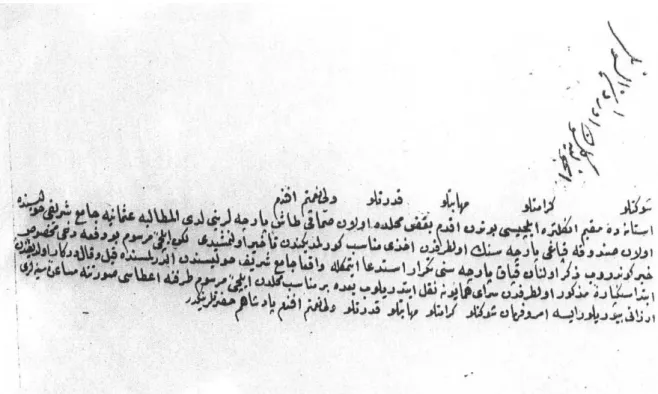
Figure 1 The Ottoman edict for the preservation of column drums in Athens...158 (Paksoy, 1993: 213)
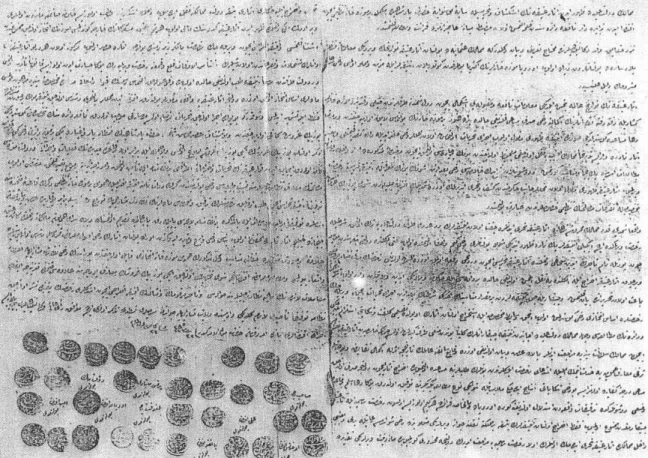
Figure 2 The Ottoman edict for the preservation of Seljukid Inn at Aksaray...159 (Paksoy, 1993: 214)
Figure 3 The Ottoman edict regarding the requests of a British Ambassador...160 (Paksoy, 1993: 219)
Figure 4 The oldest Legislation of Antiquities...161 (Paksoy, 1993: 221)
Figure 5 Osman Hamdi Bey...162 (Mansel, 1960: fig.8)
Figure 6 Lagina excavations...162 (Mansel, 1960: fig.9 )
Figure 7 The excavations at Sidon...163 (Mansel, 1960: fig.11-12)
Figure 8 Istanbul Archaeology Museum...164 (Mansel, 1960: fig.14-15)
Figure 9 Osman Hamdi Bey...165 (Mansel, 1960: fig.23)
Figure 10 Gavurkale excavations...166 (Başgelen, 1998: 4)
Figure 11 Ahlatlıbel excavations...166 (Başgelen, 1998: 5)
Figure 12 The first excavations at Alacahöyük...167 (Çığ, 2003: 12)
Figure 13 Asklepieion at Pergamon...167 (Çığ, 2003: 14 )
Figure 14 Dionysos and Ariadne Mosaic, Zeugma...168 (Haley, 2002: Pl.15)
Figure 15 İvriz Relief...169 (Gürel, M.T. January 13, 2003. “2900 Yillik Anita Kursun,” Hurriyet) Figure 16 Unauthorized construction on the Byzantine fortifications...170
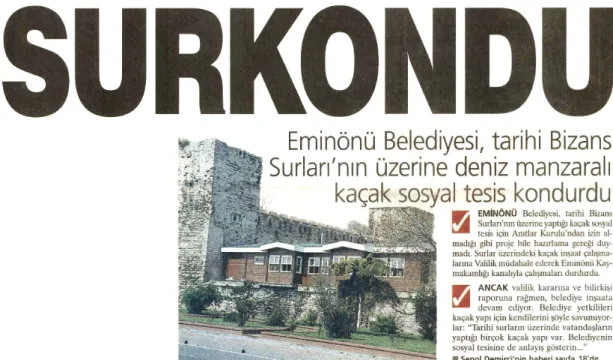
(Demirci, Ş. April 14, 2002. “Belediyekondu,” Milliyet, 18.)
Figure 17 The Museum Week...171 (May 19, 2003. “Miting Degil, Muze Gezisi,” Hurriyet, 4.)
ABBREVIATIONS
BA Archives of the Turkish Prime Ministry
BK Regional Commissions of Preservation for Cultural and Natural Entities, Turkey
ICAHM International Committee of Archaeological Heritage Management ICCD The Central Institute for Inventory and Documentation, Italy ICCROM International Center for the Study of the Preservation and
Restoration of Cultural Property
ICOMOS International Council on Monuments and Sites KTB Turkish Ministry of Culture and Tourism
KVMGM General Directorate of Cultural Heritage and Museums, Turkey MBCA The Italian Ministry of Culture
ODTU Middle East Technical University, Turkey
PPG16 Planning Policy Guidance Note 16. Archaeology and Planning, England
TAY Archaeological Settlements of Turkey Project
TAYEx Expedition Teams of the Archaeological Settlements of Turkey Project
T.C. Turkish Republic TTK Turkish Historical Society
UNESCO United Nations Educational, Scientific and Cultural Organization UNIDROIT International Institute for the Unification of Private Law
CHAPTER I
INTRODUCTION
This thesis investigates the historical evolution of archaeological heritage management in Turkey and in Europe with an emphasis on the former. Its overall concern is to draw attention both to the growing significance of archaeological heritage management in general and the recent developments achieved in this field; to allow the reader understand the stages of development regarding archaeological heritage management in Turkey and to put this process in the European historical context. The second goal of this study is to demonstrate and discuss the main problems associated with the preservation of archaeological heritage in Turkey nowadays with reference to some European countries, and to reveal how the existing problems can be overcome in Turkey which is preparing to become a member of the European Union.
The whole discussion of this work is divided up into six main chapters.
Chapter I is the Introduction. In Chapter II, I give an overview of the development of archaeological heritage management in Europe from the 17th century to the 1980’s. In this chapter, I discuss the changing perceptions towards archaeological heritage management through time in Europe by emphasizing the effects of international developments on European countries. The discussion in Chapter II does not analyze in detail the development of archaeological heritage management in every single
European country, but instead, it focuses on comparable examples which gave more or less the same responses to the general trends in this field.
In Chapter III and IV, I consider the evolution of archaeological heritage management in Turkey from the Ottoman period to the present. In this respect, I particularly aim to reveal the changing attitudes towards archaeological remains and their reflection on the establishment of institutions and legislations related with archaeology. The content of Chapters III and IV therefore, is a detailed summary of the Turkish sources published so far on this issue.
In Chapter V, I address some of the basic problems facing Turkish archaeology and heritage management under six sub-headings and try to emphasize their standing with regard to international conventions. This chapter also compares the Turkish situation with that in Italy and Greece, in particular because of certain common characteristics regarding archaeology in these countries. In this regard, I begin with discussing the problems associated with archaeological inventories in Turkey in the light of comparable work in Europe. This section is followed by an evaluation of the main factors causing destruction of archaeological resources in Turkey and it gives again a detailed statistical analysis of the effect of this. A major source in this section has been the TAY Project report, which includes information of great value and
detail regarding the scale of destruction of archaeological sites located in Turkey. In the succeeding sub-headings, I stress the main problems associated with
bureaucracy, education and economy in Turkey which I think aggravate both the development of archaeology and the preservation of ancient remains in the country.
Chapter VI is the conclusion of this thesis
An important topic that has not been covered in this study is archaeological site management. For the future academic researches, case studies on site
conservation, preservation, interpretation and heritage attractions would be very fruitful and helpful for Turkish authorities in developing more positive and effective approaches for the management and protection of archaeological sites in Turkey since these aspects are inter-relating and essential for strong future strategies.
A second important point that I want to underline is that the organizational and legislative framework related with archaeological heritage management are
frequently modified and updated in European countries in the light of new demands and international developments. These new national archaeological laws are not always accessible on-line and/or available in English. In this regard, all who are concerned with the issues related with archaeological heritage management should be able to keep up to date with recent legislative changes. Thus, government institutes responsible for the administration of archaeology in their country should attempt to make their archaeological laws available on-line in the main European languages. It is only by having a common ‘clearing room’, such as through
UNESCO, that a truly universal approach to archaeological heritage management can be established.
CHAPTER II
THE PRESERVATION AND MANAGEMENT OF
ARCHAEOLOGICAL HERITAGE IN EUROPE: AN OVERVİEW
Within the European context, the history of archaeological protection goes back to the 17th century. In Italy, there was an awareness of the need to preserve Classical antiquities and monuments during the Renaissance1. During the period of Papal States, occupying the Italian peninsula, we notice eight significant Papal decrees, dated between 1624-1750, including provisions about archaeological finds2. This was also the period when the post of conservator of monuments in Rome was established in Italy, with first Raphael and later Michelangelo, holding this position3.
The second region in the world associated with the genesis of archaeological heritage management is Scandinavia where one of the earliest legal considerations and the statutory protection of finds and monuments were exemplified. In the early Medieval laws in Scandinavia, there were the first provisions of ‘treasure trove’ which laid down that all objects from antiquity, particularly gold and silver, were to be the property of the Crown4. Like antiquities, prehistoric monuments, particularly barrows and megaliths, came under statutory protection in Scandinavia in the 17th
1 D’Agostino, 1984: 73.
2 Mumcu, 1969: 55. 3 D’Agostino, 1984: 73
century. Owing to their historical significance as ancestral monuments and their integrity with the Scandinavian landscape, the first legal protection of ancient monuments came into force with the Swedish Royal Proclamation of 1666 and the establishment of Collegium Antiquitatum5. This was the first time in Europe when the significance of the remains of the past was acknowledged in a national code6. Kristiansen notices (1989, 25) that the early regulations introduced in both Sweden and Denmark during the 17th century were a demonstration of two traditions still found in many parts of the world, those of private ownership versus state ownership. Secondly, they were manifestations of the patriotic or nationalistic ideologies of the ruling monarchies who wanted to legitimize their political power.
During the 18th and the very beginning of the 19th centuries, the attempts towards the preservation of archaeological heritage began to be made in other parts of Europe while the efforts in Italy and Scandinavia continued. In 1721, the King of Portugal, Johan V, formulated a decree which included precautions for the protection of historical monuments left from the Roman, Goth and Arab occupations7. In pre-unification Italy, the Kingdom of Naples attempted, for the first time in the country, large scale excavations at Herculaneum starting in 1738 and Pompeii starting in 17488. In Scandinavia, the Medieval provisions of treasure trove had been extended with the prime concern of ensuring the finds of old treasure were handed over to the
5 Kristiansen reveals (1989, 25) that such protection was ensured three centuries later in Denmark because of the interests of the private ownership of land in the extensively farmed Danish countryside. However, in Sweden, monuments constituted less obstruction to farming where there were large tracts of common untitled land.
6 Cleere, 1989: 1. 7 Mumcu, 1969: 58. 8 D’Agostino, 1984: 73.
royal collections and in particular to the king’s art collection. In this regard, a decree containing special rules relating to the payment of rewards to the finders was passed in 17529. In 1755, the Bourbon King Charles III, nominated as his personal expert advisor the famous antiquary A.S. Mazzocchi to take measures for the protection of archaeological monuments in Italy. In Czechoslovakia, in 1774, the Private Society for Science was founded in Prague, for the study of natural sciences and the
archaeological history of Bohemia10. Again, in Pre-Unification Italy, the King of a Papal State, Pius VII, regulated the preservation of monuments and works of art in the country through a decree named Editti Doria Pamphili in 180211. Finally, in Denmark, the systematic protection of ancient monuments and archaeological finds began in 1807 with the recommendation of the crown prince at that time owing to the increasing destruction of monuments following the agrarian reforms of the late 18th century. In this respect, with C.J. Thomsen being the director, there were great efforts by a commission to collect archaeological objects for scientific study and public display12.
In the 19th century, the preservation of archaeological heritage became a firmly established concept all over Europe. This century was a great period of museum collections, protection, archaeological research, inventories and restoration. The challenge was linked with political, social and economic developments whose
reflections were almost the same in all European countries. In this connection, one of
9 Kristiansen, 1989: 25.
10 This Institute became the Royal Bohemian Scientific Society in 1784. Princ, 1984: 13.
11 This was followed in 1820, by the Editti Doria Paca, which re-established the post of conservator of monuments in Rome. D’Agostino, 1984: 73; Mumcu, 1969: 55-56.
the main factors which triggered the development of archaeology was the destruction of archaeological sites as a result of the expansion of agriculture. Another was the changing attitudes towards ancient monuments after the French Revolution, from which time onwards historical monuments came to be interpreted as testimony of the people as a whole and large public museums were founded13. A third factor was the establishment of new political structures such as France (Annunciation of Republic in 1789), Greece (Independence from the Ottoman Empire in 1821), Italy (Unified State in 1860) and the rising interest of all European countries in their national history. To this can be added the turmoil of nationalism and political use of
archaeology - which led to the rise of excavations both within and outside Europe - and the rising interest, by the middle of the 19th century, among the public to visit cultural attractions and historic monuments, most of which were restored or reconstructed.
Stemming from these developments, by the end of the 19th century, many European countries had established relevant institutions and legislations of varying degrees and efficacy to protect their archaeological heritage. In 1835 in Greece, for example, the first legislation of antiquities came into effect, a few years after the state’s constitutional right of property on all antiquities in the country was established in 1825, when the National Assembly drafted the first national
constitution14. In England, the first steps towards a protective legislative framework for the archaeological resource were taken in 1882 with the passing of Ancient
13 For instance, the 19th century saw the foundation of the Louvre Museum (1793) and Musées des Antiquités Nationales (1867) in France; the Hungarian National Museum (1802); the National Archaeology Museum (1892) in Bulgaria; the Homeland Museum (1818) in Czechoslovakia and Museum der Nordischen Altertümer in Denmark.
Monuments Protection Act as a result of the efforts by John Lubbock. The 1882 Act,
through which the concept of ancient monument first entered into English law, gave the state the power to purchase any of a specified list of ancient monuments
(Schedule) offered for sale, or to receive them by gift or bequest15. It established the concept of ‘guardianship’ and the control of the monument was voluntarily handed over to the Commissioners of the Board of Public16. The 1882 Act also prohibited any damage on the specified monuments, and gave way to the creation of the post of Inspector of Ancient Monuments, the first being General Pitt Rivers. Finally, in Italy, in 1889, twelve regional inspectorates were established for the protection of
archaeological, artistic and monumental heritage, as a results of the efforts by G. Fiorelli, the director general of excavations and museums in Italy at that time17.
During the period between the beginning of the 20th century to the outbreak of World War II (1939-45), there were major efforts in European countries to establish legislative frameworks which included the archaeological heritage. In this regard, while some countries enacted their first national laws, others continued to modify their previous regulations related with archaeological monuments. Outside of
Europe, the USA enacted its first federal law (US Antiquities Act), in 1906, to create criminal sanctions for the destruction or looting of antiquities and to promote the creation of historic, scientific and national monuments in the country18.
15 Cleere, 1984a: 54.
16 Grenville, 1999: 34. 17 D’Agostino, 1984: 73. 18 Mattero and et al., 1998: 133.
The early 20th century saw the passing of the first national law in Italy relating to monuments and objects which had a value in terms of antiquity and art19. This law, codified in 1902, was extended in scope in the subsequent years to monuments and objects of historical, archaeological, palaeoethnological or artistic interest, and later to towns, parks and gardens. It provided a modern legislative framework for
protecting the movable and immovable heritage as well as for the rights of private citizens and general public in Italy20. In Germany, as with Italy, the first laws regarding archaeological monuments were established early in the 20th century. In this country, where the management of archaeological monuments had previously been the responsibility of historical societies, without a proper governmental
structure for the protection of archaeological monuments, three important laws were enacted to change the former situation and to allow the federal states to protect archaeological monuments21. These were the Law Concerning Monuments
Protection (1902); the Oldenburg Monuments Protection Law (1911) and the Prussian Excavation Law of 1914.
Meanwhile, in France, a law concerning historical monuments was passed in 1913. The law proposed the establishment of a list of monuments classés (classified monuments), supervised by the Historical Monuments Service, but it was ineffective from an archaeological point of view as archaeological sites as a whole and/or buried monuments were not adequately covered by the law22. Schnapp (1984, 49) indicates that during the period of the French Third Republic, the archaeological heritage
19 D’Agostino, 1984: 73.
20 Mumcu, 1969: 55-56. 21 Reichstein, 1984: 39.
failed to obtain state protection, while archaeological excavations by private
individuals or researchers were not subject to any form of supervision, and the public funding of archaeology was quite limited. Finally, with the establishment of the Czechoslovak Republic (uniting Slovakia and Bohemia) after the disintegration of the Austro-Hungarian Empire in 1918, all historical and artistic monuments in the territory passed under the protection of the Republic, and the export of antiquities was prohibited from Slovakia23.
As mentioned above, some European countries modified their archaeological laws before the World War II. Among these was England, where a number of
innovations were introduced with second Ancient Monuments Act in 1931. One of the most significant novelties brought with this law was that compensation was made available for owners subject to compulsory purchase24. In the same year, at
international level, the philosophical foundation of archaeological site conservation was laid out in the Athens Charter for the Restoration of Historic Monuments which introduced measures such as accurate documentation25. The Athens Charter also called for international collaboration between archaeologists and architects. Thus, the principle of an interdisciplinary approach to preserving ruins and archaeological sites was established26.
22 Schnapp, 1984: 49.
23 Princ, 1984: 15. 24 Cleere, 1984a: 55.
25 The Athens Charter for the Restoration of Historic Monuments was adopted at the first
International Congress of Architects and Technicians of Historic Monuments, Athens 1931.
In 1932, in Greece, a new codified legislation on antiquities was enacted, following the 1832 Act to a great extent. This law, on which the current legislation is based, set out the fact that all antiquities on land and sea are the property of the Greek State. In addition, the 1832 Act introduced definitions of what were antiquities, and important provisions about the import and collecting of
archaeological objects, the conduct of archaeological excavations, and the banning of illicit export27. Finally, in Denmark, the Nature Conservation Act of 1937 gave all remaining archaeological monuments full state protection without any compensation to land owners and without prior registration28.
World War II played a very significant role in fostering the development and of archaeological heritage management in Europe. After the devastation of 1939-1945, when most European cities suffered large scale destruction, archaeological excavations, particularly rescue and salvage projects, were necessary to rehabilitate the European historical past in advance of re-development29. In addition to the rising consciousness in archaeology and archaeological entities, Europeans recognized the need for interchange of experience and the establishment of co-operation in support of monument conservation and cultural property, since the problems were almost identical in all of Europe30. This new ideology was to become more popular – especially with the general public - in the coming years.
27 http://www.indiana.edu/~swasey/matrix/ael/ael_mod09.htm 28 Kristiansen, 1984: 22.
29 Cleere, 1989: 2. 30 Biörnstad, 1989: 70.
The effects of the World War II on European archaeology were first echoed at national levels. By the end of the war, many European countries underwent structural and legislative changes in managing their archaeological heritage. In this regard, a strong movement developed towards allocating responsibility of archaeological heritage management to the regions and self governing authorities, as in Italy, with the 1947 constitution of the new Republic31. In Czechoslovakia, all cultural
monuments were brought under the protection of the state three years after the re-establishment of the Czechoslovak Republic in 194532. In the Federal Republic of Germany, the efforts towards combating the large scale destruction of the German cultural landscape and the monumental heritage after the war led the parliamentary assemblies of all the Federal States to pass monuments protection laws in the 1950’s33. In Hungary, the amount of appropriate funding was increased by the state to foster the rise of rescue excavations carried out by the Hungarian National Museum34. And, in England, grants to be paid by central government for the restoration and maintenance of historic buildings and ancient monuments were provisioned by the Act of 195335.
At the international level, the 1950’s also saw the idea of co-operation for the protection of archaeological and cultural heritage develop in Europe. In this regard, the need for the protection of cultural property was adopted by the UNESCO’s 1954 (Hague) Convention for the Protection of Cultural Property in the Event of Armed
31 D’Agostino, 1984: 75.
32 Princ, 1984: 16.
33 Such as the Schlesmig Holstein Monuments Protection Law of 1958. Reichstein, 1984: 39. 34 Bökönyi, 1993: 143.
Conflict36. This convention, which was intended to prevent the illegal export of cultural property, was ratified by 77 nations in response to the looting of art treasures by Nazi and Soviet forces during the World War II. UNESCO’s main concern behind this convention was to claim that key elements of national cultural property can also form part of the cultural heritage of all mankind37. The dynamic achieved by the Hague Convention was accompanied by the acceptance of the UNESCO’s recommendation for the adoption of International Principles Applicable to
Archaeological Excavations after a general conference in New Delhi in 1956. In this
conference, in which the role of centralized state in overseeing excavations and conservation of archaeological sites was defined, centralized state departments were recommended to take an active role in administering archaeological services,
coordinating collaborate research and protecting both excavated and un-excavated archaeological sites38.
The post-war years in Europe, was a period of immense economic,
technological and infrastructural changes. The period of reconstruction was followed by a world-wide economic boom and industrialization during the 1960’s and 1970’s. The economic growth brought with it the destruction of natural landscapes and archaeological sites on a large scale. First of all, historic town centers in big cities became subject to development projects and construction activities such as highways. Secondly, the exploitation of natural resources for mineral extraction and alternative sources of energy, along with the need to maximize agricultural yields, resulted in
35 Cleere, 1984a: 55.
36 Goodland and M. Webb, 1987: 5. 37 Skeates, 2000: 20.
widespread deforestation and destruction of historic landscapes and non-urban areas. Thirdly, with the growth of affluence and popular tourism, many historic sites, such as Stonehenge and the Athenian Acropolis, began to suffer a visitor pressure. Finally, the availability of inexpensive detection and earth moving equipment led to
archaeological sites being threatened by treasure hunters39.
As a response to the economic growth and destruction of archaeological sites, in the 1960’s, immense efforts were called for in the international arena in order to recreate and rescue an important cultural heritage in Europe. The need for the interchange of experience and the establishment of co-operation across national boundaries led to the formation at a meeting in Venice (1965) of the International Council of Monuments and Sites (ICOMOS), and the adoption of the Charter for the
Conservation and Restoration of Monuments and Sites the year before. This
international non-governmental organization, which has today National Committees in over 107 countries, became a forum for the establishment of international
standards for the preservation, restoration and management of cultural environment40.
The 1970’s were again years of great effort regarding heritage management when a number of international conventions concerned with the archaeological heritage came into being. This period began with the implementation of UNESCO’s 1970 Convention on the Means of Prohibiting and Preventing the Illicit Import,
Export and Transfer of Ownership of Cultural Property, whose principle aim was to
39 Cleere, 1989: 3. 40 Biörnstad, 1989: 70.
reinforce international solidarity between those countries suffering from the illicit trade in antiquities, and the destination countries importing such material. This significant step was accompanied in 1972 with the acknowledgement of the concept of environmental protection, in a major conference in Helsinki, where the United Nations (UN) established the Environmental Program (UNEP) and created funds to reduce the impact of development41. In the same year, the importance of preserving the archaeological heritage continued to be emphasized by the adoption of
UNESCO’s 1972 Convention Concerning the Protection of the World Cultural and
Natural Heritage, which invited UNESCO member states to nominate places of
outstanding universal value as world heritage sites to be included in a world heritage list42. This convention strengthened the protection of designated sites by putting on nations a moral responsibility to co-operate for the safeguarding of the world cultural heritage43.
In parallel to the developments at international level during the 1970’s, the significance of both environmental protection and heritage protection was adopted in the domestic laws of most of the European countries and the USA, to replace the ineffectual statutes of pre-war era. In Italy, after a substantial change in the politico-administrative organization of the state in 1970, regional authorities, with their own legislative power and full control over the protection and improvement of cultural property, were re-established to create an effective system of heritage management44. In France, the 1976 Law laid down plan d’occupation des sols (procedure for
41 Cleere, 1989: 4; Kristiansen, 1996: 295. 42 Skeates, 2000: 64.
planning and settlement) which provided for the definition of districts, streets, monuments and sites to be protected or rehabilitated (mettre en valeur) for aesthetic, historical or ecological reasons45. In addition to this, the French State created Les
Fonds d’Intervention pour l’Archaeologie de Sauvetage (Rescue Archaeology Fund),
as a result of the increase in urban excavations. Schnapp reveals (1984, 51) that thanks to this, after 1977, funding for rescue archaeology doubled that of research excavations in France.
The development pressures of the 1960’s and the environmental movement of the 1970’s had also remarkable reflections in Danish archaeology. In the 1960’s, for example, a process of change made its first appearance when the first archaeological parks were created, such as the Lejre Park, and a 100 meter protection zone around all protected monuments was established, recognizing the intimate relationship between archaeological remains and their landscape.
In the light of an overall aim to integrate the protection and administration of archaeological monuments into the framework of regional and municipal planning, Danish authorities began to carry out in the late 1960’s a systematic analysis of the national resources and the preparation of landscape evaluation maps, which were assessed on the basis of biological data, cultural history and recreational
considerations46. These evaluation maps, which are freely available today to the conservation and planning authorities, museums, regional counties and municipal administrations operating in Denmark, are taken into account and used in all
44 D’Agostino, 1984: 75.
planning projects, and they allow for the relevant authorities to plan archaeological excavations many years in advance when necessary47. Accordingly, in Denmark, rescue excavations remain the last resort for recording the archaeological heritage.
In 1970, the Danish government introduced the National and Regional
Planning Act. This established a decentralized decision-making system, to provide
for the collective involvement in all future planning projects by the ministry of the environment, the local municipalities and county councils48. At the same time, most of the Danish museums acquired new professional staff, including archaeologists, as a result of the expansion in regional activities. This led naturally to an increase in the number of rescue excavations, when these were considered necessary. Moreover, in the late 1970’s, Danish archaeologists started to become involved in the regional
Fredningsstyrelsen (environmental agencies), staffed mainly by wildlife and
landscape conservation experts49.
As in Denmark, the 1960’s and 1970’s explosion of construction activities and property development brought the birth of rescue archaeology in England, and a greater recognition of the significance of archaeological heritage50. This change required the need for large number of professional archaeologists. In this way, county councils began to recruit archaeologists to their planning departments to set up monument records for use in planning. Besides, a number of archaeological units
46 Kristiansen, 1984: 23. 47 Kristiansen, 1984: 30. 48 Kristiansen, 1984: 23. 49 Cleere, 1989: 4. 50 Start, 1999: 50.
were set up to service a particular town (like the York Archaeological Trust); or with a county wide brief (the Norfolk Archaeological Unit); or a region (Committee for Rescue Archaeology in Avon); or even a specific construction project (the M5 Research Committee)51. These units were supported financially mainly by the central government’s rescue budget, but also from county councils and museums. To
complement these developments, the Ancient Monuments and Archaeological Areas
Act was enacted in 1979 with the principle aim of increasing statutory power over
archaeological monuments. This Act, which still constitutes the current legislation in England, required the schedule of monuments to be maintained as a list of sites of national importance, and prohibited both the destruction of scheduled monuments and all works affecting them unless the permission of the Secretary of State is obtained52. The 1979 Act also provided the establishment of a mobile central
excavation unit (the Central Excavation Unit), the functions of which were modified in the following years53.
In the USA, the 1970’s also saw a growing popularity in ‘conservation archaeology’ and archaeological resource management. As a result, the 1974
Archaeological and Historic Preservation Act came into force allowing federal
agencies to utilize funds for the investigation and recovery of cultural resources54. The law was an updated version of the 1969 National Environmental Policy Act, which had required the consideration of both natural and cultural resources as part of
51 Grenville, 1999: 38; pers. comm. J.Bennett. 52 Wheatley, 1995: 166.
53 Hunter and I. Ralston, 1994: 30. 54 Mayer-Oakes, 1989: 53.
the planning process with respect to any Federal action that might alter or destroy them55.
During the 1980’s, national efforts continued towards a establishing statutory framework and institutions, in accordance with changing circumstances of the previous twenty years. In this respect, in England, a quasi-governmental body known as the Historic Buildings and Monuments Commission (or English Heritage) was created in 1983. This body was given the responsibilities of securing the preservation of archaeological monuments, historic buildings and conservation areas, and
promoting the public’s enjoyment and knowledge of ancient monuments56. On the other hand, Spain enacted a new archaeological legislation in 1985, in which there was a substantial increase in personnel to carry out the necessary operations of recording, designation and excavation57.
In comparison to administrative and legislative innovations, the issues related with the funding of archaeological activities also began to change by the 1980’s. The reason behind this was that state budgets reserved for archaeology were getting smaller, and therefore, alternative sources of money such as tourism, private and international funding were needed. This led many countries to look for new financial arrangements. In Italy, for instance, a law was passed in 1985 allowing regions to get funding from European budgets58.
55 Mc Gimsey III, R. Charles and H.A. Davis, 1984: 119. 56 Hunter and I. Ralston, 1994: 31.
In England, a very significant step regarding the funding of archaeological heritage management was taken in the 1980’s with the adoption of the concept of ‘contract archaeology’. This concept, which had already penetrated into American archaeology, was developed in England after the preparation of a Code of Practice issued between British Archaeologists and the Developers Liaison Group59. With the resolution of the previous conflicts between archaeologists and developers, the first archaeological excavation under the new system, with a developer funding of ₤ 3.25 million, was carried out in 1988 at the Roman amphitheater under London’s
Guildhall60.
The advent of large scale developer funding in England during the 1980’s has made a major impact on the development of archaeological heritage management in that country. First of all, it provides archaeological institutions with a large amount of money for salaries. Estimates within English Heritage reveal that contract
archaeology accounts for some ₤ 35 million of archaeological expenditure annually, and that much of this is spent on small scale evaluation in England61. Secondly, developer funding allows both private companies and archaeologists to work in collaboration in preserving England’s archaeological and cultural heritage. Skeates notes (2000, 74) that the York Archaeological Trust has established a close
partnership with the city’s planning department and construction agents, and thus it
58 De Caro, Stefano: 2003. “Museums, Archaeological Parks and Cultural Heritage in Campania: towards a new organization.” A lecture delivered at the Anatolian Civilizations Museum. Ankara, November 17.
59 Carver, 1996: 45. 60 Davis, 1989: 233. 61 Grenville, 1999: 39.
becomes aware of all proposed re-development programs at the initial stage. This way, the York Archaeological Trust can make its own observations regarding the proposed development, and, when necessary, plan its future archaeological activities and budget.
The existing national and international approaches towards archaeological heritage management, which began to be formed in Europe in the 1950’s, have been strengthened and broadened with the adoption of new values and perceptions during the last thirteen years. This began to be achieved early in 1990 when ICOMOS established the International Committee of Archaeological Heritage Management (ICAHM) as a response to the widespread destruction of archaeological entities and the growing interest in issues regarding the archaeological heritage. ICOMOS set up ICAHM as international forum for the interchange of knowledge and research between archaeologists, professionals and all others concerned with the management of archaeological resources.
Today, ICAHM’s principal aims are to develop efficient strategies of
management by encouraging a multi-disciplinary approach; to promote a systematic inventory of the world archaeological heritage, and to create an understanding of the significance of archaeological heritage among the general public, politicians and governmental bodies62. These remarkable aims were put on paper, the same year ICAHM was established, with the formulation of the Charter for the Protection and
Management of the Archaeological Heritage. This Charter, which established a new
set of international principles and guidelines, highlighted the importance of
62 Biörnstad, 1989: 73.
protecting and managing the archaeological heritage for the present and future generations through the co-operation of government authorities, academic researchers, private and public enterprise and the general public63.
The international recommendations concerning the integration of
archaeological heritage management into physical planning and landscape protection and the significance of co-operation among all levels of society in establishing strong management policies, were recognized by many European countries during the 1990’s. In England, this was formalized by the government’s Department of Environment with their publication of Planning Policy Guidance Note 16
Archaeology and Planning (PPG16) in November 1990.64 This document confirmed the national importance of the archaeological heritage as a finite and non-renewable resource, and passed the responsibility for archaeological investigations to the property developers65. PPG16 also set out the principle of the ‘polluter pays’ implying that the significance of archaeological remains, whether scheduled or not, should be assessed before a development scheme is given planning permission66.
Owing to these evaluations, archaeological issues were given a place within the decision making process for both development control and strategic planning. In practice, the principles introduced by the PPG16 improved dramatically the number
63 Skeates, 2000: 65.
64 The Monuments at Risk Survey of England (MARS), undertaken by English Heritage and the University of Bournemouth between 1994-1996, illustrates that a total of 23.500 monuments and 10 ha of archaeologically sensitive land have been completely destroyed in England since 1945 (one monument per day) as a result of construction and agricultural activities. Malone, S. Stoddart and E. Zubrow, 1998: 472.
of archaeological field evaluations in relation to the number of planning applications during the last ten years in England. In this respect, the number of field evaluations, only 223 in 1989, reached 1250 in 199967. PPG 16 coincided with a collaborative movement amongst both archaeologists and non-archaeologists regarding the threats to archaeological sites in England. As illustrated by Skeates (2000, 66), in 1996, the Council of British Archaeology, Friends of the Earth, Greenpeace, the Royal Society for the Protection of Birds, the Wildlife Trust and the Worldwide Fund for Nature moved together in protesting against plans submitted by the Highway Agency and Newbury District Council for a new road to be built Newbury. The road was considered by these groups as a common environmental threat, to both archaeology and the landscape, and its wildlife. As a result of the protest, the companies were forced to change their construction plans, which otherwise would have destroyed twelve archaeological sites and a regionally environmentally precious landscape.
The acknowledgement of the fact that archaeological heritage management is a collective public responsibility had similar reflections in other European countries. In Italy in 1991, the government approved a law which allows volunteers to share to some extent in the duties of archaeological management in museums, excavations and public participation projects68. Similarly, with a new cultural legislation enacted in 1992, the Dutch state aimed at integrating archaeological heritage conservation with the whole field of existing policies on such diverse areas as wildlife,
environment, urban and rural development, tourism, academic research and public education in the Netherlands. Knoop emphasizes (1993, 440) that the idea behind
66 Grenville, 1999: 36.
this was to establish archaeological heritage management as a complementary part of the living, everyday culture.
The new set of criteria developed by the ICOMOS’s 1990 Charter continued to be supported and improved with the Council of Europe’s 1992 European Convention
on the Protection of the Archaeological Heritage (Revised) signed by 26 ministers of
culture after a meeting in Valetta (Malta). This convention, which intended to ensure a comprehensive approach to archaeological heritage management, recommended European countries to take minimum standards for the protection of their heritage. It stressed the significance of archaeological entities for the knowledge of the history of mankind; it acknowledged the ongoing threat to the European archaeological heritage, because of increasing number of planning schemes, natural risks, unscientific excavations and insufficient public awareness; and affirmed the necessity to institute appropriate administrative and scientific supervision
procedures, and the need to integrate archaeology in town and country planning. The document especially stressed that the protection of the archaeological heritage is a responsibility of all European countries, and requires the exchange of expertise as well as experience.
The increasing appeal and necessity of protecting the cultural heritage
continued to be manifested after the Council of Europe’s 1992 European Convention. In the subsequent Vienna Declaration, made after the meeting of the political leaders of Europe in 1993, the cultural heritage was introduced as one of cornerstones for the European House, just as with democracy, the rule of law and human rights69. The
68 Knoop, 1993: 440.
declaration underlined the fact that the cultural heritage is a human right, and one that must be protected against misuse by nationalists, and thoughtless destruction.
At the present, archaeological site conservation and management is
experiencing a progressive popularity in Europe since the preservation of the ancient remains has become an international topic. The increase in awareness is attributed partly to the growing co-operation among archaeologists, conservators, architects, landscape archaeologists, engineers and city planners, now that archaeology is commonly integrated in physical planning.
In compliance with the efforts towards modifying and updating national legislations, the significance of archaeological heritage management has also been strongly acknowledged both in the USA and in Europe in the field of academic education 70. The 1994 International Directory of Training in Conservation of
Cultural Heritage, jointly published by the Getty Conservation Institute and the
International Center for the Study of the Preservation and Restoration of Cultural Property (ICCROM), listed a total of 453 training programs71. Of these, 47 programs specifically cite archaeological conservation, as a principal concern, and 14 of them focus on archaeological site management.
The majority of the training programs listed by ICCROM are in the United Kingdom. The Council for British Archaeology lists eight courses at English Universities that appear wholly or partly to cover archaeological heritage
69 Kristiansen, 1996: 299.
management in their curricula: Bournemouth University (MSc Archaeological Resource Management); Cambridge University (MPhil Archaeological Heritage and Museums); Hull University (MSc Wetland Archaeological Science and
Management), Leicester University (MA Archaeology and Heritage); University College London, Institute of Archaeology (MA Cultural Heritage Studies; MA Public Archaeology); York (MA Archaeological Heritage Management) and University of Newcastle (MA Heritage Education and Interpretation).
The training and graduate programs mentioned here particularly aim to educate professional archaeological heritage managers with a knowledge and understanding of the archaeological record and interpretation. It is strongly suggested that future decision makers charged with the protection of archaeological sites need to be trained in basic general management skills such as financial control and budgeting, project planning, computer skills, human relations, legislative framework of heritage protection, commerce and conservation72. In practice, archaeological heritage
managers have began to be employed in sites. For instance, in Pompeii, the director of the Soprintendenza Archaeologia di Pompeii (autonomous administrative unit of the Italian Ministry of Culture at Pompeii created in 1997) has been working since 1997 in collaboration with a site manager, an external professional who is privately employed on the basis of a five year contract73.
71 Mattero and et al., 1998: 132.
72 Cleere, 1989: 16. 73 Vaccaro, 1999: 177.
CHAPTER III
THE PRESERVATION AND MANAGEMENT OF
ARCHAEOLOGICAL HERITAGE IN TURKEY
3.1. The Ottomans and their Cultural Heritage
Until 1829, when the Peloponnese seceded from the Empire, almost all the regions considered the cradle of civilization were dominated by the Ottoman Empire74. For centuries, the Ottomans ruled the Near East, North Africa, Caucasus, Cyprus, most of the Balkan peninsula, Greece and the Aegean islands. In other words, the Ottoman Empire directly controlled an immense cultural and archaeological heritage during the period of its existence.
Despite its long connection with this vast archaeological wealth, it is still not easy to establish when the Ottomans began to take an active interest in the ancient ruins within their empire. However, it is certainly not possible to speak of any
official Ottoman policy towards the preservation of antiquities until the middle of the 19th century. There are few published Ottoman sources reflecting any active
involvement of the empire with its archaeological heritage and the perception of its past for the period before the 19th century. In this respect, the available Ottoman archives, mainly Sultan’s edicts, give us only partial information concerning the preservation of antiquities located within the Ottoman Empire.
74 Özdoğan, 1998c: 113.
Even so, Alpay Pasinli (1992, 147) has claimed that the Turks living in
Anatolia became interested in antiquities in the 13th century, before the establishment of the Ottoman Empire. When the Seljukid Sultan, Alaeddin Keykubad, ordered the building of a fortification around the prehistoric mound which forms the center of Konya, he had the surface of the wall decorated with Roman and Byzantine
sculptures. Paksoy (1993, 202), on the other hand, in his study based on the Ottoman archives of the Turkish Prime Ministry (hereafter BA= Başbakalık Arşivleri), claims that it was the Ottomans who started this concern, when they began to collect
antiquities as a result of their growing interest in the aesthetic values of the past cultures, especially after the conquest of Constantinople in 1453.
Records from Mühimme Defterleri (the Ottoman private archives) of Murad III (1574-95) provide important information concerning the Ottoman perception of ancient ruins at that time. To exemplify, one document (Figure 1) is the edict of the Sultan to the chief administrator of Athens regarding the preservation of columns in the city in their original settings75. Another important document (Fig. 2) is concerned with the preservation of immovable antiquities, and demands the preservation of a Seljukid inn at Aksaray, damaged by the public76. Furthermore, the document states that those who would not obey the order of the Sultan were to be seized by the Ottoman officers77.
75 BA., Mühimme Defteri, c:33, v.181/hk. 357 / 28.11.1577. Paksoy, 1993: 213. 76 BA., Mühimme Defteri, c:51, v.26/hk. 89 / 4.11.1583. Paksoy, 1993: 214. 77 Paksoy, 1993: 203.
Paksoy (1993, 209) emphasizes that there exists a clear distinction between the reign of Selim III (1789-1807) and the previous periods regarding the approach of the Ottoman rulers towards ancient ruins. In this respect, Paksoy (1993, 209) points out that the protective concern of the 16th century Ottoman rulers for ancient ruins was ignored during the reign of the succeeding rulers for the next 300 years of the empire. This is especially true of the 18th and early 19th centuries.
An important document (Fig. 3) dating to 1799 illustrates the general attitude of the 18th century Ottoman rulers towards ancient ruins by describing the requests of a British ambassador working in Istanbul during the reign of Selim III (1789-1807). The document reveals that the ambassador requested from the Sultan the following items; (a) a decorated stone left near the wall of the Topkapı Palace’s main entrance; (b) a decorated stone left underwater at Saray Burnu, near the bridge of Çiviciler; (c) a decorated column fragment near the Sultan’s palace in front of the warehouse of Şehremini; and (d) a fragment of a Byzantine sarcophagus lid in the court of the Osmaniye Mosque78. The ambassador wanted these items to be shipped to England. In his response to the ambassador’s requests Selim III replied in his Hatt-ı Hümayun (Sultan’s order) that the objects in question would be loaded on the ship under the command of the British General Keith at Hagia Stephanos (Yeşilköy)79.
The relationship established between Selim III and the British ambassador at the end of the 18th century continued into the 19th century. The events leading to the loss of archaeological heritage from the Ottoman Empire are significant facts for the
78 Paksoy, 1993: 205.
period in question and demonstrate the general attitude of the Ottoman government towards ancient ruins. One of the most popular events of the 19th century is
mentioned in Stanley Lane Poole’s book, Lord Stratford Canning’s Memories of
Turkey (1959). The author clearly explains how Canning, then the British
ambassador, acquired the pieces of the Mausoleum at Halikarnassos, one of the Seven Wonders of the World, and material from Nineveh, from the Ottoman Empire80.
Poole represents Canning as the person who enriched the British Museum with the most spectacular collections by winning the permission of the Sultan and relevant official permits for excavations of the Mausoleum at Halikarnassos and the site of Nineveh in Iraq81. As mentioned by the author, it was in 1846 that Canning provided the representatives of the British Museum, under the leadership of Austen Henry Layard, with the relevant edict of the Sultan to survey and dig in the region of Mesopotamia as well as the permit allowing the shipment of Assyrian finds to England to be delivered to the British Museum. In the same year, Canning was also given the excavation permit to take out the marble blocks of the Mausoleum (350 BC), re-used, after the destruction of the building during an earthquake, for the construction of a 15th century fort known as St. Peter / Halikarnassos. Poole underlines how 13 Parian marble blocks of the Mausoleum’s frieze depicting the wars between the Greeks and the Amazons were later donated to Canning by Sultan
80 Stratford Canning or Stratford de Redcliffe (London 1786- Sussex 1880), started his diplomacy career in Istanbul in 1808 as the chief assistant of Robert Adair, the British ambassador of Istanbul at that time. In 1824, S. Canning became the British ambassador of Istanbul and having worked in the British embassy until 1829, he went back to England to work in the British parliament. In 1842 he was appointed for a second time as the ambassador of Istanbul and he remained in his job until 1858. 81 Poole, 1959: 131.
Abdülmecid82 (1839-1861) to be shipped to England: the shipment cost only ₤ 400, a sum paid by the Sultan himself83.
Canning’s interest in Halikarnassos continued until 1857, when he obtained a new permit for Charles Newton to carry out excavations on the foundations of the Mausoleum. The statues of the king Mausolos and of his wife Artemisia, along with lion statues dating to the 4th c. BC, were recovered during these excavations. They were later donated to the British Museum by another edict of the Sultan, during the Crimean war between Russia, and the Ottoman Empire, Britain and France84.
Another important event of the 19th century is associated with the excavations of the city of Troy by H. Schliemann85, and his removal of excavation finds from Turkey. Esin (1993, 179) indicates that the relationship between the Ottomans and Schliemann can be expressed and examined in two ways. The first deals with the edict of the Ottoman Empire which allowed Schliemann, in 1870, to start his
excavations at Hisarlık, Homer’s legendary city of Troy. The other is the legal action brought by the Ottomans against Schliemann in 1874, accusing him of looting the city.
82 This is referred to by Canning in his letter that he wrote to R.H. Inglis, a member of the British Museum, in 1846 soon after the pieces of the Mausoleum reached to England at the end of the same year. Poole, 1959: 133-135.
83 In a letter written to his wife in 30.01.1846, Canning emphasizes that the shipment of the pieces to England was paid by Sultan Abdülmecid. Poole, 1959: 134.
84 Poole, 1959: 136.
85 The excavations of Troy were carried out by Schliemann in 1870-2, 1878-9, 1882-3, 1889 and 1890.
Esin (1993, 183) emphasizes that Schliemann allegedly discovered the so called ‘Treasure of Troy’ (150 items, including Early Bronze Age jewelry and other artifacts), on 17.06.1873. In the same year, Schliemann sent the treasure to Athens to be exhibited, and then later to England, while he also published his book and atlas on Troy titled Trojanische Altertümer. Bericht über die Ausgrabungen in Troja.The pieces are known to have made their way afterwards to the Berlin Museum86. According to Schliemann, despite the imperial edicts of the Ottomans, asking the excavators to leave half of their excavation finds for the imperial museum, nobody gave anything to the museums simply because they were not open to the public87.
In 1874, the Ottomans brought a legal action against Schliemann accusing him of illegally exporting material from Troy. Schliemann countered the claims of the Ottoman government by stating that “...instead of yielding the finds to the
government...by keeping all to myself, I saved them for science. All the civilized world will appreciate what I have done...”88. Schliemann’s statement was an expression of the 19th century ideology that the Europeans regarded themselves as the sole authority on the civilized world, and only they could evaluate and posses the cultural heritage of the past89.
The lawsuit between the Ottoman state and Schliemann was concluded in 1875 when Schliemann was ordered to pay 10.000 Swiss francs to the Ottoman Empire for
86 Priam’s treasure and other artifacts were later taken from Berlin by the Soviet Army. Their existence in the Pushkin and Hermitage Museum was a closely guarded secret until 1991. Rose and Ö. Acar, 1995: 56.
87 Esin, 1993: 186.
illegally exporting the material. However, we know that in fact Schliemann paid 50.000 Swiss francs to the Ministry of Education to be used for the Ottoman Imperial Museum. Although the exact relationship between Schliemann and the Ottoman Empire remains a mystery, on the basis of the published Ottoman archives, we know that Schliemann was granted a new imperial edict for his renewed excavation
projects in Troy after the lawsuit in 1875. Schliemann was given an excavation permit in April 1876 by Sadrazam Mahmud Paşa and again in the 1880’s through the medium of foreign representatives - including Bismarck of Germany - although Osman Hamdi Bey, an opponent of Schliemann’s actions, was by then the director of the Imperial Museum (later the Sultan’s Museum)90.
The archaeological heritage that Turkey lost through the Ottoman official permits during the 18th and the middle of the 19th centuries is neither restricted to the Mausoleum at Halikarnassos or the treasure of Troy. Akurgal (1998, 129) and Ebcioğlu (1983, 76) determined that the British Museum in London, the Louvre Museum in Paris, the Pergamon Museum in Berlin and the Kunsthistorisches Museum in Vienna are full of material acquired from Anatolia at the time of the Ottoman Empire ( See APPENDIX A).
Therefore, the period from the reign of Selim III to the first half of the 19th century was a period during which the Ottoman Empire lost many remarkable pieces belonging to its rich archaeological heritage through the edicts of the Ottoman rulers. During this time, the Ottoman bureaucracy neither made a serious attempt to uncover
89 Ortaylı 1992: 126.
90 It is claimed that the 1889 edict was given to Schliemann by Osman Hamdi through the medium of German ambassador, Von Radowitz, working at Istanbul. Esin, 1993: 187.
the archaeological remains of the empire, nor did it establish an official policy to preserve and make use of them. The ancient remains were means of establishing good political relationships with the Ottoman state and foreign governments. Özdoğan (1998c, 114) ascertains that the Ottomans found the interest shown to ancient ruins by the first generation of European archaeologists quite extraordinary.
Yet, in evaluating Ottoman attitudes towards their heritage in the period from the 18th to the middle of the 19th century, we must take into account other significant factors which contributed to the loss of archaeological material from the territories of the Ottoman Empire. These do not make the negligence of the Ottoman rulers
excusable, but they help us to establish the main weaknesses of the Ottoman Empire in protecting its archaeological wealth. The main point to be underlined is that Ottoman scholarship and science-including archaeology- could not develop until the middle of the 19th century due to the great economic and political disturbances that the Ottoman Empire experienced in the struggle for its existence91. The conditions necessary for the development of this branch of scientific study did not exist.
In particular, the Ottoman Empire lacked schools of archaeology; research centers with libraries; museums to house the finds; the relevant equipment for scientific excavations; well trained archaeologists to carry out scientific research in the territories of the empire; and finally stringent laws controlling the export of archaeological finds. Moreover, the concept of archaeology was totally unknown among the public at large. Such convulsions coincided with a period which saw the state budget reserved mainly for the military activities and wars that the empire was involved in during the period of its collapse. In short, the Ottoman Empire was
unprepared in every sense to begin archaeology and thus to preserve its
archaeological heritage until the time after the declaration of Tanzimat (the period of reforms) in 03.10.1839.
By comparison with the picture outlined above, as Chapter II has shown, contemporary Europe was developing its accumulated knowledge about its antiquities and historical monuments. European states and the upper classes had financial sources reserved for the protection and recovery of archaeological remains. Moreover, there was a recognition that antiquities were significant as objects of education and historical monuments belong to the people as a whole92. Stemming from this ideology, France, for instance, had already opened the Palace of Louvre to the public on 27.07.1793, calling it Museum de la Republique. Thus, the properties of the rich élite became accessible to larger audience.
Likewise, the 19th century was a key period for the development of archaeology in Europe. Trigger (1996, 617) notes that scientific archaeology originated in the 19th century in Scandinavia, and diffused from there throughout Europe as a whole. At the same time prehistoric archaeology developed in America within the context of an awareness of what was happening in Europe, while
Europeans were initiating archaeological research in many parts of the world within colonial or semi-colonial settings. These efforts let the establishment of the first specifically archaeology museums all over Europe.
91 Özgüç, 1982: xv.